How To Make People Feel Truly Heard?
7 months ago
5 minute read.

We’ve all had those moments when we’re talking to someone and… we can tell they’re not really listening.
Their eyes glaze over, their phone lights up, or they jump in with “Here’s what you should do…” before we’ve even finished.
It feels disappointing - almost like our words didn’t matter.
Now, recall the last time someone genuinely paid attention to what you were saying. Maybe they leaned in, nodded at the right moments, remembered small details, and didn’t rush to give advice. You walked away thinking: Wow, they really understood me.
That’s the impact of genuinely making someone feel heard - a rare and valuable skill in today’s busy, distracted world. Whether you’re talking to a friend, a partner, a colleague, or even a stranger, here’s how to do it well.
Also Read: Are You Truly Listening? Signs You Might Be A Bad Listener
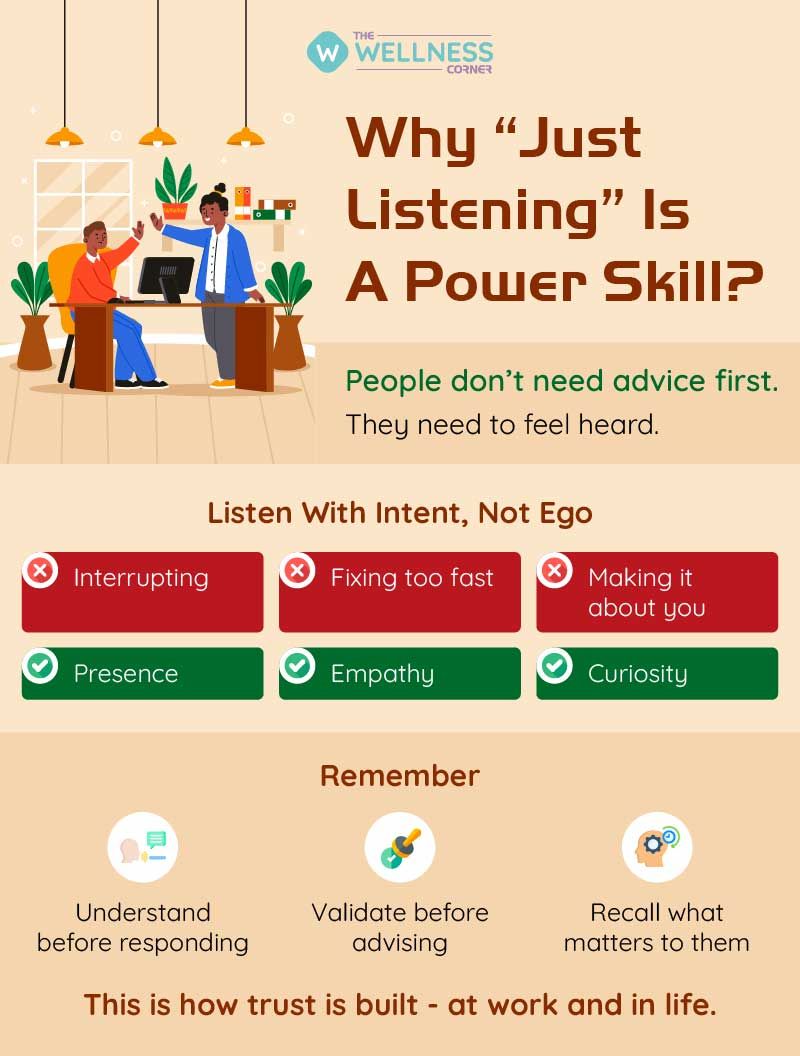
1. Give Your Full Attention (And Show It)
Why It Matters?
When you give someone your full attention, it makes them feel valued. If you’re distracted, even slightly, it sends a silent message: “Something else matters more right now.”
How To Do It?
- Put away distractions - your phone, your laptop, even the TV in the background.
- Face them fully and make comfortable eye contact.
- Show active body language - leaning in slightly, nodding, and keeping your posture open.
Relatable Example
Imagine telling your friend about a stressful work situation and, mid-story, they start typing an email. Even if they’re “still listening,” you probably won’t feel heard. Compare that to a friend who pauses what they’re doing, puts their phone aside, and says, “Tell me everything.” Big difference.

2. Listen To Understand - Not To Reply
Why It Matters?
Most of us listen with half our brain while the other half is busy preparing what we’re going to say next. This means we miss nuances and emotions.
How To Do It?
- Be curious about their perspective.
- Mentally set aside your need to give advice right away.
- Focus on their words, tone, and feelings instead of mentally rehearsing your answer.
Relatable Example
Your coworker says, “I’m so overwhelmed with deadlines.”
Instead of instantly replying, “I know, I’m busy too,” try asking, “What’s making it feel unmanageable right now?” You’ll get a much deeper and more honest answer.
Also Read: 8 Tips To Meet Deadlines Without Over-Stressing Yourself
3. Acknowledge Their Feelings (Even If You Don’t Agree)
Why It Matters?
People want validation before solutions. If their emotions aren’t acknowledged, they may feel dismissed.
How To Do It?
- Use empathy phrases:
o “That sounds frustrating.”
o “I can see why you’d feel that way.”
o “That must have been really exciting!”
- Avoid brushing it off with comments like, “It’s not a big deal” or “Don’t worry about it.”
Relatable Example
A teenager tells their parent, “I’m upset my friend didn’t invite me.” The parent could say, “You’re overreacting,” or they could say, “That must have hurt your feelings.” Which one makes the teen feel understood?

4. Use Reflective Listening
Why It Matters?
Repeating back or paraphrasing shows you’ve really heard the message and helps clear up misunderstandings.
How To Do It?
- Summarize: “So you’re saying you feel left out when the team makes decisions without you?”
- Clarify: “Do you mean you want more support from your manager, or more freedom to handle tasks your way?”
Relatable Example
If your partner says, “I just feel like I’m doing everything around here,” you might reply, “You feel you’re carrying most of the household work?” This invites them to confirm or correct your understanding.
5. Ask Open-Ended Questions
Why It Matters?
Open-ended questions encourage deeper sharing and keep the conversation flowing.
How To Do It?
- Avoid yes/no questions.
- Use prompts like:
o “How did that make you feel?”
o “What happened next?”
o “What do you think would help?”
Relatable Example
Rather than asking your colleague, “Was the meeting successful?” ask, “What was the vibe in the meeting today?” You’ll get a richer, more thoughtful answer.

6. Be Comfortable With Pauses
Why It Matters?
Silence gives people time to gather their thoughts - especially when they’re sharing something emotional or complex.
How To Do It?
- Resist the urge to jump in as soon as they stop speaking.
- Wait a few seconds; they might continue with something even more important.
Relatable Example
During a performance review, an employee hesitates after sharing a challenge. If the manager stays quiet for a moment, the employee might feel safe enough to open up more honestly.
7. Avoid Making It About You
Why It Matters?
When you immediately turn the conversation to your own story, it can feel like you’ve shifted the focus away from them.
How To Do It?
- Keep the spotlight on their experience unless they ask about yours.
- Share personal examples only if it adds value, not to compete for attention.
Relatable Example
Your friend says, “I had such a rough day.” Instead of, “You think that’s bad? Listen to what happened to me,” you could say, “I’m sorry it was so tough. Want to talk about it?”
8. Follow Up Later
Why It Matters?
Remembering what someone shared - and checking in later - shows genuine care.
How To Do It?
- Send a quick message: “How did that presentation go today?”
- Bring it up in your next conversation: “Last time we talked, you mentioned feeling anxious. How have you been since?”
Relatable Example
If a coworker told you last week they were worried about a doctor’s appointment, asking about it later will mean more to them than you realize.

Why This Skill Changes Relationships?
When people feel truly heard:
- Trust grows. They know they can open up to you.
- Conflicts reduce. Understanding replaces assumptions.
- Connections deepen. You’re not just sharing words - you’re sharing understanding.
Also Read: Communication And Conflict Resolution At The Workplace
In personal life, it strengthens love and friendship. In work life, it builds stronger teams, improves leadership, and creates a culture where people feel valued.
Final Thought
Listening well isn’t about being silent. It’s about creating a space where the other person feels safe, respected, and understood. In a world full of noise, you can be that rare person who truly hears. And trust me, people remember how you made them feel far longer than they remember the exact words you said.
Leave a Comment

Sign-Up Now & Unlock
₹100 Cashback
Subscribe to our Newsletter!
Get a weekly dose of wellness tips delivered straight to your inbox.
Recently Published
Related Articles


Health Checks @ Home
Service
Explore



Follow us on:


© 2026 Truworth Health Technologies Pvt. Ltd.