How To Tell If Your Protein Powder Is Authentic: A Buyer’s Guide
7 months ago
5 minute read.
Walk into any fitness store or scroll through an online marketplace, and you will find dozens of protein powders promising faster muscle gain, better recovery, and improved overall health. While protein supplements can be incredibly useful, the growing demand has also led to an increase in fake, diluted, and low-quality products. For consumers, this creates a serious problem. An inauthentic protein powder does not just waste money, it can compromise your health and fitness goals.
This buyer’s guide is designed to help you confidently identify authentic protein powder, understand what you are paying for, and make safer choices for your body.
Also Read: How Much Protein Is Too Much? Make Your Protein Powder At Home
Why Authenticity Matters More Than You Think?
Protein powders are not just another grocery item. They are concentrated nutritional products that many people consume daily. When a protein supplement is fake or adulterated, the risks can include digestive distress, allergic reactions, poor workout recovery, and long-term nutrient imbalances.
Authentic protein powders are manufactured under strict quality standards, tested for purity, and formulated to deliver accurate nutrition. Counterfeit versions often cut corners using cheap fillers, excess sugar, or unverified ingredients that can harm your health over time.
Start With The Label And Ingredient List
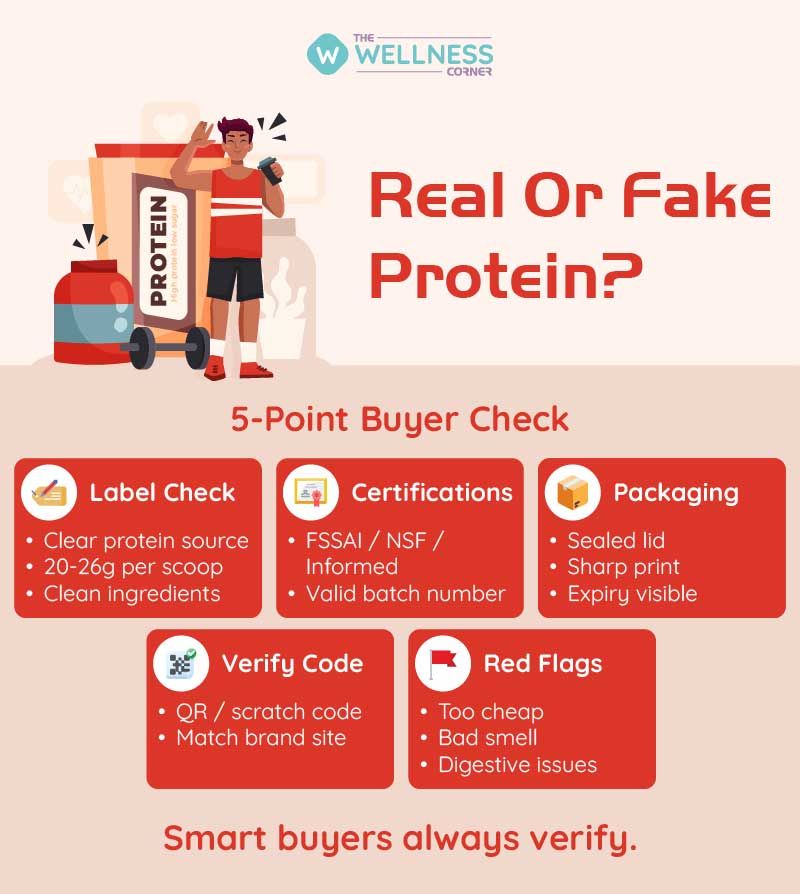
The label is your first and most important checkpoint. Authentic brands invest heavily in transparent, accurate labeling.
Look closely at the ingredient list. A genuine protein powder keeps it simple. Whey protein concentrate, isolate, or a clearly stated plant protein should appear at the top. Long lists filled with vague terms, artificial coloring, or unrecognizable additives should raise concern.
Next, examine the nutrition panel. A standard scoop usually provides between 20 and 26 grams of protein. If the protein content seems unusually low or unrealistically high, question its accuracy. Authentic labels also maintain consistent fonts, spacing, and spelling. Poor print quality or grammatical errors are often signs of counterfeit packaging.
Also Read: Nutrition Labels Give The Real Picture

Verify Manufacturing And Safety Certifications
One of the strongest indicators of authenticity is certification. Reputable brands voluntarily submit their products for third-party testing to ensure quality and safety.
Depending on your location, look for certifications such as FSSAI approval, NSF Certified for Sport, Informed Choice, or Informed Sport. These certifications confirm that the product has been tested for contaminants, banned substances, and label accuracy.
If a protein powder claims multiple certifications but does not provide verification numbers or links, proceed with caution.
Inspect The Packaging Carefully
Counterfeit products often mimic original packaging but struggle to replicate finer details.
Check the seal before opening. Authentic protein powders come with a firm, intact seal. A loose lid, damaged seal, or missing inner lining is a clear warning sign.
Examine the print quality. Logos should be sharp, colors consistent, and text aligned properly. Look for a clearly printed batch number, manufacturing date, and expiry date. These details should not be smudged, overwritten, or pasted separately.

Use Brand Authentication Features
Many established supplement brands now include built-in verification tools to protect consumers.
These may include QR codes, scratch codes, or unique serial numbers that can be verified on the brand’s official website. Always take a minute to check these features. If a code appears invalid or already used, the product may be counterfeit.
Brands that invest in authentication systems usually take quality seriously.
Pay Attention To Taste, Texture, And Mixability
Once opened, the product itself provides important clues.
Authentic protein powder has a consistent texture and mixes smoothly with water or milk. It should not form stubborn clumps, settle excessively at the bottom, or feel gritty when consumed.
The taste should be mild and balanced. Overly sweet, chemical-like, or unpleasant flavors often point to artificial fillers or low-quality sweeteners. A strong industrial smell is another red flag that should not be ignored.

Be Cautious With Deep Discounts
While everyone loves a good deal, unusually low prices often signal compromised quality. Genuine protein powders involve costs related to sourcing, testing, manufacturing, and compliance. If a product is significantly cheaper than its usual market price, it may be expired, diluted, or counterfeit.
Authorized sellers maintain consistent pricing. Always compare prices across official platforms before purchasing.
Also Read: Muscle Gain Meal Guide: High Protein On A Budget
Buy Only From Trusted And Verified Sellers
Where you buy your protein powder matters just as much as what you buy.
Stick to official brand websites, authorized online retailers, pharmacies, and well-known nutrition stores. Avoid purchasing from social media sellers, unverified marketplaces, or gym counters offering unsealed or repackaged products.
A genuine seller will always provide invoices, return policies, and customer support.
Watch How Your Body Responds
Your body often detects problems before labels do. If you experience bloating, nausea, headaches, skin reactions, or digestive discomfort after starting a new protein powder, do not ignore these signals.
While mild adjustment is normal, persistent symptoms may indicate poor-quality ingredients or contamination. Discontinue use and consult a health professional if needed.
Understand What You Actually Need
Not every protein powder suits every individual. Choosing the right type is just as important as choosing an authentic one.
Factors such as your fitness goals, dietary preferences, digestion, and medical history should guide your choice. Whey isolate, concentrate, casein, or plant-based proteins all serve different purposes. Buying blindly based on trends can lead to unnecessary problems.
Also Read: Should Men & Women Use the Same Protein Powder?
The Smart Buyer’s Mindset
Authenticity is not just about avoiding fake products. It is about being an informed consumer. Taking a few extra minutes to read labels, verify sellers, and understand your needs can save you from long-term health issues.
Your protein supplement should support your health, not compromise it.
Final Thoughts
The market of supplements is crowded, and the skill of identifying authentic protein powder is a essential one to have. By checking labels, verifying certifications, inspecting packaging, and purchasing from trusted sources, you protect both your investment and your well-being.
When the choice is made wisely, protein powders can become powerful tools. Make informed decisions, and let quality guide your choices.
Also Read: Whey Protein VS Plant Protein: Which One Is Right For You?
Make Smarter Nutrition Choices With The Wellness Corner
Still confused about which protein powder to? Having trouble interpreting certifications and labels? The Wellness Corner have experts that will offer you guidance that will help you choose safe, authentic, and effective nutrition solutions tailored to your goals.
Your body deserves clarity, confidence, and quality nutrition.
Frequently Asked Questions
Leave a Comment

Sign-Up Now & Unlock
₹100 Cashback
Recently Published
Related Articles


Health Checks @ Home
Service
Explore



Follow us on:


© 2026 Truworth Health Technologies Pvt. Ltd.