Indian Foods That Offer Better Fat Balance Than Avocados And More Protein Than Quinoa
9 months ago
5 minute read.

Avocados and quinoa have earned their place as global health icons. They are nutritious, versatile, and widely promoted as must-have superfoods. But here’s a truth that often gets overlooked: Indian kitchens have been quietly offering foods that match and sometimes outperform these imports, both nutritionally and economically.
From protein-packed dals to fat-balanced seeds and fermented staples, Indian foods are deeply rooted in balance, not trends. They support muscle health, heart health, gut health, and long-term energy without relying on exotic labels or expensive price tags.
Let’s explore Indian foods that offer a better fat balance than avocados and more protein than quinoa, all while fitting seamlessly into everyday meals.
Also Read: How To Add Healthy Fats To Your Diet?
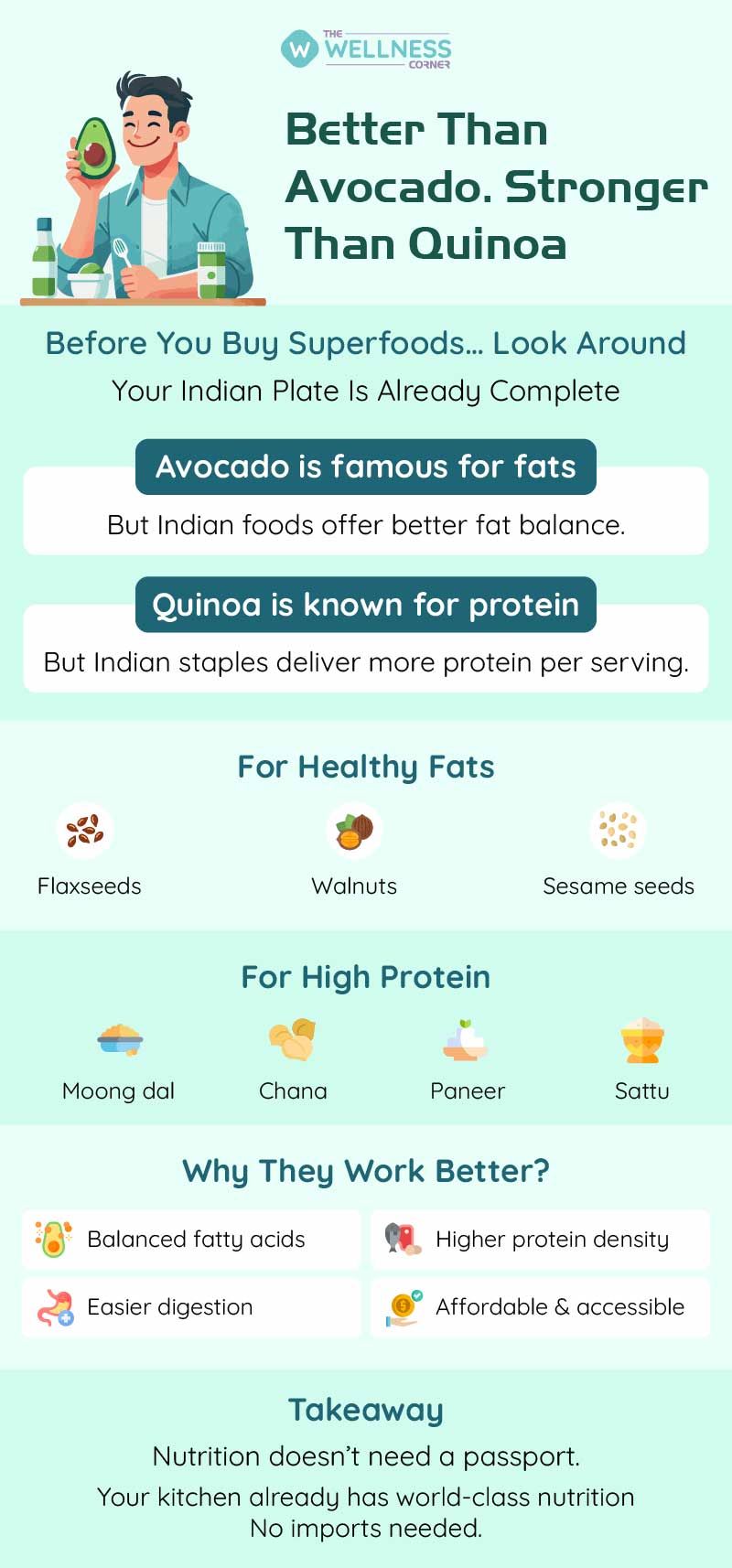
Why Look Beyond Avocados And Quinoa?
There’s nothing wrong with avocados or quinoa. The issue is perception. These foods are often marketed as superior, while equally powerful local options are ignored.
Indian Foods Bring Several Advantages
- Better omega fatty acid balance
- Higher protein density per serving
- Rich micronutrient profiles
- Greater affordability and accessibility
- Cultural familiarity and digestive compatibility
In many cases, traditional Indian foods are more aligned with long-term metabolic health than imported superfoods.

A Better Fat Balance Than Avocados: Indian Powerhouses
Avocados are known for their healthy fats, but they are heavily skewed toward omega-9 fatty acids. Indian foods often provide a more balanced combination of omega-3, omega-6, and omega-9 fatty acids, which is crucial for reducing inflammation and supporting heart health.
Flaxseeds (Alsi): The Omega-3 Champion
Among the richest plant sources for omega-3 fatty acids is flaxseed (Alsi).
Why do they stand out?
- Excellent omega-3 to omega-6 ratio
- Supports heart health and hormone balance
- Improves digestion and gut health
- High fiber content for blood sugar control
Just one tablespoon of ground flaxseeds daily can offer more functional fat balance than half an avocado.
Walnuts: Brain-Boosting Healthy Fats
Walnuts are known as the food for the brain, and that is for a good reason.
Nutritional highlights:
- High omega-3 content
- Supports cognitive health
- Helps reduce inflammation
- Provides plant-based protein
Compared to avocados, walnuts offer a stronger anti-inflammatory profile with added protein benefits.
Also Read: Go Nuts With Walnuts

Mustard Oil: A Traditional Fat With Modern Benefits
Often misunderstood, mustard oil is rich in monounsaturated fats and omega-3 fatty acids when used in moderation.
Why does it deserve recognition?
- Balanced fatty acid profile
- Supports heart health
- Enhances absorption of fat-soluble vitamins
- Naturally antimicrobial
Used traditionally across North India, mustard oil brings more metabolic balance than many trendy oils.
More Protein Than Quinoa: Indian Protein Heroes
For every cooked cup of Quinoa, you get around 8 grams of protein. Several Indian foods easily exceed this while offering additional nutrients and better satiety.
Moong Dal: Light, Lean, and Protein-Rich
Moong dal is one of the most digestible plant proteins.
Protein advantage:
- Every cooked cup holds around 15 grams of protein
- Low in fat
- Easy on the digestive system
- Ideal for weight management
It also provides iron, folate, and antioxidants, making it superior to quinoa in daily nutrition.

Chana (Chickpeas): Protein with Power
Chickpeas are a staple across Indian households and street food alike.
Why do they outperform quinoa?
- Every cooked cup holds around 15 grams of protein
- High fiber content for gut health
- Supports blood sugar stability
- Keeps you full longer
From chana salads to chole, this humble legume delivers serious nutritional value.
Also Read: Chickpeas With Spinach & Olives Recipe
Paneer: High-Quality Protein With Healthy Fats
Paneer offers complete protein, something quinoa is often praised for, but paneer delivers it in a more concentrated form.
Nutritional benefits:
- Approximately 18 to 20 grams of protein per 100 grams
- Rich in calcium and phosphorus
- Supports muscle and bone health
- Excellent satiety factor
For vegetarians, paneer is one of the most effective muscle-supporting foods available.

Sattu: The Forgotten Superfood
Made from roasted Bengal gram, sattu is an underrated nutritional powerhouse.
Why does it shine?
- Around 20 grams of protein per 100 grams
- Rich in fiber and minerals
- Helps regulate blood sugar
- Cooling and gut-friendly
Sattu drinks or rotis, offer more protein density than quinoa with added digestive benefits.
Fat And Protein Combined: Indian Foods That Do Both
Some Indian foods deliver the perfect combination of balanced fats and high protein.
Groundnuts (Peanuts): Affordable Nutrition
Often dismissed as simple snacks, peanuts are nutritional heavyweights.
What makes them special?
- Good balance of healthy fats
- About 7 grams of protein per small handful
- Supports heart and muscle health
- Highly affordable and accessible
Peanut chutneys, roasted peanuts, or peanut-based gravies are powerful additions to a balanced diet.
Sesame Seeds (Til): Tiny Seeds, Massive Nutrition
Sesame seeds are rich in healthy fats and moderate protein.
Key benefits:
- Excellent omega-6 and monounsaturated fat balance
- Supports bone health due to calcium
- Contains plant-based antioxidants
- Enhances energy and immunity
Til laddoos and sesame chutneys are traditional foods with modern relevance.
Also Read: Sesame Seeds

Why Do Indian Foods Support Long-Term Health Better?
Indian foods are not just nutrient-rich. They are designed around balance.
They Offer
- Better digestion due to traditional cooking methods
- Natural portion control
- Seasonal and regional adaptability
- Lower environmental impact
Unlike many imported superfoods, Indian staples fit seamlessly into everyday eating patterns without overwhelming the system.
How To Build Meals Using These Foods?
A Balanced Indian Plate Might Include
- Dal or paneer for protein
- Flaxseed or sesame chutney for healthy fats
- Vegetables for fiber and micronutrients
- Rice or roti for sustained energy
This combination offers more functional nutrition than many Western-style superfood bowls.
Final Thoughts
Avocados and quinoa may be popular, but Indian foods have been quietly delivering superior fat balance and protein quality for centuries. From flaxseeds and walnuts to moong dal and paneer, these staples are proof that nutrition does not need to be imported to be effective.
Sometimes, the best superfoods are already in your kitchen.
Discover Smarter Nutrition With The Wellness Corner
Confused about what foods truly support your health goals? Looking for guidance from the experts for your body and lifestyle?
The Wellness Corner connects you with experienced nutritionists who help you build balanced diets using familiar, effective foods.
Visit www.thewellnesscorner.com and take the first step toward sustainable, science-backed nutrition that fits your life.
Because the smartest health choices are often the simplest ones.
Leave a Comment

Sign-Up Now & Unlock
₹100 Cashback
Recently Published
Related Articles


Health Checks @ Home
Service
Explore



Follow us on:


© 2026 Truworth Health Technologies Pvt. Ltd.