Can Some Drinks Really Accelerate Healing? The Rise Of Functional Beverages
1 hour ago
6 minute read.

Imagine finishing an intense workout and reaching for a drink that promises faster muscle recovery. Or perhaps you have noticed beverages marketed for gut health, better sleep, stronger immunity, or reduced inflammation. These products are everywhere, and they are changing the way people think about everyday hydration.
Welcome to the world of functional beverages.
Unlike ordinary refreshments, functional beverages contain ingredients intended to offer benefits beyond basic hydration. From protein shakes and electrolyte drinks to probiotic beverages and turmeric-infused tonics, the choices are expanding rapidly.
But can these drinks genuinely help your body heal faster, or are they simply clever marketing packaged in attractive bottles?
The answer depends on what you drink, why you need it, and whether its ingredients have scientific evidence supporting their benefits.
Also Read: 5 Foods And Beverages To Avoid Immediately After Taking Thyroid Medication
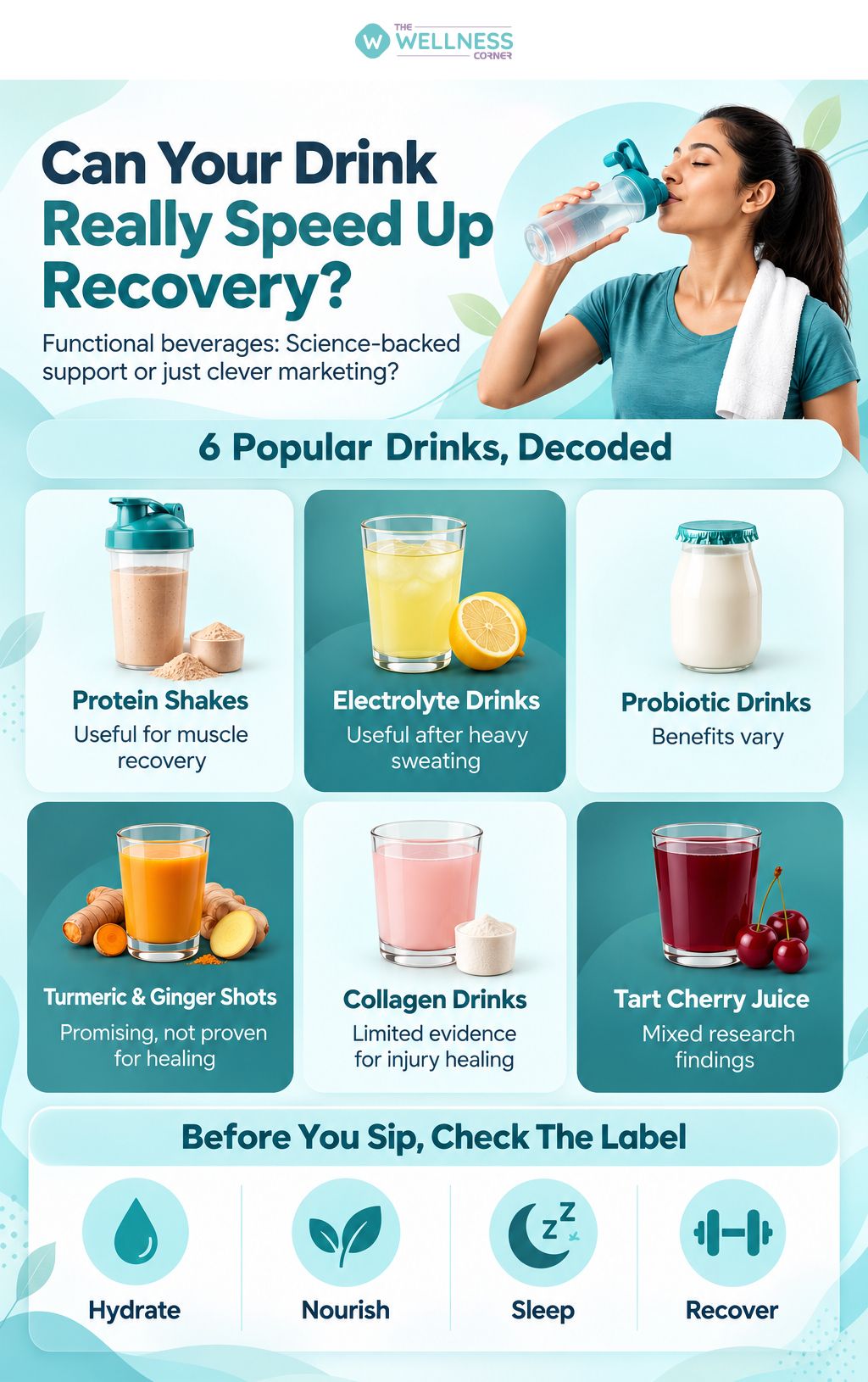
What Exactly Are Functional Beverages?
Functional beverages are drinks formulated or marketed to support specific aspects of health. They may contain added vitamins, minerals, protein, probiotics, electrolytes, botanical extracts, or other ingredients.
Some are designed for exercise recovery, while others target digestion, relaxation, or general wellbeing.
However, the term functional does not guarantee that a product delivers its advertised benefits. Different ingredients have different levels of scientific support, and a beverage's effectiveness depends on its formulation, dosage, and your individual needs.
Understanding these differences can help you make better choices rather than relying on attractive health claims.

1. Protein Drinks: Helping Muscles Rebuild After Exercise
Protein shakes are among the most familiar functional beverages, particularly among fitness enthusiasts.
During demanding exercise, muscles experience stress and small amounts of tissue damage. Adequate dietary protein provides amino acids that support muscle repair and adaptation.
A protein shake can be convenient after exercise, especially when you cannot eat a protein-rich meal immediately.
However, protein drinks are not automatically superior to foods such as eggs, yoghurt, beans, or other protein-rich options. Your overall daily protein intake matters more than relying on a particular recovery drink.
For most people, a balanced diet can provide sufficient protein without expensive supplements.
Also Read: How To Tell If Your Protein Powder Is Authentic: A Buyer’s Guide
2. Electrolyte Drinks: Replacing What Sweat Takes Away
Sweating helps regulate body temperature, but it also causes your body to lose water and electrolytes, particularly sodium.
During prolonged exercise, intense physical activity, or workouts in hot conditions, electrolyte drinks may help replace some of these losses.
However, not every workout requires a specialised sports drink. For shorter or less demanding exercise sessions, drinking water and eating regular meals are generally sufficient.
Be mindful of products containing large amounts of added sugar or caffeine, particularly when they are marketed as everyday hydration solutions.

3. Probiotic Drinks: Can Better Gut Health Support Recovery?
Your digestive system does much more than process food. It also interacts with your immune system and influences how your body absorbs nutrients.
Probiotic beverages, including certain fermented milk drinks and kefir, contain live microorganisms that may offer health benefits.
Some probiotic strains have been studied for specific digestive conditions, but their effects vary considerably. Drinking a probiotic beverage does not automatically improve immunity or accelerate healing.
Check the ingredients carefully, particularly the added sugar content and the specific probiotic strains listed on the label.
Also Read - Gond Katira: 7 Reasons Why This Natural Coolant Is Good For Your Gut
4. Turmeric And Ginger Drinks: Can They Calm Inflammation?
Turmeric shots and ginger-infused beverages have become popular among people looking for natural recovery solutions.
Turmeric is a source of curcumin, which researchers have investigated for its ability to help regulate inflammation. Ginger contains bioactive compounds that may help with certain inflammatory processes and nausea.
Although some studies suggest potential benefits, the evidence does not establish that ordinary turmeric or ginger drinks speed up injury recovery.
The concentration of active ingredients also varies between products. Enjoy these beverages as part of a balanced diet rather than treating them as alternatives to medical care.
5. Collagen Drinks: Beauty Trend Or Recovery Essential?
Collagen beverages are frequently marketed for healthier skin, stronger joints, and improved tissue repair.
Collagen is a structural protein found in skin, tendons, cartilage, and other connective tissues. Some research suggests that collagen supplementation may offer modest benefits for certain skin and joint outcomes.
However, evidence for faster injury healing remains limited, and results cannot automatically be applied to every collagen drink.
Your body also requires adequate overall protein, vitamin C, and other nutrients to maintain healthy tissues. No single supplement can replace these nutritional foundations.
Also Read: Which Is Better, Collagen Or Whey Protein?

6. Tart Cherry Juice: A Promising Workout Recovery Drink?
Tart cherry juice has attracted attention among athletes because it contains polyphenols, including anthocyanins.
Some studies suggest that tart cherry products may modestly reduce muscle soreness or support certain recovery measures following strenuous exercise. However, research findings are mixed, and benefits may depend on the amount consumed and type of exercise.
It is also important to remember that fruit juices contain naturally occurring sugars.
If you enjoy tart cherry juice, consider it an optional addition to your diet rather than an essential recovery supplement.
The Hidden Ingredients That Deserve Your Attention
Before purchasing a functional beverage, take a moment to examine its nutritional label.
Some products contain substantial amounts of added sugar, stimulants, or herbal ingredients that may interact with medications.
Others make impressive claims without providing meaningful information about ingredient quantities.
Look for clearly listed ingredients, appropriate serving sizes, and realistic health claims. Be especially cautious of beverages promising detoxification, instant immunity, or guaranteed healing.
Also Read: Is Monk Fruit Really Helpful In Reducing Sugar Intake?

Can Functional Beverages Replace Healthy Eating?
Functional drinks can be convenient, particularly when you have specific nutritional requirements or struggle to meet them through regular meals.
However, your body relies on a combination of nutrients, adequate hydration, sleep, and appropriate physical activity to recover effectively.
A protein shake cannot compensate for consistently inadequate sleep. Similarly, an antioxidant-rich beverage cannot replace a varied diet containing vegetables, fruits, whole grains, and sufficient protein.
Think of functional beverages as optional nutritional tools rather than shortcuts to better health.
The Bottom Line
Functional beverages can offer genuine benefits when their ingredients address specific nutritional or hydration needs. However, claims about accelerated healing often extend beyond what scientific research currently supports.
Rather than choosing drinks based on marketing promises, consider your individual requirements, examine ingredient labels, and prioritise established recovery habits.
Want to make smarter choices about nutrition, fitness, and everyday health? Explore The Wellness Corner for practical wellness resources, expert guidance, and personalised support to help you build healthier habits.
Disclaimer: This article is intended for general educational and informational purposes only and should not replace personalized dietary or medical advice. Nutritional needs vary based on factors such as age, health status, lifestyle, and individual requirements. If you have a medical condition, dietary restriction, or specific nutritional concern, consult a qualified healthcare professional or registered dietitian.
Frequently Asked Questions
Leave a Comment

Sign-Up Now & Unlock
₹100 Cashback
Recently Published
Related Articles


Health Checks @ Home
Service
Explore



Follow us on:


© 2026 Truworth Health Technologies Pvt. Ltd.