Regional Indian Breakfasts Ranked By Nutrition: North Vs South Vs East Vs West
17 hours ago
6 minute read.
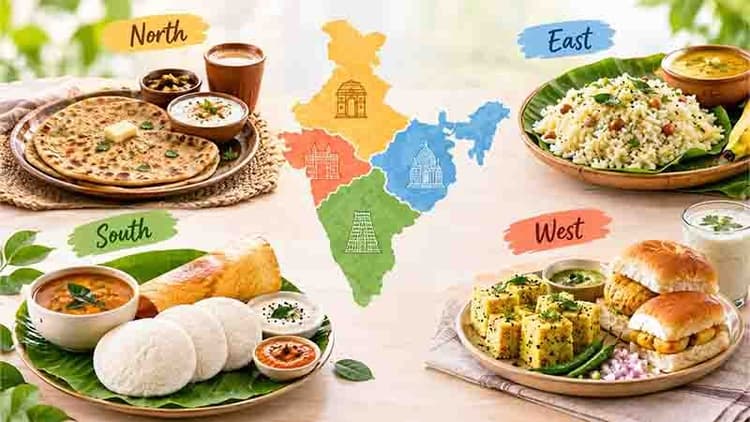
1. What Makes A Healthy Indian Breakfast?
Indian breakfast traditions offer an incredible variety of grains, lentils, vegetables, dairy products, and regional specialities. But when comparing nutrition, popularity alone is not enough.
A healthy Indian breakfast should ideally provide a balance of carbohydrates, protein, fibre, and healthy fats. Protein can help with fullness, while fibre supports digestive health and can slow the absorption of carbohydrates. Vegetables, fruit, and suitable dairy or fortified alternatives can add important vitamins and minerals.
The best Indian breakfast for nutrition depends on your needs, activity level, health conditions, and portion size. A dish made with whole grains and plenty of vegetables may offer more fibre than a refined-grain version, while adding curd, paneer, sprouts, or lentils can improve its protein content.
Also Read: No Gas Stove? Try These 7 Easy Breakfast Recipes
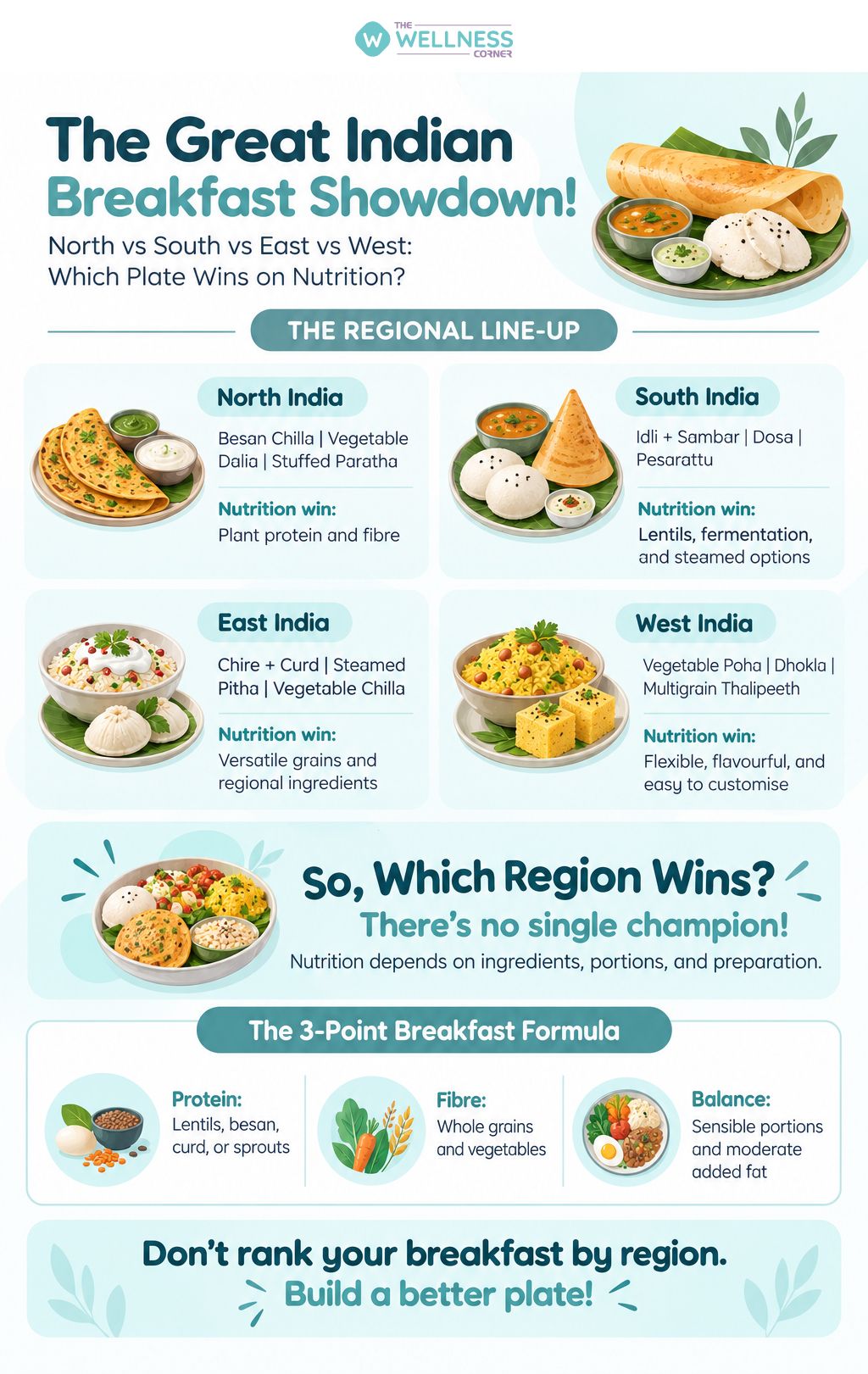
2. North Indian Breakfasts: Comfort With A Nutritional Twist
Popular choices: Besan chilla, stuffed paratha, vegetable dalia
A typical North Indian breakfast can range from a simple bowl of dalia to a stuffed paratha served with curd.
Besan chilla is a strong everyday option because gram flour supplies plant protein and some fibre. Adding onions, tomatoes, spinach, or other vegetables improves its nutritional variety. Pairing it with curd can make the meal more satisfying.
Parathas are also part of a traditional Indian breakfast, but their nutritional value depends on the filling, flour, cooking fat, and portion size. A vegetable or paneer paratha cooked with moderate oil can fit into a balanced diet. Large portions prepared with generous amounts of ghee may provide substantially more energy.
Vegetable dalia, particularly when made with broken whole wheat and vegetables, offers fibre and complex carbohydrates.
Nutrition verdict: Besan chilla and vegetable dalia are excellent starting points, especially when paired with a protein-rich accompaniment.
3. South Indian Breakfasts: Fermented Foods And Lentil Goodness
Popular choices: Idli with sambar, dosa, pesarattu
A South Indian breakfast often combines rice, lentils, fermented batters, and flavourful accompaniments.
Idli is steamed, making it relatively low in added fat when prepared traditionally. However, idli alone is not particularly high in protein. Sambar adds lentils and vegetables, making the complete meal more nutritionally balanced.
Dosa can also be a good choice, although the amount of oil, size, filling, and accompanying chutneys influence its overall nutritional profile. Pesarattu, made primarily from green gram, is another useful option for people looking for a high protein Indian breakfast.
So, is South Indian breakfast healthier than North Indian? Not automatically. A meal of idli with lentil-rich sambar may compare favourably with a large, oily paratha, but besan chilla or vegetable dalia can be equally nutritious.
Nutrition verdict: Idli with sambar and pesarattu stand out when protein, vegetables, and cooking methods are considered together.
Also Read: The Goodness Of Fermented Food
4. East Indian Breakfasts: Regional Variety Beyond Sweets
Popular choices: Chire with curd, vegetable chilla, steamed pitha
A Bengali breakfast may include chire, also called flattened rice, with milk or curd, as well as luchi, vegetables, and regional preparations.
Chire is convenient and easy to prepare, but it is primarily a carbohydrate source. Adding curd, nuts, seeds, or a suitable protein-rich accompaniment can make it more balanced. Luchi, which is typically deep-fried, is best enjoyed in moderation rather than treated as an everyday nutritional benchmark.
Steamed pitha varieties can also form part of regional breakfast traditions. Their nutritional value varies considerably depending on whether they contain rice flour, lentils, coconut, jaggery, or other fillings.
Nutrition verdict: Choose steamed preparations and pair carbohydrate-based dishes with protein and fibre-rich foods.

5. West Indian Breakfasts: Flavour Meets Flexibility
Popular choices: Vegetable poha, dhokla, thepla, thalipeeth
Western India offers several practical breakfast options.
A Gujarati breakfast may include dhokla, thepla, or handvo. Dhokla made with gram flour can provide some protein, while handvo combines ingredients such as lentils, grains, and vegetables. Thepla can be a convenient option, particularly when prepared with whole wheat and served with curd.
A Maharashtrian breakfast often features poha, upma, or thalipeeth. Vegetable poha with peanuts offers carbohydrates, some protein, and fats. Thalipeeth made from a multigrain flour blend can provide more fibre, depending on the ingredients used.
For the question poha vs upma which is better for weight loss, neither automatically wins. • Both choices can work alongside healthy weight-control habits.
Vegetable content, portion size, added oil, and protein accompaniments matter more than the dish's name.
Nutrition verdict: Vegetable poha, steamed dhokla, and multigrain thalipeeth can all be sensible options when portions and preparation are considered.
Also Read: 6 High Protein Snacks To Keep In The Office For Your 4 PM Hunger
6. Regional Breakfasts Compared: Which Comes Out On Top?
Rather than ranking entire regions, compare common dishes based on how they are prepared.
|
Breakfast |
Nutritional
strength |
What
to improve |
|
Besan chilla |
Plant protein and some fibre |
Add vegetables and curd |
|
Idli with sambar |
Steamed preparation, lentils, and
vegetables |
Include enough sambar |
|
Vegetable poha |
Convenient and adaptable |
Add peanuts, sprouts, or curd |
|
Steamed dhokla |
Some protein from gram flour |
Pair with a protein-rich side |
|
Vegetable dalia |
Whole-grain fibre |
Add curd, legumes, or another
protein source |
|
Stuffed paratha |
Can provide vegetables or protein |
Moderate added fat and portion
size |
This comparison helps answer which Indian breakfast is the healthiest: the one that balances your nutritional needs, suits your preferences, and can be part of your regular routine.
An Indian breakfast calories comparison also needs context. Calories vary with serving size, ingredients, and cooking fat, so there is no single calorie count for every plate. A low calorie Indian breakfast is not necessarily the most nutritious if it lacks protein or leaves you hungry soon afterwards.
7. How To Choose The Right Breakfast For Your Lifestyle?
For a healthy breakfast for weight loss India, prioritise portions you find satisfying, adequate protein, vegetables, and minimally processed ingredients. Avoid assuming that skipping breakfast or eating as little as possible is automatically healthier.
If you need a healthy Indian breakfast for diabetics, consider carbohydrate portions, fibre, protein, and your individual glucose response. Pairing grain-based dishes with lentils, vegetables, or other suitable protein sources may help create a more balanced meal. Individual advice from a qualified healthcare professional or dietitian is important.
For busy mornings, the best Indian breakfast for office workers may be besan chilla prepared in advance, overnight oats with curd, vegetable poha, or idli with sambar.
These can also work as a quick healthy Indian breakfast before work when planned ahead.
The goal is not to abandon regional food traditions. It is to make small adjustments that preserve flavour while supporting your health.
Also Read: How Much Of Fat, Fibre And Cholesterol Do You Need?

The Bottom Line
North, South, East, and West India all offer nutritious breakfast choices. No region wins every nutritional comparison, and no traditional dish needs to be labelled unhealthy simply because of where it comes from.
A healthy Indian breakfast is built through balanced ingredients, sensible portions, and preparation methods that suit your needs. Choose the foods you enjoy, add protein and vegetables where possible, and make breakfast work for your lifestyle.
Want to make more informed choices about your daily diet? Explore The Wellness Corner for practical nutrition resources, expert-backed guidance, and support to help you build sustainable, healthier eating habits.
Frequently Asked Questions
Disclaimer: This article is intended for general educational and informational purposes only and should not replace personalized dietary or medical advice. Nutritional needs vary based on factors such as age, health status, lifestyle, and individual requirements. If you have a medical condition, dietary restriction, or specific nutritional concern, consult a qualified healthcare professional or registered dietitian.
Leave a Comment

Sign-Up Now & Unlock
₹100 Cashback
Subscribe to our Newsletter!
Get a weekly dose of wellness tips delivered straight to your inbox.
Recently Published
Related Articles


Health Checks @ Home
Service
Explore



Follow us on:


© 2026 Truworth Health Technologies Pvt. Ltd.