Not Feeling Enough Fetal Movements In Your Third Trimester? When to Seek Help?
4 months ago
5 minute read.

One of the most emotional and reassuring parts of pregnancy is feeling your baby move.
Those little kicks, rolls, stretches, and nudges often create a strong sense of connection between mother and baby. As pregnancy progresses into the third trimester, many women become increasingly aware of their baby’s movement patterns throughout the day.
So when movements suddenly feel different, slower, or less noticeable, it is completely natural to feel concerned.
Many expecting mothers wonder:
- “Is my baby moving enough?”
- “Why do movements feel weaker today?”
- “When should I contact my doctor?”
These questions are very common, especially during the later stages of pregnancy.
In many situations, changes in fetal movement may have harmless explanations. However, reduced fetal movement should never be ignored completely because baby movements can provide important clues about fetal well-being.
Understanding what is normal, what is not, and when to seek medical advice can help reduce panic while encouraging timely care when needed.
Also Read - Pregnancy Health: Identifying Common Infections Early
What Are Fetal Movements?
Fetal movements refer to the baby’s activity inside the uterus.
These movements may include:
- Kicks
- Rolls
- Flutters
- Stretches
- Turns
- Jerking motions
Most pregnant women begin noticing movements between 16 to 25 weeks of pregnancy, although timing varies.
By the third trimester, movement patterns often become more regular and noticeable.
Why Movements May Feel Different In The Third Trimester?
Many women expect movements to become stronger continuously throughout pregnancy.
However, movement patterns may change during the final trimester for several reasons.
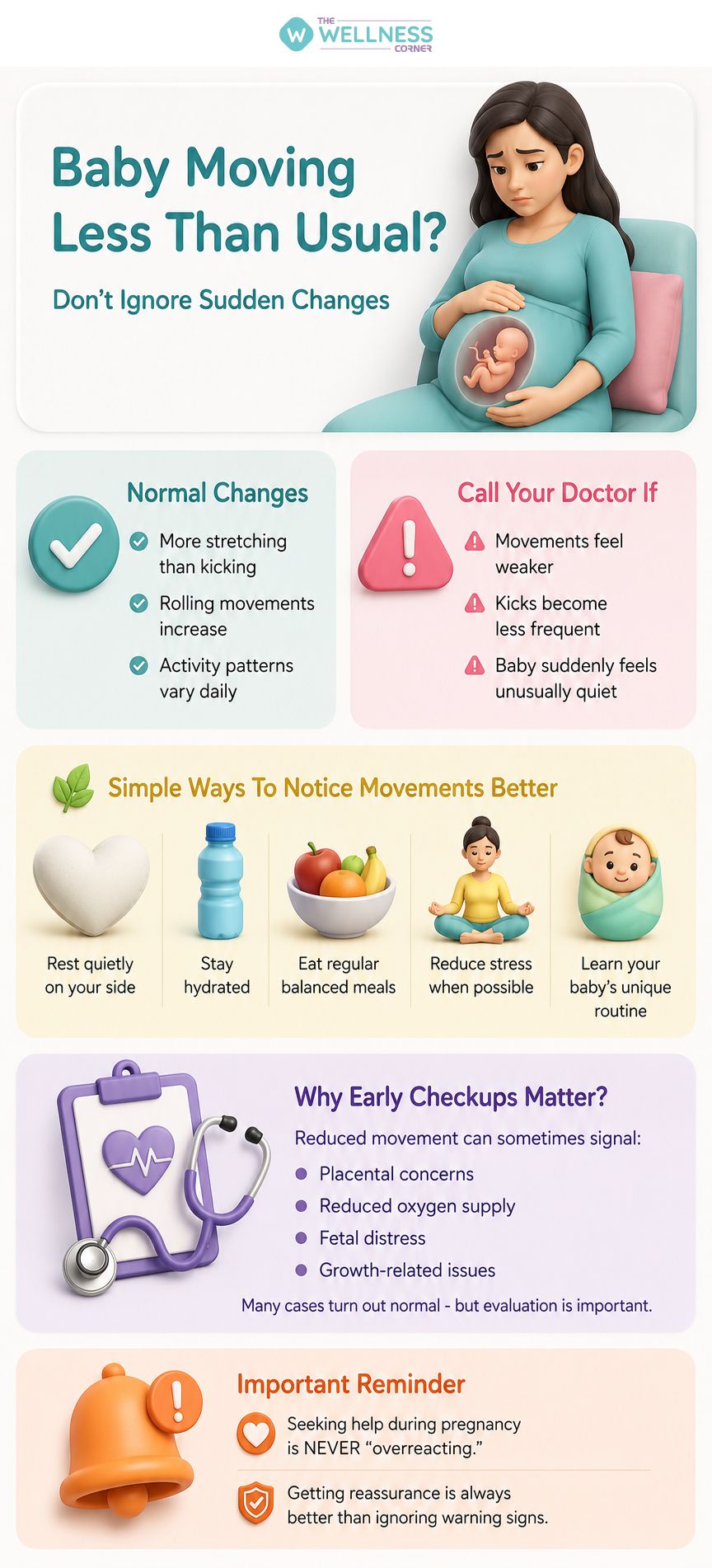
As the baby grows larger, there is less room inside the uterus for dramatic kicks and flips.
Movements may begin feeling:
- Slower
- More rolling in nature
- More stretching than kicking
- Less sharp but still regular
This does not automatically mean something is wrong.
The important factor is usually whether the baby continues showing a consistent movement pattern.

Every Baby Has A Unique Pattern
Just like adults have different activity levels, babies in the womb also develop individual movement routines.
Some babies are naturally more active in the:
- Morning
- Evening
- After meals
- Late at night
Over time, many mothers begin recognizing their baby’s usual rhythm.
This is why sudden noticeable changes may feel concerning.
Also Read - Mothers Diet Influences Infant Sex: High Energy Intake Linked To Conception Of Sons
When Reduced Fetal Movement May Need Attention?
Occasional quiet periods can happen normally.
Babies sleep inside the womb too.
However, significant reduction in movement or sudden changes from the usual pattern should be taken seriously.
Some situations that may require medical attention include:
- Movements becoming much weaker than usual
- Noticeably fewer kicks over time
- Sudden absence of movement
- Difficulty feeling movement despite normally active patterns
Trusting maternal instincts is important.
If something feels unusually different, it is always reasonable to contact a healthcare professional.
What Can Sometimes Affect Baby Movements?
Several factors may temporarily influence how movements feel.
1. Baby’s Sleep Cycles
Babies regularly sleep in the womb, sometimes for 20 to 40 minutes or longer.
During these periods, movements may naturally decrease temporarily.
2. Maternal Activity
When mothers are busy, walking, or distracted, smaller movements may go unnoticed.
Some women notice movements more clearly when resting quietly.
3. Placenta Position
An anterior placenta, where the placenta sits at the front of the uterus, may cushion certain movements and make them feel less noticeable.
4. Stage Of Pregnancy
As delivery approaches, movement style may shift from sharp kicks to slower stretching or rolling motions because of limited space.
What Is Kick Counting?
Some healthcare providers recommend monitoring fetal movement patterns using kick counts.
A common approach involves:
- Sitting or lying quietly
- Paying attention to baby movements
- Counting movements over a specific period
Many babies move several times within two hours, although exact recommendations may vary.
Healthcare providers may offer individualized guidance based on pregnancy history and medical conditions.
When To Contact A Doctor Immediately?
It is important not to delay seeking medical care if:
- You notice a significant decrease in movements
- You cannot feel movement for an extended period
- Movements suddenly become dramatically different
- You feel worried about your baby’s activity
Doctors and maternity teams prefer evaluating concerns early rather than missing potential complications.
Seeking help is never considered “overreacting” during pregnancy.
Why Reduced Fetal Movement Should Not Be Ignored?
In some cases, decreased movement may signal that the baby needs medical evaluation.
While many cases turn out normal, reduced fetal movement can occasionally be associated with issues involving:
- Placental function
- Oxygen supply
- Fetal distress
- Growth concerns
This is why timely assessment matters.
What Happens During Medical Evaluation?
Healthcare professionals may perform several checks to assess fetal well-being.
These may include:
- Monitoring baby’s heart rate
- Ultrasound examination
- Movement assessment
- Checking amniotic fluid levels
The goal is to ensure the baby is doing well and determine whether further monitoring is needed.
Also Read: Ultrasounds & Pregnancy
Emotional Anxiety During The Third Trimester Is Common
The final months of pregnancy often bring both excitement and worry.
Many mothers become highly alert to every physical sensation.
This emotional sensitivity is completely understandable.
Pregnancy involves significant physical, emotional, and hormonal changes, and concerns about the baby’s health naturally become a major focus.
Seeking reassurance when worried is part of responsible prenatal care.
How To Stay More Aware Of Baby Movements?
Some simple habits may help mothers notice fetal activity more clearly.
1.Spend Quiet Time Observing Movements
Lying on the side in a calm environment may make movements easier to notice.
2. Stay Hydrated And Nourished
Proper hydration and regular meals support overall pregnancy health.
3. Avoid Excessive Stress When Possible
Stress and anxiety may sometimes make it harder to focus on subtle movements.
4. Learn Your Baby’s Pattern
Familiarity with your baby’s routine may help you notice unusual changes earlier.
The Bigger Picture: Trusting Your Instincts Matters
Pregnancy advice often comes from many directions, including family members, social media, and online forums.
But maternal instincts should not be dismissed.
If movements feel significantly different or concerning, it is always appropriate to seek professional advice.
It is far better to get reassurance than to ignore potential warning signs.
Support Your Pregnancy Wellness With The Wellness Corner
Pregnancy involves both physical and emotional changes that deserve informed and compassionate support.
The Wellness Corner offers expert-backed guidance on women’s health, emotional wellness, preventive care, nutrition, fitness, and healthy lifestyle management to help individuals make confident health decisions during every stage of life.
Because informed care supports healthier pregnancies and healthier families.
Frequently Asked Questions (FAQs)
Leave a Comment

Sign-Up Now & Unlock
₹100 Cashback
Subscribe to our Newsletter!
Get a weekly dose of wellness tips delivered straight to your inbox.
Recently Published
Related Articles


Health Checks @ Home
Service
Explore



Follow us on:


© 2026 Truworth Health Technologies Pvt. Ltd.