Brain Tumour Warning Signs: 6 Early Symptoms Beyond Headaches You Shouldn't Ignore
17 hours ago
10 minute read.

When people hear the words "brain tumour," headaches are often the first symptom that comes to mind. However, brain tumour symptoms can involve much more than head pain. Depending on its size, location, and growth rate, a tumour may affect vision, movement, speech, memory, balance, or behaviour.
Recognizing the early signs of brain tumour development is not about assuming the worst whenever something feels unusual. Many of these symptoms occur because of more common conditions, including migraines, sleep problems, medication effects, and other neurological disorders.
What matters is recognizing changes that are new, persistent, unexplained, or progressively worsening. Understanding the possible brain tumour warning signs can help you know when to seek medical advice and when a symptom requires urgent attention.
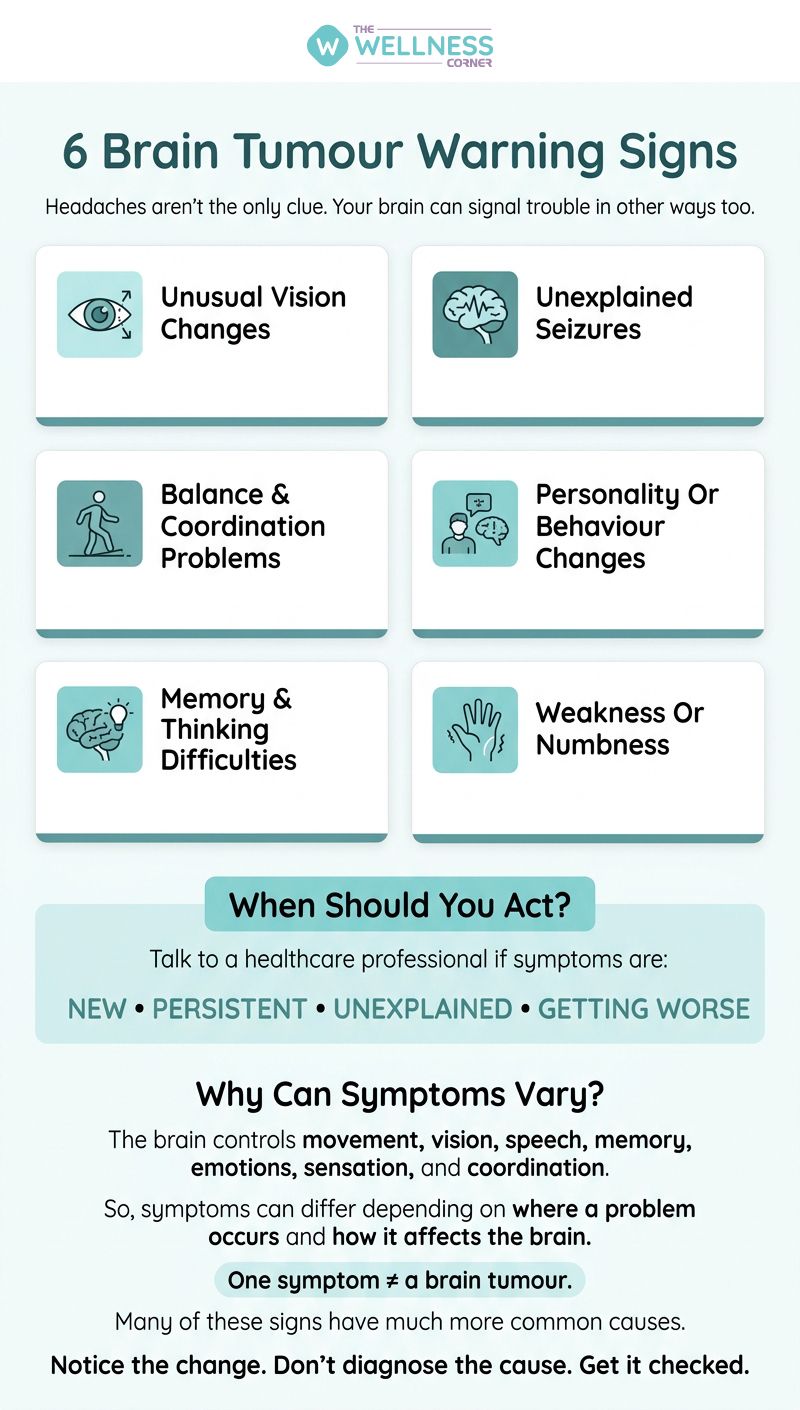
Here are six symptoms beyond headaches that deserve attention, along with what causes brain tumours, how they are diagnosed, and when to consult a doctor.
Also Read - Thunderclap Headaches: When A Headache Hits Out Of Nowhere
1. Vision Changes That Seem Unusual
Unexpected changes in eyesight can sometimes be among the early signs of brain tumour development, particularly when a growth affects the areas responsible for vision or increases pressure inside the skull.
Possible brain tumour symptoms vision problems include:
- Blurred or double vision.
- Difficulty seeing objects clearly.
- Reduced peripheral vision.
- Difficulty interpreting what you see.
- Other unexplained changes in visual function.
The precise symptoms depend on which structures are affected. For example, a tumour near the optic pathways may interfere with visual signals travelling between the eyes and the brain.
However, vision problems can also result from eye conditions, migraines, medication effects, and other neurological issues. New or persistent changes deserve medical assessment rather than self-diagnosis.
Important: Sudden vision loss or a sudden significant change in vision requires urgent medical evaluation, particularly if accompanied by weakness, confusion, or difficulty speaking.

2. Unexplained Seizures
A seizure can sometimes be one of the first noticeable brain tumour symptoms in adults. A tumour may irritate surrounding brain tissue and disrupt the electrical activity responsible for normal brain function.
Seizures do not always involve dramatic convulsions. The effects can vary by type and may include:
- Brief episodes of staring or reduced awareness.
- Unusual repetitive movements.
- Temporary confusion.
- Sudden, unexplained sensations.
- Loss of consciousness or uncontrolled muscle movements.
So, can a brain tumour cause seizures? Yes. However, seizures can also occur because of epilepsy, infections, metabolic disturbances, and other neurological conditions. Having a seizure does not automatically mean a tumour is present.
A first seizure requires urgent medical assessment. Call emergency services if a seizure lasts five minutes or longer, another seizure begins before the person recovers, breathing becomes difficult, or a serious injury occurs.
3. Balance And Coordination Problems
Have you started stumbling more frequently, feeling unusually unsteady, or struggling with movements that were previously easy?
Changes in balance and coordination can occur when a tumour affects brain regions involved in controlling movement and coordinating muscular activity.
You might notice difficulty walking steadily, reduced coordination when handling objects, or trouble maintaining your balance.
These brain tumour symptoms are not specific to tumours. Inner-ear disorders, medication side effects, vitamin deficiencies, and other neurological or musculoskeletal conditions can cause similar problems.
The important distinction is whether the change is new, unexplained, or becoming progressively worse.
Sudden difficulty walking, severe dizziness accompanied by neurological symptoms, or an abrupt loss of coordination requires urgent medical assessment because a stroke or another serious condition may be responsible.
Also Read: 7 Nutritional Deficiencies Linked To Mood Swings And Irritability

4. Personality Or Behaviour Changes
Not every neurological change is physical. Sometimes, alterations in personality, emotions, or behaviour become noticeable first.
A person may develop unusual irritability, reduced motivation, impulsiveness, confusion, or difficulty managing emotions. Family members and close friends may notice these changes before the individual recognizes them.
These changes can occur when areas involved in personality, emotional regulation, and decision-making are affected.
However, changes in behaviour are common and can be associated with stress, sleep disturbances, depression, anxiety, medication effects, and other health concerns.
An occasional mood change is not, by itself, a typical reason to suspect a brain tumour. A persistent, unexplained departure from someone's usual behaviour, particularly when accompanied by other neurological changes, deserves professional evaluation.
5. Memory And Thinking Difficulties
Everyone occasionally forgets a name, misplaces their keys, or struggles to concentrate. Persistent or progressively worsening cognitive changes, however, should not automatically be dismissed as ordinary forgetfulness.
Possible brain tumour symptoms in adults involving thinking and memory include:
- Increasing difficulty remembering familiar information.
- Trouble concentrating on everyday tasks.
- Difficulty finding the right words.
- Changes in judgement or decision-making.
- Problems following conversations or completing familiar activities.
Early changes may be subtle, making them difficult to recognise initially.
Sleep deprivation, stress, nutritional deficiencies, depression, medication effects, and other neurological conditions can also affect memory and concentration.
If cognitive changes are new, persistent, or interfering with everyday activities, arrange an assessment with a healthcare professional.
Also Read - Cognitive & Memory Issues: Alzheimer’s & Dementia-Know The Difference

6. Weakness Or Numbness On One Side
A tumour affecting the parts of the brain responsible for movement or sensation may cause weakness, numbness, or reduced control over particular body movements.
Possible changes include weakness in an arm or leg, difficulty using one side of the body, unusual sensory changes, or reduced coordination.
Different symptom patterns may point to particular regions of the nervous system that require further evaluation. However, these symptoms have several possible causes and cannot establish a diagnosis on their own.
A stroke may cause an abrupt loss of sensation or strength, often affecting one side of the body. Seek emergency medical attention immediately rather than waiting to see whether the symptoms improve.
Why Symptoms Can Look So Different?
There is no single pattern of symptoms that applies to every brain tumour.
The brain controls an enormous range of functions, including movement, speech, vision, memory, emotions, coordination, and sensation. A tumour affecting one area may therefore produce very different symptoms from one affecting another.
The size and location of the tumour, how quickly it develops, and whether it increases pressure within the skull can all influence symptoms.
This is why it is not useful to rely on a single symptom as a way of determining whether someone has a brain tumour.
What Causes A Brain Tumour? Understanding The Risk Factors
Understanding brain tumour causes and risk factors can help separate established medical knowledge from common misconceptions.
Brain tumours develop when cells grow abnormally in the brain or in nearby structures. The exact reason for many tumours remains unknown. Some develop from cells within the brain, while others arise from surrounding tissues or spread to the brain from cancers elsewhere in the body.
The risk of developing certain brain tumours may be influenced by factors such as:
- Radiation exposure: Exposure to ionising radiation, especially radiation used in some medical treatments involving the head, is an established risk factor for certain brain tumours.
- Family history and inherited conditions: A small proportion of brain tumours are associated with inherited genetic syndromes. Even with a family history of brain tumours, an individual's likelihood of developing one can vary.
- Age: The likelihood of developing particular types of brain tumours varies with age. While some forms are more prevalent among children, other types tend to develop later in life.
- Previous cancer: Certain cancers can spread to the brain, producing secondary brain tumours.
It is important to understand that most people with these risk factors will not necessarily develop a brain tumour, and many people diagnosed with one have no identifiable risk factor.
Research has not established that everyday stress, ordinary mobile phone use, or a particular food directly causes brain tumours.
Types Of Brain Tumours You Should Know About
Brain tumours are not all the same. Each type varies in its location within the brain, cellular characteristics, and rate of progression.
1. Primary Brain Tumours
Primary brain tumours begin in the brain or its surrounding tissues. They include several different types, some of which are cancerous and others non-cancerous.
Examples include gliomas, meningiomas, and pituitary tumours. Their effects depend on their location, size, growth pattern, and whether they interfere with nearby structures.
2. Secondary Brain Tumours
Secondary, or metastatic, brain tumours develop when cancer cells spread to the brain from another part of the body.
Cancers originating in organs such as the lungs, breasts, kidneys, or skin can sometimes spread to the brain. These tumours are different from primary brain tumours because they originate elsewhere.
3. Benign And Malignant Brain Tumours
Benign tumours are generally non-cancerous, while malignant tumours are cancerous. However, a non-cancerous brain tumour can still cause serious problems if it presses against important structures or obstructs the normal flow of fluid in the brain.
Likewise, malignant tumours vary in their behaviour and treatment options. Doctors consider the tumour's exact type, grade, location, and molecular characteristics when determining the most appropriate treatment.
The term "brain tumour" therefore covers a broad range of conditions. Symptoms alone cannot determine the type or severity of a tumour.

How Is A Brain Tumour Diagnosed?
If your symptoms suggest a possible neurological problem, a doctor will first review your medical history and the nature of your symptoms.
Understanding how is a brain tumour diagnosed begins with a clinical assessment rather than immediately assuming that a tumour is present.
The evaluation may include:
- Medical history: The doctor will ask when symptoms began, how frequently they occur, whether they are worsening, and whether you have other health conditions or relevant risk factors.
- Neurological examination:This may assess vision, hearing, balance, coordination, muscle strength, sensation, reflexes, speech, and mental function.
- Brain imaging: Depending on the findings, a doctor may recommend magnetic resonance imaging (MRI), often with contrast, or computed tomography (CT). These scans can help identify abnormal growths and show their location and characteristics.
- Additional investigations:In selected cases, further tests may be needed. A biopsy or surgical tissue sample may help establish the exact tumour type and its molecular features. Not every suspected brain tumour requires a biopsy.
The appropriate tests depend on the symptoms, examination findings, and suspected condition. Having a scan does not automatically mean that a tumour is present.
When Should You See A Doctor For Brain Tumour Symptoms?
Knowing when to see a doctor for brain tumour symptoms is more useful than trying to diagnose yourself from a checklist.
Arrange a medical appointment if you experience unexplained, persistent, or progressively worsening changes in vision, memory, personality, balance, coordination, movement, or sensation. Recurrent or changing headaches also deserve evaluation, especially when accompanied by vomiting, seizures, or neurological changes.
A brain tumour headache may sometimes be persistent, worsen over time, or occur alongside other symptoms. However, headaches are extremely common, and most are not caused by brain tumours. Headache patterns alone cannot confirm or exclude a tumour.
If you experience sudden weakness, difficulty speaking, a first seizure, loss of consciousness, severe confusion, or sudden significant vision changes, seek emergency medical care.
Which Doctor Should You Consult For Brain Tumour Symptoms?
If your symptoms are not an emergency, a primary care doctor or general physician is a reasonable starting point. They can assess your symptoms and refer you to a neurologist if necessary.
A neurologist specialises in disorders of the brain and nervous system. If imaging identifies a suspected tumour, a neurosurgeon or neuro-oncology specialist may become involved in further evaluation and treatment planning.
The right specialist depends on your symptoms and the findings from your initial assessment.
The Bottom Line
Brain tumour symptoms can vary considerably because different parts of the brain control different functions. While headaches may occur, other warning signs include vision changes, seizures, balance difficulties, personality changes, memory problems, and weakness or numbness.
Having one of these symptoms does not mean you have a brain tumour. Many have more common explanations. However, new, persistent, unexplained, or worsening neurological changes deserve appropriate medical attention.
Rather than trying to diagnose yourself from an online symptom list, focus on recognizing meaningful changes and seeking professional advice when needed.
Want to understand more about your health and wellbeing? Explore The Wellness Corner for reliable health information, practical wellness resources, and guidance to help you make informed decisions about your everyday health.
Frequently Asked Questions
> Medical Disclaimer: This article is intended for general educational and informational purposes only and should not replace personalized medical advice, diagnosis, or treatment. Health needs can vary from person to person. If you have persistent, severe, or concerning symptoms, or questions about your health, consult a qualified healthcare professional for appropriate guidance.
Leave a Comment

Sign-Up Now & Unlock
₹100 Cashback
Subscribe to our Newsletter!
Get a weekly dose of wellness tips delivered straight to your inbox.
Recently Published
Related Articles


Health Checks @ Home
Service
Explore



Follow us on:


© 2026 Truworth Health Technologies Pvt. Ltd.