Stomach Cancer Symptoms: What Are The Three Major Signs To Watch For?
1 day ago
6 minute read.

Stomach discomfort is something most people experience from time to time. Indigestion after a heavy meal, occasional bloating, acidity, or a temporary change in appetite usually has a simple explanation. But when digestive symptoms persist, worsen, or appear alongside other unusual changes, they deserve attention.
Stomach cancer, also called gastric cancer, develops when abnormal cells in the stomach begin growing uncontrollably. In its early stages, it may cause few noticeable symptoms, and some signs can look similar to common digestive problems. This can make it easy to dismiss changes as ordinary acidity or indigestion.
So, what should you watch for?
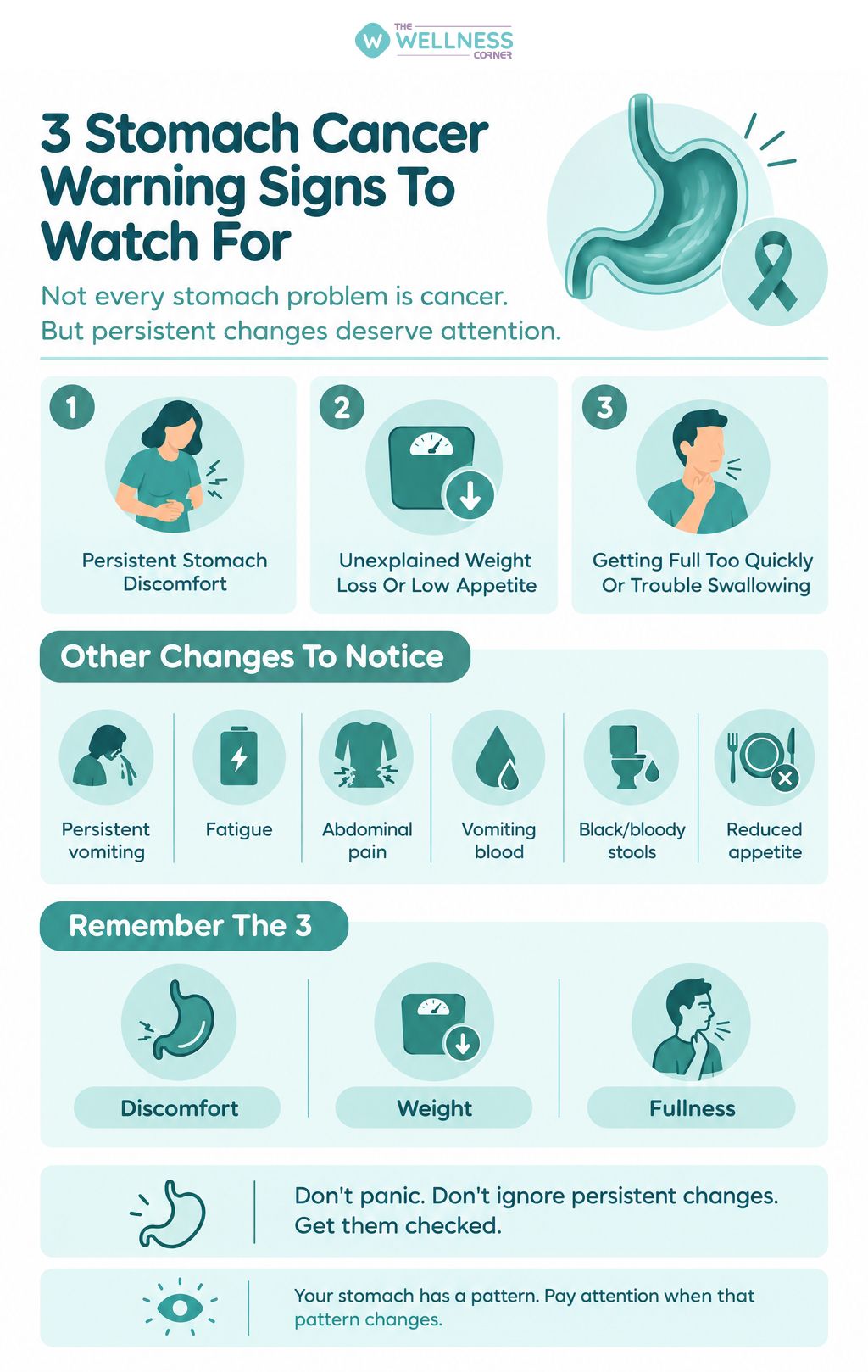
While stomach cancer can produce several symptoms, three important warning signs are persistent digestive discomfort, unexplained weight loss or reduced appetite, and difficulty swallowing or feeling unusually full after eating. Recognizing these changes does not mean you have cancer, but understanding when to seek medical advice can help ensure that concerning symptoms are properly evaluated.
Also Read - Emotional Support During Cancer: Being There For Your Loved One
1. Persistent Stomach Discomfort Should Not Be Ignored
Occasional indigestion is common. However, discomfort that repeatedly returns or does not improve deserves a closer look.
You might notice a persistent feeling of discomfort, burning, pressure, or pain in the upper abdomen. Some people may experience frequent indigestion, excessive belching, bloating, or nausea.
The important factor is not one isolated episode. It is a persistent or changing pattern.
If digestive discomfort continues despite making reasonable dietary changes, keeps returning without an obvious explanation, or becomes progressively worse, speaking with a healthcare professional is sensible.
Several conditions, including acid reflux, gastritis, ulcers, infections, and food-related problems, can cause similar symptoms. Therefore, stomach discomfort alone cannot tell you whether cancer is present.
What matters is giving persistent symptoms the attention they deserve rather than repeatedly assuming they will disappear on their own.
2. Unexplained Weight Loss Or Loss Of Appetite Can Be A Warning Sign
Weight loss can be welcome when it follows intentional changes such as exercising more or reducing calorie intake. Losing weight without trying is different.
Unexplained weight loss may occur when an illness affects appetite, digestion, metabolism, or the body's ability to use nutrients effectively. In some people with stomach cancer, reduced appetite can also develop.
You may find yourself eating less than usual because you feel uncomfortable after meals, become full quickly, or simply do not feel interested in food.
The change may initially seem insignificant. Perhaps you are skipping breakfast more often or eating smaller portions. Over time, however, these changes can lead to noticeable weight loss.
Unintentional weight loss does not automatically indicate stomach cancer. Thyroid problems, digestive disorders, infections, stress, medication effects, and many other conditions can contribute to it.
Still, unexplained weight loss should not be ignored, especially when it occurs together with persistent digestive symptoms.
Also Read: Nutritional Deficiency After A Weight Loss Surgery

3. Feeling Full Quickly Or Having Trouble Swallowing
Another change worth paying attention to is feeling unusually full after eating only a small amount.
You may sit down for a normal meal but feel satisfied after just a few bites. This is sometimes called early satiety. When it happens repeatedly, it can affect how much food you consume and may eventually contribute to weight loss or nutritional problems.
Some people may also experience difficulty swallowing, particularly if the cancer affects areas near the upper part of the stomach or the connection between the stomach and oesophagus.
Swallowing difficulties can feel like food is getting stuck, moving slowly, or becoming uncomfortable while going down.
These symptoms have many possible causes, including reflux, inflammation, narrowing of the digestive tract, and other gastrointestinal conditions. They are not proof of cancer.
However, persistent swallowing problems or a major change in how much food you can comfortably eat should be assessed by a healthcare professional.
Other Symptoms That May Accompany Stomach Cancer
The three signs above are important, but stomach cancer can produce other symptoms as well.
Depending on the location and stage of the cancer, some people may experience:
- Persistent nausea or vomiting
- Bloating or abdominal discomfort
- Frequent indigestion or heartburn
- Vomiting blood
- Black or unusually dark stools
- Fatigue or weakness
- Abdominal pain
- Reduced appetite
Some of these symptoms can occur with relatively common digestive conditions. That is why symptoms should be considered in context rather than used for self-diagnosis.
Also Read - Bloating After 30: When It's More Than Just A Temporary Discomfort?

Why Early Symptoms Are So Easy To Miss?
One reason stomach cancer can be difficult to recognize early is that its symptoms may overlap with everyday digestive complaints.
Someone experiencing occasional heartburn may assume their symptoms are related to their diet. Another person may attribute reduced appetite to stress or a busy schedule.
This is understandable. Most digestive symptoms are not caused by cancer.
However, the duration, severity, progression, and combination of symptoms matter.
A symptom that occurs once and disappears is different from one that continues for weeks, becomes more frequent, or appears alongside unexplained weight loss, bleeding, persistent vomiting, or swallowing difficulties.
When Should You Speak To A Doctor?
You do not need to panic every time you experience indigestion or bloating. Instead, pay attention to patterns.
Consider making an appointment with a healthcare professional if digestive symptoms are persistent, unexplained, increasingly uncomfortable, or interfering with normal eating and daily activities.
Seek urgent medical attention if you experience signs such as vomiting blood, black or bloody stools, severe abdominal pain, fainting, or significant weakness.
A healthcare professional can review your symptoms, medical history, medications, and risk factors before deciding whether further testing is appropriate.
Depending on the situation, evaluation may involve blood tests, imaging, or procedures such as an upper gastrointestinal endoscopy.
Also Read - Fainting: Is It Your Heart Or Your Head You Need To Worry About?

Risk Factors Matter Too
Certain factors can increase the likelihood of developing stomach cancer. These may include increasing age, certain stomach infections, a family history of stomach cancer, smoking, and some inherited conditions.
Having a risk factor does not mean that someone will develop stomach cancer. Likewise, people without obvious risk factors can still develop the disease.
This is why persistent or unusual symptoms should be evaluated based on the individual situation rather than dismissed because someone considers themselves low risk.
Listen To Changes In Your Digestive Health
Your digestive system will naturally have good days and uncomfortable ones. The goal is not to become alarmed by every stomach symptom.
Instead, learn to recognize when something is different from your usual pattern.
Persistent stomach discomfort, unexplained weight loss or reduced appetite, and early fullness or difficulty swallowing can all warrant medical attention, particularly when they continue or occur together.
The earlier a concerning change is investigated, the sooner an appropriate diagnosis can be considered and, when necessary, treatment can begin.

Frequently Asked Questions
Leave a Comment

Sign-Up Now & Unlock
₹100 Cashback
Recently Published
Related Articles


Health Checks @ Home
Service
Explore



Follow us on:


© 2026 Truworth Health Technologies Pvt. Ltd.