Why Sleep Quality Drops During Festive Weeks: Late Nights, Sugar And Noise
16 hours ago
6 minute read.
Blog Briefing: The Short Answer
Also Read: How Sleeping Less Than 6 Hours Can Harm Your Health?
Why Does Sleep Quality Drop During Festivals?
Festivals often change the rhythm of everyday life. You may stay awake longer for family gatherings, eat dinner later than usual, enjoy sweets after meals, or spend hours in noisy surroundings.
These changes can affect your body's internal clock, also known as the circadian rhythm, which helps regulate when you feel awake and sleepy.
So, why does sleep quality drop during festivals? It is usually not one single reason. A combination of an irregular sleep schedule, heavier meals, stimulating activities, and environmental changes can lead to sleep disturbances.
These sleep problems during festivals may appear as difficulty falling asleep, waking up frequently, or feeling unrefreshed the following morning. Even a few nights of poor rest can make your usual routine feel harder to manage.
Late Nights And Their Impact On Your Sleep
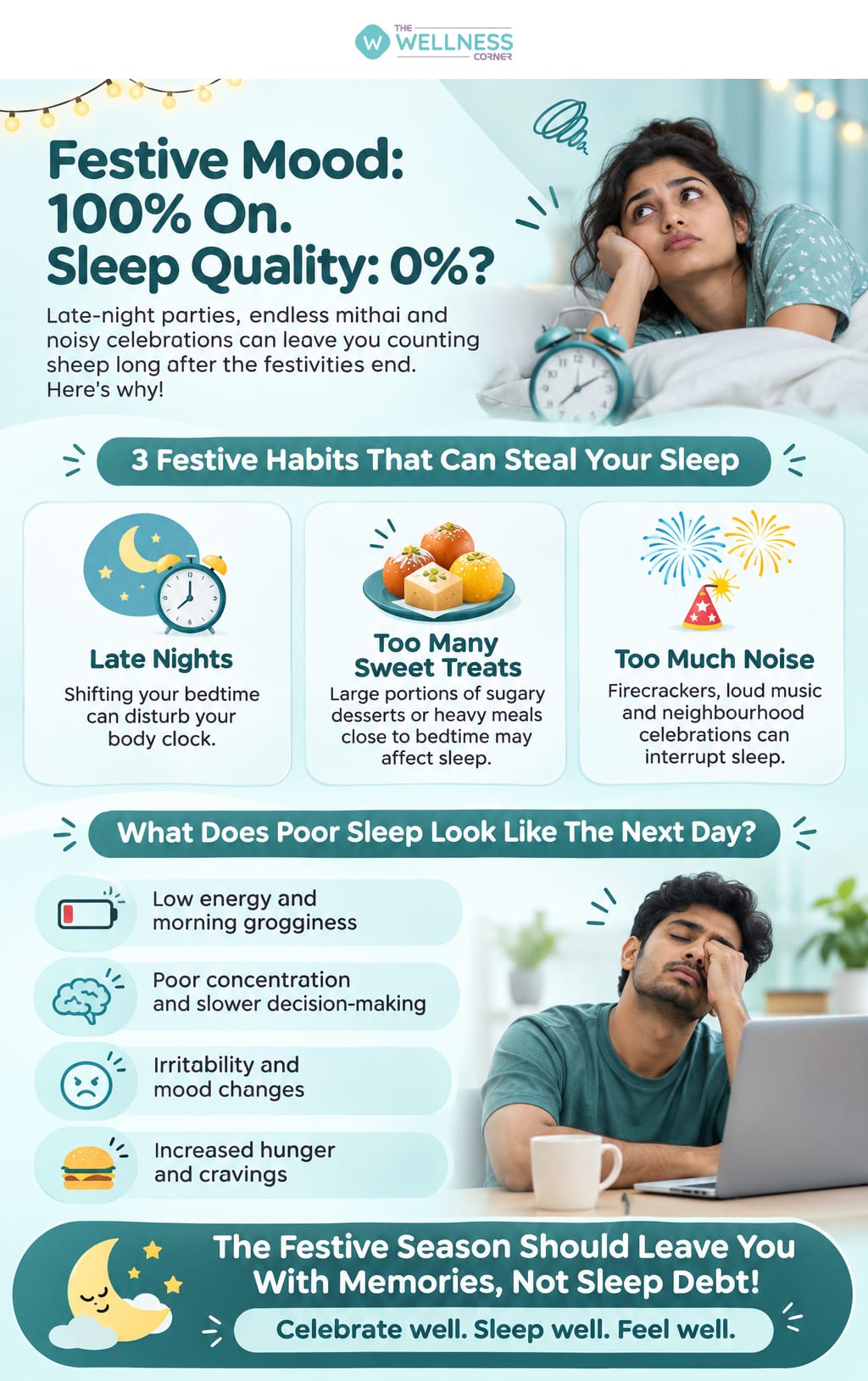
One of the most common festive habits is pushing bedtime later than usual. Celebrations, card parties, social visits, and family conversations can easily stretch past midnight.
But why is it difficult to sleep after late nights?
Your body follows a natural sleep-wake cycle. Staying awake beyond your usual bedtime can disrupt this rhythm, particularly when you also wake up at your regular time the next morning.
Understanding how do late nights affect sleep quality starts with recognising that sleep is not just about the number of hours you spend in bed. Timing and consistency matter too.
Repeated late nights and sleep changes can cause:
- Difficulty falling asleep at your usual bedtime.
- Morning tiredness and reduced alertness.
- Changes in appetite and energy levels.
- A disrupted sleep schedule that continues after celebrations.
If late nights become frequent, your body may take longer to settle back into its usual routine.
Also Read: The Link Between Sleep And Emotions
Sugar And Sleep Quality: Is That Extra Sweet Affecting Your Rest?
Festive sweets are hard to resist, but eating large quantities close to bedtime may not be ideal for your sleep.
So, how does sugar affect sleep quality?
Sugary foods can cause changes in blood glucose levels, while rich desserts may also contribute to digestive discomfort. For some people, eating a large or sugary snack late at night can make it harder to feel comfortable enough to sleep.
Can eating sweets before bed affect sleep? It may, particularly when the portion is large or the sweet is part of a heavy late-night meal. However, the effect varies between individuals, and sugar does not affect everyone's sleep in the same way.
The connection between sugar and sleep quality is also influenced by overall eating patterns. Late caffeine intake, chocolate-based desserts, and irregular meal timings may add to the problem.
You do not need to avoid every festive treat. Enjoy smaller portions, avoid making desserts your last meal of the night, and give yourself time to digest before going to bed.

How Noise Disrupts Your Night?
Festive noise does not always stop when the celebrations end. Firecrackers, music, traffic, neighbourhood gatherings, and loud conversations can continue late into the night.
How does noise affect sleep quality? Sudden sounds can interrupt sleep, trigger brief awakenings, and make it harder to move through uninterrupted sleep cycles. Even when you do not fully wake up, repeated noise disturbance during sleep can affect how rested you feel.
To make your sleeping environment more comfortable:
- Close windows when outdoor noise is high.
- Use thick curtains to help reduce some outside sound.
- Try comfortable earplugs if you can use them safely.
- Keep your bedroom cool, dark, and quiet.
These small changes may help limit sleep disturbances when the neighbourhood remains active.
Also Read: Never Go To Sleep Angry Or Mad At Someone. Here's Why.
What Poor Sleep Quality Does To Your Body?
A few restless nights may seem harmless, but repeatedly getting inadequate sleep can affect several aspects of physical and mental well-being.
What are the effects of poor sleep quality on the body?
- Energy: You may feel tired, sluggish, or less motivated.
- Concentration: Attention, memory, and decision-making can become less effective.
- Mood: Poor rest may make irritability and emotional stress harder to manage.
- Appetite: Sleep loss can influence hunger and fullness signals, potentially affecting food choices.
- Overall health: Persistent inadequate sleep is associated with a higher risk of several health problems, including metabolic and cardiovascular conditions.
If you notice poor sleep quality continuing beyond the festive period, it may be worth reviewing your routine and seeking professional advice if the problem persists.
Tips For Better Sleep During Festive Weeks
You do not have to choose between enjoying celebrations and maintaining healthy sleep habits. A few realistic adjustments can help.
Keep bedtime reasonably consistent: Try not to shift your sleeping and waking times dramatically, even when celebrations run late.
Avoid heavy meals just before bed: Give yourself time to digest after dinner and enjoy sweets in moderate portions.
Limit late caffeine: Tea, coffee, and caffeinated soft drinks can make it harder to fall asleep, particularly when consumed in the evening.
Create a wind-down routine: Reduce screen time, dim the lights, and spend a few minutes doing something relaxing before bed.
Also Read: Is Too Much Screen Time Harmful To Our Eyes?
Manage your surroundings: Reduce indoor noise and light as much as possible to create a comfortable sleeping space.
Get daylight and movement: Morning sunlight and regular physical activity can help support your natural sleep-wake rhythm.
If you are wondering how to improve sleep after late-night celebrations, return to your usual bedtime gradually, avoid long daytime naps, and give your body a few consistent nights to readjust.
These tips for better sleep can also help you understand how to fix a disrupted sleep schedule after festivals and how to get better sleep during Diwali.

Enjoy The Festivities Without Losing Your Rest
Celebrations are meant to bring joy, not leave you exhausted for days afterwards. Paying attention to sleep quality can help you enjoy festive gatherings while giving your body the recovery it needs. By managing late nights, moderating sugary treats, and reducing noise exposure, you can make sleep problems during festivals less likely.
For more practical wellness guidance, expert-backed health information, and everyday lifestyle tips, explore The Wellness Corner and take small steps towards healthier routines.
Frequently Asked Questions
Disclaimer: This article is intended for general educational and informational purposes only and should not replace personalized medical advice, diagnosis, or treatment. Health needs can vary from person to person. If you have persistent, severe, or concerning symptoms, or questions about your health, consult a qualified healthcare professional for appropriate guidance.
Leave a Comment

Sign-Up Now & Unlock
₹100 Cashback
Subscribe to our Newsletter!
Get a weekly dose of wellness tips delivered straight to your inbox.
Recently Published
Related Articles


Health Checks @ Home
Service
Explore



Follow us on:


© 2026 Truworth Health Technologies Pvt. Ltd.