Massage Vs. Physiotherapy: Which Treatment Do You Actually Need For Your Pain?
1 day ago
6 minute read.

You wake up with a stiff neck. Your lower back hurts after sitting through a long workday. Your shoulder feels tight after hours at your desk. What do you do?
For many people, the first thought is a massage.
And sometimes, that may be exactly what your body needs. But if the pain keeps returning, affects your movement, or started after an injury, massage may not be enough.
This is where physiotherapy can become a more appropriate option.
Massage and physiotherapy can both play a role in managing pain, but they are not interchangeable. One primarily focuses on manipulating soft tissues to promote relaxation and relieve muscle tension, while the other involves assessment and targeted rehabilitation to address movement problems and restore function.
So, how do you know which one you actually need?
The answer depends on what is causing your pain, how long it has been present, and how it affects your movement and daily life.
Also Read - Healthy Ageing With Physiotherapy: Stay Mobile, Stay Independent
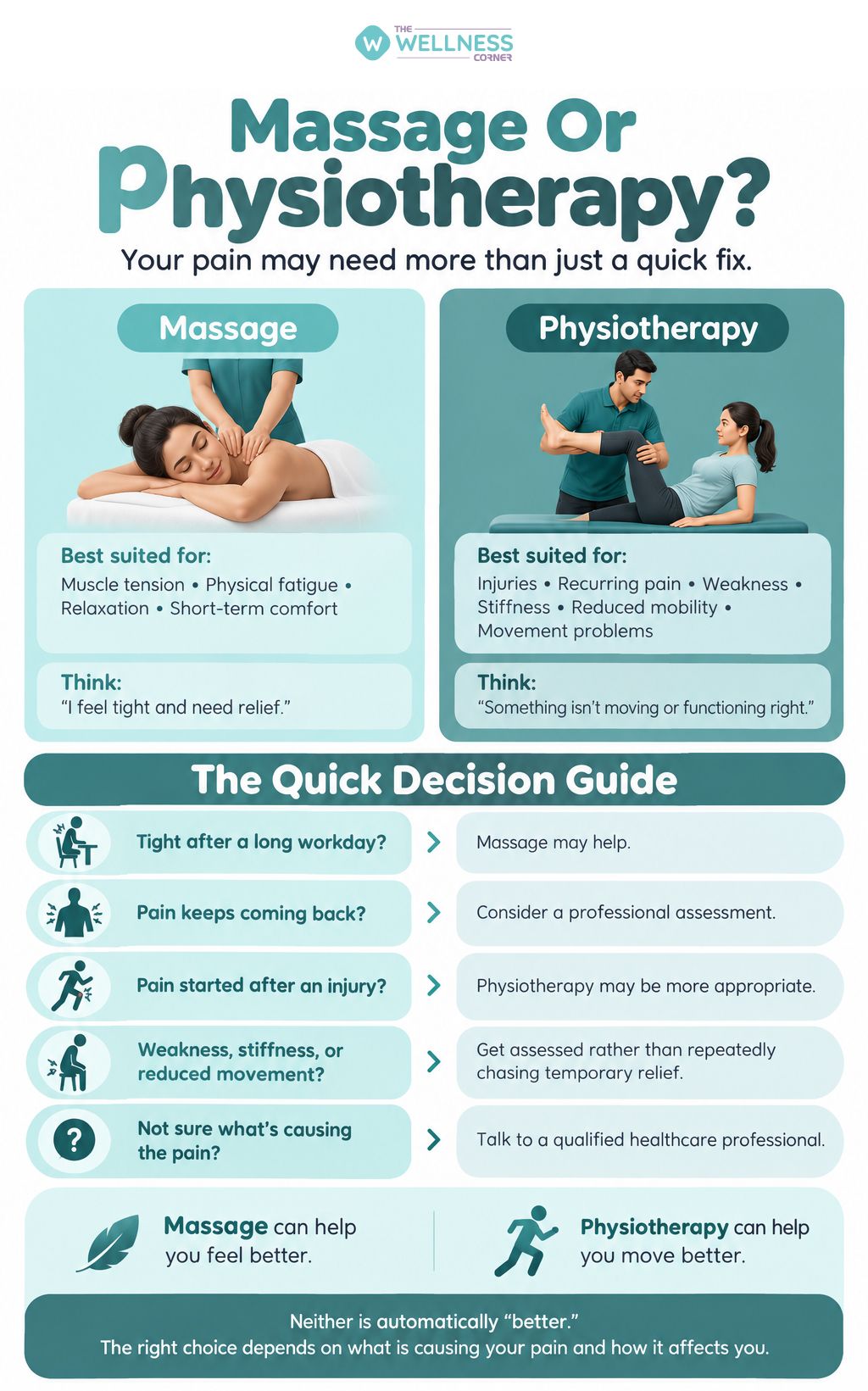
First, Understand What Each Treatment Actually Does
Massage therapy involves manipulating muscles and other soft tissues using techniques such as kneading, pressure, and stroking. It may help reduce muscle tension, promote relaxation, and provide short-term relief from certain types of discomfort.
Physiotherapy takes a broader approach.
A physiotherapist assesses movement, strength, flexibility, balance, and functional limitations. Treatment may include therapeutic exercises, manual therapy, movement education, stretching, strengthening, and other techniques depending on the person's condition.
The key difference is simple: massage generally focuses more on relieving symptoms, while physiotherapy focuses on understanding and improving the underlying movement problem.
That does not make one better than the other. They simply serve different purposes.
When To Consider Massage For Relief?
Imagine your shoulders feel tight after spending eight hours at a computer. Your muscles feel tense, but you have no injury, significant weakness, or major restriction in movement.
A massage may help you relax and temporarily ease that muscle tension.
It can also be useful when discomfort is associated with general muscular tightness or physical fatigue.
Massage may be particularly appealing when your primary goal is relaxation and short-term relief.
However, relief does not necessarily mean the underlying cause has been addressed.
If you repeatedly develop the same pain, it may be worth looking beyond temporary muscle relaxation.
Also Read - Exercise: A Better Remedy For Fatigue Than A Cup Of Coffee

When Physiotherapy Makes More Sense?
Physiotherapy may be more appropriate when pain is affecting your ability to move or function normally.
Consider situations such as:
- Pain following a sports or workplace injury
- Persistent back or neck pain
- Joint stiffness or reduced mobility
- Muscle weakness
- Problems with balance or coordination
- Recovery after certain surgeries
- Repeated injuries
- Difficulty performing everyday movements
A physiotherapist can assess how your body is moving and identify areas that may need strengthening, mobility work, or retraining.
The treatment is therefore not necessarily about making the pain disappear during one appointment. It is often about helping you regain function and develop strategies
that can reduce the likelihood of the problem continuing.
What If Your Pain Keeps Coming Back?
This is where the distinction becomes especially important.
Suppose you get a massage every few weeks because your lower back becomes painful after long hours at your desk. The massage helps, but the pain returns again and again.
Instead of repeatedly treating the discomfort without investigating why it keeps happening, consider getting the problem assessed.
Your posture, movement patterns, muscle strength, flexibility, workload, physical activity levels, or other factors may be contributing to the discomfort.
Physiotherapy can help identify these factors and create an individualized plan.
The goal is to understand the pattern, not simply chase the pain every time it appears.
Also Read: Ayurvedic Facial Massage Brightens Your Skin & Reduces Toxins?

Massage Can Still Be Part Of A Bigger Recovery Plan
Choosing physiotherapy does not necessarily mean massage has no place in your recovery.
Soft-tissue techniques or massage may sometimes be incorporated into a broader rehabilitation approach, depending on the individual's condition and the physiotherapist's assessment.
Some people may also use massage as a complementary wellness practice while following a structured exercise or rehabilitation program.
The important thing is understanding what each treatment is designed to accomplish.
Massage can feel good. That matters. But feeling better temporarily is not always the same as resolving the problem.
What About Desk-Related Neck And Back Pain?
This is particularly relevant for people working in corporate environments.
Long periods of sitting, limited movement, poorly adjusted workstations, and repetitive computer use can contribute to musculoskeletal discomfort.
A massage may provide temporary relief when muscles feel tight after a long day.
But if neck or back pain keeps returning, physiotherapy may offer a more comprehensive approach. A professional can assess movement and recommend exercises, strengthening work, mobility strategies, and practical changes that fit your daily routine.
Sometimes the best treatment is not simply another appointment. It is changing the habits that keep triggering the discomfort.
Also Read: Common Exercises To Avoid When You Have Back Pain

Don't Ignore These Pain Warning Signs
Not every type of pain should be treated with massage or physiotherapy without first getting medical advice.
Seek prompt medical attention if pain follows a serious injury or is accompanied by symptoms such as significant weakness, numbness, loss of bladder or bowel control, unexplained fever, severe swelling, chest pain, difficulty breathing, or sudden neurological changes.
Persistent or unexplained pain also deserves appropriate assessment.
A healthcare professional can determine whether you need physiotherapy, another form of treatment, diagnostic testing, or specialist care.
How To Choose Between The Two?
Ask yourself a few simple questions.
Is my main issue muscle tension and general stress?
Massage may be worth considering.
Do I have an injury, movement limitation, weakness, or recurring pain?
A physiotherapy assessment may be more appropriate.
Does the same problem keep returning despite temporary relief?
It is worth investigating the underlying cause.
Am I unsure what is causing my pain?
Start with a qualified healthcare professional who can guide you toward the right type of care.
The goal should not be choosing the trendiest treatment. It should be choosing the treatment that matches your actual problem.

Prevention Can Be Just As Important As Treatment
Whether you choose massage, physiotherapy, or another form of care, your everyday habits matter.
Regular movement, appropriate strengthening exercises, good workstation ergonomics, adequate recovery, and avoiding prolonged periods in one position can all support musculoskeletal health.
If you work at a desk, consider taking brief movement breaks throughout the day instead of waiting until your back or neck starts hurting.
Small changes can become powerful when they are repeated consistently.
Frequently Asked Questions
Leave a Comment

Sign-Up Now & Unlock
₹100 Cashback
Subscribe to our Newsletter!
Get a weekly dose of wellness tips delivered straight to your inbox.
Recently Published
Related Articles


Health Checks @ Home
Service
Explore



Follow us on:


© 2026 Truworth Health Technologies Pvt. Ltd.