Do You End Up Getting A Stomach Ache After Running?
14 hours ago
6 minute read.

You finish a run feeling proud of yourself, only to be greeted by an unwelcome surprise: stomach pain.
Maybe it is a sharp cramp in your side, a heavy feeling in your abdomen, bloating, nausea, or an urgent need to find the nearest restroom. If this sounds familiar, you are not alone. Digestive discomfort during or after running is surprisingly common, affecting beginners and experienced runners alike.
The good news is that a stomach ache after running does not always mean something is seriously wrong. In many cases, it is linked to factors such as meal timing, hydration, exercise intensity, or the way your body responds to physical activity.
At the same time, recurring or severe symptoms should not be ignored, especially if they interfere with your training or everyday life.
So, why does running sometimes upset your stomach, and what can you do about it?
Also Read: Do You Follow The Correct Way Of Breathing While Running?
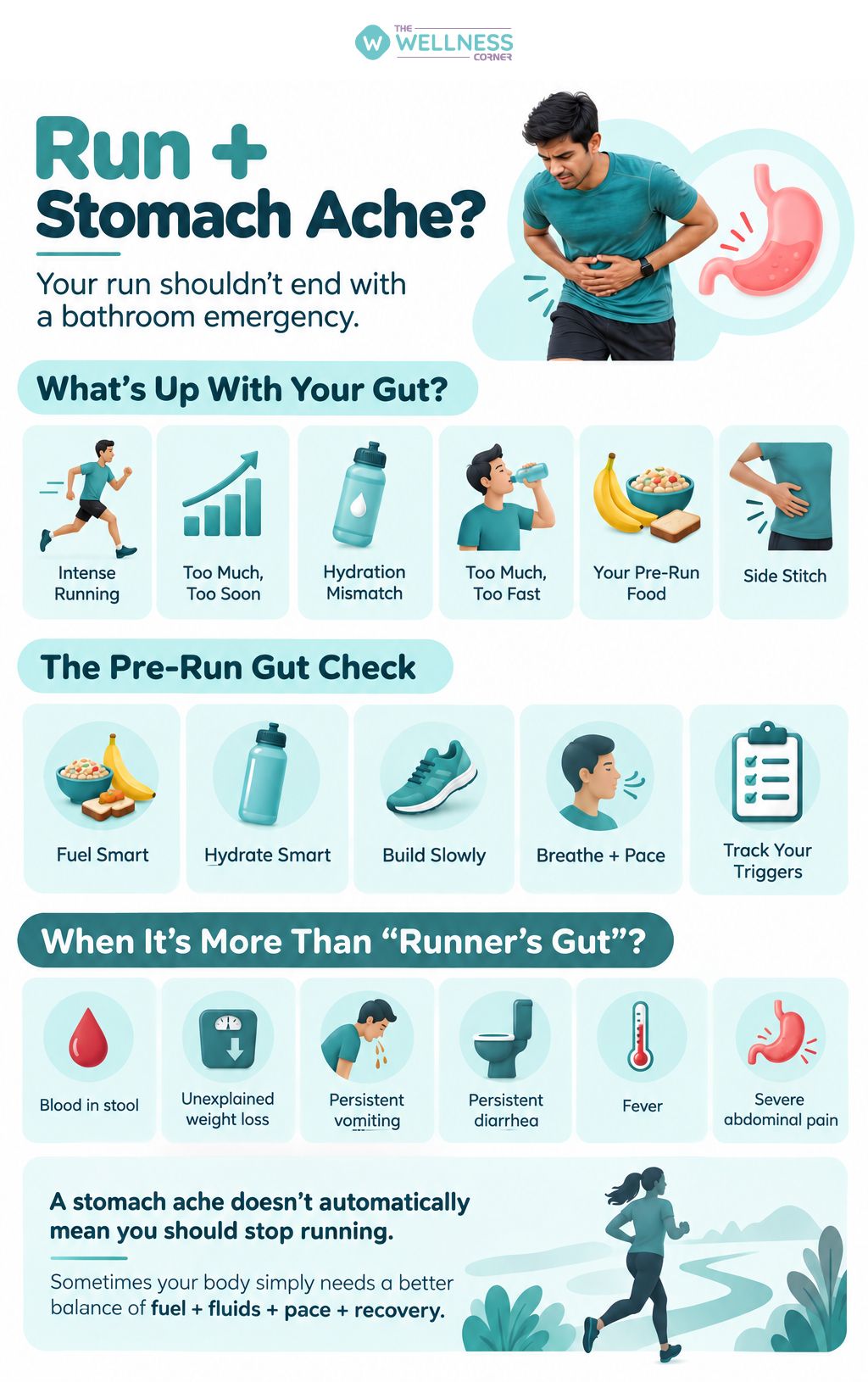
Running Changes What Happens Inside Your Body
When you run, your body prioritizes the muscles that are working hard.
Your heart pumps more blood toward the legs, lungs, and other tissues involved in exercise. This can temporarily reduce blood flow to the digestive system.
For some people, this shift may contribute to symptoms such as stomach cramps, bloating, nausea, or an unsettled feeling.
The intensity of the run can also matter. Faster runs, interval training, hill workouts, and longer distances may place more stress on the body than an easy jog.
This does not mean running is harmful to digestion. It simply means that your digestive system may react differently when your body is under physical stress.
Eating Too Close To Your Run Can Backfire
One of the most common reasons for stomach discomfort is meal timing.
A large meal shortly before running can leave food sitting in the stomach while your body is trying to exercise. This may contribute to cramping, heaviness, nausea, or bloating.
Foods that are high in fat, very spicy, or rich in fiber can be more difficult for some people to tolerate before a run.
However, running on an empty stomach is not always ideal either.
Going too long without eating may leave some runners feeling weak, lightheaded, or nauseous.
What proves helpful can vary depending on the person. Many people find that allowing enough time after a larger meal or choosing a lighter snack before running works better.
Also Read: Which Exercise Burns The Most Calories?

Dehydration Can Affect More Than Performance
Most runners think about hydration in terms of thirst and energy levels, but inadequate fluid intake can also affect digestion.
Dehydration may contribute to stomach discomfort, cramps, and nausea during or after exercise.
On the other hand, drinking very large amounts of fluid immediately before a run may also create an uncomfortable sloshing feeling in the stomach.
Finding the right balance is important.
Hydrate consistently throughout the day rather than trying to consume a large amount of fluid all at once just before running.
Environmental conditions matter too. Hot and humid weather can increase fluid losses through sweat, making hydration even more important.
Could It Be A Side Stitch?
A side stitch, also known as exercise-related transient abdominal pain, is a common cause of discomfort during running.
It often feels like a sharp pain below the ribs, usually on one side of the body.
The exact cause is not completely understood, but several factors may contribute, including breathing patterns, posture, sudden increases in exercise intensity, or eating too close to activity.
A side stitch is usually temporary and often improves by slowing down, focusing on controlled breathing, or briefly stopping to rest.
Although uncomfortable, it is generally not considered dangerous.
Also Read: Should You Exercise When You’re Sleep-Deprived?
Stomach Pain Vs. Side Stitch
A side stitch is usually a localized pain around the ribs/side, whereas GI discomfort can include nausea, bloating, cramping, urgency, etc.

Your Running Pace May Be Too Much, Too Soon
Many people become enthusiastic about a new running routine and increase speed or distance too quickly.
Your muscles are not the only parts of your body that need time to adapt. Your digestive system may also need time to adjust to longer or more intense workouts.
If stomach pain repeatedly occurs after hard runs, consider whether your training progression is too aggressive.
Building up gradually can help your body adapt more comfortably.
This is especially important for beginners who may be eager to push themselves before their body is ready.
Some Foods Can Be Tricky Before Running
Certain foods may trigger digestive symptoms in some runners.
Common examples include:
- High-fat meals
- Very spicy foods
- Large amounts of fiber shortly before exercise
- Excessive caffeine
- Carbonated drinks
- Large portions of dairy products in people who are sensitive to them
This does not mean these foods are unhealthy.
It simply means that timing and individual tolerance matter.
Keeping a simple food and symptom diary may help you identify patterns.
Also Read: Sip, Relax, Repeat! Try These Low-Caffeine Drinks If You Want To Quit Coffee

Could An Underlying Condition Be Involved?
Occasional digestive discomfort can happen, but persistent symptoms deserve attention.
Conditions such as acid reflux, irritable bowel syndrome, food intolerances, inflammatory bowel disease, or other digestive disorders may sometimes contribute to exercise-related symptoms.
If stomach pain is severe, repeatedly disrupts your runs, or is accompanied by symptoms such as blood in the stool, unexplained weight loss, persistent diarrhea, vomiting, fever, or severe pain, seek medical advice.
Do not assume that every stomach problem is simply a normal part of running.
Small Changes Can Make A Big Difference
If stomach aches are affecting your runs, a few practical adjustments may help:
- Avoid large meals immediately before running.
- Experiment with meal timing.
- Stay hydrated throughout the day.
- Increase training intensity gradually.
- Practice controlled breathing.
- Avoid trying unfamiliar foods before long runs.
- Track foods and symptoms to identify triggers.
- Allow time for recovery between hard sessions.
Remember that every runner is different.
What works perfectly for one person may not work for another.
Also Read - Skipping Weekdays, Training Weekends: Is It Effective?

Don't Let Stomach Pain Discourage You
Digestive discomfort can be frustrating, especially if it interrupts a run you were enjoying.
But in many cases, stomach pain is a signal to make small adjustments rather than a reason to stop exercising altogether.
Running offers many benefits for physical and mental wellbeing, and finding the routine that suits your body is part of the process.
Listen to your body, make gradual changes, and seek professional advice if symptoms continue.
The goal is not simply to run farther or faster. It is to run comfortably and sustainably.
Also Read: 6 Foods To Eat On An Empty Stomach For Better Stamina And More Energy
The Bottom Line
A stomach ache after running can have several possible explanations, including meal timing, hydration, exercise intensity, side stitches, food choices, or an underlying digestive condition.
Most cases improve with simple adjustments, but recurring or severe symptoms deserve proper evaluation.
Pay attention to your body's signals, make gradual changes, and remember that good running habits include recovery, hydration, and nutrition, not just kilometres on the road.
Want more practical tips on fitness, nutrition, digestion, and overall wellbeing? Explore The Wellness Corner for expert guidance, health resources, and tools designed to support healthier everyday choices.
Disclaimer: This article is intended for general educational and informational purposes only and should not replace personalized medical or fitness advice. Exercise needs and abilities vary between individuals. If you have an existing health condition, injury, significant pain, or concerns about starting or changing an exercise routine, consult a qualified healthcare professional before doing so.
Frequently Asked Questions
Leave a Comment

Sign-Up Now & Unlock
₹100 Cashback
Recently Published
Related Articles


Health Checks @ Home
Service
Explore



Follow us on:


© 2026 Truworth Health Technologies Pvt. Ltd.