Yoga For Every Emotion Your Body Holds
18 hours ago
7 minute read.
Have you ever noticed your shoulders tightening when you feel stressed, your jaw clenching when you are frustrated, or your chest feeling heavy when you are sad? Emotions can influence how we experience our bodies. Sometimes, tension appears before we even realise that something is bothering us.
This is where yoga can offer a little support. Through gentle movement, mindful breathing, and moments of stillness, yoga can help you notice physical tension, reconnect with your feelings, and respond to stress more thoughtfully. You don't need previous practice or exceptional flexibility to give it a try. Even a brief break can give you a chance to reconnect with your thoughts and feelings.
Also Read: The Overlooked Yoga Pose That Activates Muscles You Often Miss
1. Understanding The Connection Between Emotions And Your Body
Emotions involve a combination of mental processes and bodily sensations. They can also produce physical responses. When anxiety rises, you may notice faster breathing and increased muscle tension. Anger can leave you feeling restless, while prolonged stress may contribute to headaches, jaw tension, or discomfort around the neck and shoulders.
These reactions are part of the body's response to emotional experiences. However, there is no universal map that links a particular emotion to one specific body part.
Where you feel tension can vary depending on your habits, health, experiences, and circumstances.
Yoga encourages you to become more aware of these sensations without immediately judging them. Rather than forcing yourself to feel better, you can notice what is happening and choose a gentle movement or breathing exercise that feels appropriate.
The goal is not to eliminate every uncomfortable emotion. It is to develop a healthier relationship with your physical and emotional experiences.
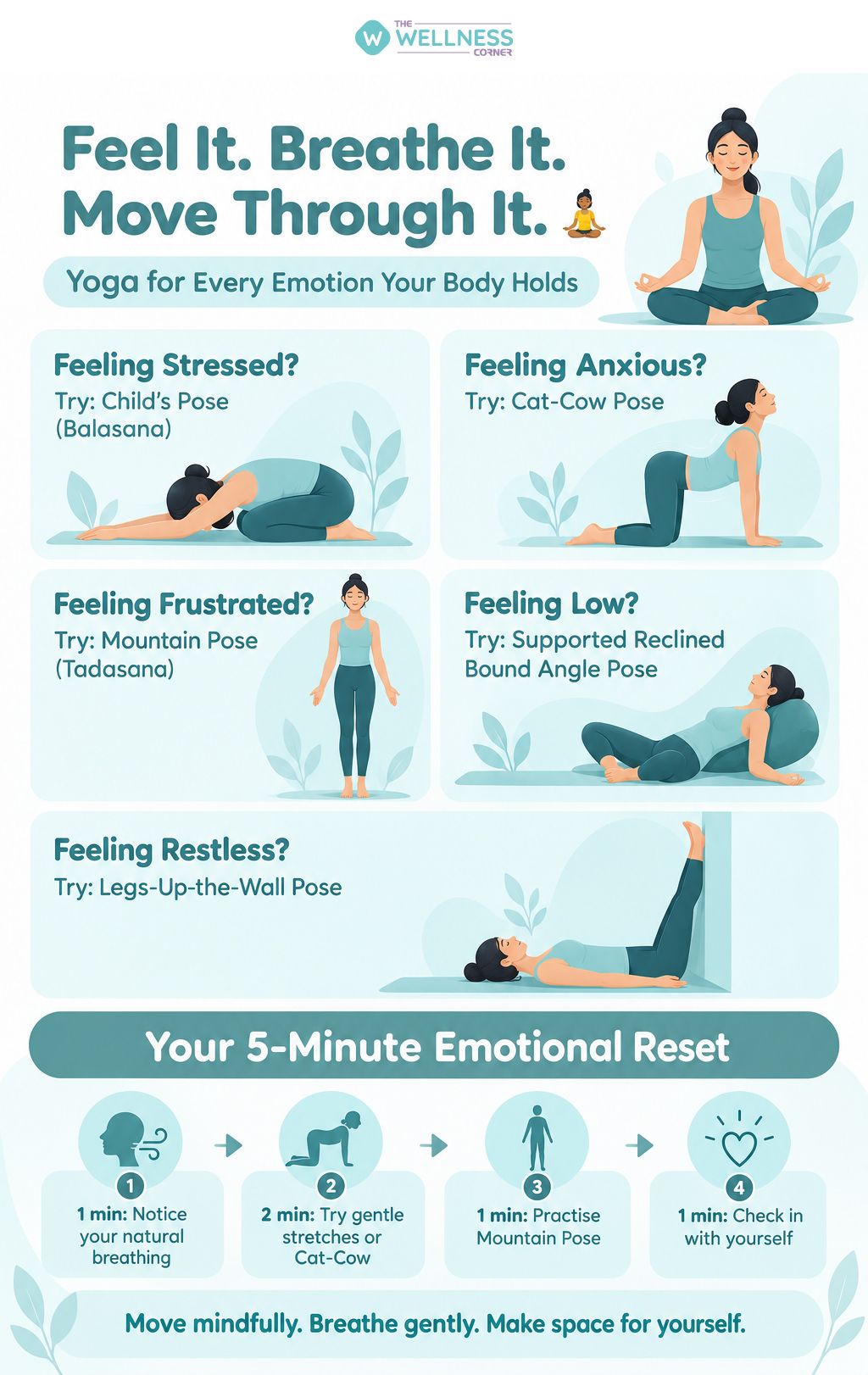
2. Yoga For Stress: Release The Tension You Carry
Stress can leave you feeling as though you are constantly preparing for the next challenge. Your shoulders may creep towards your ears, your breathing may become shallow, and relaxing may feel surprisingly difficult.
Try Child's Pose (Balasana).
Kneel on a comfortable surface, bring your big toes together, and gently lower your hips towards your heels. Fold forward, allowing your forehead to rest on a cushion if needed. Keep your arms wherever they feel comfortable and breathe naturally.
Stay for 30 seconds to a minute, provided the position feels comfortable.
Child's Pose offers an opportunity to slow down and reduce the pressure to keep doing something. If kneeling is uncomfortable, try sitting in a chair and leaning forward slightly with your forearms supported on a table.
Pair the movement with gentle breathing. Instead of trying to control every stressful feeling, step back briefly and let yourself rest.
Also Read - Healthy Aging Through Yoga: Build Strength, Improve Mobility, And Thrive
3. Yoga For Anxiety: Find Your Way Back To The Present
Anxiety can pull your attention towards future possibilities. You may replay conversations, anticipate problems, or feel uneasy even when nothing urgent is happening.
Try Cat-Cow Pose.
Begin on your hands and knees, with your hands beneath your shoulders and knees beneath your hips. As you inhale, gently lift your chest and tailbone while keeping your neck comfortable. As you exhale, round your back softly and allow your head to follow the movement naturally.
Repeat slowly for five to eight comfortable rounds.
Pairing each movement with your breath gives your mind an easy point of focus. It may help you become more aware of the present moment rather than remaining caught up in anxious thoughts.
If getting onto the floor is difficult, perform gentle seated spinal movements instead. Stop if you experience pain, dizziness, or worsening discomfort.
Also Read: 5 Exercising Mistakes That Can Increase Anxiety (Instead Of Reducing It)

4. Yoga For Anger And Frustration: Create Space Before Reacting
Anger can show up as clenched fists, tight shoulders, a rigid jaw, or an urge to move. You may feel tempted to react immediately, especially when a situation seems unfair or overwhelming.
Before responding, try creating a little physical space between the emotion and your next action.
Try Mountain Pose (Tadasana).
Stand with your feet comfortably apart and distribute your weight evenly. Keep your knees soft, relax your shoulders, and let your arms rest naturally by your sides.
Notice your feet making contact with the floor.
Take several slow, comfortable breaths without holding them. Allow your jaw and hands to soften if you notice tension there.
Mountain Pose may look simple, but it encourages you to pause and observe your physical state. You can practise it before a difficult conversation, after a frustrating meeting, or whenever you need a moment to collect your thoughts.
Anger itself is not a bad emotion. The aim is to recognise it and choose how to respond rather than allowing the first impulse to make the decision for you.
5. Yoga For Emotional Healing: Allow Yourself To Feel
Sadness can sometimes make you want to withdraw, move less, or spend time alone. You may also notice heaviness in your body or reduced motivation. These experiences differ from person to person, and there is no need to force yourself to feel cheerful.
Try Supported Reclined Bound Angle Pose.
Rest on your back and keep both knees flexed. Bring the soles of your feet together and allow your knees to open gently towards the sides. Place cushions beneath your thighs for support, and keep your arms relaxed.
Remain in the position for one to three minutes if comfortable, breathing naturally. If the stretch feels uncomfortable, keep your knees closer together or choose another resting position.
This supported posture offers a quiet opportunity to rest without demanding a particular emotional outcome. You can acknowledge sadness without trying to fix it immediately.
Remember that yoga is not a substitute for mental health treatment. If sadness persists, affects daily functioning, or becomes difficult to manage, consider reaching out to a qualified mental health professional.
Also Read: Yoga Practices To Clean Your Aura And Restore Inner Balance
6. Yoga For Restlessness: Slow Down When Your Mind Will Not
Sometimes, your body feels tired, but your mind keeps moving. You may struggle to settle after a busy day, repeatedly check your phone, or find it difficult to transition from work to rest.
Try Legs-Up-the-Wall Pose.
Sit with your hip near the wall, ease yourself onto your back, and position your legs vertically against the wall. Keep your hips at a comfortable distance from it, and place a folded blanket beneath your head if needed.
Stay for a few minutes if the position feels good. Breathe normally and allow your attention to settle on the contact between your body and the supporting surface.
If this position is uncomfortable or unsuitable for you, lie down with your calves resting on a chair instead.
A short period of supported rest can become a useful signal that the working day is over. You do not have to achieve perfect stillness. Even a few quiet minutes can create space between a busy schedule and your evening routine.
7. Build An Emotional Wellness Routine That Works For You
You do not need a different yoga session for every feeling. Start by noticing what you are experiencing and choose a practice that feels comfortable.
Try this simple five-minute routine:
- Spend one minute noticing your breathing without changing it forcefully.
- Practise gentle Cat-Cow movements or seated stretches for two minutes.
- Stand in Mountain Pose or rest in a supported position for one minute.
- Finish by noticing how your body feels and what you might need next.
You can also keep a short journal describing your mood, physical sensations, and the movement that felt helpful. Over time, this may help you recognise patterns and identify practices you enjoy.
Consistency matters more than intensity. Choose movements that suit your abilities, modify poses when necessary, and avoid pushing through pain. If you have an injury, significant mobility limitations, or a medical condition that affects exercise, seek appropriate professional guidance before starting a new routine.
The Bottom Line
Your emotions are part of being human, and you do not need to suppress them to feel balanced. Yoga offers an opportunity to slow down, notice physical sensations, and respond to yourself with greater awareness.
Whether you are feeling stressed, anxious, frustrated, sad, or restless, begin with a gentle practice that feels right for your body. Progress does not require you to resolve every issue in one go. Sometimes, making a little space for yourself is a meaningful first step.
Ready to make emotional wellbeing part of your everyday routine? Explore The Wellness Corner for practical wellness resources, expert guidance, and lifestyle support to help you build healthier habits for both body and mind.
Frequently Asked Questions
> Fitness Disclaimer: This article is intended for general educational and informational purposes only and should not replace personalized medical or fitness advice. Exercise needs and abilities vary between individuals. If you have an existing health condition, injury, significant pain, or concerns about starting or changing an exercise routine, consult a qualified healthcare professional before doing so.
Leave a Comment

Sign-Up Now & Unlock
₹100 Cashback
Subscribe to our Newsletter!
Get a weekly dose of wellness tips delivered straight to your inbox.
Recently Published
Related Articles


Health Checks @ Home
Service
Explore



Follow us on:


© 2026 Truworth Health Technologies Pvt. Ltd.