How To Use A Fitness-Inclusive Wellness App To Achieve Your Desired Goals?
9 hours ago
7 minute read.

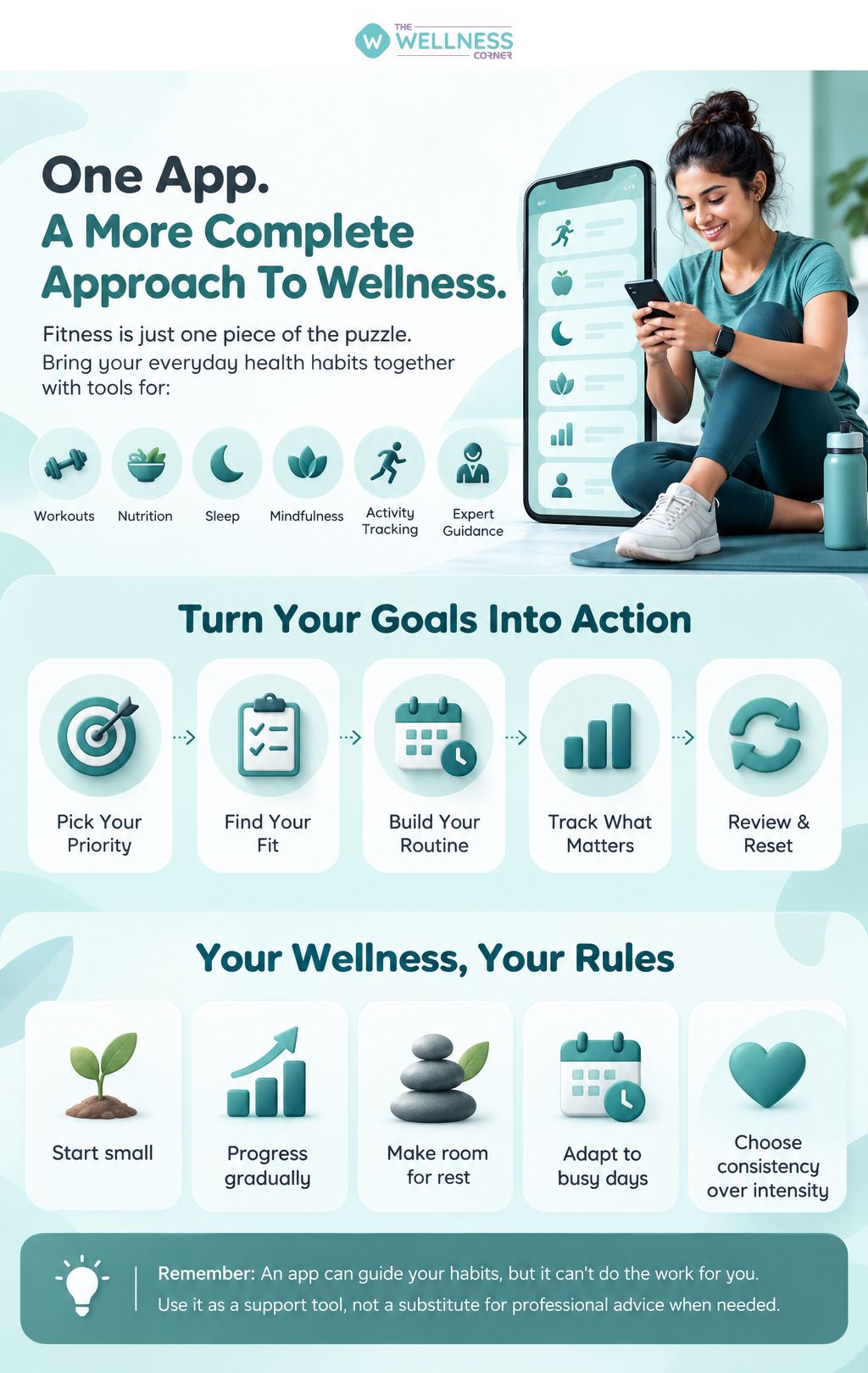
A fitness-inclusive wellness app helps you manage different aspects of your health in one place, from workouts and daily activity to nutrition, sleep, mindfulness, and expert guidance. To get the most out of it, start with a clear goal, choose features that match your needs, and build a routine you can maintain. The best wellness app is not the one you use the most in a single day, but the one that helps you develop healthier habits over time.
1. What Is A Fitness-Inclusive Wellness App?
A regular workout app usually focuses on exercise routines, training plans, or activity goals. A fitness-inclusive wellness app takes a broader approach by bringing several aspects of wellbeing together.
Depending on the platform, a wellness app may include guided workouts, activity tracking, nutrition resources, sleep insights, mindfulness exercises, health assessments, and access to professional guidance. Instead of treating exercise as the only measure of health, it encourages you to consider how your everyday habits work together.
For instance, you might exercise regularly but struggle with poor sleep or stress. Looking at these areas together can help you understand your routine more clearly and identify where small changes could make a difference.
The best wellness app for your needs should make this process easier to understand and manage. A comprehensive health and fitness app can help you organise your efforts without making healthy living feel complicated.
Also Read - The Wellness Reset: Move Ahead This Year At 50%, Not 100%
2. Why Should You Use A Fitness App?
Between work, family responsibilities, commuting, and personal commitments, finding time for health can be challenging. A fitness app offers a convenient way to plan activities and fit movement into your existing schedule.
Here is how it can help:
- Adds structure: Scheduled workouts and reminders give your routine a starting point.
- Encourages consistency: Regular check-ins can help you remember your goals.
- Makes progress visible: Tracking lets you review activity and recognise improvements.
- Supports flexibility: You can often choose shorter workouts or different activities depending on your day.
- Improves awareness: Reviewing your habits can help you identify what is working and what needs adjustment.
A fitness tracking app can be particularly useful when you want to understand your daily movement rather than rely on memory. Similarly, useful wellness app features can help you organise your routine around your personal priorities.
For busy employees, the best wellness app for working professionals is one that fits into real life. It should help you make healthier choices around your schedule, not demand that you follow an unrealistic one.
3. First, Be Clear About Your Goal
Before exploring workouts and tracking tools, ask yourself a simple question: What do I want to improve?
Your answer might be losing or managing weight, building strength, improving flexibility, developing stamina, correcting movement habits, improving mobility, or simply becoming more active throughout the day.
Not everyone needs the same exercise routine. A beginner returning to physical activity after a long break may benefit from gentle movement and gradual progression. Someone with regular training experience may have different requirements.
This is where learning how to set realistic goals in a fitness and wellness app becomes important. Make your target specific enough to guide your actions, but flexible enough to fit your circumstances.
Set a realistic starting point, such as fitting in three exercise sessions weekly before increasing your frequency. If your priority is mobility, include appropriate stretching and movement exercises. If you want to build strength, look for a suitable strength-training plan.
A personalised fitness plan app can help you find activities aligned with your goals and current ability. Choose a plan because it suits you, not simply because it is popular online.
Also Read: 6 Foods To Eat On An Empty Stomach For Better Stamina And More Energy

4. How Can The App Help You?
A fitness-inclusive platform becomes more useful when you understand how its individual tools support your goals.
4.1) Assessments: Understand your starting point
Assessments may help you review your current habits, fitness priorities, and areas that need attention. They provide a useful starting point for planning, although they should not be treated as a medical diagnosis.
4.2) Workouts: Find activities that suit your level
Guided workouts can make exercise easier to follow, particularly if you are unsure where to begin. Choose sessions based on your ability, available time, and preferred activities. Increase difficulty gradually as your fitness develops.
4.3) Activity tracking: See how much you move
Daily steps, active minutes, and recorded workouts can help you understand your movement patterns. If you spend most of your day sitting, these insights might encourage you to add short walking breaks.
Also Read: Will You Lose Muscle If You Skip Workouts?
4.4) Expert guidance: Get support when needed
A wellness app has its limits, and some situations need additional guidance. Access to qualified fitness professionals, doctors, or dietitians can help you make more informed decisions, particularly if you have a health condition, persistent discomfort, or specific dietary needs.
4.5) Challenges and programmes: Make progress engaging
Structured challenges and guided programmes can give you a clear starting point and help maintain interest. Choose challenges that encourage healthy participation rather than pushing you towards excessive exercise.
Together, these tools can make a wellness app more than a place to record numbers. They can help turn your intentions into practical steps.
5. Fitness Is More Than Just A Workout
Exercise is important, but it is only one part of a healthy lifestyle. Your energy, recovery, and ability to maintain a routine are also influenced by nutrition, sleep, and stress.
A workout and nutrition tracking app can help you see how your eating routine and exercise habits fit together. The aim is not to record every bite obsessively, but to understand whether your meals support your everyday needs.
Sleep resources may help you establish a more consistent bedtime, while mindfulness exercises can provide opportunities to pause and manage everyday stress. A mental wellness and fitness app brings these areas into the same broader approach to wellbeing.
You can also use a fitness tracking app to monitor activity while paying attention to how you feel after exercise. Persistent fatigue, ongoing pain, or poor recovery may be signs that your routine needs adjustment.
If you are wondering how to track workouts, food and sleep in one app, begin with the details most relevant to your goal. You do not need to monitor everything from day one.
Also Read: Should You Exercise When You’re Sleep-Deprived?
6. A Fitness Consultant's Perspective
Think of a wellness app as a tool for building better habits, not as a replacement for professional guidance.
Start with exercises appropriate for your current fitness level. Follow the instructions carefully, pay attention to your body's response, and progress at a manageable pace. More exercise is not automatically better, especially when recovery is insufficient.
Consistency matters more than intensity when you are developing a sustainable routine. A moderate workout you can maintain is often more practical than an ambitious plan you abandon after a week.
Learning how to stay consistent with a fitness app means allowing room for busy days, rest, and adjustments. If a scheduled workout becomes impossible, consider a shorter session or a walk, provided it suits your needs.
If you want to manage your weight effectively, consider the bigger picture of your daily habits instead of focusing only on how to use a fitness app for weight loss.
Sustainable eating habits, regular movement, adequate sleep, and realistic expectations all matter. Avoid extreme targets, and seek professional advice when you need individualised support.
7. The Simple Approach To Getting Started
You do not have to use every feature available. A straightforward approach is often easier to maintain.
- Choose one clear goal. Begin by setting a clear priority for your personal goals.
- Find the right resources. Select workouts, assessments, or guidance that support that goal.
- Build a routine. Schedule activities at times that suit your day.
- Track your progress. Review your activity and habits regularly.
- Adjust when needed. Let your routine adapt as your schedule shifts and your needs or capabilities develop.
If you are a beginner, a wellness app for beginners with simple instructions and flexible plans may make the first steps less intimidating.
The real benefit comes from learning how to use a wellness app to build healthy habits and applying those habits consistently. Downloading an app is the easy part.
Making it useful in your everyday life is what counts.
Also Read: 7 Sneaky Hacks To Fit A Full Workout Into Your 2026 Busy Schedule
Make Your Wellness Goals Part Of Everyday Life
A fitness-inclusive wellness app can help you bring movement, nutrition, recovery, and mental wellbeing into one practical routine. The real value of the app lies in how you put its features into practice. Start with achievable targets, select tools that suit your needs, monitor changes that matter, and refine your routine based on your experience.
The best wellness app is ultimately one that supports your lifestyle and helps you keep moving forward, one achievable step at a time.
Building a healthier lifestyle starts with the right information. Discover helpful wellness insights, professional health guidance, and simple strategies for healthier living with The Wellness Corner.
Frequently Asked Questions
Disclaimer: This article is intended for general educational and informational purposes only and should not replace personalized medical or fitness advice. Exercise needs and abilities vary between individuals. If you have an existing health condition, injury, significant pain, or concerns about starting or changing an exercise routine, consult a qualified healthcare professional before doing so.
Leave a Comment
Sign-Up Now & Unlock
₹100 Cashback
Subscribe to our Newsletter!
Get a weekly dose of wellness tips delivered straight to your inbox.
Recently Published
Related Articles


Health Checks @ Home
Service
Explore



Follow us on:


© 2026 Truworth Health Technologies Pvt. Ltd.