Can Exercise Change Or Alter Your DNA?
23 days ago
6 minute read.
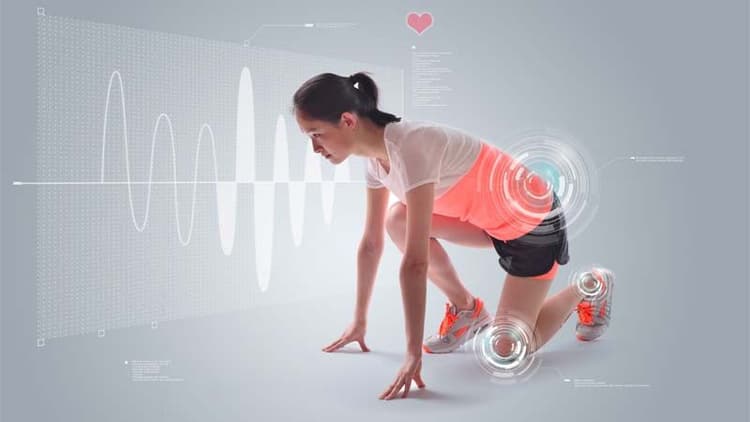
Have you ever wondered whether the benefits of exercise go deeper than stronger muscles, better stamina, or a healthier heart? Scientists are increasingly discovering that physical activity can influence what happens inside our cells, including how certain genes are switched on or off.
This raises an intriguing question: Can exercise actually change or alter your DNA?
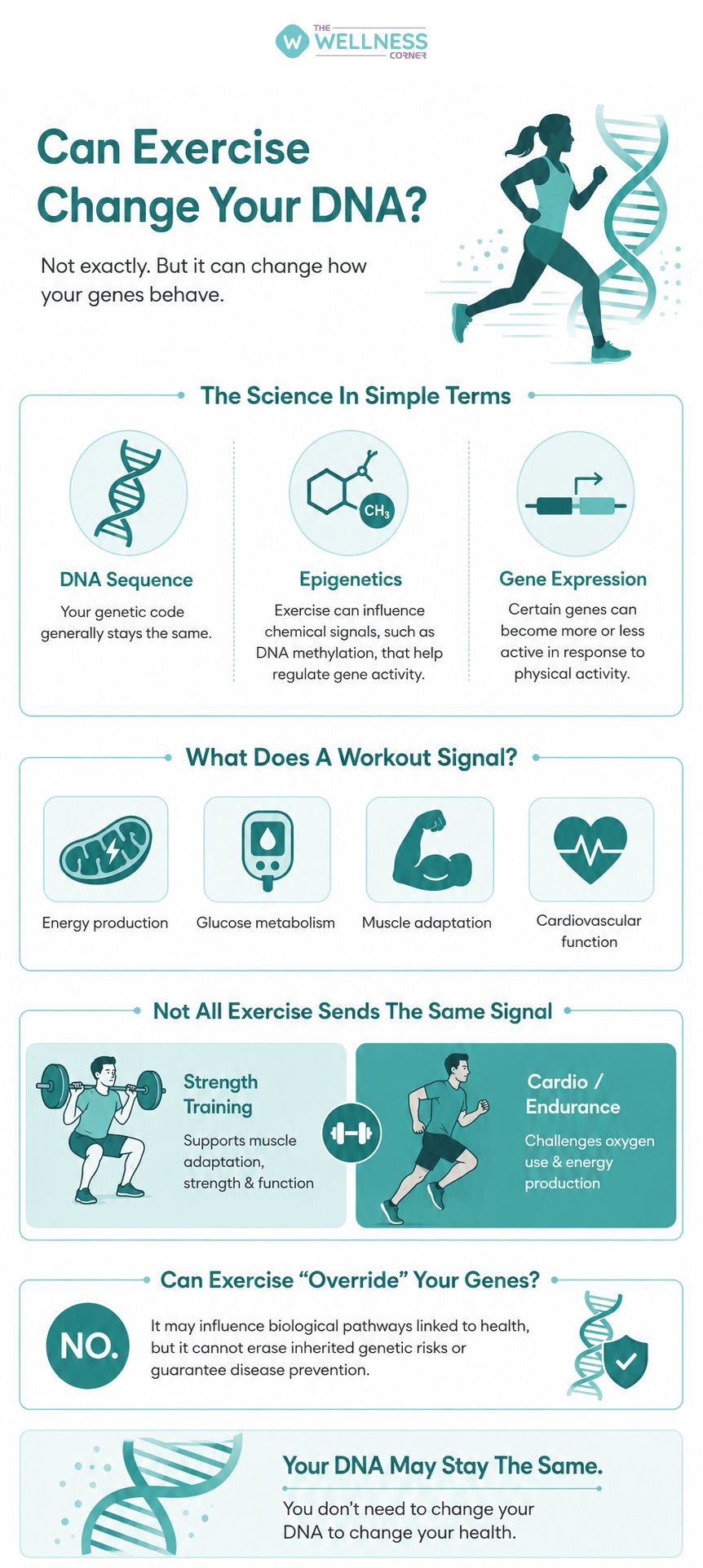
The short answer is more nuanced than a simple yes or no. Exercise does not normally rewrite the DNA sequence you were born with. However, it can influence how your genes behave through biological processes known as epigenetic changes. These changes can affect gene activity without changing the underlying genetic code.
Understanding this distinction can help explain why regular physical activity has such wide-ranging effects on the body.
Also Read: Can Your Skincare Affect Your Genes?
Your DNA Is Not The Whole Story
Think of DNA as an enormous instruction manual containing information that helps your body develop and function. Your genes provide instructions for making proteins and regulating countless biological processes.
But having a particular gene does not necessarily mean that it is constantly active.
Your cells have sophisticated systems that determine which genes should be used and when. This is where epigenetics comes into the picture. Epigenetic mechanisms can influence gene activity without changing the sequence of DNA itself.
One of the best-studied mechanisms is DNA methylation, where small chemical groups called methyl groups attach to specific regions of DNA. Depending on where these changes occur, they can influence whether certain genes are more or less active.
Research suggests that physical activity can affect DNA methylation and other epigenetic processes, particularly in tissues such as skeletal muscle and fat.
So, Does Exercise Actually Change Your DNA?
This is where the wording matters.
Exercise does not generally alter the basic sequence of the DNA letters that make up your genes. Instead, it can change how those genes are regulated.
Imagine your DNA as a book. Exercise does not necessarily rewrite the words printed on the pages. Instead, it may influence which pages are opened, which sections are highlighted, and which instructions are read more frequently.
These regulatory changes can contribute to the body's ability to adapt to physical activity.
For example, repeated exercise can stimulate molecular pathways involved in energy production, glucose metabolism, muscle adaptation and cardiovascular function. Some of these adaptations are connected to changes in gene expression and epigenetic regulation.
Also Read: Should You Exercise When You’re Sleep-Deprived?

What Happens To Your Genes When You Exercise?
Every workout creates a temporary biological challenge.
Physical activity increases the amount of energy your muscles require. Your heart pumps faster, oxygen demand rises, and your cells respond to increased metabolic activity. To cope with these demands, your body activates numerous molecular pathways.
Some genes involved in energy metabolism and muscle function become more active during or after exercise. With repeated training, these responses contribute to longer-term physiological adaptations.
Studies have found that both individual exercise sessions and longer-term training can influence DNA methylation patterns. However, these effects are not identical for everyone. They can vary according to the type, intensity and duration of exercise, as well as the tissue and genes being examined.
This is one reason researchers are increasingly interested in exercise as a biological signal, rather than viewing it simply as a way to burn calories.
Strength Training And Cardio May Send Different Signals
Each form of exercise places different demands on the body.
Resistance training places substantial demands on skeletal muscles. Over time, this encourages adaptations associated with muscle strength, size and function.
Endurance activities such as brisk walking, cycling, swimming and running create different demands, particularly on the body's ability to use oxygen and produce energy efficiently.
Research into exercise epigenetics suggests that different forms of exercise can produce different molecular responses. Scientists are still working to understand exactly how exercise type, intensity, frequency and duration influence these changes.
This does not mean that one workout is capable of dramatically transforming your genetic profile. Instead, exercise appears to be one of several environmental factors capable of influencing gene regulation over time.
Also Read: Strength Training Using Adjustable Dumbbells

Could Exercise Help Counter Some Genetic Risks?
This is one of the most exciting areas of research, but it needs to be interpreted carefully.
Your genes can influence your susceptibility to certain health conditions, but genes are only one part of the picture. Lifestyle, environment, nutrition, sleep, stress and physical activity can also influence health outcomes.
Epigenetic research is helping scientists understand how environmental factors may interact with genetic information. Exercise has been associated with changes in gene expression and DNA methylation that are relevant to metabolism and other physiological processes. Some of these changes have been linked with pathways associated with chronic disease risk.
However, this does not mean exercise can erase an inherited genetic risk or guarantee protection from disease. The science is still developing, and many findings remain specific to particular tissues, genes or research settings.
Are These Changes Permanent?
Not necessarily.
One fascinating feature of epigenetic regulation is that many of these changes can be dynamic. They may respond to environmental conditions, lifestyle behaviours and physiological demands.
Research has observed exercise-related epigenetic changes following both short-term exercise and longer training programmes. However, the duration and significance of these changes can differ considerably.
In other words, one workout is unlikely to permanently "reprogram" your DNA. Consistent physical activity, however, can repeatedly stimulate biological pathways that help your body adapt.
That is another reason consistency matters more than chasing extreme workouts.

How Much Exercise Do You Need?
You do not need an elaborate training programme to benefit from physical activity.
For most adults, the World Health Organization recommends at least 150 minutes of moderate-intensity physical activity per week, or 75 minutes of vigorous activity, along with muscle-strengthening activities on two or more days each week. Additional movement can contribute to broader health benefits.
Walking, cycling, swimming, strength training, recreational sports and other activities can all contribute.
The goal is not to manipulate your DNA. The goal is to give your body regular opportunities to adapt, recover and become more resilient.
Also Read: This Japanese Walking Technique Is Better Than 10,000 Steps - Doctor Explains Why?
The Bigger Picture: Exercise Talks To Your Biology
The idea that exercise can influence gene activity adds another fascinating layer to our understanding of physical activity.
Your DNA provides the genetic blueprint, but your biology is constantly responding to the world around you. Exercise is one of the signals that can influence these responses.
So, can exercise alter your DNA? It generally does not change the underlying DNA sequence. What it can do is influence how certain genes are regulated and expressed through epigenetic mechanisms.
That distinction may sound subtle, but it is scientifically significant.
The next time you exercise, remember that the benefits are not limited to what you can see in the mirror. Your workout is also creating a series of molecular signals
that help your body respond, adapt and function more efficiently.

Frequently Asked Questions
Leave a Comment

Sign-Up Now & Unlock
₹100 Cashback
Recently Published
Related Articles


Health Checks @ Home
Service
Explore



Follow us on:


© 2026 Truworth Health Technologies Pvt. Ltd.