Why Do I Yawn When I Exercise?
2 days ago
7 minute read.

Have you ever started a workout feeling energetic, only to find yourself yawning a few minutes into it? It may seem strange. After all, exercise is supposed to wake you up, improve alertness, and get your body moving. So why does your body suddenly seem ready for a nap?
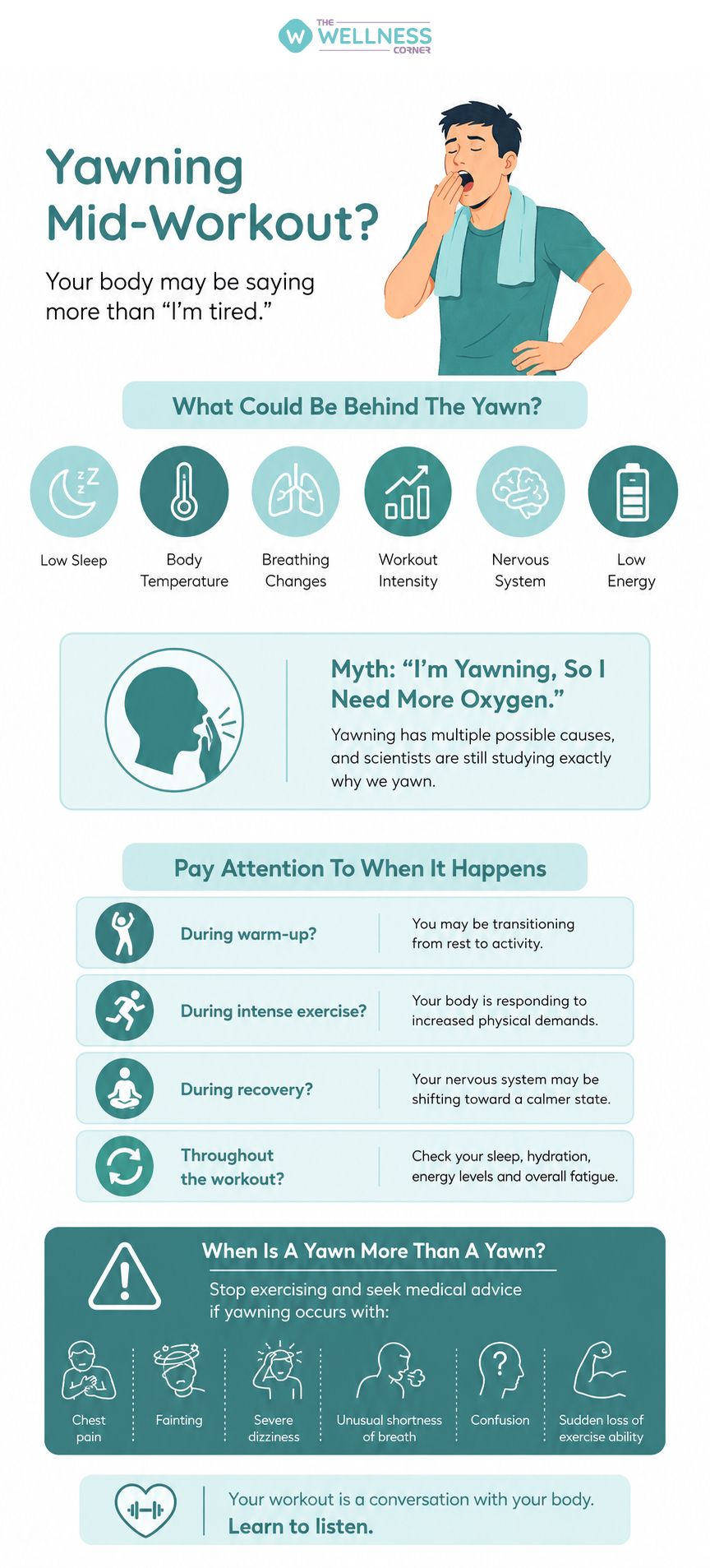
Yawning during exercise is more common than you might think. In many cases, an occasional yawn is not a cause for concern. It can be linked to changes in body temperature, breathing patterns, fatigue, workout intensity, or even your body's response to physical stress.
However, if yawning happens frequently or is accompanied by unusual symptoms, it is worth paying closer attention. Understanding why it happens can help you distinguish between a normal response and a sign that something needs to be addressed.
Also Read - The Reverse Workout: How Less Exercise Could Lead To Better Fitness Results?
Your Body May Be Adjusting To The Workout
Exercise causes your body to make several changes at once. Your heart rate increases, muscles demand more energy, blood circulation changes, and your breathing becomes faster.
Yawning may occur as part of this adjustment process. Your body is constantly trying to maintain balance while you exercise, and yawning could be one of the ways your nervous system responds to these changes.
It does not necessarily mean that your body lacks oxygen. The common idea that we yawn simply because we need more oxygen is an oversimplification. Yawning appears to involve several physiological processes, and researchers are still studying exactly why humans yawn.
You Could Be Starting Your Workout Tired
The reason may be simpler than you initially think.
If you begin exercising after a poor night's sleep, a demanding workday, or several days of inadequate rest, your body may already be fatigued. Exercise does not instantly erase that tiredness.
You might notice yawning particularly during warm-ups or lower-intensity activities because your body is transitioning from a resting state into physical activity.
Sleep quality matters for exercise performance too. When you are not well rested, you may experience reduced concentration, slower reactions, lower motivation, and greater perceived effort during a workout.
If yawning regularly appears alongside daytime sleepiness, take a closer look at your sleep routine rather than assuming the workout itself is responsible.
Also Read: Slow Or Fast Reps? Find The Best Tempo For Your Workout Goals

Your Body Temperature May Influence It
Your body temperature naturally changes during exercise.
Working muscles release heat as they become more active. Your body then uses mechanisms such as increased blood flow and sweating to help regulate temperature.
Yawning has been linked by researchers to thermoregulatory processes, meaning it may have some relationship with temperature regulation. This could help explain why some people notice yawning during periods of physical exertion.
The exact relationship between yawning and temperature is not fully understood, but it is one reason scientists consider yawning more complex than simply being a sign of tiredness.
Your Breathing Pattern Could Be Changing
When you exercise, your breathing naturally becomes deeper and faster. If you suddenly increase your pace or begin a demanding exercise, you may become more aware of your breathing.
Yawning can sometimes occur alongside changes in breathing patterns. It may feel as though your body is taking an unusually deep breath, particularly when you are transitioning between different exercise intensities.
This can be more noticeable during activities such as running, cycling, brisk walking, or circuit training.
Instead of trying to suppress the yawn, pay attention to your breathing. Aim for steady, controlled breaths appropriate for the activity rather than intentionally taking repeated oversized breaths.

Workout Intensity Can Make A Difference
Your body responds differently to gentle exercise and high-intensity training.
If you suddenly push your workout intensity higher than your usual level, your cardiovascular and respiratory systems have to work harder. You may experience a range of sensations as your body adapts, including heavier breathing, sweating, muscle fatigue, and occasionally yawning.
On the other hand, yawning can also occur during repetitive or low-intensity activities, particularly if you are already tired or mentally disengaged.
The timing of your yawning can therefore provide useful information. Notice whether it happens during warm-up, at peak intensity, during recovery, or throughout the entire workout.
Stress And Your Nervous System May Be Involved
Exercise is physical, but your nervous system plays a major role in how you respond to it.
Yawning has been associated with changes in arousal and nervous system activity. This means you may occasionally yawn when your body is transitioning between different states of alertness.
For some people, yawning may appear before a challenging workout because of nervousness or anticipation. For others, it may happen during recovery as the body begins returning to a calmer state.
If you notice yawning before an important workout, competition, presentation, or physically demanding activity, stress or anticipation could be contributing to the response.
Also Read: Should You Change Your Workout With The Seasons?

Dehydration Or Low Energy May Be Worth Considering
Yawning itself is not a reliable indicator of dehydration or low blood sugar. However, if yawning occurs along with weakness, dizziness, headache, unusual fatigue, or difficulty completing your workout, consider whether you have adequately fuelled and hydrated your body.
Exercise increases fluid requirements, particularly in hot or humid conditions. Similarly, exercising without enough food may leave some people feeling drained.
Try maintaining regular meals, drinking enough fluids throughout the day, and avoiding workouts when you are significantly depleted.
If symptoms continue despite these changes, speak with a healthcare professional.
Could Your Pre-Workout Routine Be The Problem?
Your activities before exercise can influence how alert you feel once your workout begins.
A heavy meal immediately before exercising may leave you feeling sluggish. Similarly, sitting for several hours before a workout can make the transition into physical activity feel more dramatic.
Try giving yourself enough time to transition into exercise. A gradual warm-up can help your body move from rest to activity more comfortably.
It is also worth considering when you exercise. If you regularly work out late at night or very early in the morning, your natural sleep-wake rhythm may influence how alert you feel.
Also Read: Looking For A Workout That Tones Your Body And Calms Your Mind?
When Should You Take Yawning Seriously?
Occasional yawning during exercise is usually not something to worry about, particularly if you otherwise feel well.
However, frequent yawning combined with concerning symptoms deserves attention. Yawning accompanied by symptoms such as chest discomfort, fainting, severe dizziness, unexplained breathlessness, confusion, or reduced exercise tolerance should be taken seriously and medically assessed.
You should also speak with a healthcare professional if excessive yawning occurs frequently outside exercise and is accompanied by persistent daytime sleepiness or other unexplained symptoms.
Your body often gives you useful signals. What matters most is recognizing when your body needs attention.
How To Reduce Yawning During Exercise?
If yawning happens occasionally, you may not need to do anything. But a few simple habits can support better workout readiness:
- Get consistent, quality sleep.
- Stay adequately hydrated throughout the day.
- Eat balanced meals that support your activity level.
- Give yourself time to warm up.
- Avoid starting intense exercise abruptly.
- Pay attention to your breathing.
- Adjust workout intensity when you feel unusually fatigued.
- Track when yawning happens and whether other symptoms appear.
These habits can help you understand whether yawning is simply part of your normal exercise response or connected to another factor.

The Bottom Line
Yawning during exercise can seem unusual, but it is not automatically a reason for concern. Your sleep, body temperature, breathing, workout intensity, nervous system, and overall energy levels may all influence when and why you yawn.
Rather than focusing on the yawn alone, pay attention to the bigger picture. If you feel energetic and otherwise well, an occasional yawn may simply be part of your body's response to exercise. But if yawning is persistent or occurs alongside unusual symptoms, it is worth discussing with a healthcare professional.
Understanding these small signals can help you become more aware of your body's needs and make your workouts safer, more comfortable, and more effective.
Want to understand your health and fitness better? Explore The Wellness Corner for practical wellness information, expert guidance, and resources designed to help you make informed choices about your everyday wellbeing.
Disclaimer: This article is intended for general educational and informational purposes only and should not replace personalized medical or fitness advice. Exercise needs and abilities vary between individuals. If you have an existing health condition, injury, significant pain, or concerns about starting or changing an exercise routine, consult a qualified healthcare professional before doing so.
Frequently Asked Questions
Leave a Comment

Sign-Up Now & Unlock
₹100 Cashback
Subscribe to our Newsletter!
Get a weekly dose of wellness tips delivered straight to your inbox.
Recently Published
Related Articles


Health Checks @ Home
Service
Explore



Follow us on:


© 2026 Truworth Health Technologies Pvt. Ltd.