Should A Seven-Year-Old Hit The Gym?
21 hours ago
6 minute read.
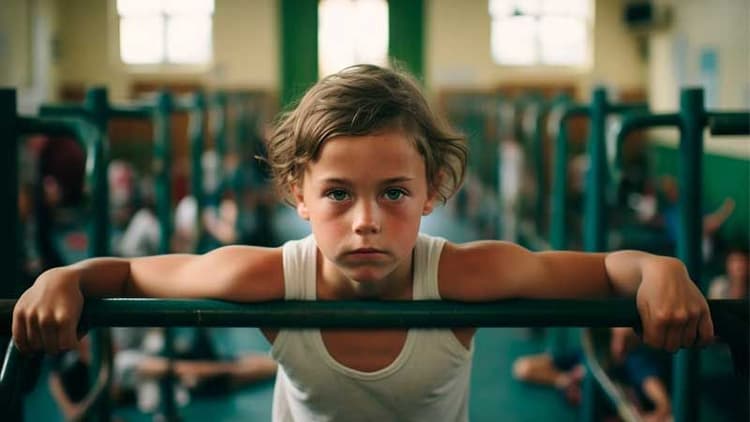
A seven-year-old running around the house, climbing playground equipment, playing football, dancing to music, or racing friends is already getting a workout. So when parents see children becoming interested in fitness or wanting to accompany them to the gym, a natural question comes up: Should a seven-year-old hit the gym?
The short answer is that children can participate in physical activities and, in some circumstances, age-appropriate strength exercises, but a traditional adult gym routine is usually not what they need.
At this age, movement should be about building confidence, coordination, strength, balance, and healthy habits. It should feel enjoyable rather than like another obligation.
Also Read: Ideas On What To Do On Your Gym Rest Days
Why Movement Matters So Much At Seven?
Childhood is an important period for developing motor skills and physical confidence.
Regular physical activity supports children's bones, muscles, cardiovascular fitness, coordination, and overall wellbeing. It can also give children opportunities to socialise, develop teamwork skills, and learn how their bodies move.
The goal is not to create a miniature bodybuilder or future athlete.
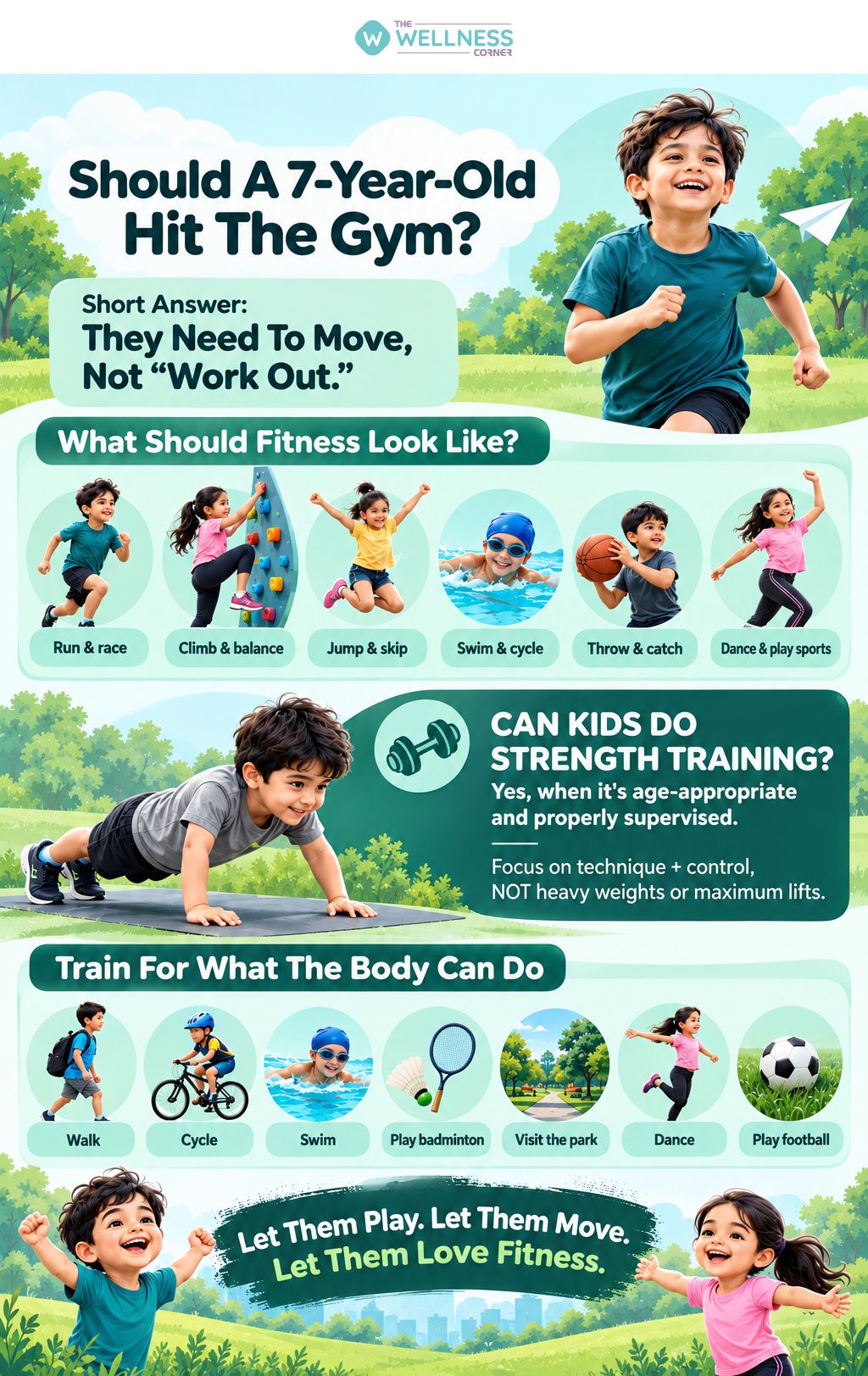
Instead, children should have plenty of opportunities to run, jump, climb, throw, catch, balance, swim, cycle, dance, and play.
For a seven-year-old, these activities can provide many of the physical benefits that adults seek from structured workouts.
Does A Child Need A Gym Membership?
Usually, no.
A seven-year-old does not need access to treadmills, weight machines, or a complicated workout programme to become healthier or stronger.
Think about what happens naturally on a playground. A child may climb, hang from bars, squat to pick something up, jump over obstacles, run repeatedly, and use their arms to pull themselves upward.
That is functional movement in action.
A child can develop strength and coordination through play without needing to spend an hour on a gym floor.
If a child enjoys going to a fitness facility with a parent, however, that does not automatically mean they need to be excluded. The important question is what activities are available, whether the facility permits children, and whether qualified supervision is provided.

Can Seven-Year-Olds Do Strength Training?
A crucial distinction comes into play at this point.
Strength training is not necessarily the same as lifting heavy weights.
Children can perform age-appropriate resistance exercises when they are taught proper technique and supervised appropriately. Activities may include bodyweight movements, resistance bands, light medicine balls, or other suitable forms of resistance.
For younger children, the emphasis should be on movement quality and control rather than how much weight they can lift.
Exercises such as squats, modified push-ups, climbing activities, crawling, and supervised resistance movements can help develop strength while also improving coordination.
Heavy lifting, maximal-effort testing, competitive weightlifting, and unsupervised use of gym equipment are a different matter.
The Real Workout Should Still Feel Like Play
Ask a seven-year-old to complete a repetitive workout and you may quickly lose their attention.
Ask them to complete an obstacle course, chase a ball, climb, jump, or play a game, and suddenly exercise feels completely different.
That is because children are naturally wired for movement through play.
Try activities such as:
- Tag or relay races
- Cycling
- Swimming
- Football
- Dancing
- Skipping
- Martial arts with qualified instruction
- Playground climbing
- Hopscotch
- Nature walks
- Simple obstacle courses
The best activity is often the one a child genuinely enjoys and wants to repeat.
Also Read: Benefits Of Swimming And Pool Safety For Kids

What About Treadmills And Exercise Machines?
Adult gym equipment is generally designed around adult bodies, movement patterns, and training goals.
A seven-year-old should not be expected to use gym equipment alone without proper guidance.
There are practical concerns involving equipment size, technique, supervision, and the possibility of injury.
If a child participates in a gym-based programme, it should be specifically designed for children and supervised by someone appropriately qualified to work with young people.
Parents should also check the gym's age requirements. Many facilities have specific policies about children using equipment or entering particular areas.
Could Too Much Training Be Harmful?
More exercise is not automatically better.
Children need time to recover, sleep, eat adequately, attend school, socialise, and simply be children.
An overly demanding exercise schedule can take the fun out of physical activity and may contribute to fatigue or overuse injuries, particularly when a child repeatedly performs the same movements without adequate recovery.
Watch for signs such as persistent pain, unusual tiredness, reduced enthusiasm for activities they previously enjoyed, or difficulty keeping up with normal daily routines.
A child's exercise programme should support their life, not take it over.
Focus On Skills, Not Appearance
One of the key takeaways for parents is this.
A seven-year-old does not need to worry about losing weight, getting abs, becoming "ripped," or achieving a particular body shape.
Childhood fitness should focus on what the body can do, not how it looks.
Celebrate improvements such as learning to ride a bicycle, completing a swimming lap, balancing better, throwing a ball farther, or mastering a new movement.
This approach can help children develop a healthier relationship with exercise and their bodies as they grow older.
Also Read: Ways To Tackle Childhood Obesity
Parents Can Make Fitness A Family Habit
Children often learn by watching adults.
If they regularly see parents taking walks, playing sports, stretching, cycling, dancing, or enjoying other forms of movement, physical activity can become a normal part of family life.
You do not necessarily need to take your child to the gym.
Go for a weekend walk together. Play badminton. Visit a park. Take a family swim. Have a dance session at home. Organise a friendly game of football.
These activities can be more valuable than forcing a child through an adult-style workout.
When Should You Seek Professional Guidance?
Most healthy children can participate in ordinary age-appropriate physical activity without needing extensive medical screening.
However, if your child has a chronic health condition, significant symptoms, previous injuries, exercise-related breathing problems, unexplained chest pain, fainting, or another health concern, speak with their paediatrician before introducing a structured exercise programme.
Professional guidance is particularly important if the child wants to participate in competitive or intensive training.
The Bottom Line
So, should a seven-year-old hit the gym?
They can be physically active, but they do not need an adult-style gym routine.
At seven, fitness should be about discovering movement, developing physical skills, having fun, and building habits that can last a lifetime. If a child enjoys a gym environment, a child-focused programme with appropriate supervision may be an option. But for most children, the world outside the gym already offers an enormous playground for getting stronger and healthier.
The goal is simple: help children love moving, rather than making them feel that they have to work out.
Want to build healthier habits for the whole family? Explore practical health and wellness resources on The Wellness Corner for expert guidance and everyday tips that can support your family's wellbeing.
Frequently Asked Questions
Disclaimer: This article is intended for general educational and informational purposes only and should not replace personalized medical or fitness advice. Exercise needs and abilities vary between individuals. If you have an existing health condition, injury, significant pain, or concerns about starting or changing an exercise routine, consult a qualified healthcare professional before doing so.
Leave a Comment

Sign-Up Now & Unlock
₹100 Cashback
Subscribe to our Newsletter!
Get a weekly dose of wellness tips delivered straight to your inbox.
Recently Published
Related Articles


Health Checks @ Home
Service
Explore



Follow us on:


© 2026 Truworth Health Technologies Pvt. Ltd.