Protecting Lungs From Firework Smoke & AQI Spikes: Practical Guidelines For High-Risk Individuals
1 day ago
6 minute read.

Blog Briefing: The Short Answer
Why Firework Smoke Can Affect Your Lungs?
Firework displays can introduce smoke, gaseous compounds, and fine particulate matter into the atmosphere. Some particles are small enough to travel deep into the respiratory tract, irritating the airways and triggering coughing, wheezing, or breathlessness. When firecracker emissions combine with traffic fumes, dust, and other pollutants, air quality can deteriorate further.
For people with sensitive airways, even brief exposure may cause discomfort. Diwali pollution asthma concerns are particularly relevant because smoke can aggravate airway inflammation and make existing symptoms harder to manage.
The effects are not always limited to the time fireworks are being burst. Fine particles can remain suspended in the air after celebrations, especially when weather conditions prevent pollutants from dispersing. That is why plans to protect lungs from Diwali smoke should cover the hours and days after the festivities, not just the evening itself.
Also Read: Creative Diwali Celebration Ideas For Office
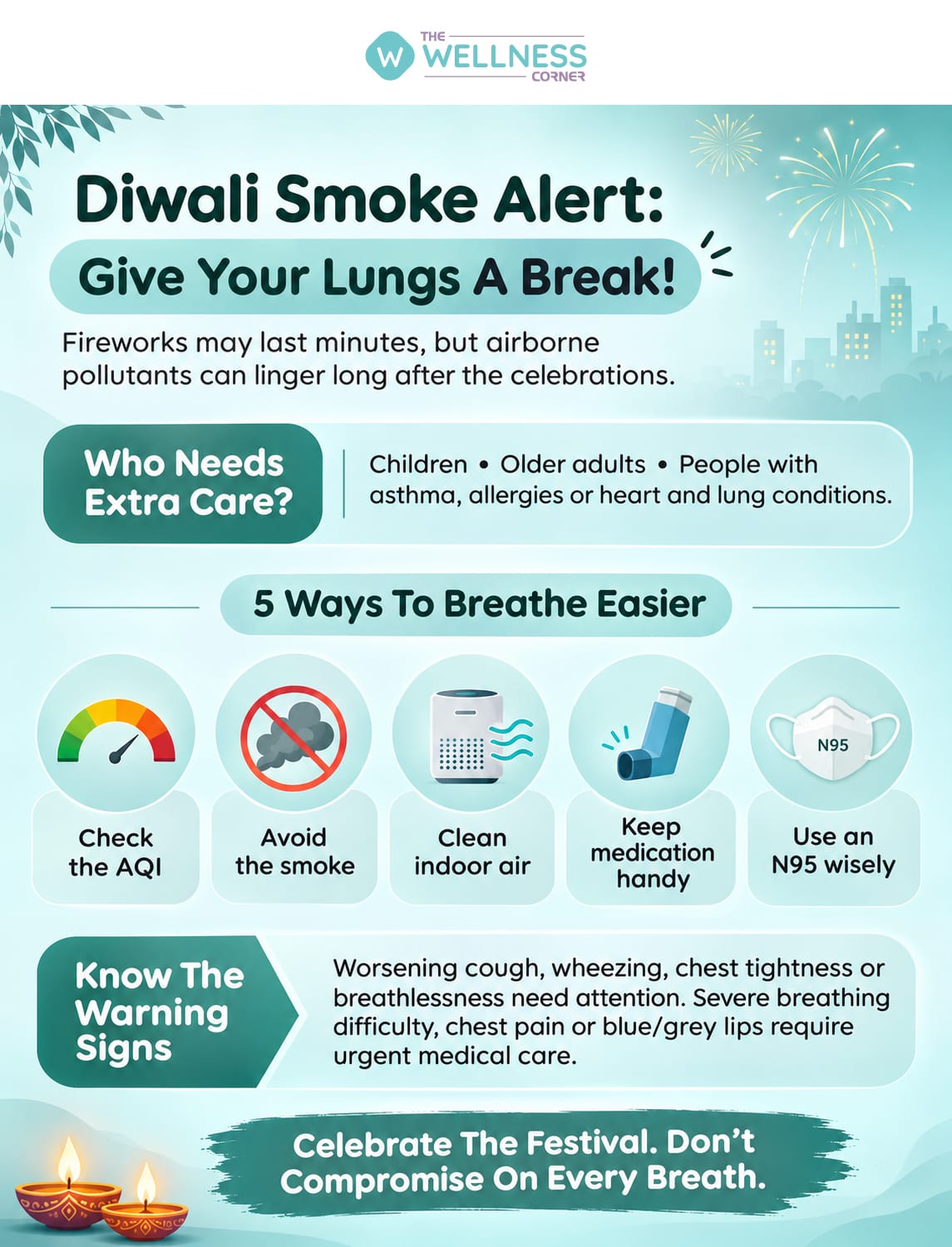
Who Needs Extra Protection?
Certain groups may be more vulnerable to the effects of polluted air.
People with asthma: Smoke can trigger wheezing, chest tightness, coughing, and breathlessness. Firecracker smoke asthma symptoms may appear during exposure or become noticeable afterwards. Keep your prescribed medicines within easy reach and stick to the asthma management plan provided by your doctor. Do not stop or change controller medication during the festive season.
People with allergies: Smoke can irritate already sensitive airways. People with allergic rhinitis may experience sneezing, a blocked or runny nose, throat irritation, or coughing. Limiting exposure can help prevent additional irritation.
Older adults: Ageing and existing heart or lung conditions can make pollution harder to tolerate. Diwali pollution elderly precautions should include limiting outdoor exertion and keeping regular medicines and emergency contacts handy.
Children: Children may not recognise early breathing symptoms or move away from smoky areas. Diwali smog children concerns are particularly important for children with asthma or other respiratory conditions. Keep them away from firework activity and supervise their outdoor exposure. Extra care can help protect lungs from Diwali smoke in children who may not be able to communicate discomfort clearly.
Practical Precautions Before And During Diwali
A little preparation can make celebrations safer. Check the local Air Quality Index (AQI) forecast and plan outdoor activities for periods when air quality is comparatively better. If pollution levels are high, avoid outdoor exercise, long walks, and unnecessary trips.
Use these practical steps to protect lungs from Diwali smoke:
- Stay away from firework zones: Avoid standing close to fireworks or areas where smoke collects. Ask children to watch fireworks only from a safe distance.
- Choose indoor celebrations: Celebrate indoors, away from roads, balconies, and open spaces where smoke may accumulate.
- Keep windows closed during heavy smoke: Close doors and windows when outdoor pollution is high. Ventilate your home when air quality improves.
- Keep medicines accessible: People with asthma should have their prescribed inhaler and spacer nearby.
- Avoid outdoor workouts: Vigorous activity increases breathing rate and the amount of polluted air inhaled.
If you are wondering how to keep a child with asthma safe during Diwali, keep their prescribed medication accessible, ensure caregivers know how to use the inhaler and spacer, and follow the child's asthma action plan. Avoid firework areas and contact a healthcare professional if symptoms worsen.
Managing Indoor Air Quality When AQI Spikes
Staying indoors can reduce exposure, but indoor air quality also matters. A correctly sized HEPA air purifier can help lower airborne particle levels in a room. Keep doors and windows closed as far as practical while outdoor pollution is high, and maintain the purifier's filters according to the manufacturer's instructions. These measures can support efforts to protect lungs from Diwali smoke even when outdoor conditions are poor.
But does an air purifier remove firecracker smoke completely? No. It can reduce many airborne particles, but it may not remove every gas or odour. Avoid air-cleaning devices that intentionally produce ozone, as ozone can irritate the respiratory system.
A well-fitting N95 respirator can filter many fine particles, but fit is essential. An N95 mask for asthma patients Diwali may be uncomfortable or unsuitable for some individuals, particularly during breathing difficulty. If you have asthma, check with your healthcare provider before using one.
Masks are not a replacement for avoiding outdoor exposure during severe pollution. Do not put a mask on a young child unless a healthcare professional advises it and confirms that it is appropriate for the child's age.
Also Read - Safe Diwali, Happy Diwali: Celebrate Mindfully And Meaningfully!!

Is It Safe To Step Outside After Diwali?
Not necessarily. The absence of visible smoke does not necessarily mean the air is free from fine particles. If you are asking, is it safe to walk outside the morning after Diwali, check the current AQI before heading out.
If readings remain poor, postpone your walk or exercise indoors. High-risk individuals should be particularly cautious and avoid outdoor exertion until air quality improves. Checking local readings is a practical way to protect lungs from Diwali smoke even after the celebrations have ended.
These Diwali AQI health tips can also help during the days following celebrations:
- Check local AQI readings before leaving home.
- Choose less polluted routes when possible.
- Avoid outdoor exercise when air quality is poor.
- Continue precautions until pollution levels improve.
Also Read: Foods For Healthy Lungs And Improved Breathing
Warning Signs You Should Not Ignore
A mild cough or throat irritation may settle after moving away from smoke. However, persistent or worsening symptoms deserve attention. Cough and breathlessness after Diwali may indicate airway irritation or an asthma flare-up.
People with asthma should follow their prescribed action plan and contact their healthcare professional if symptoms are not improving as expected.
Seek urgent medical care if you experience:
- Severe or rapidly worsening breathlessness
- Difficulty speaking because of breathing problems
- Blue or grey lips
- Fainting, confusion, or chest pain
- Symptoms that do not improve after using prescribed reliever medication
An asthma attack after Diwali crackers should never be ignored or managed by waiting for symptoms to pass. Prompt medical attention is important, particularly when prescribed medication is not providing relief.
The goal is not to avoid every celebration. It is to reduce exposure, recognise individual risks, and respond early. Keeping medicines accessible, checking AQI updates, and making indoor spaces cleaner can help protect lungs from Diwali smoke while allowing families to celebrate more comfortably. For people at higher risk, these steps are most effective when planned in advance and followed consistently.

Breathe Easier With The Wellness Corner
Small precautions can make a meaningful difference during high-pollution periods. Explore The Wellness Corner for practical respiratory health resources, expert-backed guidance, and support to help you build healthier everyday habits. If breathing symptoms persist or worsen, consult a qualified healthcare professional for personalised advice. Taking informed steps to protect lungs from Diwali smoke can help make festive celebrations safer for everyone.
Frequently Asked Questions
Disclaimer: This article is intended for general educational and informational purposes only and should not replace personalized medical advice, diagnosis, or treatment. Health needs can vary from person to person. If you have persistent, severe, or concerning symptoms, or questions about your health, consult a qualified healthcare professional for appropriate guidance.**
Leave a Comment

Sign-Up Now & Unlock
₹100 Cashback
Subscribe to our Newsletter!
Get a weekly dose of wellness tips delivered straight to your inbox.
Recently Published
Related Articles


Health Checks @ Home
Service
Explore



Follow us on:


© 2026 Truworth Health Technologies Pvt. Ltd.