How To Prevent Burn Scars: A Healing Timeline And Care Guide
10 hours ago
5 minute read.
Blog Briefing: The Short Answer
Also Read: Effective Ways To Treat Scars (Surgical + Natural)
Why Some Burns Leave Scars?
A burn damages skin tissue, and its depth influences how it heals. Superficial burns affect the outer layer, while deeper injuries damage structures involved in repair. During burn wound healing, the body produces new tissue and collagen. Deeper damage may leave a raised, firm, or discoloured mark.
Good burn scar prevention starts with prompt first aid and appropriate wound care. Knowing how to prevent burn scars begins with protecting the injured skin. Infection, friction, delayed healing, and picking can complicate recovery. Support skin regeneration after a burn by reducing avoidable irritation. This is the foundation of how to prevent burn scars.
Understanding The Burn Healing Timeline
The burn healing process depends on depth, size, location, and complications.
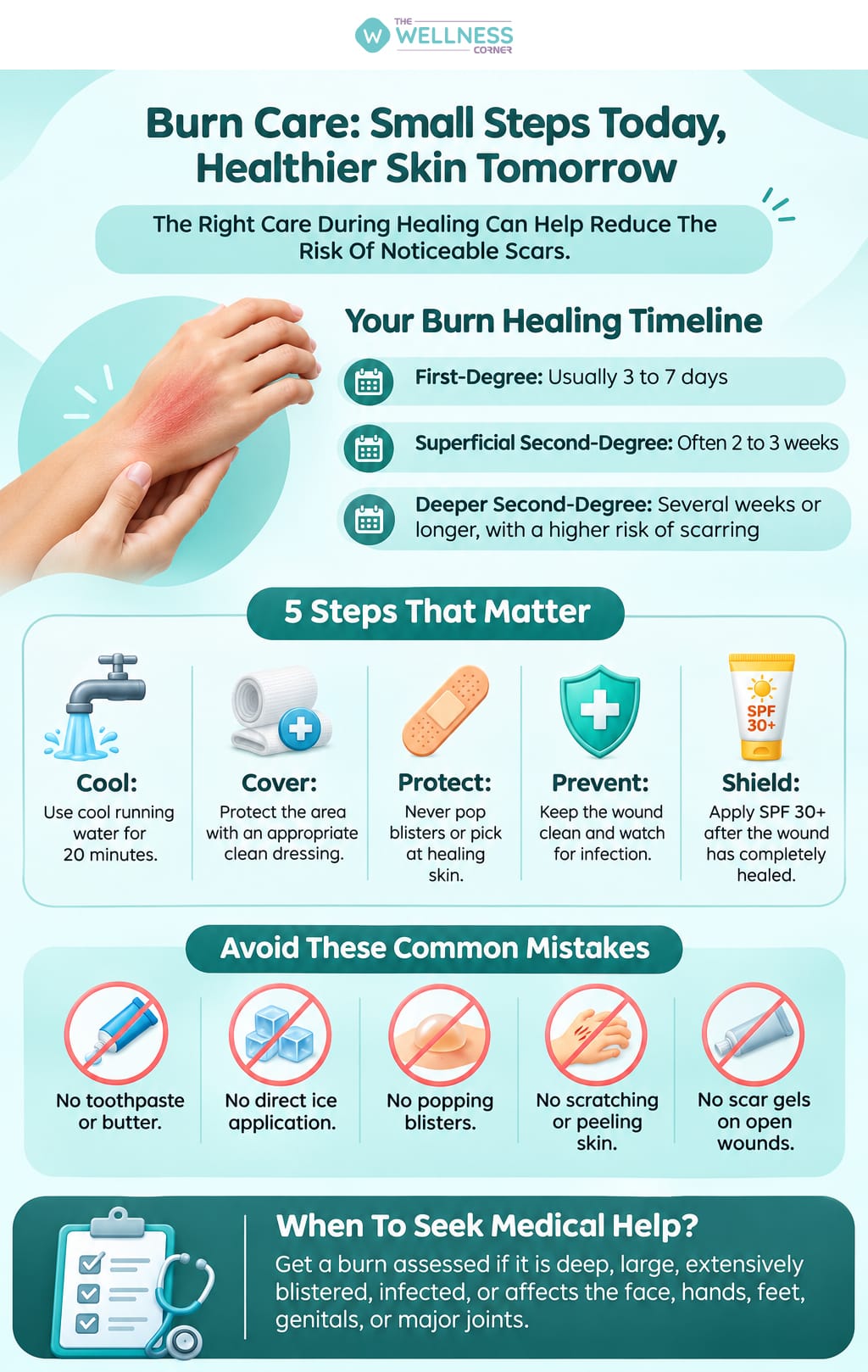
First-degree burns: usually around 3 to 7 days
These affect the outer skin layer, causing redness and tenderness. First-degree burn healing usually leaves no permanent scar, although colour changes may remain.
Superficial second-degree burns: often around 2 to 3 weeks
These affect a deeper layer and may cause blisters, swelling, and pain. Second-degree burn healing varies, and temporary colour changes may remain.
Deeper second-degree burns: several weeks or longer
These injuries extend deeper, take longer to close, and carry a greater risk of scarring. They need medical assessment.
How long does a second-degree burn take to heal? It depends on depth, infection, treatment, and individual health. The burn scar healing stages broadly involve inflammation, new tissue formation, and remodelling. If you ask what are the stages of burn wound healing, these are the broad phases.
How To Prevent Burn Scars?
For how to prevent scars after a minor burn, start with first aid, not scar cream. This is the first step in how to prevent burn scars. These steps also explain how to prevent burn scars while the wound heals.
Cool the area promptly. Cool it under gently running tap water for 20 minutes as soon as possible. Do not use ice.
Remove nearby jewellery. Remove nearby rings or watches before swelling develops. Never pull away clothing stuck to the burn.
Cover and protect the wound. After cooling, use a clean, non-stick dressing or follow a clinician's instructions. Some dermatology guidance recommends a thin layer of petroleum jelly for a small, superficial burn. Seek assessment if it is extensively blistered or may be deeper.
Leave blisters intact. Do not pop or peel them. Blisters protect damaged skin; breaking them can increase infection risk.
Reduce friction. Avoid rubbing, pressure, and tight clothing. Change dressings as directed.
These steps also matter for how to prevent scarring after a hot water burn. Scalds can be deeper than they appear, so how to prevent burn scars depends on depth and timely care. If the injury concerns you, get it checked.
After the skin closes, use clothing, shade, and broad-spectrum SPF 30+ sunscreen to limit discolouration. This helps with how to prevent dark marks after a burn and is part of how to prevent burn scars.

What To Avoid During Recovery?
Do not apply toothpaste, butter, cooking oil, or household remedies to a fresh burn. They may irritate skin or interfere with care. Avoid scratching, removing scabs, or exfoliating the area.
Burn scar remedies are widely discussed, but natural does not always mean safe. Increasing pain, redness, swelling, warmth, or pus needs medical advice. Knowing how to prevent infection in a minor burn wound means clean hands, gentle wound care, and an appropriate dressing.
When To Consider Scar Treatment?
After closure, scars may remain raised, tight, itchy, or darker. A dermatologist can assess them and discuss burn scar treatment.
Silicone gel or sheets may help some raised scars, but only on fully healed skin. If you're asking when should you use silicone gel on a burn scar, confirm the timing and application with a dermatologist.
No burn scar removal method guarantees complete removal. Treatment aims to improve appearance, comfort, or movement. Options include silicone, pressure therapy, laser treatment, or injections. A clinician can explain how to reduce burn scars. For lasting results, how to prevent scars after a burn should be discussed alongside treatment.
Itching may occur as skin heals. For how to reduce itching during burn scar healing, avoid scratching and ask whether a fragrance-free moisturiser or another treatment is suitable.
Also Read: Does Laser Treatment Cause Acne?
When To Seek Medical Attention?
Seek prompt assessment for deep, large, extensively blistered burns or burns on the face, hands, feet, genitals, or major joints. Chemical and electrical burns need urgent care. White, charred, leathery, or numb skin may signal a deeper burn.
If you're wondering when should you see a doctor for a burn, seek advice promptly, especially for a baby, child, older adult, or person with a health condition. Get help for spreading redness, worsening pain, pus, fever, or delayed healing.
Support Your Skin Health With The Wellness Corner
Burn recovery takes patience and appropriate care. Explore The Wellness Corner for practical skin-health resources and expert-backed guidance. For a deep, worsening, or infected burn, consult a qualified healthcare professional.

Frequently Asked Questions
Disclaimer: This article is for general awareness and does not replace medical advice. Burn depth can be difficult to assess at home. Seek professional evaluation when the injury is more than superficial, affects a sensitive area, or shows signs of infection.
Leave a Comment

Sign-Up Now & Unlock
₹100 Cashback
Subscribe to our Newsletter!
Get a weekly dose of wellness tips delivered straight to your inbox.
Recently Published
Related Articles


Health Checks @ Home
Service
Explore



Follow us on:


© 2026 Truworth Health Technologies Pvt. Ltd.