How Safe And Healthy Is Your Everyday Dal Chawal?
4 months ago
6 minute read.
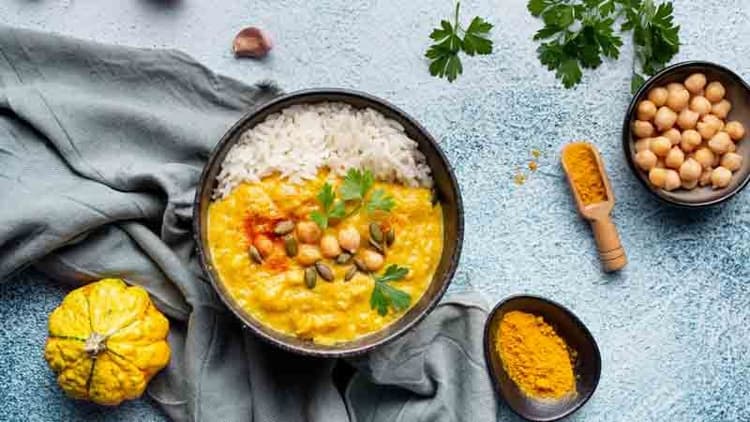
When it comes to comfort food in Indian households, few dishes enjoy the reputation of dal chawal. It is warm, familiar, easy to digest, affordable, and often recommended during illness or recovery. Many people even believe that if there is one meal that is always healthy and completely safe, it has to be dal and rice.
But is that assumption entirely true?
The answer is a little more nuanced. Dal chawal remains one of the most balanced and nourishing meals in Indian cuisine, but like any food, its nutritional value depends on portion size, preparation methods, individual health conditions, and what accompanies it on the plate.
Let's explore why dal chawal has earned its healthy reputation, where its limitations lie, and how you can make this everyday meal even better.
A Great Recipe: Mixed Dal & Vegetable idli
What Makes Dal Chawal A Timeless Household Staple?
Dal and rice complement each other nutritionally.
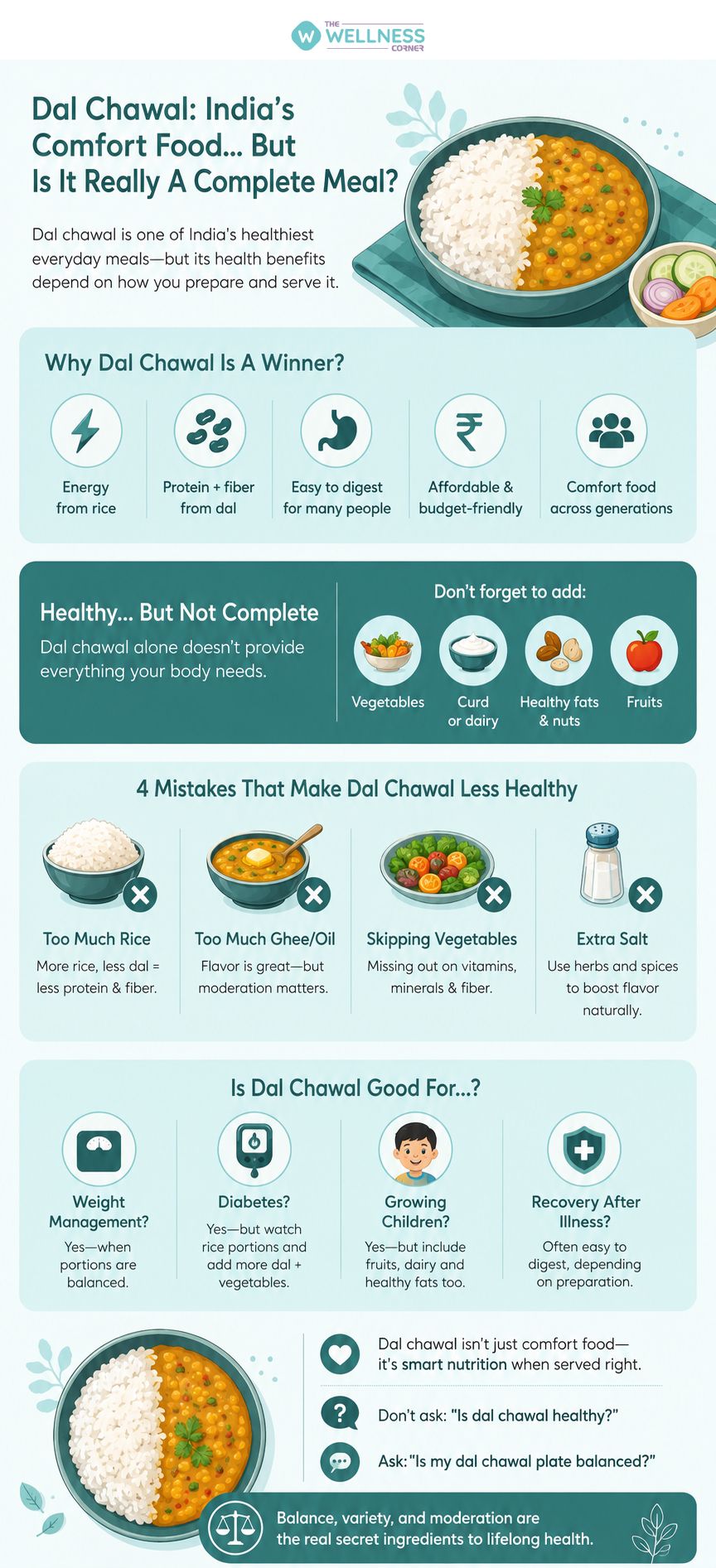
Rice provides carbohydrates that supply energy, while dal contributes protein, fiber, vitamins, and minerals. Together, they create a meal that is satisfying and relatively balanced.
For generations, this combination has been a staple because it is:
- Affordable
- Easy to prepare
- Easily digestible for many people
- Filling
- Versatile
It is also suitable for people across different age groups when prepared appropriately.
Does Dal Chawal Provide Complete Nutrition?
Dal and rice together provide a better protein profile than either food alone.
Cereals and pulses contain different essential amino acids. When eaten together, they complement one another, dal and rice makes a complete protein. When cereal and pulse is eaten together, they provide all the essential amino acids.
Although this combination offers many important nutrients, it should not be viewed as a complete diet on its own.
Your body also needs:
- Healthy fats
- Fruits
- Vegetables
- Dairy
- Nuts and seeds
A varied diet remains essential for overall health.
Also Read: How To Add Healthy Fats To Your Diet?

Why Many People Consider It Easy To Digest?
Plain dal and rice are often recommended during recovery from illness because they are generally gentle on the digestive system.
However, digestibility depends on:
- The type of dal
- Cooking method
- Spice levels
- Individual digestive health
Some people with digestive disorders may tolerate certain dals better than others. Some easy-to-digest dals are moong dal and masoor dal. Urad dal, chana dal, and whole pulses are the heavy ones.
Is Dal Chawal Good For Weight Management?
It can be.
Despite popular misconceptions, rice alone is not responsible for weight gain.
Weight management depends on overall calorie intake, physical activity, and dietary patterns.
Dal contributes:
- Protein
- Fiber
- Vitamins
- Minerals
- Essential micronutrients
These nutrients help promote fullness, which may reduce overeating.
Portion control remains important.

Can People With Diabetes Eat Dal Chawal?
Yes, but portion balance matters.
Rice has a higher glycemic index than many whole grains, meaning it raises blood sugar more quickly.
Adding dal helps increase protein and fiber, which may improve the overall nutritional balance of the meal.
People with diabetes will benefit more from:
- Increasing the proportion of dal
- Including vegetables
- Choosing brown rice or other whole grains when appropriate
Dietary recommendations should always be individualized with guidance from a healthcare professional.
Also Read - How To Lose Weight With Rice: Tips To Avoid Overeating
Is Dal Chawal Enough For Growing Children?
Dal chawal provides valuable nutrients for children but should be part of a diverse diet.
Growing children require adequate amounts of:
- Protein
- Healthy fats
- Vitamins
- Minerals
- Good carbs
- Fiber rich foods
Adding vegetables, curd, fruits, or other nutrient-rich foods helps create a more balanced meal.
Common Mistakes That Reduce Its Nutritional Value
Although dal chawal is healthy, certain habits may reduce its overall nutritional quality.
1. Oversized Rice Portions
Many plates contain significantly more rice than dal.
A better balance between rice and dal improves protein intake and satiety.
2. Too Few Vegetables
Adding vegetables increases:
- Fiber
- Vitamins
- Minerals
- Antioxidants
Simple additions like spinach, carrots, beans, bottle gourd, or pumpkin can improve the meal considerably.
Also Read: Antioxidants Keep Diseases Away
3. Excess Ghee Or Oil
Small amounts of healthy fats must be part of a balanced diet.
However, excessive quantities may increase calorie intake unnecessarily.
Moderation is key.
4. High Sodium
Using excessive salt or packaged seasonings like pickles, packaged chutneys, etc., may increase sodium intake.
Flavor can also come from herbs, spices, garlic, ginger, cumin, turmeric, and coriander.

How To Make Dal Chawal Even Healthier?
A few small changes can make a familiar meal more nutritious.
1. Add More Vegetables
Serve your dal with:
- Spinach
- Carrots
- Tomatoes
- Peas
- Beans
- Pumpkin
Vegetables increase both fiber and micronutrient intake.
2. Include A Side Of Curd
Curd contributes:
- Protein
- Calcium
- Beneficial bacteria that support gut health
Unsweetened curd is generally a healthier choice.
Also Read: 10 Reasons Why You Should Have Your Daily Bowl Of Curd
3. Add Salad
Fresh salad provides additional vitamins and fiber.
Options include:
- Cucumber
- Tomato
- Carrot
- Radish
- Lettuce
4. Experiment With Different Pulses
Different dals provide slightly different nutrient profiles.
Try rotating:
- Moong dal
- Masoor dal
- Toor dal
- Urad dal
- Mixed lentils
Dietary variety helps improve overall nutrient intake.

Can Dal Chawal Be Eaten Every Day?
For many healthy individuals, yes.
However, eating exactly the same meal every day may reduce nutrient variety, i.e. the variety of micronutrients in the diet gets limited.
Rotating grains and pulses while including plenty of fruits, vegetables, and other nutritious foods helps ensure broader nutrient intake.
Balance matters more than avoiding any single food.
Who May Need Dietary Modifications?
Some individuals may require personalized advice.
Examples include:
- People with chronic kidney disease
- Individuals with advanced liver disease
- Those with certain digestive disorders
- People following medically prescribed diets
In these situations, dietary planning should be discussed with a qualified healthcare professional or registered dietitian.
The Bigger Picture
No single food determines whether a diet is healthy.
Dal chawal remains an excellent example of how traditional eating patterns can support good nutrition.
Its health benefits can be enhanced by adding:
- Plenty of vegetables
- Fruits
- Healthy fats like nuts and seeds
- Adequate hydration
- Regular physical activity
Also by:
- Reducing oil or ghee
- Accompanying it with curd and salad
Traditional foods often provide lasting nutritional value when enjoyed as part of an overall balanced lifestyle.
Final Thoughts
Dal chawal has earned its place as one of India's most trusted comfort meals for good reason. It offers a satisfying combination of carbohydrates, protein, fiber, and essential nutrients while being affordable and accessible for millions of families.
At the same time, no meal is perfect on its own. A healthy diet depends on variety, moderation, and balance.
Rather than asking whether dal chawal is the safest meal, a better question may be: How can I build a balanced plate around it?
With a few thoughtful additions, this timeless meal can continue supporting good health for years to come.

Support Your Nutrition Goals With The Wellness Corner
Healthy eating isn't about eliminating traditional foods. It is about making informed choices that fit your body's needs and your lifestyle.
The Wellness Corner offers expert-backed guidance on nutrition, fitness, preventive healthcare, mental well-being, and healthy lifestyle practices to help you make balanced decisions every day.
Frequently Asked Questions (FAQs)
Leave a Comment

Sign-Up Now & Unlock
₹100 Cashback
Subscribe to our Newsletter!
Get a weekly dose of wellness tips delivered straight to your inbox.
Recently Published
Related Articles


Health Checks @ Home
Service
Explore



Follow us on:


© 2026 Truworth Health Technologies Pvt. Ltd.