I Started Drinking Salt Water Every Morning: Here's What Actually Happens, According To Doctors
1 day ago
6 minute read.

A glass of water first thing in the morning has long been promoted as a healthy habit. Recently, however, social media has taken the trend a step further by encouraging people to add salt to their morning water. Influencers claim it improves hydration, boosts energy, balances electrolytes, and even supports digestion. With so many impressive promises, it's easy to wonder whether this simple habit really delivers the benefits people talk about.
The truth is more nuanced. While sodium is an essential mineral that helps regulate fluid balance and nerve function, adding salt to your morning water isn't necessary for everyone. In fact, for some people, it may even do more harm than good.
Here's what healthcare professionals say about the growing salt water trend and whether it deserves a place in your morning routine.
Also Read: 7 Signs You Are Eating More Salt Than Your Body Can Handle
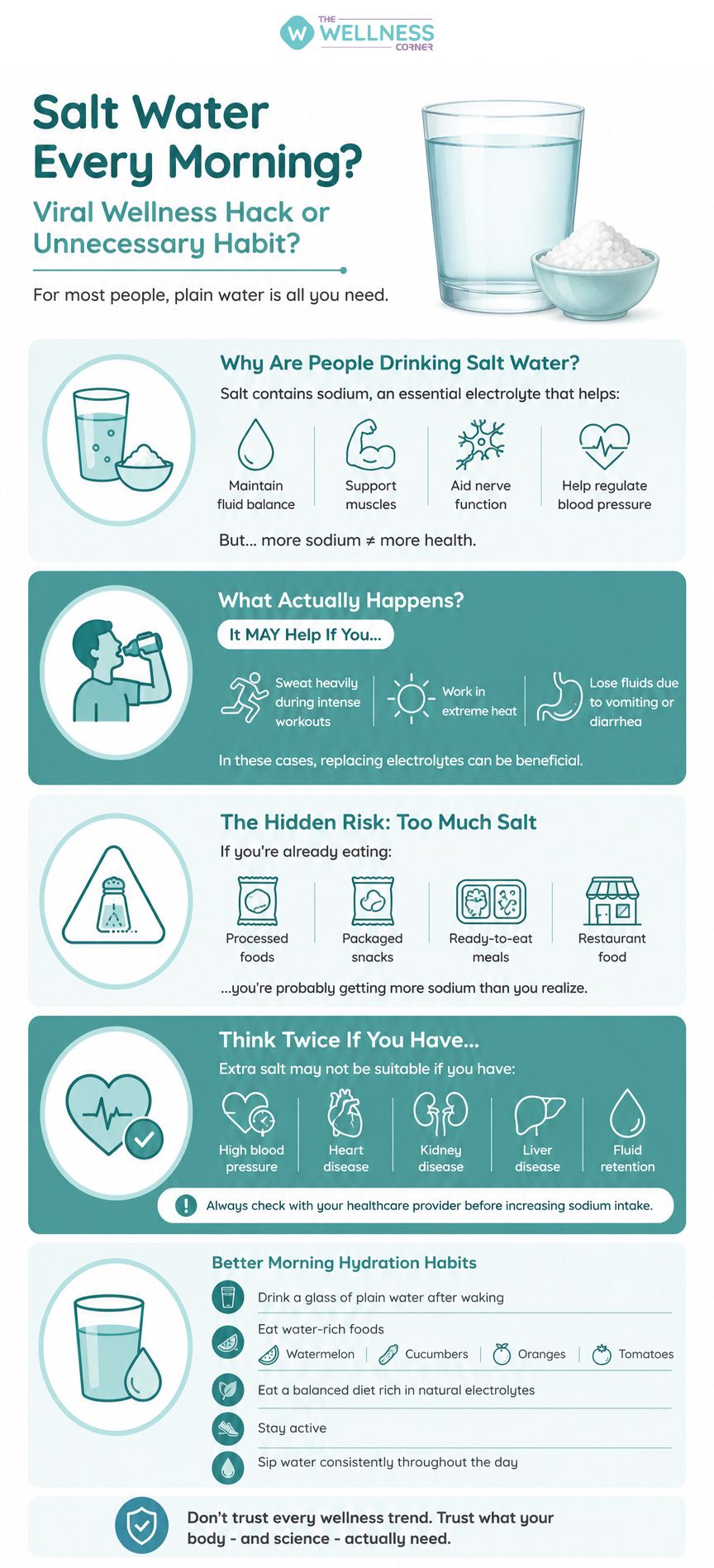
Why Are People Drinking Salt Water?
The popularity of salt water stems from the growing interest in electrolytes.
Electrolytes are minerals that help the body:
- Maintain fluid balance
- Support muscle contractions
- Regulate nerve signals
- Maintain healthy blood pressure
- Assist normal cellular function
Sodium is one of these electrolytes. Since it plays an important role in hydration, some people assume adding extra salt to water automatically makes it healthier.
However, the body's electrolyte needs vary depending on factors such as climate, exercise, illness, and overall health.
What Actually Happens When You Drink Salt Water?
Adding a small amount of salt to water doesn't instantly transform it into a health drink.
Instead, several things may happen depending on your body's needs.
It May Replace Electrolytes After Heavy Sweating
If you've exercised intensely, spent time in extreme heat, or lost fluids due to prolonged sweating, replacing electrolytes can be helpful.
In these situations, sodium works together with water to support hydration.
However, for someone simply waking up after a normal night's sleep, extra sodium usually isn't necessary.
Also Read: Do You Suffer From Excessive Sweating?

Your Kidneys Already Manage Sodium Efficiently
Healthy kidneys carefully regulate sodium levels throughout the day.
When sodium intake increases, the kidneys normally remove excess amounts through urine.
Unless you've experienced significant fluid loss, your body already has effective systems for maintaining electrolyte balance.
Too Much Sodium Can Become A Problem
Many people already consume more sodium than recommended through processed foods, restaurant meals, packaged snacks, sauces, and ready-to-eat products.
Adding even more sodium without medical need may contribute to:
- Increased blood pressure
- Water retention
- Swelling
- Greater cardiovascular risk over time
This is especially important for people living with hypertension, kidney disease, or heart conditions.
Also Read: How Fasting Affects Blood Pressure - And When It Can Be Dangerous?
Does Salt Water Improve Hydration?
The answer depends on the situation.
For endurance athletes, people working in hot environments, or those recovering from significant fluid loss, electrolyte replacement may be useful.
For healthy adults following a balanced diet, plain water is usually sufficient for everyday hydration.
Most people obtain enough sodium from their regular meals without needing to add extra salt to drinking water.

Can It Improve Energy Levels?
Some people report feeling more energetic after drinking salt water.
However, there is limited scientific evidence showing that salt water directly boosts energy in otherwise healthy individuals.
Improved energy is more likely to result from:
- Better hydration
- Adequate sleep
- Balanced nutrition
- Regular physical activity
Rather than the salt itself.
Also Read: Why Your Energy Levels Are Low And What To Eat About It?
Does It Help Digestion?
Another popular claim is that salt water improves digestion.
Current scientific evidence supporting this claim remains limited.
Maintaining digestive health generally depends on:
- Fiber intake
- Adequate hydration
- Regular exercise
- Healthy gut bacteria
- Balanced eating habits
Adding salt to water alone is unlikely to significantly improve digestive function.

Who Might Actually Need Extra Electrolytes?
Certain individuals may benefit from electrolyte replacement under specific circumstances.
These include:
- Endurance athletes
- People exercising for prolonged periods
- Individuals recovering from vomiting or diarrhea
- Workers exposed to extreme heat
- People advised by their healthcare provider
Even then, electrolyte replacement should be appropriate for the individual's condition rather than becoming a daily habit without reason.
Also Read: Suffering From Diarrhea? Don't Neglect It...
When Salt Water May Not Be A Good Idea?
Adding salt to drinking water may not be appropriate for everyone.
Extra caution is advised for people with:
- High blood pressure
- Heart disease
- Kidney disease
- Liver disease
- Fluid retention
- Sodium-sensitive conditions
If you fall into any of these categories, always consult your healthcare provider before making changes to your sodium intake.

Better Ways To Stay Hydrated Every Morning
Instead of relying on viral wellness trends, focus on habits supported by scientific evidence.
These include:
1. Drink Plain Water
A glass of water after waking helps replace fluids lost overnight.
2. Eat Water-Rich Foods
Include foods such as:
- Watermelon
- Cucumbers
- Oranges
- Strawberries
- Tomatoes
These naturally contribute to hydration.
3. Maintain A Balanced Diet
Fruits, vegetables, whole grains, dairy products, legumes, and lean proteins naturally provide many essential electrolytes.
4. Stay Active
Regular physical activity supports circulation, metabolism, and overall well-being.
5. Monitor Your Fluid Intake
Drink water consistently throughout the day instead of trying to compensate with large amounts at once.

Should You Follow The Salt Water Trend?
For most healthy adults, drinking plain water remains one of the simplest and most effective ways to stay hydrated.
Although electrolyte replacement has an important role during prolonged exercise, illness, or excessive sweating, routinely adding salt to morning water offers little proven benefit for the average person.
Nutrition trends often spread faster than scientific evidence. Rather than following every new wellness practice, it is better to understand whether it matches your own health needs.
When in doubt, personalized medical advice is always more reliable than viral social media claims.
Frequently Asked Questions
1. Is drinking salt water every morning healthy?
Not necessarily. Most healthy adults already consume enough sodium through their daily diet and usually do not require extra salt in drinking water.
2. Can salt water improve hydration?
It may help replace electrolytes after heavy sweating or prolonged exercise, but plain water is generally sufficient for routine hydration.
3. Can drinking salt water raise blood pressure?
Yes. Excess sodium intake may contribute to elevated blood pressure, particularly in people who are sensitive to sodium.
4. Should athletes drink salt water?
Athletes with prolonged or intense physical activity may benefit from electrolyte replacement, but the amount should be appropriate for their individual needs.
5. Who should avoid drinking salt water?
People with hypertension, kidney disease, heart disease, or fluid retention should consult a healthcare professional before increasing sodium intake.

Make Smarter Health Choices With The Wellness Corner
Health advice on social media isn't always backed by science. Before trying new wellness trends, rely on trusted, evidence-based guidance. The Wellness Corner provides expert health information, preventive care resources, and access to qualified professionals who can help you make informed decisions that support your long-term well-being.
Frequently Asked Questions
Nutrition Disclaimer: This article is intended for general educational and informational purposes only and should not replace personalized dietary or medical advice. Nutritional needs vary based on factors such as age, health status, lifestyle, and individual requirements. If you have a medical condition, dietary restriction, or specific nutritional concern, consult a qualified healthcare professional or registered dietitian.
Leave a Comment

Sign-Up Now & Unlock
₹100 Cashback
Subscribe to our Newsletter!
Get a weekly dose of wellness tips delivered straight to your inbox.
Recently Published
Related Articles


Health Checks @ Home
Service
Explore



Follow us on:


© 2026 Truworth Health Technologies Pvt. Ltd.