Is Your Home Making You Sick This Monsoon?
3 months ago
5 minute read.

The arrival of the monsoon is often a welcome relief from scorching summer temperatures. The cool breeze, refreshing rain, and greener surroundings make the season enjoyable. However, while the outdoors may feel cleaner and fresher, your home could quietly become a breeding ground for health problems if extra care isn't taken.
Increased humidity, poor ventilation, damp walls, and stagnant water create ideal conditions for mold, dust mites, bacteria, and mosquitoes to thrive. These hidden hazards can trigger allergies, respiratory infections, skin problems, digestive illnesses, and even mosquito-borne diseases.
The good news is that small changes in your home environment can significantly reduce these risks. Understanding what to look for is the first step toward keeping your family safe and healthy throughout the rainy season.
Also Read - Avoid Food Poisoning This Monsoon: Smart Eating Tips
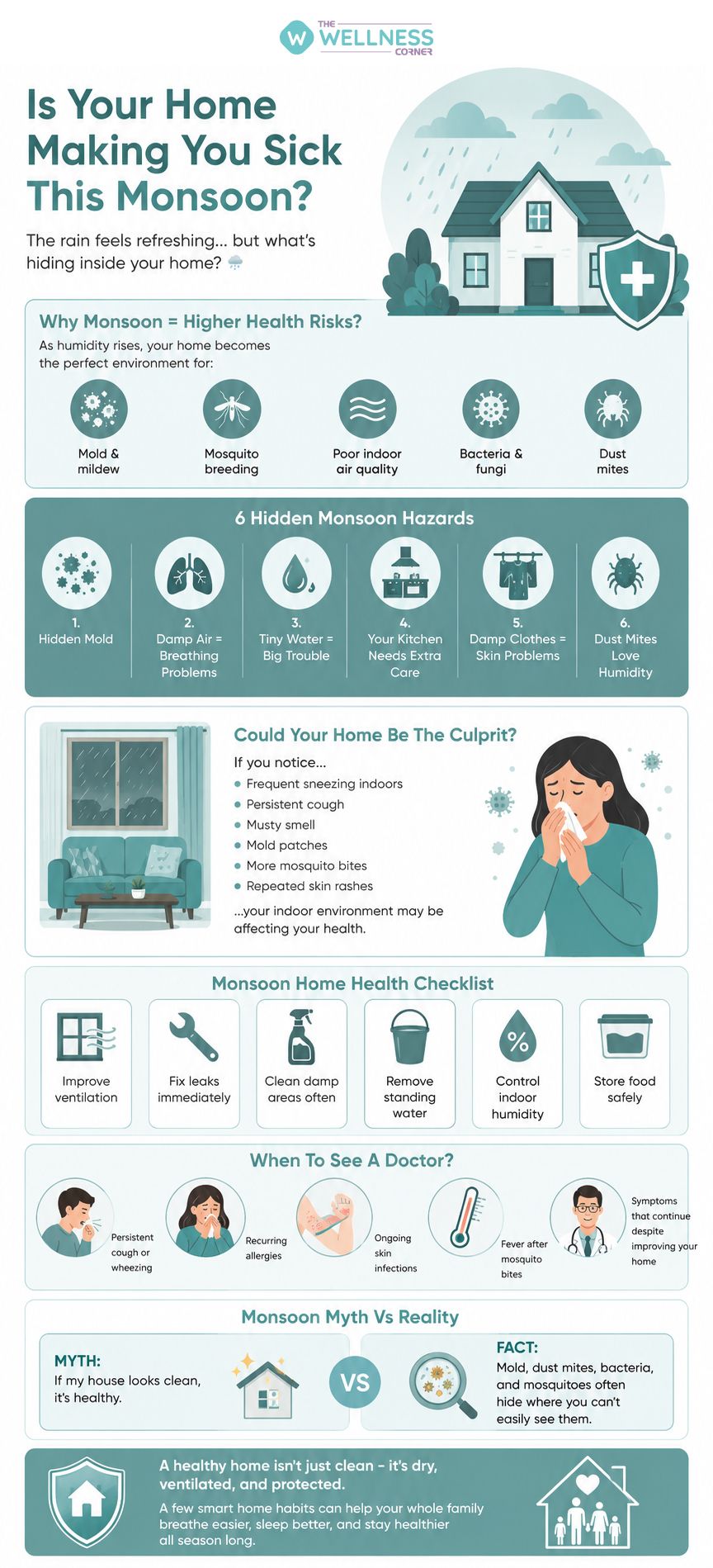
Why Does The Monsoon Increase Health Risks At Home?
Humidity levels rise significantly during the rainy season. Excess moisture affects not only the structure of your home but also indoor air quality.
Common problems include:
- Damp walls and ceilings
- Mold growth
- Poor air circulation
- Musty odors
- Increased insect activity
- Slower drying of clothes and household items
When these issues are ignored, they may begin affecting your health without you immediately realizing the cause.
Hidden Mold: A Common Monsoon Problem
One of the biggest indoor concerns during the rainy season is mold.
Mold thrives in damp environments such as:
- Bathroom walls
- Kitchen corners
- Window frames
- Air conditioner ducts
- Wooden furniture
- Behind cupboards
Also Read: Is Sleeping In AC Bad For Health?
Exposure to mold may contribute to:
- Sneezing
- Persistent cough
- Wheezing
- Eye irritation
- Skin irritation
- Worsening asthma symptoms
If you notice black, green, or white patches accompanied by a musty smell, it's time to investigate further.

Damp Air Can Affect Your Breathing
High indoor humidity encourages the growth of dust mites, mold spores, and other airborne allergens.
People with asthma, allergic rhinitis, sinusitis, or other respiratory conditions may notice worsening symptoms during this time.
Common complaints include:
- Nasal congestion
- Frequent sneezing
- Difficulty breathing
- Chest tightness
- Morning cough
Maintaining good ventilation helps improve indoor air quality.
Also Read: Mindful Breathing
Mosquitoes Love Hidden Water Sources
Rainwater doesn't have to collect in large puddles to become a problem.
Mosquitoes can breed in:
- Plant trays
- Buckets
- Coolers
- Flower pots
- Roof drains
- Open containers
These insects may spread illnesses such as dengue, malaria, chikungunya, and other mosquito-borne infections.
Regularly checking your home for stagnant water is one of the simplest preventive measures.
Your Kitchen Needs Extra Attention
Warm, humid weather allows bacteria and fungi to multiply more quickly.
Foods spoil faster during the monsoon, especially:
- Cooked rice
- Dairy products
- Meat
- Seafood
- Leftovers
Also Read: What Makes Me Digest Other Dairy Items But Not Milk?
To reduce foodborne illness:
- Refrigerate leftovers promptly.
- Wash fruits and vegetables thoroughly.
- Avoid consuming food left at room temperature for long periods.
- Clean kitchen surfaces regularly.
Proper food hygiene becomes even more important during this season.
Wet Clothes Can Become A Health Hazard
Clothes that remain damp for long periods often develop an unpleasant odor caused by fungal growth.
Wearing poorly dried clothing may increase the likelihood of:
- Skin irritation
- Fungal infections
- Itching
- Rashes
Whenever possible, dry clothes completely before storing or wearing them.
If sunlight is limited, use fans or well-ventilated indoor spaces to improve drying.
Don't Ignore Indoor Air Quality
Many people focus on outdoor pollution but overlook the quality of air inside their homes.
During the rainy season:
- Windows often remain closed.
- Fresh air circulation decreases.
- Moisture becomes trapped indoors.
Simple ways to improve indoor air include:
- Opening windows whenever weather permits.
- Using exhaust fans in kitchens and bathrooms.
- Keeping furniture slightly away from damp walls.
- Cleaning air conditioner filters regularly.
Good airflow reduces moisture buildup.
Protect Yourself From Dust Mites
Dust mites thrive in humid environments and are a common trigger for allergies.
They often accumulate in:
- Mattresses
- Pillows
- Upholstery
- Carpets
- Curtains
To reduce exposure:
- Wash bedding regularly in warm water.
- Vacuum soft furnishings frequently.
- Keep indoor humidity under control.
- Allow mattresses and pillows to air out whenever possible.

Watch For Early Signs Your Home May Be Affecting Your Health
Your environment could be contributing to illness if you or your family experience:
- Frequent sneezing indoors
- Persistent cough
- Worsening allergies
- Recurrent fungal skin infections
- Musty smells in rooms
- Visible mold patches
- Increased mosquito bites indoors
Recognizing these warning signs early makes it easier to address the problem.
Simple Ways To Keep Your Home Healthy This Monsoon
Small preventive measures can make a significant difference.
1. Keep Indoor Spaces Dry
Repair leaking pipes, roofs, and walls promptly.
2. Improve Ventilation
Allow fresh air to circulate whenever conditions are suitable.
3. Remove Standing Water
Empty containers that collect rainwater every few days.
4. Clean Regularly
Dust, vacuum, and disinfect areas that tend to stay damp.
5. Monitor Humidity
If your home remains excessively humid, consider using a dehumidifier where practical.
6. Store Food Properly
Use airtight containers and refrigerate perishable foods promptly.
Also Read: 10 Common Skin Problems To Watch Out For In Monsoon
When Should You Seek Medical Advice?
If you notice recurring symptoms that seem worse while you're indoors, don't ignore them.
Consult a healthcare professional if you experience:
- Persistent cough
- Frequent breathing difficulty
- Repeated allergy symptoms
- Ongoing skin rashes
- Fever after mosquito exposure
- Symptoms that continue despite improving your home environment
Early evaluation can help identify the underlying cause and prevent complications.
Conclusion
The monsoon brings welcome rain, but it also creates conditions that may quietly affect your health if your home isn't properly maintained.
Fortunately, keeping your indoor environment healthy doesn't require major renovations. Regular cleaning, good ventilation, moisture control, safe food storage, and mosquito prevention can go a long way toward protecting your family.
This season, don't just prepare for the rain. Prepare your home as well.
Frequently Asked Questions
Leave a Comment

Sign-Up Now & Unlock
₹100 Cashback
Subscribe to our Newsletter!
Get a weekly dose of wellness tips delivered straight to your inbox.
Recently Published
Related Articles


Health Checks @ Home
Service
Explore



Follow us on:


© 2026 Truworth Health Technologies Pvt. Ltd.