Why Your Lower Back Hurts After Deadlifts? (And The Simple Form Fix You’re Missing)
7 months ago
5 minute read.
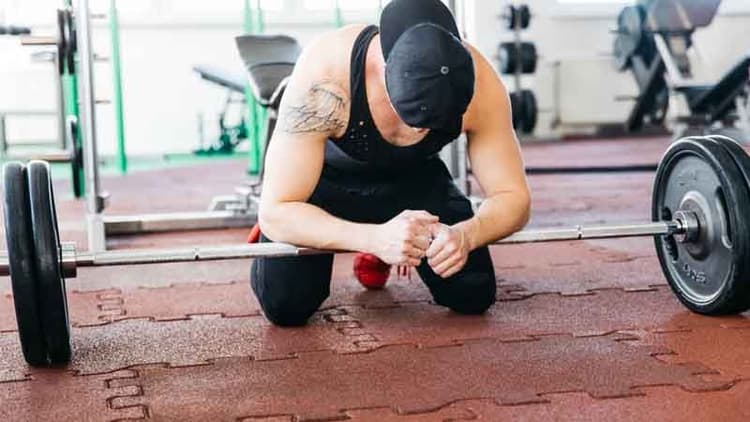
Deadlifts are often called the king of strength exercises. They build power, improve posture, and strengthen nearly every major muscle group in the body. Yet for many people, especially professionals trying to balance fitness with long workdays, deadlifts come with an unwelcome side effect: persistent lower back pain.
If your lower back aches after deadlifts, you are not alone. This discomfort is one of the most common complaints among gym goers, office professionals, and even experienced lifters. The good news is that in most cases, the pain is not caused by the exercise itself. It is caused by a small but critical form mistake that often goes unnoticed.
Understanding why this happens and how to fix it can protect your spine, improve your performance, and help you train with confidence. Let’s break it down in a clear, practical way.
For expert guidance on movement health, injury prevention, and holistic fitness support, explore trusted resources at The Wellness Corner.
Also Read: Should I Do Deadlifts Or Squats First?
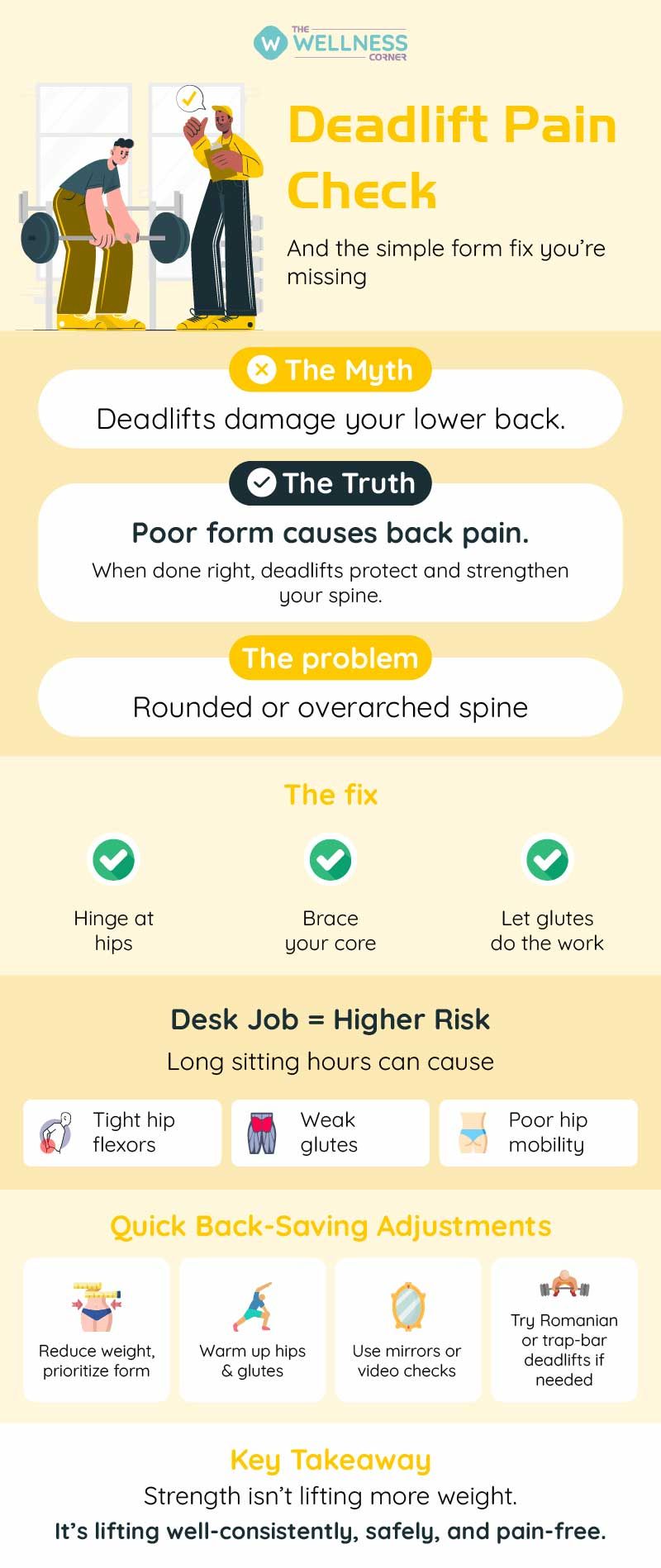
Deadlifts Are Not the Enemy, Poor Mechanics Are
Deadlifts are designed to strengthen the posterior chain, including the glutes, hamstrings, core, and spinal stabilizers. When performed correctly, they actually support lower back health rather than damage it.
Lower back pain usually appears when the spine is forced to compensate for weak engagement elsewhere in the body. Instead of sharing the load, the lower back ends up doing more work than it should.
This overload often happens gradually. You may feel fine during the lift but notice stiffness, soreness, or sharp discomfort hours later or the next morning.
The Most Common Reason Your Lower Back Hurts
The single most common cause of lower back pain after deadlifts is loss of a neutral spine during the movement.
A neutral spine means maintaining the natural curve of your lower back from the start of the lift to the end. When this position breaks down, the spine either rounds or overarches, placing unnecessary stress on the spinal discs and surrounding muscles.
Also Read: Is Walking Good For Lower Back Pain?
This usually happens due to one or more of the following factors:
- Weak core engagement
- Poor hip hinge pattern
- Limited mobility in the hips or hamstrings
- Lifting more weight than your current form can support
Among these, poor hip hinging is the missing link most people overlook.
The Simple Form Fix You Are Probably Missing
The key fix is learning to hinge at the hips instead of bending through the lower back.
Many people think they are hinging correctly, but in reality, they are bending forward by rounding their spine rather than pushing their hips back.
Here is what proper hip hinging should feel like:
- Your hips move backward first, not your chest moving down
- Your shins stay relatively vertical
- Your spine stays long and stable, not curved
- You feel tension in your hamstrings and glutes before the bar leaves the floor
If you initiate the movement by dropping your chest or pulling with your back, the lower spine becomes the main driver of the lift. Over time, this leads to strain, fatigue, and pain.
Why Your Core Matters More Than You Think?
Another overlooked factor is insufficient core bracing.
Your core is not just your abs. It includes deep stabilizing muscles that wrap around your spine and torso. When these muscles are not engaged, your lower back becomes unstable under load.
Before lifting the bar, you should brace your core as if preparing for a cough or light punch to the stomach. This creates internal pressure that protects the spine.
Without this brace, even a technically decent lift can become risky as the weight increases.
How Desk Jobs Make Deadlifts Harder?
If you spend long hours sitting at a desk, your body may already be working against you.
Sitting for a long period of time can tighten up the flexors of your hips, weaken your glutes, and lead to reduction in hip mobility. When you attempt deadlifts in this state, the body defaults to the path of least resistance, which often means bending through the lower back.
This is why many professionals experience back pain even when they are otherwise active. The issue is not effort, but preparation.
Also Read: What Happens To Your Body When Your Glute Muscles Are Weak?
Practical Adjustments That Reduce Back Pain
You do not need to abandon deadlifts to protect your back. Small adjustments can make a significant difference.
Start by lowering the weight and focusing on form. Ego lifting is one of the fastest ways to develop injuries.
Warm up with mobility drills that open the hips and activate the glutes. Exercises like glute bridges, hip hinges with a dowel, and hamstring stretches help reset movement patterns.
Use mirrors or video recordings to check your spine position. Visual feedback can reveal form issues you may not feel during the lift.
If pain persists, try variations like Romanian deadlifts or trap bar deadlifts, which place less stress on the lower back while reinforcing proper mechanics.
Pain Versus Normal Muscle Soreness
It is important to distinguish between muscle soreness and injury related pain.
Normal soreness feels like stiffness or tenderness in the muscles and improves with movement and time. Pain that feels sharp, localized in the spine, or worsens with daily activities should not be ignored.
Persistent pain is a signal that something in your technique, load management, or recovery needs attention.
Why Listening To Your Body Is A Strength, Not A Weakness?
Many people push through discomfort because they believe pain is part of progress. In reality, smart training prioritizes longevity.
Addressing pain early prevents small issues from becoming chronic injuries. Adjusting form, reducing load, or seeking expert guidance is not a setback. It is an investment in sustainable strength.
Building A Back-Friendly Strength Routine
A strong lower back does not come from deadlifts alone. Supporting exercises such as planks, bird dogs, glute work, and controlled mobility training help create balance.
Strength training should complement your lifestyle, not compete with it. When movement supports daily function, workouts feel empowering rather than punishing.
Also Read: Strength Training - How Much Weight Should I Be Lifting?
Frequently Asked Questions
Leave a Comment

Sign-Up Now & Unlock
₹100 Cashback
Recently Published
Related Articles


Health Checks @ Home
Service
Explore



Follow us on:


© 2026 Truworth Health Technologies Pvt. Ltd.