Male Infertility In Urban India: Causes, Lifestyle, And Risks
2 months ago
6 minute read.

For a long time, discussions around infertility largely focused on women. However, modern research and clinical observations have shown that male fertility plays an equally important role in a couple's ability to conceive.
Today, fertility specialists across India are noticing a growing number of men seeking evaluation for fertility-related concerns. While infertility can result from multiple factors involving either partner, male-related factors contribute significantly to many cases.
Urban lifestyles, changing work environments, rising stress levels, poor sleep habits, environmental exposures, and unhealthy lifestyle choices are increasingly being examined for their potential impact on reproductive health.
Encouragingly, more people are becoming informed about the importance of male reproductive health.
Understanding the factors that may affect male fertility can help individuals make informed lifestyle choices and seek timely medical guidance when necessary.
Also Read: Significance Of Blood Test In Infertility
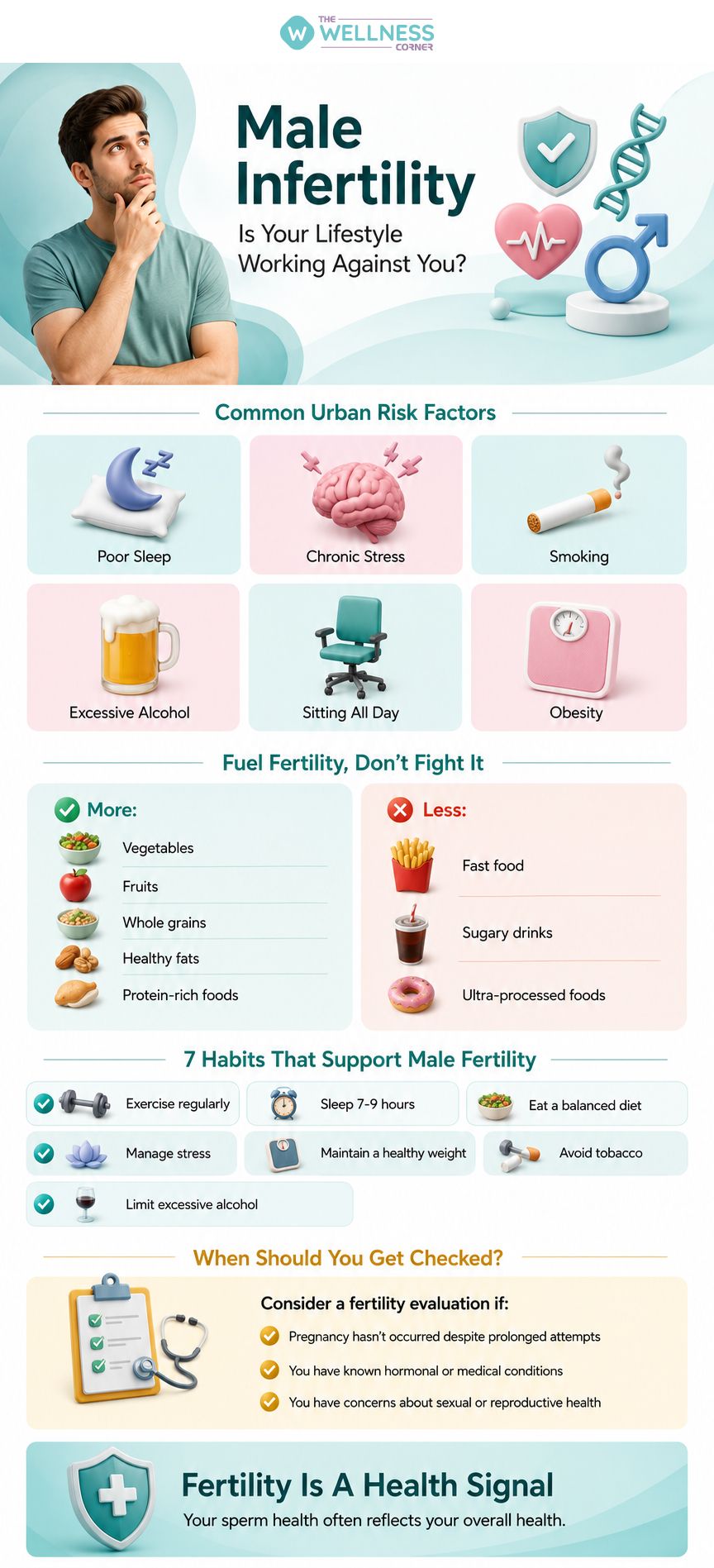
Understanding Male Infertility
Male infertility refers to a reduced ability to contribute to conception due to issues involving sperm production, sperm quality, sperm movement, or reproductive function.
Fertility is influenced by several factors, including:
- Sperm count
- Sperm motility (movement)
- Sperm morphology (shape)
- Hormonal balance
- Overall reproductive health
A problem affecting any of these areas may reduce the likelihood of successful conception.
Importantly, infertility does not always mean sterility. Many fertility challenges may be manageable with appropriate medical evaluation and lifestyle modifications.
Why Urban India Is Seeing More Fertility Concerns?
India's urban population has experienced major lifestyle shifts over the past two decades.
Long working hours, increased screen time, reduced physical activity, irregular eating habits, and chronic stress have become common aspects of daily life.
While urbanization has brought many benefits, certain lifestyle patterns associated with city living may influence overall health, including reproductive wellness.
Experts continue to study how modern lifestyle factors may contribute to changing fertility trends among men.

The Hidden Impact Of Chronic Stress
Stress has become an unavoidable part of modern urban life.
Work deadlines, financial pressures, career competition, family responsibilities, and social expectations can create ongoing psychological strain.
Chronic stress may influence reproductive health through its effects on hormone regulation.
High stress levels may contribute to:
- Reduced libido
- Sleep disturbances
- Hormonal fluctuations
- Lower overall well-being
Although stress alone is not always the sole cause of infertility, long-term emotional strain may indirectly affect reproductive function.
Also Read: Foods That Can Increase Your Libido
Sleep Deprivation And Fertility
Many urban professionals sacrifice sleep to manage demanding schedules.
However, sleep plays an important role in maintaining hormonal health.
During sleep, the body regulates several biological processes that influence:
- Hormone production
- Recovery
- Metabolic function
- Immune health
Insufficient sleep may interfere with hormonal balance and overall physical well-being.
Over time, poor sleep habits may become one of several factors that influence reproductive health.

Sedentary Lifestyles And Physical Inactivity
Modern work environments often require individuals to spend long hours sitting.
Many people commute, work, relax, and socialize while remaining largely inactive throughout the day.
A sedentary lifestyle may contribute to:
- Weight gain
- Reduced cardiovascular health
- Metabolic disturbances
- Poor overall fitness
Staying physically active contributes to overall health and may help support reproductive function when combined with other healthy lifestyle habits.
Also Read - Sedentary Lifestyles: A Silent Killer?
The Link Between Obesity And Male Fertility
Excess body weight has become increasingly common in urban populations.
Obesity may affect fertility through multiple pathways, including changes in:
- Hormone levels
- Metabolic health
- Inflammation
- Insulin regulation
Maintaining a healthy weight through balanced nutrition and regular physical activity may support reproductive health as well as overall wellness.
Smoking And Tobacco Use
Tobacco use remains a significant public health concern.
Smoking exposes the body to numerous chemicals that may affect various organs and biological systems.
Research has associated tobacco use with potential impacts on:
- Sperm quality
- Sperm count
- Blood circulation
- Overall reproductive health
Reducing or eliminating tobacco exposure may provide benefits for both fertility and long-term health.
Also Read - Sperms, The Fertility Factor!
Alcohol Consumption And Reproductive Health
Moderate and excessive alcohol consumption may influence overall health differently.
Frequent heavy alcohol intake has been linked to hormonal changes and may affect reproductive function in some individuals.
While occasional consumption may not have the same impact, excessive alcohol use may contribute to broader health concerns that can indirectly affect fertility.
Also Read: Here’s What Happens To Your Body When You Mix Alcohol And Smoking
Environmental Pollution And Urban Exposure
Urban residents are often exposed to higher levels of environmental pollution.
Air pollution, industrial emissions, traffic-related pollutants, and certain chemicals continue to be studied for their possible effects on human health.
Researchers are investigating how long-term environmental exposure may influence:
- Hormonal health
- Reproductive function
- Sperm quality
Although many factors influence fertility, environmental health remains an area of growing scientific interest.

The Role Of Diet In Male Fertility
Nutrition affects nearly every aspect of health, including reproductive wellness.
A diet heavily dependent on:
- Ultra-processed foods
- Sugary beverages
- Excessive fast food
- Highly refined products
May negatively influence overall health over time.
In contrast, balanced nutrition that includes:
- Fruits
- Vegetables
- Whole grains
- Healthy fats
- Protein-rich foods
Supports overall well-being and may contribute positively to reproductive health.

Heat Exposure And Reproductive Health
The male reproductive system functions optimally within a specific temperature range.
Excessive and prolonged heat exposure is often discussed in fertility research.
Potential sources of prolonged heat exposure may include:
- Hot tubs
- Saunas
- Frequent laptop use directly on the lap
- Certain occupational environments
While occasional exposure is unlikely to be harmful for most individuals, chronic excessive heat may affect sperm production in some cases.
Medical Conditions That May Affect Fertility
Lifestyle is not the only factor involved.
Certain medical conditions may also influence male fertility, including:
- Varicocele
- Hormonal disorders
- Diabetes
- Infections
- Genetic conditions
- Thyroid disorders
This is why proper medical evaluation remains important when fertility concerns arise.
When Should Men Consider Fertility Evaluation?
Many couples delay seeking help because infertility remains a sensitive topic.
However, early evaluation may help identify potential concerns sooner.
Men may consider consulting a healthcare professional if:
- Pregnancy has not occurred after prolonged attempts
- There has been a previous history of reproductive or fertility-related health concerns.
- There are concerns regarding sexual function
- There are known hormonal or medical conditions
Timely medical guidance often helps clarify the situation and identify appropriate next steps.

Breaking The Stigma Around Male Fertility
One of the biggest barriers to addressing male infertility is social stigma.
Many men feel uncomfortable discussing fertility concerns due to cultural expectations or misconceptions.
However, fertility challenges are medical issues, not personal failures.
Open conversations, education, and early evaluation can help reduce unnecessary stress and encourage proactive healthcare decisions.
Supporting Male Reproductive Health Through Lifestyle Choices
While not all fertility challenges can be prevented, healthy habits may support overall reproductive wellness.
Helpful lifestyle practices include:
- Regular exercise
- Balanced nutrition
- Adequate sleep
- Stress management
- Avoiding tobacco use
- Limiting excessive alcohol intake
- Maintaining a healthy weight
- Regular health checkups
Small, consistent lifestyle improvements often support broader health goals beyond fertility alone.
The Bigger Picture: Fertility Reflects Overall Health
Male fertility is often closely connected to general physical and metabolic health.
The same habits that support heart health, hormonal balance, energy levels, and disease prevention may also contribute positively to reproductive wellness.
Rather than viewing fertility as an isolated concern, it can be helpful to see it as one aspect of overall health.
Investing in healthier lifestyle choices today may offer benefits that extend far beyond reproductive outcomes.
Take Charge Of Your Health With The Wellness Corner
Physical health, mental well-being, nutrition, sleep, stress management, and preventive care all play important roles in long-term wellness.
The Wellness Corner offers expert-backed support for healthy lifestyle habits, fitness, nutrition, emotional wellness, preventive healthcare, and overall well-being to help individuals make informed health decisions at every stage of life.
Because better health begins with awareness and action.
Frequently Asked Questions (FAQs)
Leave a Comment

Sign-Up Now & Unlock
₹100 Cashback
Subscribe to our Newsletter!
Get a weekly dose of wellness tips delivered straight to your inbox.
Recently Published
Related Articles


Health Checks @ Home
Service
Explore



Follow us on:


© 2026 Truworth Health Technologies Pvt. Ltd.