Quinoa And Digestive Health: Understanding Why It May Trigger Gas, Bloating, Or Constipation
1 month ago
5 minute read.

Quinoa has gained enormous popularity in recent years.
It is often praised as a superfood because it contains fiber, plant protein, vitamins, minerals, and essential amino acids. From salads and grain bowls to breakfast recipes and healthy snacks, quinoa has become a favorite among people trying to eat cleaner and more nutritiously.
But despite its healthy image, not everyone feels great after eating it.
Some people notice symptoms like:
- Gas
- Bloating
- Stomach discomfort
- Constipation
- Digestive heaviness
This can feel confusing.
“How can a healthy food upset digestion?”
The answer lies in the fact that even nutritious foods may affect individuals differently depending on gut sensitivity, portion size, preparation methods, hydration, and overall digestive health.
Quinoa is not inherently harmful, but understanding how it interacts with the digestive system can help people consume it more comfortably.
Also Read: Indian Foods That Offer Better Fat Balance Than Avocados And More Protein Than Quinoa
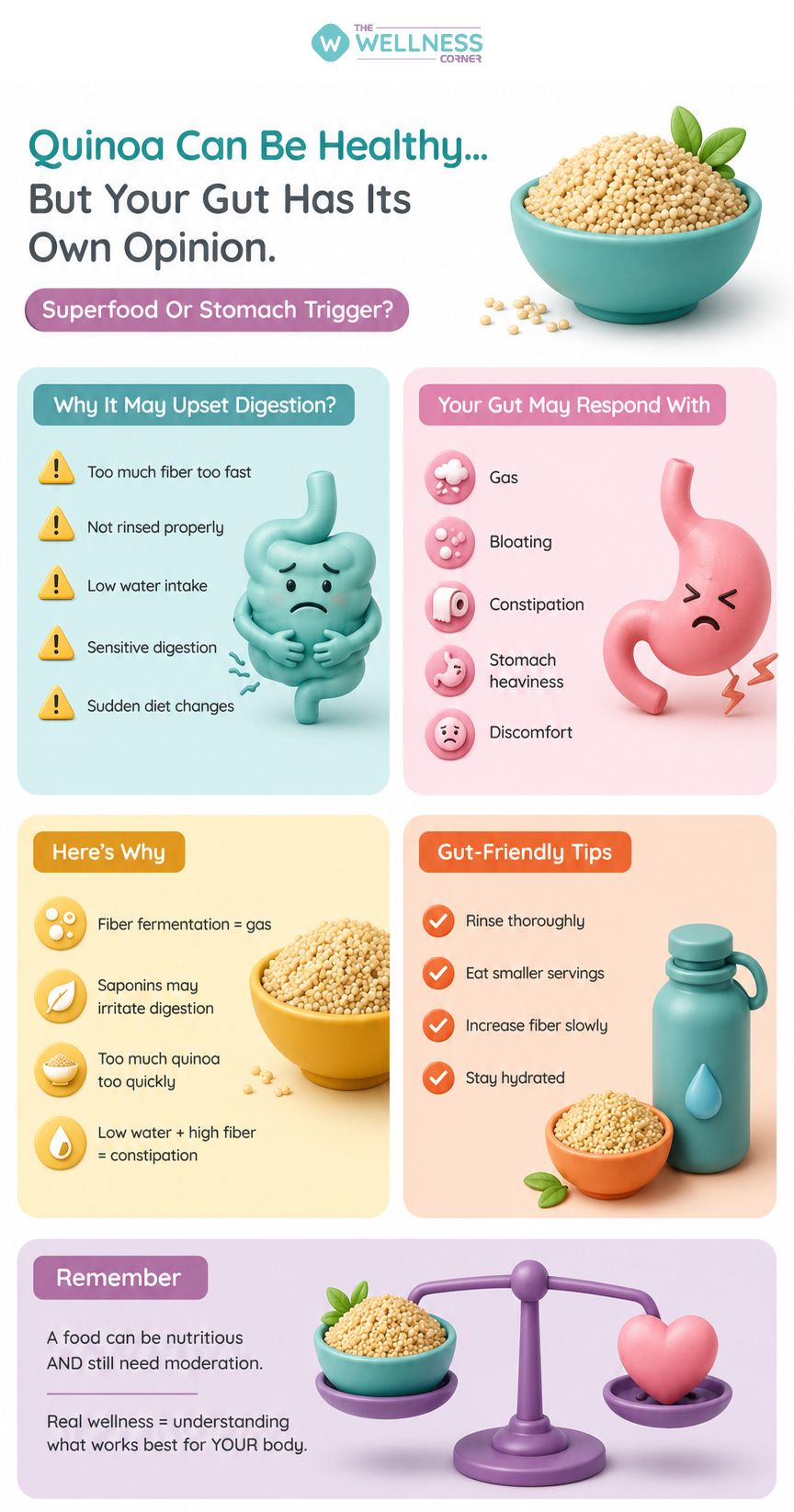
What Exactly Is Quinoa?
Quinoa is technically a seed, although it is commonly eaten like a grain.
It naturally contains:
- Fiber
- Protein
- Iron
- Magnesium
- Antioxidants
Since quinoa is naturally gluten-free and packed with nutrients, it is commonly suggested as a healthier substitute for refined carbs.
However, its high fiber and plant compound content may sometimes create digestive challenges for certain individuals.
Why Quinoa May Cause Gas Or Bloating?
Digestive discomfort after eating quinoa is often linked to fiber and certain natural compounds present in the seed.
Several factors may contribute.
Also Read: How Dietary Choices Affect Bloating And Gas?
1. High Fiber Content
Fiber is important for digestive health.
It supports bowel regularity, gut bacteria, and satiety.
However, a rapid increase in fiber consumption can sometimes temporarily put extra strain on the digestive system.
When fiber reaches the large intestine, gut bacteria ferment parts of it, which can produce gas.
This may lead to:
- Bloating
- Abdominal discomfort
- Flatulence
- A feeling of fullness
People who are not used to high-fiber foods may notice these symptoms more strongly.

2. Saponins On The Outer Layer
Quinoa naturally contains compounds called saponins.
These compounds form a protective coating around the seed and may taste slightly bitter.
If quinoa is not rinsed thoroughly before cooking, leftover saponins may irritate the digestive tract in sensitive individuals.
Some people may experience:
- Stomach discomfort
- Digestive irritation
- Mild bloating
Proper washing before cooking can help reduce this issue significantly.
3. Sudden Dietary Changes
Many people begin eating quinoa as part of a rapid “healthy eating” shift.
For example:
- Replacing refined carbs suddenly
- Increasing salads and fiber-rich foods overnight
- Combining quinoa with multiple raw vegetables
The digestive system sometimes needs time to adapt to major dietary changes.
The issue may not be quinoa alone but the overall sudden increase in fiber and plant-based foods.

4. Inadequate Water Intake
Fiber supports digestion more effectively when the body is adequately hydrated.
Without enough fluids, high-fiber foods may sometimes contribute to:
- Constipation
- Hard stools
- Digestive heaviness
Some people increase quinoa intake without adjusting water consumption accordingly.
Also Read: Struggling With Constipation? Here’s How Prunes (Dried Plums) Can Help
5. Individual Digestive Sensitivities
Every digestive system responds differently to foods.
People with conditions such as:
- Irritable bowel syndrome (IBS)
- Sensitive digestion
- Food intolerances
- Gut inflammation
May react more strongly to high-fiber foods like quinoa.
This does not necessarily mean quinoa is unhealthy. It simply means tolerance levels vary.

Can Quinoa Cause Constipation?
Surprisingly, yes.
While fiber is commonly linked to better digestion, consuming too much of it without adequate water intake can occasionally lead to slower bowel movements.
Portion size also matters.
Eating large amounts of quinoa while consuming limited fluids may contribute to digestive discomfort in certain individuals.
Balance is important.
Also Read: Get Your Food Portions Under Control
Is Quinoa Bad For Gut Health?
Not at all.
For many individuals, quinoa may benefit digestive health by supplying fiber and nutrients that help nourish healthy gut bacteria.
The key difference lies in:
- Preparation methods
- Portion sizes
- Individual tolerance
- Overall diet quality
A food can be healthy overall while still causing temporary digestive discomfort in some people.
How To Make Quinoa Easier To Digest?
Simple preparation habits may help reduce digestive symptoms.
1.Rinse Quinoa Thoroughly
Washing quinoa before cooking helps remove excess saponins.
2. Increase Fiber Gradually
Avoid dramatically increasing fiber intake overnight.
3. Drink Enough Water
Drinking enough fluids allows fiber to move more smoothly through the digestive system.
4. Start With Smaller Portions
Some people tolerate smaller servings better initially.
5. Pair It With Cooked Foods
Cooked vegetables may sometimes feel gentler on digestion than large raw salads.
What If Symptoms Continue?
Temporary bloating or gas can sometimes occur as the digestive system adjusts to dietary changes.
However, persistent symptoms should not be ignored.
If digestive discomfort continues regularly, medical guidance may help identify:
- Food intolerances
- Digestive disorders
- Underlying gut conditions
Self-diagnosing every symptom through internet trends can sometimes create unnecessary confusion.
The Bigger Picture: Healthy Foods Are Not One-Size-Fits-All
Modern wellness culture often labels foods as universally “good” or “bad.”
But the human digestive system is far more individualized.
A food that works well for one person may not feel ideal for another.
Healthy eating is about paying attention to your body’s individual needs instead of simply copying popular food trends.
Quinoa can absolutely be part of a nutritious diet, but moderation, preparation, and personal tolerance all matter.
Nurture Your Digestive Well-Being With The Wellness Corner
Digestive health is closely connected to nutrition, stress, lifestyle habits, and overall well-being.
The Wellness Corner offers expert-backed support for nutrition, fitness, emotional wellness, preventive health, and healthier lifestyle management to help individuals make informed choices that support long-term wellness.
Because healthy eating should nourish the body, not create unnecessary stress around food.
Frequently Asked Questions (FAQs)
Leave a Comment

Sign-Up Now & Unlock
₹100 Cashback
Recently Published
Related Articles


Health Checks @ Home
Service
Explore



Follow us on:


© 2026 Truworth Health Technologies Pvt. Ltd.