20 Daily Habits That Could Be Aging Your Face
7 hours ago
6 minute read.
You may have a skincare routine, invest in good products, and remember to apply sunscreen when you are heading to the beach. Yet sometimes, the habits affecting your skin are not the ones you notice in the mirror.
Even seemingly insignificant habits can affect your skin in the long run. From regularly skipping sleep to forgetting sunscreen on ordinary workdays, seemingly small choices can contribute to dryness, dullness, uneven pigmentation, and the gradual appearance of fine lines.
The good news? Taking care of your skin doesn’t require a long or complicated routine.
Sometimes, the most effective changes involve correcting the habits you barely think about.
Here are 20 everyday habits that may be making your face look older than it needs to.
Also Read - Healthy Aging Through Yoga: Build Strength, Improve Mobility, And Thrive
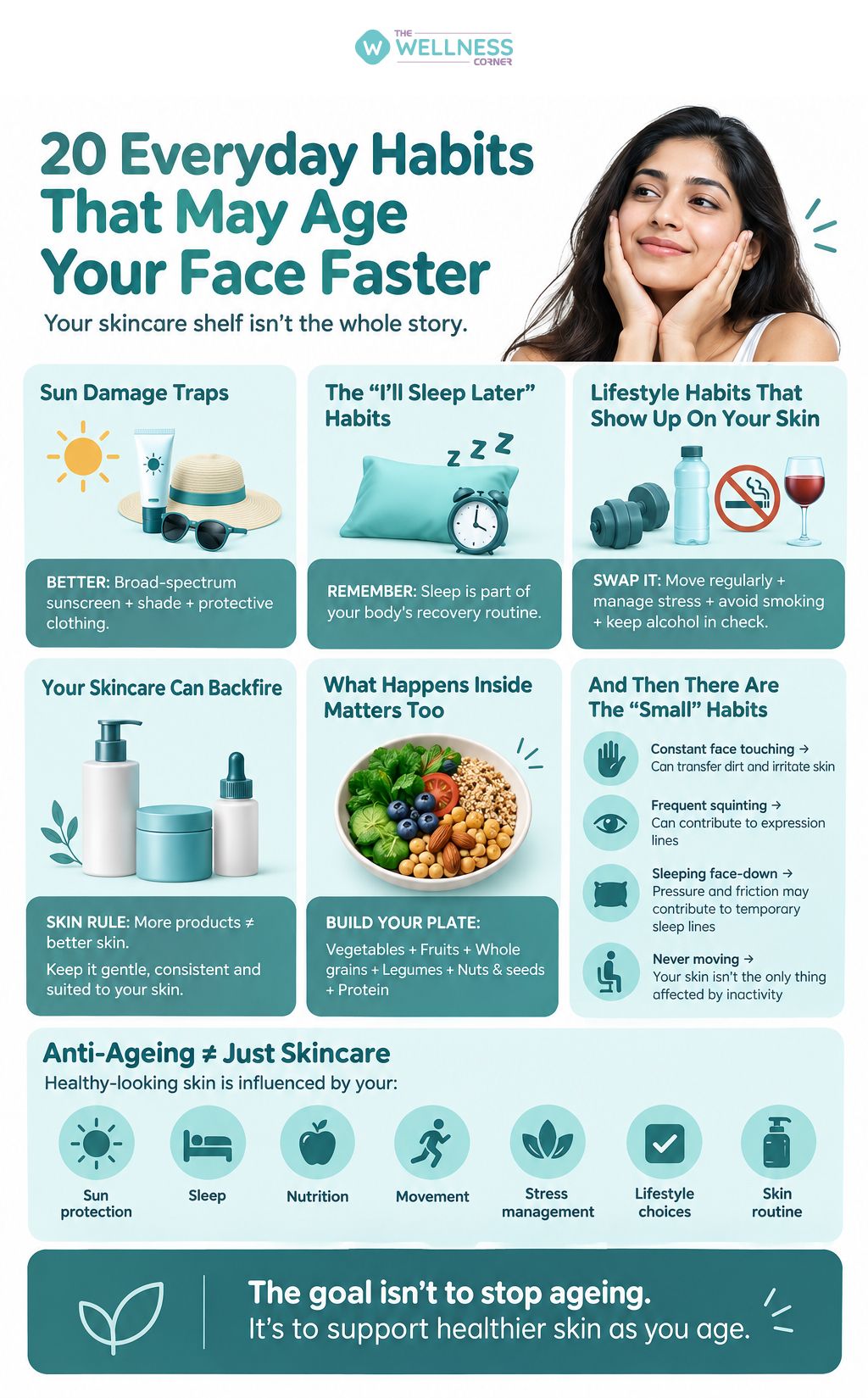
1. Skipping Sunscreen On Cloudy Days
Frequent exposure to UV rays can play a significant role in early skin ageing. Clouds do not completely block ultraviolet radiation, so your skin can still receive UV exposure on overcast days.
Apply a broad-spectrum sunscreen every day, especially before spending time outside.
2. Treating Sleep As Optional
Late nights may seem harmless when deadlines are piling up, but consistently inadequate sleep can affect how your skin looks and feels.
Sleep gives your body valuable time to rest, repair, and recover. Regularly prioritising work, scrolling, or entertainment over adequate sleep can leave your face looking tired and dull.
Also Read: Is The 8-Hour Sleep Rule A Myth? What Science Really Says?
3. Forgetting To Stay Hydrated
Water is not a magic anti-ageing treatment, but adequate hydration supports normal body function and can help prevent dehydration-related dryness.
Instead of waiting until you are extremely thirsty, make regular fluid intake part of your daily routine.

4. Prolonged Sun Exposure Without Skin Protection
Sunscreen is only part of sun protection. Spending long periods in direct sunlight without shade, protective clothing, or other precautions increases UV exposure.
When possible, use shade and protective clothing alongside sunscreen.
Also Read: Your Complete Guide To Skin Barrier Repair
5. Smoking
Smoking exposes the body to chemicals that can damage skin structure and reduce blood flow.
Over time, smoking is associated with premature skin ageing and wrinkles, particularly around the mouth and eyes.
Quitting smoking is one of the most meaningful things you can do for your overall health, including your skin.
6. Drinking Excessively
Regular heavy alcohol consumption can affect overall health and may contribute to dehydration and disrupted sleep.
If you drink alcohol, moderation and adequate hydration are important parts of a healthier lifestyle.
Also Read: Here’s What Happens To Your Body When You Mix Alcohol And Smoking
7. Forgetting To Wash Your Face After Sweating
Working out is great for your health, but prolonged contact with sweat and excess oil can sometimes trigger skin irritation or blemishes.
After a sweaty workout, gently cleanse your face rather than aggressively scrubbing it.
8. Sleeping With Makeup On
A long day can make removing makeup feel like another task you simply cannot face.
Leaving cosmetics on your skin overnight can lead to pore buildup and may trigger irritation.
A quick cleanse at night can help clear away dirt, oil, and other residue.
Also Read: How Long Can You Wear Makeup Without Risking Skin Damage?

9. Constantly Touching Your Face
How often do you touch your face without noticing?
Hands can carry dirt, oil, and microorganisms. Repeated face touching may bring unwanted buildup to the skin and aggravate existing breakouts.
Greater awareness of this habit can encourage you to touch your face less often.
10. Picking At Pimples
That tempting spot on your chin may look like it needs immediate attention.
Picking or squeezing blemishes can increase inflammation and raise the risk of scarring or pigmentation.
Allow your skin to recover naturally and follow a suitable acne-care routine.
11. Using Extremely Hot Water
Although hot water can feel soothing, extended exposure may strip moisture from your skin and cause discomfort. Try using lukewarm water instead.
Choosing comfortably warm water can be kinder to your skin.
12. Over-Exfoliating
Removing dead skin cells can be beneficial, but excessive exfoliation may leave your skin worse off. Frequent scrubbing and harsh products can disrupt the skin barrier
and trigger dryness or sensitivity.
13. Constantly Frowning Or Squinting
Everyday expressions can gradually leave behind lines as the skin changes with age.
Squinting may also be a sign that you need updated vision correction or better protection from bright sunlight.
Sunglasses can help reduce unnecessary squinting outdoors while protecting your eyes from UV exposure.
14. Living On Highly Processed Foods
What you eat can influence the nutrients available to support your skin. A diet centered around processed foods, with limited fruits, vegetables, whole grains, healthy fats, and protein, may not offer enough dietary variety.
15. Not Eating Enough Protein
Protein provides building blocks that the body needs to maintain various tissues, including your skin.
Extremely restrictive diets can sometimes make it difficult to meet nutritional needs.
Include appropriate protein sources such as eggs, dairy, fish, lean meats, beans, lentils, nuts, seeds, or other suitable options.
16. Ignoring Stress
Stress does not automatically cause wrinkles, but chronic stress can affect sleep, lifestyle choices, and overall wellbeing.
Some people also notice changes in their skin during periods of prolonged stress.
Finding sustainable ways to manage stress can therefore support both your general health and your skin.

17. Sitting Indoors All Day And Never Moving
Your skin may not care whether you completed 10,000 steps, but your overall health certainly benefits from regular movement.
Physical activity supports circulation, cardiovascular health, stress management, and sleep.
Take movement breaks during long workdays and make regular exercise part of your routine.
18. Sleeping On Your Face Every Night
The idea that sleeping on your face automatically causes permanent wrinkles is overstated. However, prolonged pressure and friction can contribute to temporary sleep lines, and repeated mechanical stress may play a role in skin changes over time.
Comfort should still come first. If you sleep comfortably on your side or back, there is no need to force yourself into an unnatural position.
19. Using Products That Irritate Your Skin
Skincare does not need to feel harsh or painful to deliver results.
Using too many active ingredients, switching products constantly, or ignoring irritation can compromise your skin barrier.
A simple routine with products suited to your skin type is often easier to maintain than constantly chasing the newest trend.
20. Treating Skincare As Your Only Anti-Ageing Strategy
This may be the biggest mistake of all.
Healthy skin is shaped by more than just your skincare products. Sleep, nutrition, physical activity, sun protection, smoking, alcohol consumption, stress, and overall health all matter.
Your face reflects your lifestyle more than any single product can fix.

The Bottom Line
Ageing is a completely natural process, and there is nothing wrong with developing wrinkles, fine lines, or changes in skin texture over time.
The goal should not be to stop your face from ageing.
It is about supporting your skin’s health as it changes with age.
Start with the basics: protect yourself from excessive sun exposure, get enough sleep, eat a varied diet, stay active, avoid smoking, manage stress, and treat your skin gently.
You do not need to change all 20 habits overnight.
Pick one or two that genuinely fit your lifestyle and work from there.
Looking for more practical ways to support your everyday health and wellbeing? Explore The Wellness Corner for expert guidance, health resources, wellness tools, and simple habits that can help you build a healthier lifestyle from the inside out.
Disclaimer: This article is intended for general educational purposes and should not replace personalized medical or dermatological advice. Skin ageing is a natural process, and individual skin needs can vary. If you experience persistent irritation, unusual skin changes, severe dryness, pigmentation concerns, or other ongoing skin problems, consult a dermatologist or qualified healthcare professional for appropriate evaluation and guidance.
Leave a Comment

Sign-Up Now & Unlock
₹100 Cashback
Subscribe to our Newsletter!
Get a weekly dose of wellness tips delivered straight to your inbox.
Recently Published
Related Articles


Health Checks @ Home
Service
Explore



Follow us on:


© 2026 Truworth Health Technologies Pvt. Ltd.