9 Foods That Help Reduce Dark Circles And Brighten Under-Eye Skin
2 days ago
6 minute read.

Dark circles under the eyes are easy to blame on late nights. But the truth is more complicated.
Genetics, ageing, allergies, dehydration, sun exposure and frequent eye rubbing can all contribute to a darker under-eye appearance. In some people, naturally thin skin or hollowing beneath the eyes can also create shadows that make the area look darker.
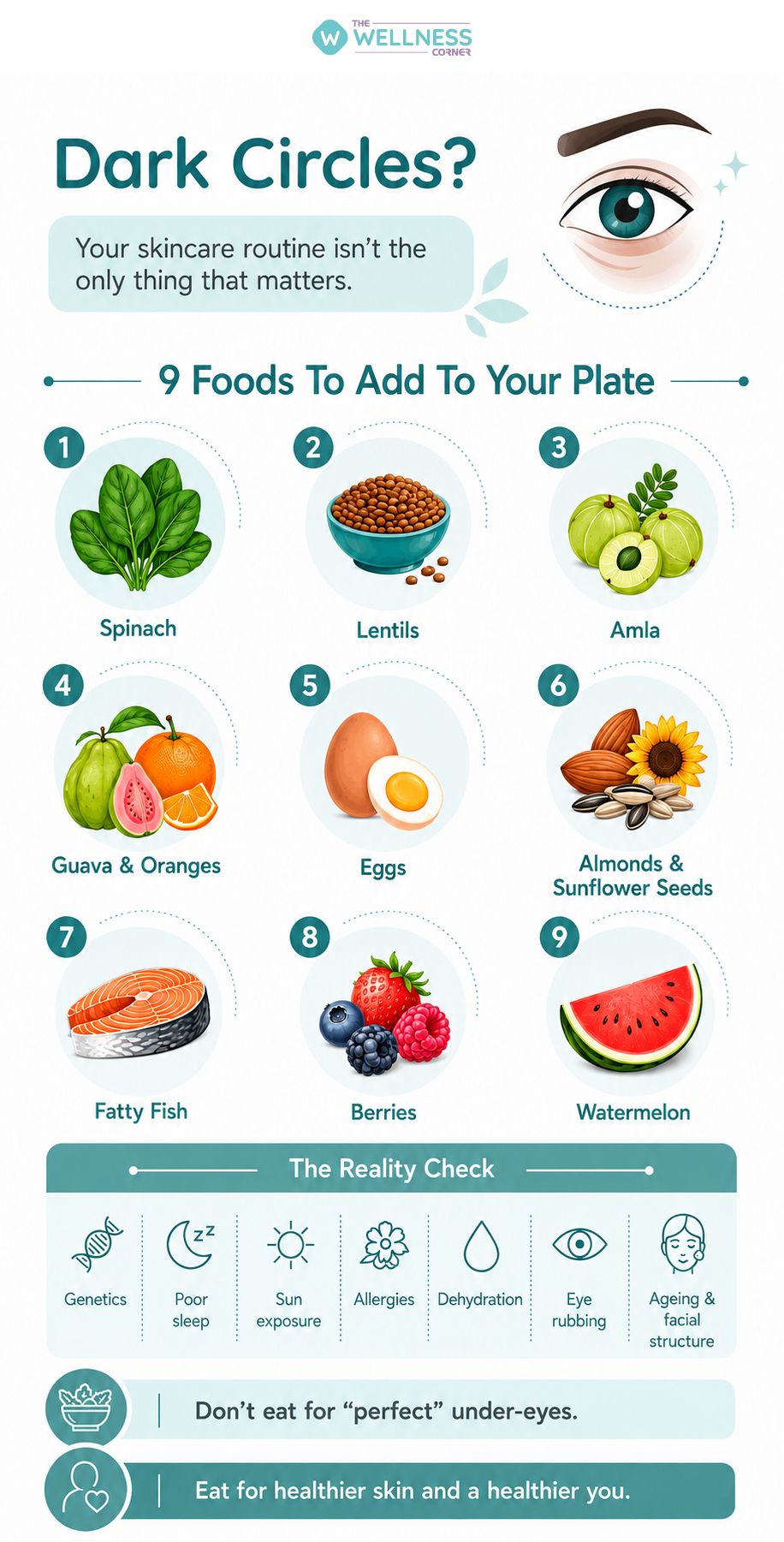
That is why food should not be presented as a magic eraser for dark circles. Your diet can support healthy skin and help correct nutrient gaps, but it cannot change genetics or completely remove pigmentation and structural shadows.
Still, adding nutrient-rich foods to your meals is a smart place to start. Here are nine foods that can support healthy skin, hydration and the nutrients your body needs for a healthy complexion.
Also Read: Does Your Dark Circle Spoil Your Look?
1. Spinach: A Leafy Green Worth Adding
Spinach provides several nutrients, including folate, iron, vitamin C and carotenoids.
Iron is important because iron deficiency can contribute to fatigue and pale skin. Vitamin C, meanwhile, helps the body absorb iron from plant foods and is needed for collagen production.
Try adding spinach to dal, soups, vegetable preparations, omelettes or salads.
It is not going to erase dark circles overnight, but it can contribute to a nutrient-dense diet that supports overall health.
2. Lentils: An Everyday Source Of Plant-Based Iron
Lentils are an easy way to include plant-based iron and folate in your diet.
There is an even smarter pairing to remember. Combine lentils with vitamin C-rich foods such as tomatoes, lemon, guava or capsicum. Vitamin C can improve the absorption of non-heme iron found in plant foods.
If you frequently feel tired or unusually pale along with persistent under-eye darkness, do not assume the answer is simply eating more iron. A healthcare professional can determine whether iron deficiency or another condition needs to be investigated.
Also Read: Can You Actually Get Enough Vitamin C From An Orange To Reap The Benefits?

3. Amla: Small Fruit, Big Vitamin C Boost
Amla, or Indian gooseberry, is particularly useful for adding vitamin C to the diet.
Vitamin C acts as an antioxidant and plays an important role in collagen production, which supports the structure of the skin.
You can enjoy amla fresh, chopped into a salad, or in other food preparations that suit your diet.
The benefit is nutritional rather than cosmetic magic. Think of it as one part of a broader skin-supportive eating pattern.
4. Guava And Oranges: Bring More Vitamin C To Your Plate
Oranges are a familiar source of vitamin C, but guava deserves equal attention.
Adequate vitamin C supports collagen formation and antioxidant protection. It can also improve the absorption of iron obtained from plant sources.
Try having fruit or dried fruits like melon, pomegranate, raisins or dry dates.
That simple combination can improve the overall nutritional quality of your diet while supporting normal skin function.
Also Read - Guava Leaves: Benefits For Skin & Hair
5. Eggs: Protein Plus Important Micronutrients
Eggs provide protein and vitamin B12, along with other nutrients.
Vitamin B12 deficiency can lead to anaemia, which may cause pallor and fatigue.
Again, this does not mean eating eggs directly treats dark circles.
The point is that adequate nutrition supports your body as a whole. When your diet is consistently lacking important nutrients, your overall appearance and energy levels may reflect it.
6. Almonds And Sunflower Seeds: Don't Forget Vitamin E
Almonds and sunflower seeds are good sources of vitamin E and beneficial dietary fats.
Vitamin E is an antioxidant that helps protect cells from oxidative damage.
A small portion makes an easy snack or topping for breakfast bowls, salads and yoghurt.
Just remember that nuts and seeds are energy-dense, so a modest serving is usually enough. More is not necessarily better.
Also Read: Eating Foods Rich In Vitamin E Associated With Lower Dementia Risk
7. Fatty Fish: Supporting Skin From The Inside
Salmon, sardines and mackerel are good sources of omega-3 fatty acids and other nutrients, including vitamin D.
Omega-3 fats are important components of cell membranes and form part of a balanced, nutrient-rich eating pattern.
They are not a direct treatment for under-eye pigmentation. However, regularly including nutrient-dense foods such as fatty fish can support overall nutritional health, which is ultimately more useful than chasing individual “beauty foods.”

8. Berries: A Colourful Addition To Your Diet
Strawberries, blackberries and other berries provide vitamin C and antioxidant compounds.
A diet that regularly includes a variety of fruits and vegetables helps provide nutrients involved in normal skin maintenance. Vitamin C, in particular, supports collagen production and antioxidant protection.
Add berries to breakfast, smoothies, yoghurt or snacks.
Think variety rather than one food. What you eat consistently as a whole matters more than relying on one particular food.
Also Read: 5 Powerful Antioxidant-Rich Herbs
9. Watermelon: Hydration Can Affect How Your Skin Looks
Watermelon contains a high amount of water, making it a refreshing addition to meals and snacks.
Dehydration can make the skin around the eyes look dull and may make existing shadows more noticeable. Dehydration is among the factors that can contribute to dark circles.
Of course, eating watermelon does not replace drinking enough fluids. It simply contributes to overall hydration.
What Your Diet Can And Cannot Change?
Here is where realistic expectations matter.
Food can support healthy skin and help you meet your nutritional needs. Adequate vitamin C, iron, B vitamins, healthy fats and antioxidants all have important roles in normal body function.
But dark circles are not caused by nutrition alone.
Genetics, ageing, allergies, dehydration, lack of sleep, hyperpigmentation and changes in the tissues beneath the eyes can all influence their appearance.
So, if you are eating good but still have dark circles, that does not mean your diet has failed.
The Sleep Connection You Should Not Ignore
Your dinner may be healthy, but your bedtime habits matter too.
Poor sleep can make the skin beneath the eyes appear paler, making the blood vessels underneath more visible and potentially accentuating dark circles.
If late-night scrolling, irregular work hours or frequent sleep disruption has become routine, improving your sleep schedule may be just as important as improving what is on your plate.

Protect The Skin Around Your Eyes
Nutrition is just one part of the bigger picture.
Sun exposure can increase melanin production and contribute to hyperpigmentation. Gentle skincare, appropriate sun protection and avoiding frequent eye rubbing can therefore matter too.
Allergies can also create what are commonly called allergic shiners. Nasal congestion can affect blood flow around the eyes, causing the area underneath them to look darker and puffier.
If you have frequent congestion, itching or watery eyes along with dark circles, allergies may deserve attention.
When Dark Circles Need More Than A Food Fix?
Dark circles are usually harmless, but not every change should be ignored.
Seek medical advice if the darkness appears suddenly, becomes significantly worse, affects mainly one eye or occurs with unusual swelling or other concerning symptoms.
It is also recommended to have medical assessment when darkening or swelling under one eye is unexplained.
Persistent fatigue, unusual paleness or breathlessness can also warrant a medical discussion because iron-deficiency anaemia can cause those symptoms.
The Bottom Line: Feed Your Skin, But Keep Expectations Real
There is no single food that can make dark circles disappear.
But there are plenty of foods that can support the nutritional foundation behind healthy skin.
Add leafy greens, lentils, amla, guava, oranges, eggs, nuts and seeds, fatty fish, berries and hydrating fruits to a varied diet. Pair those choices with sufficient sleep, good hydration, sun protection and gentle skincare.
And remember the bigger goal.
You are not eating one particular food to “cure” dark circles. You are building a diet that supports your overall health, including the health of your skin.
Support Your Skin And Overall Wellbeing With The Wellness Corner
Your skin is influenced by more than your skincare shelf. Nutrition, sleep, hydration, stress and everyday lifestyle habits can all contribute to how you look and feel.
Explore The Wellness Corner for practical resources on nutrition, fitness, skincare, stress management and healthier everyday habits.

FAQs
Leave a Comment

Sign-Up Now & Unlock
₹100 Cashback
Recently Published
Related Articles


Health Checks @ Home
Service
Explore



Follow us on:


© 2026 Truworth Health Technologies Pvt. Ltd.