Look For These Ingredients In Your Nail Paint! They Can Harm You
1 day ago
5 minute read.

A fresh coat of nail paint can make your hands look polished and put together. Whether you prefer soft neutrals or bold colours, nail polish is an easy way to express your style. But have you ever stopped to read the ingredients printed on the bottle?
Some nail polish formulations contain chemicals that may irritate the skin, trigger allergic reactions, or raise health concerns depending on the ingredient, level of exposure, and how frequently the product is used. This does not mean every nail paint is dangerous. However, knowing what goes into your favourite shade can help you make more informed choices.
Here are some ingredients worth recognising before your next manicure.
Also Read: 5 Tricks To Prevent Your Nail Polish From Chipping
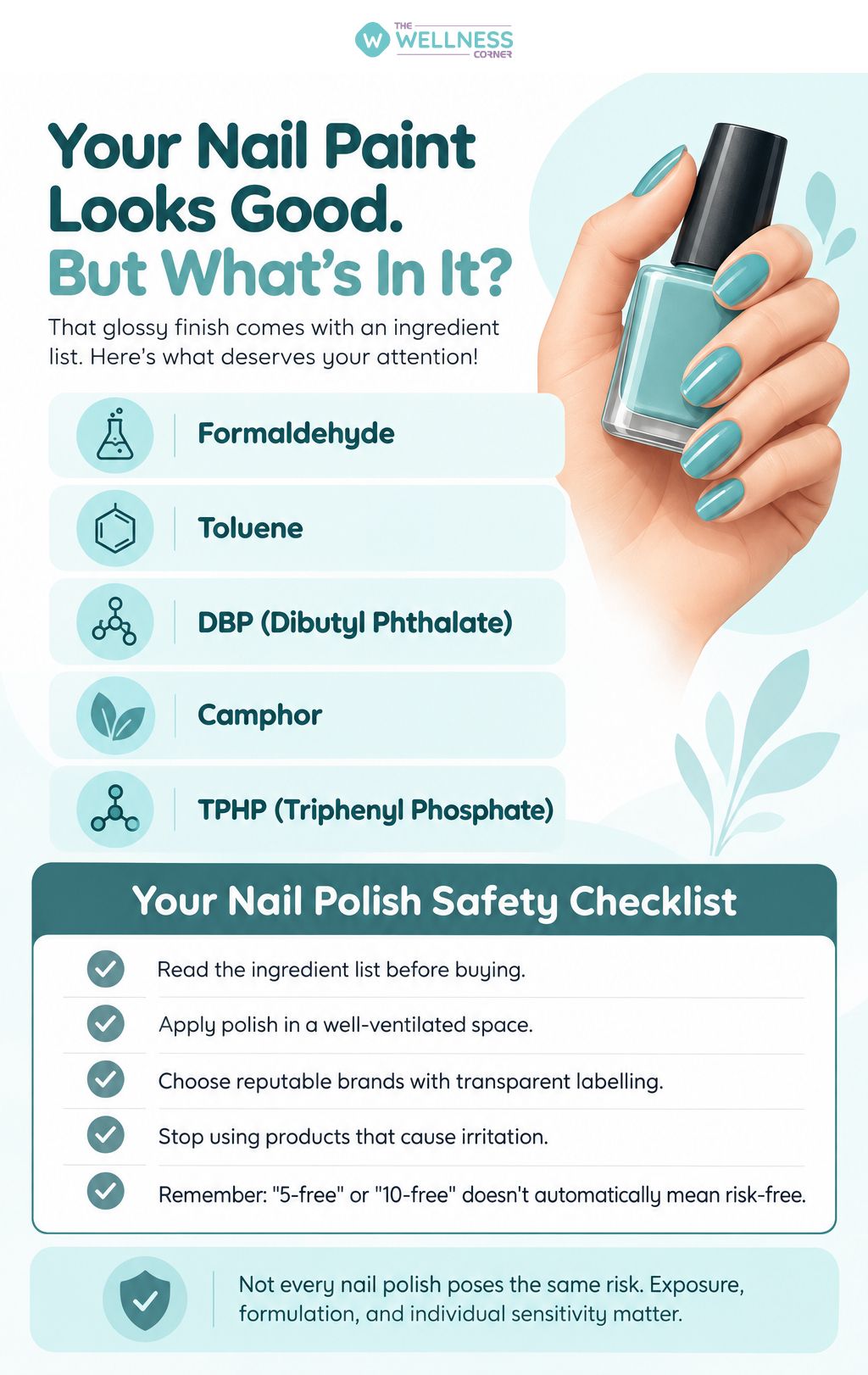
1. Formaldehyde: A Chemical Worth Watching
Formaldehyde has traditionally been used in some nail hardeners and nail products. It helps certain formulations improve nail hardness, but exposure can cause problems for some people.
Formaldehyde is a known human carcinogen, with the strongest evidence concerning certain types of cancer associated with exposure. The risk depends on the level, route, and duration of exposure. Its presence in a product does not mean that occasional use will cause cancer, but unnecessary exposure should be avoided.
In nail products, formaldehyde can also irritate the eyes, nose, throat, and skin. Some people may develop allergic contact dermatitis, which can cause redness, itching, swelling, or a rash around the nails.
Ingredient Check
Examine the product label for formaldehyde. You may also encounter formaldehyde resin, which is a different chemical and may still cause allergic reactions in susceptible individuals. Do not assume that all ingredients with similar names have identical risks.
2. Toluene: The Solvent Behind The Strong Smell
Toluene is a solvent that has been used in some nail polish formulations to help ingredients mix and create a smooth finish. It is also associated with the familiar chemical smell of certain nail products.
The main concern is excessive inhalation, particularly in poorly ventilated spaces or settings involving frequent occupational exposure. High concentrations can affect the nervous system and cause symptoms such as headaches, dizziness, nausea, and confusion.
Repeated or substantial exposure may pose additional health risks. The smell alone, however, cannot tell you the exact concentration or toxicity of a product.
What To Check?
Look for toluene on the label. If you paint your nails at home, work near an open window or use good ventilation, avoid deliberately inhaling the fumes, and follow the manufacturer's instructions. People who regularly use nail products professionally should take particular care to minimise repeated exposure.
3. Dibutyl Phthalate (DBP): A Plasticiser With Health Concerns
Dibutyl phthalate, commonly known as DBP, has been used in some nail polishes as a plasticiser. It helps the coating remain flexible and may reduce cracking.
DBP has raised concerns because research has linked certain levels of exposure to reproductive and developmental effects, particularly in animal studies. The implications of low-level exposure from occasional cosmetic use are less certain and depend on the amount absorbed and overall exposure.
Cosmetic regulations also differ across countries, so a product's availability does not automatically establish that every ingredient is appropriate for every user.
What To Check?
Look for dibutyl phthalate or DBP. If you prefer to minimise exposure, choose a product that does not list this ingredient and purchase cosmetics from reputable sellers.
4. Camphor: Not Always Harmless In Nail Products
Camphor is a naturally occurring compound that can also be manufactured synthetically. Certain nail polish formulas may contain formaldehyde because it can influence how the product forms a coating and responds to movement.
Camphor is not automatically harmful whenever it appears in a cosmetic. However, exposure to excessive amounts can be dangerous, and swallowing camphor-containing products can cause serious poisoning.
For nail polish, the relevant concern depends on the concentration, intended use, and likelihood of exposure. Avoid applying nail products to irritated or broken skin, and keep bottles away from children.
What To Check?
If camphor appears on the label, use the product as directed. Store it securely and never ingest nail polish or use it for purposes other than those specified by the manufacturer.
Also Read: Is Nail Polish Turning Your Nails Yellow?
5. Triphenyl Phosphate (TPHP): An Ingredient Under Investigation
Triphenyl phosphate, also called TPHP or TPP, has been used in some nail polishes as a plasticiser. Researchers have investigated whether exposure could affect hormone-related processes.
Laboratory and animal research has raised questions about potential endocrine and reproductive effects. However, the extent to which ordinary nail polish use causes meaningful health effects in humans remains uncertain. More research is needed to understand the risks associated with typical cosmetic exposure.
What To Check?
Look for triphenyl phosphate, TPHP, or TPP. If you would rather avoid it, select a formulation that clearly identifies its ingredients and does not list the compound.
Remember that labels such as "clean" or "non-toxic" do not automatically mean a product is risk-free. Consider the actual ingredients and the manufacturer's safety information.
Also Read: 10 Tips For Strong And Healthy Nails

6. Why Your Nail Polish Habits Matter Too?
Ingredients are just one factor to take into account. How you apply, remove, and store nail polish can also affect your exposure.
Follow these simple precautions:
- Ventilate the room: Apply nail polish in a well-ventilated area to reduce the build-up of fumes.
- Avoid skin contact: Try not to get polish on the surrounding skin, especially if you have a history of cosmetic allergies.
- Follow product directions: Use nail polish and removers only as instructed, and keep them away from your eyes and mouth.
- Do not pick at damaged nails: Give brittle or irritated nails a break from polish if needed.
- Check ingredient labels: Choose products from reputable brands that provide clear ingredient information.
- Seek advice for persistent reactions: Redness, swelling, itching, or nail changes that continue after stopping a product should be assessed by a healthcare professional.

The Bottom Line
Nail polish can be part of your beauty routine without becoming a source of unnecessary worry. The important thing is to understand which ingredients deserve attention, use products as directed, and reduce avoidable exposure.
Formaldehyde, toluene, DBP, camphor, and TPHP have different uses and potential risks, so they should not all be treated as equally harmful. Reading labels, choosing reputable products, and maintaining good ventilation are sensible steps towards safer cosmetic habits.
Want to make more informed choices about your everyday beauty and wellness routine? Explore The Wellness Corner for practical health information, expert-backed guidance, and tips to support your wellbeing from the inside out.
Frequently Asked Questions
Disclaimer: This article is intended for general educational and informational purposes only and should not be considered a substitute for personalized dermatological advice, diagnosis, or treatment. Skin and hair needs can vary considerably between individuals. If you experience persistent, unusual, or concerning changes, consult a qualified dermatologist or healthcare professional.
Leave a Comment

Sign-Up Now & Unlock
₹100 Cashback
Subscribe to our Newsletter!
Get a weekly dose of wellness tips delivered straight to your inbox.
Recently Published
Related Articles


Health Checks @ Home
Service
Explore



Follow us on:


© 2026 Truworth Health Technologies Pvt. Ltd.