Could These 6 Foods Be Affecting Kidney Health In Younger Generations?
2 months ago
8 minute read.

Kidney disease was once considered a health issue that primarily affected older adults. Today, however, healthcare professionals are seeing a concerning trend: an increasing number of younger people are being diagnosed with kidney-related problems.
While kidney failure rarely develops because of a single food or meal, long-term dietary habits can significantly influence kidney health. Factors such as high blood pressure, diabetes, obesity, dehydration, and excessive consumption of certain foods may place additional strain on the kidneys over time.
The kidneys perform several essential functions, including:
- Filtering waste products from the blood
- Maintaining fluid balance
- Regulating blood pressure
- Supporting electrolyte balance
- Supporting the production of hormones that play a role in the formation of red blood cells.
As kidney function starts to weaken, it can influence several aspects of overall health and well-being.
While kidney disease can develop due to a variety of factors, certain frequently consumed foods and drinks have come under greater scrutiny for their possible impact on long-term kidney function and overall kidney health.
Let's explore six dietary habits and foods that may contribute to kidney-related concerns when consumed excessively.
Also Read: 6 Simple Diet Tips To Protect Your Kidneys If You Have Diabetes
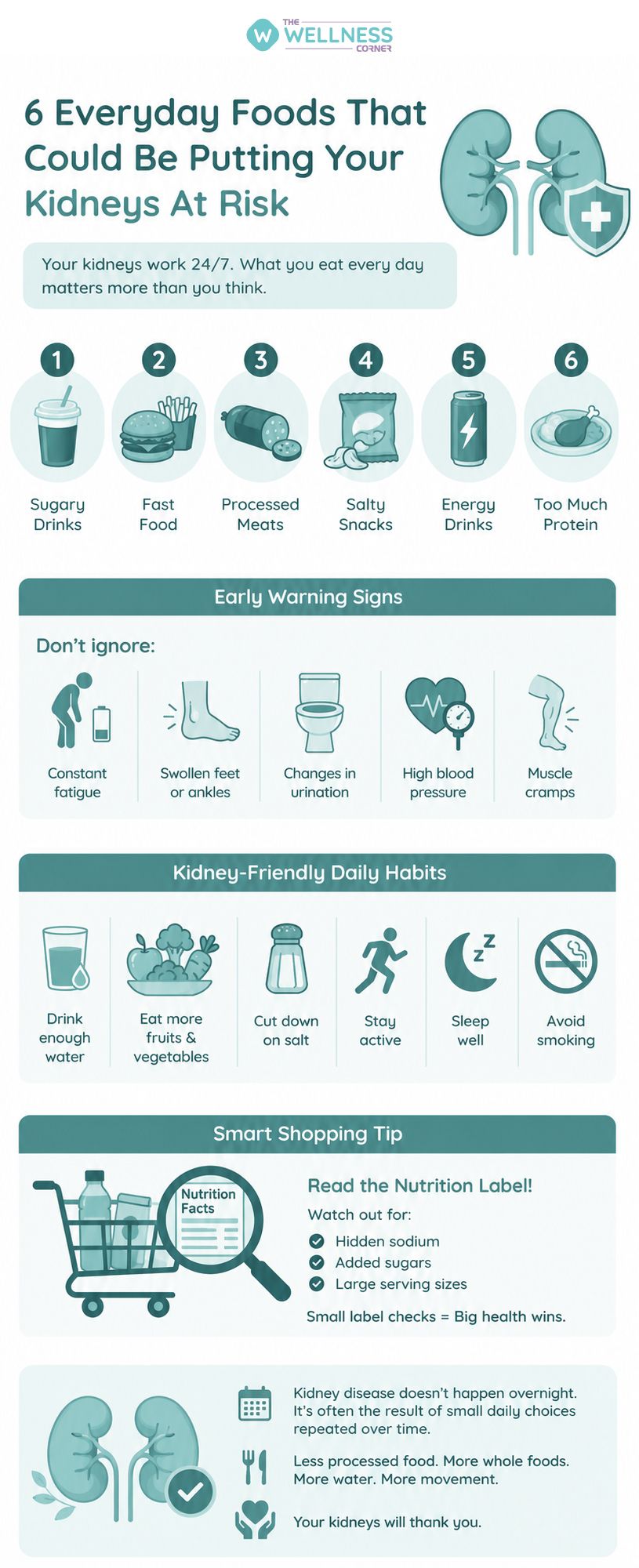

Understanding The Bigger Picture Before We Begin
Before discussing specific foods, it is important to clarify one point.
No single food directly causes kidney failure on its own.
Kidney disease usually develops through a combination of factors such as:
- Poor dietary habits
- High blood pressure
- Type 2 diabetes
- Smoking
- Sedentary lifestyles
- Chronic inflammation
- Genetic predisposition
The foods discussed below may contribute to increased risk when consumed frequently and as part of an overall unhealthy lifestyle.
1. Sugary Soft Drinks And Sweetened Beverages
Sugary beverages have become a major part of modern diets, particularly among younger populations.
These drinks often include:
- Soft drinks
- Energy drinks
- Sweetened iced teas
- Flavored beverages
- Sugar-loaded coffee drinks
Also Read: Energy Drinks Vs. Sports Drinks, The Difference
Regular consumption of sugary drinks has been associated with conditions that may increase the risk of kidney disease, including:
- Obesity
- Insulin resistance
- Type 2 diabetes
- High blood pressure
These conditions can gradually damage blood vessels throughout the body, including those that supply the kidneys.
In addition, some soft drinks contain additives and ingredients that may place additional demands on the body's metabolic systems when consumed excessively.

2. Highly Processed Fast Foods
Fast food has become a staple for many busy young adults.
Common examples include:
- Burgers
- French fries
- Fried chicken
- Processed sandwiches
- Packaged convenience meals
A large number of processed food products contain substantial amounts of sodium, often more than people realize.
Excessive sodium intake may contribute to:
- Elevated blood pressure
- Water retention that places extra demands on the kidneys
- Increased workload on the kidneys as they remove excess sodium
- Damage to the kidneys' delicate filtering units over time
- Higher protein levels in urine (proteinuria), which may indicate kidney damage
- Increased calcium loss in urine, raising the risk of certain kidney stones
Although high blood pressure remains one of the leading contributors to chronic kidney disease, excessive sodium intake may also affect the kidneys directly. Large amounts of sodium can increase the workload on the kidneys, place stress on their filtering units, contribute to protein leakage into the urine (proteinuria), disturb normal fluid balance through water retention, and increase calcium excretion in urine, which may raise the risk of certain kidney stones.
The challenge is that many people consume far more sodium than they realize because processed foods often contain significant amounts of hidden salt.
3. Processed Meats
Processed meats remain common in many diets.
Examples include:
- Sausages
- Hot dogs
- Bacon
- Salami
- Processed deli meats
These products are often high in:
- Sodium
- Preservatives
- Saturated fats
- Various food additives
In addition to their high sodium content, processed meats may place extra demands on the kidneys because they are often rich in animal protein. Regular consumption of large amounts of processed meat has been associated with an increased risk of declining kidney function in some studies, particularly when combined with other unhealthy dietary habits.
While occasional consumption is unlikely to cause major harm, regularly consuming large amounts of processed meats may contribute to conditions associated with kidney disease risk.
Researchers continue to examine how highly processed dietary patterns may affect long-term kidney health.
Also Read: Tips To Cut Down Sodium In Your Diet

4. Excessively Salty Snack Foods
Many people focus on obvious unhealthy foods while overlooking snacks.
Popular examples include:
- Potato chips
- Salted crackers
- Packaged snack mixes
- Instant noodles
- Flavored popcorn
- Salted processed snacks
These products are often consumed mindlessly while:
- Watching television
- Gaming
- Studying
- Using social media
Over time, consistently consuming excessive sodium may affect kidney health in several ways. Besides contributing to elevated blood pressure, it can increase the kidneys' filtering workload, promote water retention, increase protein leakage into urine, and raise calcium levels in urine, all of which may place additional stress on kidney function over time.
The problem is not necessarily one serving. Rather, repeated daily consumption can gradually increase overall sodium exposure.
5. Energy Drinks And Excessive Caffeine-Based Products
Energy drinks have become increasingly popular among students, athletes, and working professionals.
Many products contain combinations of:
- Caffeine
- Sugar
- Stimulants
- Artificial flavorings
- Various additives
Although moderate caffeine intake may be safe for many healthy individuals, excessive reliance on highly caffeinated beverages can sometimes contribute to:
- Dehydration
- Sleep disruption
- Elevated blood pressure
- Increased stress on cardiovascular function
Because the kidneys help regulate fluid and electrolyte balance, maintaining proper hydration remains important for overall kidney health.
Also Read - Caffeine And Depression: Is There A Link?
6. Excessive Protein Intake And Protein Supplements
High-protein diets have become increasingly popular, particularly among people focused on muscle building and fitness.
While protein is an essential nutrient, consuming extremely large amounts over long periods may increase the kidneys' workload because they are responsible for filtering protein waste products from the blood.
For healthy individuals, moderate protein intake is generally considered safe. However, people with existing kidney disease or reduced kidney function are often advised to avoid excessive protein intake unless recommended by a healthcare professional.
Protein supplements should also be used thoughtfully. More protein does not always mean better health, and nutritional needs vary based on age, activity level throughout the day, body weight, and medical conditions.
Why Younger People May Be More Vulnerable Today?
Daily habits and routines have evolved significantly over the last several decades, reshaping the way people live, work, and eat.
Many younger adults face a combination of risk factors, including:
- Highly processed diets
- Sedentary habits
- Poor sleep patterns
- Chronic stress
- Frequent consumption of convenience foods
- Inadequate hydration
- Excessive screen time
These factors can collectively influence metabolic health and increase the risk of conditions that affect kidney function.

How High Blood Pressure And Diabetes Influence Kidney Health?
Among the various factors linked to kidney disease, two health conditions are repeatedly identified as major contributors:
- High blood pressure
- Type 2 diabetes
Both conditions can damage the delicate filtering structures within the kidneys over time.
Many of the foods discussed earlier may contribute indirectly to these health concerns when consumed excessively and consistently.
This is why dietary patterns matter more than any single food item.
Signs Of Potential Kidney Problems
Kidney disease often develops gradually.
During the initial stages, warning signs may be mild, difficult to notice, or not present at all.
Possible warning signs may include:
- Persistent fatigue
- Swelling in the feet or ankles
- Changes in urination patterns
- Difficulty concentrating
- Persistent high blood pressure
- Muscle cramps
- Loss of appetite
Because symptoms may not appear immediately, regular health screenings can play an important role in early detection.
How To Support Kidney Health Through Everyday Habits?
Maintaining healthy kidneys generally does not require following highly restrictive or extreme eating plans.
Instead, small and sustainable lifestyle choices often make the biggest difference.
Helpful habits may include:
- Drinking adequate water
- Limiting highly processed foods
- Reducing excessive sodium intake and avoiding sugars
- Managing blood pressure
- Maintaining healthy blood sugar levels
- Eating more fruits and vegetables
- Engaging in regular physical activity
- Getting sufficient sleep
- Avoiding smoking
- Attending regular health checkups
- Consistency matters more than perfection.
Why Hydration Matters?
The kidneys depend on adequate fluid intake to help remove waste products from the body.
While hydration needs vary from person to person, regularly drinking water throughout the day can support healthy kidney function.
People who frequently replace water with sugary beverages may miss out on some of the benefits associated with proper hydration.
The Importance Of Reading Food Labels
Many people underestimate how much sodium, sugar, and additives they consume.
Reading nutrition labels can help identify:
- Hidden sodium
- Added sugars
- Artificial ingredients
- Serving size differences
Greater awareness often leads to healthier choices without requiring major dietary changes.
The Bigger Picture: Kidney Health Is Built Over Time
Kidney disease rarely develops overnight.
Instead, it often reflects years of cumulative lifestyle habits.
While certain foods may contribute to increased risk when consumed excessively, overall dietary patterns matter far more than any individual food item.
The goal is not fear.
The goal is awareness.
Making informed choices today can help support healthier kidneys and better overall wellness in the years ahead.
Support Preventive Health With The Wellness Corner
The health of your kidneys is influenced by several factors, including diet, hydration levels, regular exercise, quality sleep, and everyday lifestyle choices.
The Wellness Corner offers expert-backed support for preventive care, nutrition guidance, fitness, stress management, emotional wellness, and healthy lifestyle practices that help individuals build a strong foundation for long-term health.
Because prevention is often one of the most powerful health tools available.
Frequently Asked Questions (FAQs)
Leave a Comment

Sign-Up Now & Unlock
₹100 Cashback
Subscribe to our Newsletter!
Get a weekly dose of wellness tips delivered straight to your inbox.
Recently Published
Related Articles


Health Checks @ Home
Service
Explore



Follow us on:


© 2026 Truworth Health Technologies Pvt. Ltd.