Women Beware! How Inadequate Hydration May Impact Your Periods And Hormone Balance. Learn How
16 hours ago
6 minute read.
Water is often associated with glowing skin, better digestion, and improved energy levels. While these benefits are well known, hydration also plays an important role in supporting women's hormonal health and menstrual well-being.
Many women experience symptoms such as bloating, fatigue, headaches, mood changes, or painful menstrual cramps without realizing that inadequate hydration may be making these symptoms worse. Although drinking enough water cannot directly regulate hormones or cure menstrual disorders, proper hydration supports several bodily functions that influence how you feel throughout your menstrual cycle.
Understanding the connection between hydration, hormones, and your monthly cycle can help you make simple lifestyle choices that support your overall health.
Also Read - Stress And Your Periods: Understanding The Connection
Why Hydration Matters For Women's Health?
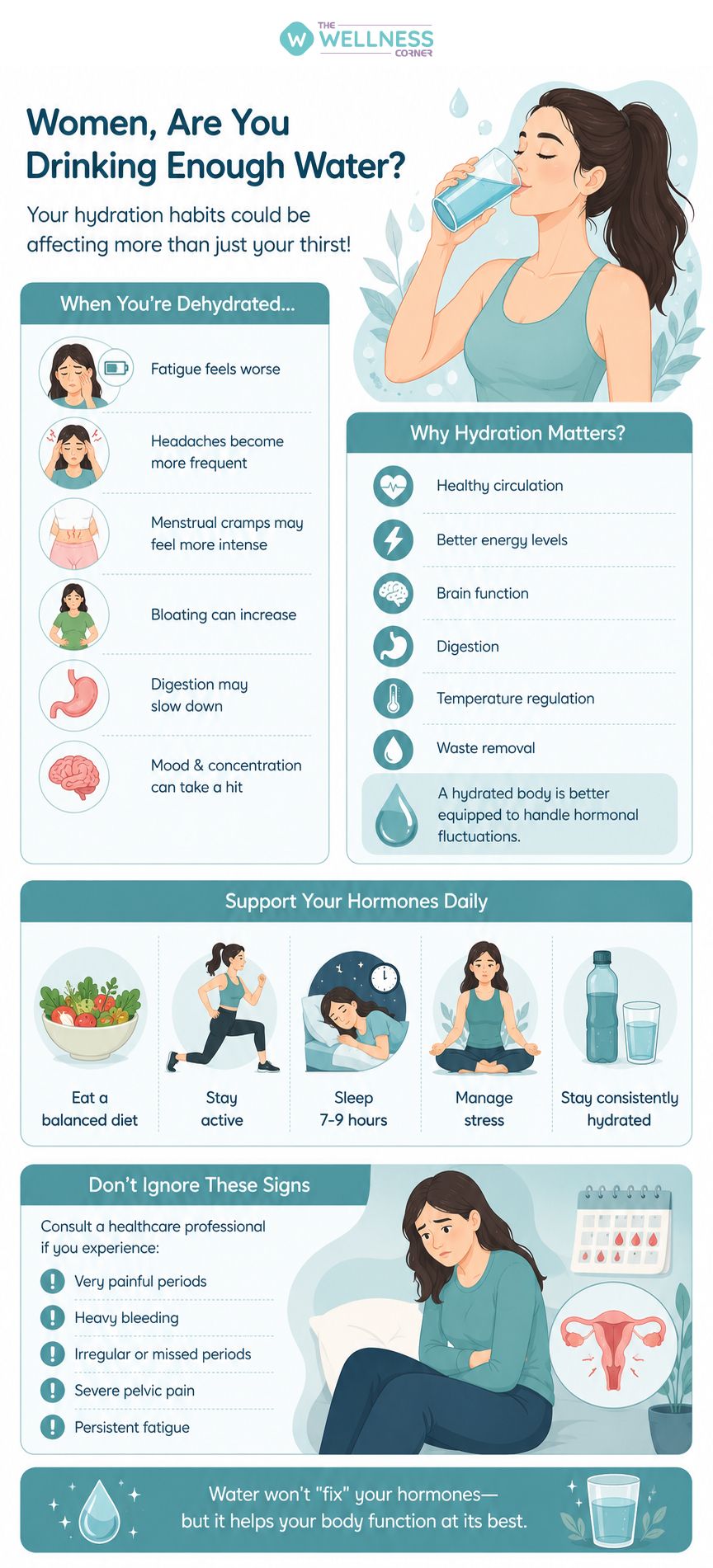
Water makes up a significant portion of the human body and is involved in nearly every physiological process.
It supports:
- Nutrient transportation
- Blood circulation
- Temperature regulation
- Waste removal
- Cellular function
- Joint lubrication
- Digestion
When your body does not receive enough fluids, multiple systems begin working less efficiently, including those that influence your menstrual health.
Can Dehydration Affect Hormones Directly?
Current scientific evidence does not suggest that dehydration directly changes hormone production in healthy individuals.
However, dehydration may indirectly influence how your body responds to hormonal fluctuations by increasing physical stress and reducing overall physiological efficiency.
Hormones function best when the body maintains proper balance, and hydration is one important part of that balance.
Also Read: 9 Common Symptoms Of Hormonal Imbalances Among Women (And What To Do?)

How Poor Hydration May Affect Your Menstrual Cycle?
While dehydration may not alter hormone levels directly, it can contribute to several symptoms that make periods feel more uncomfortable.
Increased Fatigue
Many women already experience lower energy levels during menstruation.
Dehydration may worsen feelings of tiredness because reduced fluid levels can decrease circulation and make it harder for the body to deliver oxygen and nutrients efficiently.
Remaining hydrated helps support normal energy production throughout the day.
Menstrual Cramps May Feel More Intense
Painful menstrual cramps occur because the uterus contracts to shed its lining.
Although water cannot prevent these contractions, staying well hydrated may help support healthy circulation and reduce fluid retention, which some women find improves overall comfort during their period.
Hydration is best viewed as one part of a broader strategy for managing menstrual discomfort.
Also Read: Remedies For Menstrual Cramps
Headaches Can Become More Frequent
Hormonal changes during menstruation already increase the likelihood of headaches for some women.
Dehydration is another well-recognized trigger for headaches.
If you are prone to menstrual headaches, maintaining good hydration throughout the month may help reduce one potential contributing factor.

Bloating Can Feel Worse
Many women are surprised to learn that drinking more water may actually help reduce bloating.
When the body senses insufficient fluid intake, it tends to retain water as a protective response.
Adequate hydration supports normal fluid balance and may help reduce water retention in some individuals.
Digestive Discomfort
Hormonal changes during menstruation often affect digestion.
Some women experience:
- Constipation
- Bloating
- Gas
- Slower bowel movements
Also Read: Struggling With Constipation? Here’s How Prunes (Dried Plums) Can Help
Mood And Mental Well-Being
Hormonal fluctuations naturally influence mood throughout the menstrual cycle.
At the same time, even mild dehydration has been associated with:
- Reduced concentration
- Irritability
- Mental fatigue
- Lower alertness
Although hydration cannot eliminate mood swings, maintaining proper fluid intake supports overall cognitive function and emotional well-being.

Common Indicators That You May Be Dehydrated
Your body often provides early warning signs when fluid intake is insufficient.
Common symptoms include:
- Dry mouth
- Dark-colored urine
- Fatigue
- Headaches
- Dizziness
- Constipation
- Dry skin
- Increased thirst
If you notice these symptoms regularly, increasing your daily fluid intake may be beneficial.
How Much Water Do Women Need?
Daily hydration needs are not the same for everyone.
Daily fluid requirements depend on factors such as:
- Age
- Body size
- Physical activity
- Climate
- Pregnancy
- Breastfeeding
- Medical conditions
A practical approach is to:
- Drink regularly throughout the day.
- Increase intake during exercise.
- Consume more fluids during hot weather.
- Listen to your body's thirst signals and keep an eye on the color of your urine.
Light yellow urine is commonly viewed as a sign of healthy hydration.
Also Read: Myths & Realities About Breastfeeding
Foods That Help Keep You Hydrated
Your body can obtain fluids from sources other than drinking water.
Many foods naturally contain large amounts of water.
Examples include:
- Watermelon
- Cucumber
- Oranges
- Strawberries
- Tomatoes
- Lettuce
- Zucchini
- Celery
Including these foods in your diet can contribute to your overall fluid intake.

Tips To Stay Hydrated Every Day
Simple habits can make hydration easier.
1. Carry A Water Bottle
Keeping water nearby serves as a helpful reminder to drink regularly.
2. Drink Water With Meals
Pairing meals with a glass of water helps build consistency.
3. Set Hydration Reminders
Phone reminders or hydration apps may help if you frequently forget to drink.
4. Flavor Your Water Naturally
Adding fresh lemon, cucumber, mint leaves, or berries can naturally enhance the taste of plain water.
5. Limit Excess Sugary Drinks
Water remains the best primary source of hydration.
Lifestyle Habits That Support Hormonal Health
Hydration is only one part of maintaining hormonal balance.
Other supportive habits include:
1. Eat A Balanced Diet
Include:
- Whole grains
- Fruits
- Vegetables
- Lean protein
- Healthy fats
These nutrients support overall reproductive health.
2. Exercise Regularly
Physical activity supports circulation, mood, and overall wellness.
3. Get Enough Sleep
Aim for 7 to 9 hours of quality sleep each night whenever possible.
4. Manage Stress
Chronic stress can influence hormone regulation.
Activities such as meditation, deep breathing, yoga, and mindfulness may help improve emotional well-being.
When Should You See A Healthcare Professional?
While hydration supports overall health, it cannot treat underlying hormonal disorders.
Consult a healthcare professional if you experience:
- Extremely painful periods
- Very heavy bleeding
- Irregular menstrual cycles
- Missed periods
- Persistent fatigue
- Severe pelvic pain
These symptoms deserve proper medical evaluation.
Final Thoughts
Water may seem like a simple part of your daily routine, but it plays a meaningful role in supporting overall health, including your comfort during the menstrual cycle.
Although drinking enough water does not directly regulate hormones, proper hydration helps maintain circulation, digestion, energy levels, and fluid balance, all of which can influence how you feel throughout the month.
Small habits such as carrying a water bottle, eating water-rich foods, and staying consistent with fluid intake can contribute to better well-being over time.
Your body works hard every day. Giving it enough water is one of the simplest ways to support it.
Support Your Women's Health With The Wellness Corner
Women's health extends beyond managing periods. Nutrition, hydration, physical activity, stress management, sleep, preventive care, and emotional well-being all contribute to hormonal health.
The Wellness Corner offers expert-backed guidance on nutrition, fitness, mental well-being, preventive healthcare, healthy lifestyle practices, and overall wellness to help women make informed choices every day.
Frequently Asked Questions (FAQs)
Disclaimer: This article is intended for general educational and informational purposes only and should not replace personalized dietary or medical advice. Nutritional needs vary based on factors such as age, health status, lifestyle, and individual requirements. If you have a medical condition, dietary restriction, or specific nutritional concern, consult a qualified healthcare professional or registered dietitian.**
Leave a Comment

Sign-Up Now & Unlock
₹100 Cashback
Subscribe to our Newsletter!
Get a weekly dose of wellness tips delivered straight to your inbox.
Recently Published
Related Articles


Health Checks @ Home
Service
Explore



Follow us on:


© 2026 Truworth Health Technologies Pvt. Ltd.