Best Diet Plan For Navratri Fasting: What To Eat For 9 Days?
12 hours ago
6 minute read.

Table Of Contents
1. What Makes a Healthy Navratri Fasting Diet?
2. What to Eat During Navratri Fast
3. Navratri Fasting Food List
4. A Simple 9 Day Navratri Diet Plan
5. How to Use Fasting as Part of a Weight Loss Plan
6. Navratri Fasting Diet Plan for Working Professionals
7. Important Tips for People With Diabetes
8. Navratri Fasting Tips for Better Energy
9. Frequently Asked Questions
What Makes A Healthy Navratri Fasting Diet?
Navratri fasting is followed differently from one household to another. Some people eat only once a day, while others have fruits, dairy, nuts, or specific fasting foods throughout the day. Some avoid grains and legumes, while others follow more flexible traditions.
That means there is no single perfect best diet plan for Navratri fasting.
However, there is a healthier way to approach your vrat. Fasting is not a licence to eat whatever you want. When you break your fast, focus on foods that support your nutritional needs.
A balanced Navratri fasting diet plan should ideally include:
- Adequate fluids
- Protein-rich foods that fit your fasting rules
- Fresh fruits and vegetables
- Nuts and seeds
- Suitable sources of carbohydrates
- Healthy fats in moderate portions
- Fewer deep-fried and highly processed foods
The objective is to follow your tradition while still supporting your energy and wellbeing.
Also Read - 9 Days Of Navratri: 9 Days Of Wellness Transformation
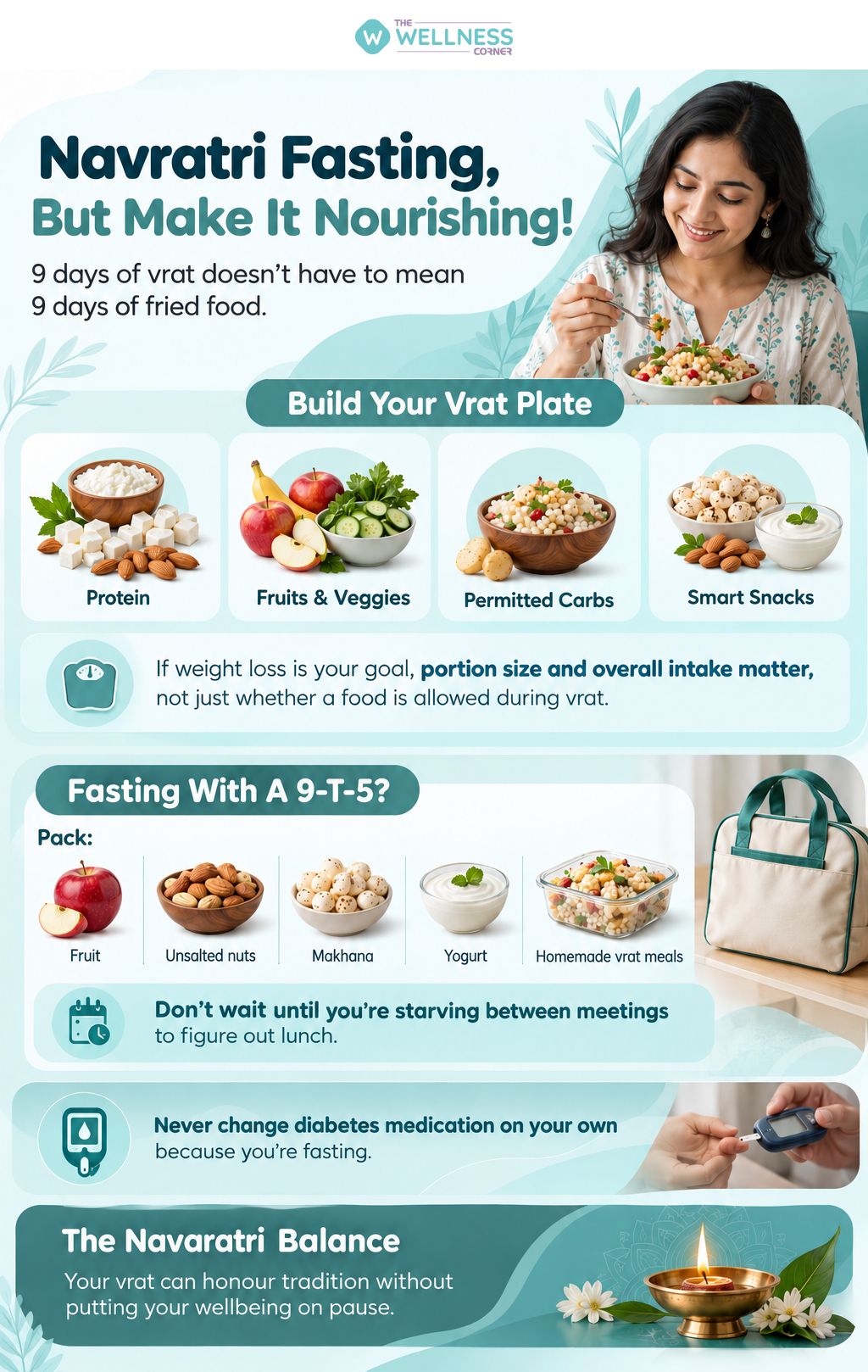
What to Eat During Navratri Fast?
Wondering what to eat during Navratri fast without feeling hungry two hours later?
Choose foods that provide a combination of protein, fibre, carbohydrates, and healthy fats.
Depending on your fasting tradition, options may include:
Protein: Milk, curd, paneer, Greek yogurt, nuts, seeds, and suitable dairy products.
Carbohydrates: Sabudana, potatoes, sweet potatoes, sama rice, or kuttu and rajgira preparations where permitted.
Fruits: Bananas, apples, oranges, papaya, guava, berries, or other seasonal fruits.
Vegetables: Pumpkin, cucumber, spinach, bottle gourd, carrots, tomatoes, and other vegetables allowed during your vrat.
Snacks: Makhana, roasted nuts, fruit, unsweetened yogurt, or homemade vrat-friendly snacks.
This Navratri fasting food list can be adapted according to your family's fasting practices.
A Simple 9 Day Navratri Diet Plan
A healthy eating routine can include different meals from day to day. Variety can make fasting easier and nutritionally more balanced.
Day 1
Breakfast: Fruit with unsweetened yogurt
Lunch: Kuttu roti, vegetable curry, and curd
Snack: Roasted makhana
Dinner: Paneer with permitted vegetables
Also Read - Paneer Vs. Chole Vs. Soybean: Which Has More Protein?
Day 2
Breakfast: Milk with fruit and a small portion of nuts
Lunch: Sama rice with vegetables and curd
Snack: Coconut water and fruit
Dinner: Sweet potato with paneer or yogurt
Day 3
Breakfast: Fruit and Greek yogurt
Lunch: Rajgira preparation with vegetables and curd
Snack: Handful of almonds or walnuts
Dinner: Vegetable soup with paneer, if permitted
Also Read: An Easy Way To Lose Weight! Eat A Bowl Of These Fruits Every Day To Get Amazing Results
Day 4
Breakfast: Makhana and milk
Lunch: Kuttu roti with pumpkin or bottle gourd and curd
Snack: Guava or apple
Dinner: Sabudana preparation with vegetables and yogurt
Day 5
Breakfast: Seasonal fruit with yogurt
Lunch: Sama rice, vegetables, and paneer
Snack: Roasted makhana
Dinner: Sweet potato with curd and cucumber
Day 6
Breakfast: Milk and a small serving of nuts
Lunch: Rajgira or kuttu preparation with vegetables
Snack: Fruit
Dinner: Paneer and permitted vegetables
Also Read: Can Eating Paneer Increase Cholesterol Levels?
Day 7
Breakfast: Yogurt with fruit and seeds
Lunch: Sama rice with vegetables and curd
Snack: Coconut water
Dinner: Kuttu roti with vegetable curry
Day 8
Breakfast: Fruit and milk
Lunch: Sweet potato, vegetables, and curd
Snack: Makhana
Dinner: Paneer with permitted vegetables
Also Read: 6 Easy Steps To Make Fasting Easy
Day 9
Breakfast: Fruit and yogurt
Lunch: Kuttu or rajgira preparation with vegetables
Snack: Nuts and fruit
Dinner: A light meal with vegetables and a suitable protein source
This Navratri 9 day diet plan is an example, not a compulsory menu. Fasting rules differ, so adjust the foods according to your personal practices.
Can Navratri Fasting Help With Weight Loss?
Yes, weight loss can happen during Navratri, but fasting itself does not guarantee it.
Navratri fasting for weight loss depends largely on your overall calorie intake, food choices, physical activity, sleep, and portion sizes.
A plate of deep-fried sabudana vada, puris, fried potatoes, sweets, and sweetened beverages can contain substantial calories even though the foods are considered vrat-friendly.
If your goal is a 9 day Navratri fasting diet plan for weight loss, focus on minimally processed foods, reasonable portions, adequate protein, vegetables, and hydration.
You do not need to starve yourself to lose weight.
Also Read: How Fasting Affects Blood Pressure - And When It Can Be Dangerous?
Navratri Fasting Diet Plan For Working Professionals
Long meetings and deadlines can make fasting challenging.
For a Navratri fasting diet plan for working professionals, preparation is the secret weapon.
Keep easy options at work, such as fruit, unsalted nuts, makhana, yogurt, or homemade vrat-friendly meals. If you know you have a long afternoon of meetings, do not skip a nourishing meal simply because you are busy.
If your fasting tradition allows multiple meals, spreading food across the day may help you maintain energy better than waiting until you are extremely hungry.
For people considering a Navratri fasting meal plan vegetarian high protein, include paneer, yogurt, milk, nuts, seeds, and other permitted protein sources regularly.

What About Diabetes During Navratri?
Fasting requires additional care if you have diabetes, particularly if you take insulin or medicines that can lower blood glucose.
A Navratri diet plan for diabetics should not be created using generic fasting advice. Meal timing, carbohydrate intake, medication, and blood glucose monitoring may all need consideration.
Speak with your doctor or dietitian before fasting. Do not independently change diabetes medication because you are fasting.
Navratri Fasting Tips To Stay Energetic
If you want to know what to eat during Navratri fast to stay energetic, look beyond carbohydrates when planning your meals.
Try these Navratri fasting tips:
- Drink water regularly throughout the day.
- Include a protein source in appropriate meals.
- Choose whole fruits instead of relying on juices.
- Keep fried foods occasional rather than making them the foundation of your diet.
- Avoid excessive sugary drinks and sweets.
- Include vegetables whenever your fasting rules permit them.
- Prioritise sleep.
- Avoid intense workouts if you are feeling weak, dizzy, or unusually fatigued.
Also remember that a Navratri one meal a day diet plan is not automatically healthier than eating more frequently. Choosing a single daily meal should take into account both your individual health requirements and your fasting customs.
The Bottom Line
The best diet plan for Navratri fasting is not the one that leaves you hungry or exhausted. It is one that respects your fasting tradition while giving your body enough nourishment to function well.
Choose minimally processed foods, include suitable protein sources, stay hydrated, watch portions, and avoid turning every vrat meal into a fried-food feast.
Whether you are following a Navratri diet plan 2026, fasting for spiritual reasons, or hoping to improve your eating habits, remember that health should remain part of the celebration.
Looking for more practical nutrition and wellness guidance? Explore expert-backed health resources and personalised support through The Wellness Corner to make healthier choices that fit your lifestyle and goals.
Frequently Asked Questions
Disclaimer: This article is intended for general educational and informational purposes only and should not replace personalized dietary or medical advice. Nutritional needs vary based on factors such as age, health status, lifestyle, and individual requirements. If you have a medical condition, dietary restriction, or specific nutritional concern, consult a qualified healthcare professional or registered dietitian.
Leave a Comment

Sign-Up Now & Unlock
₹100 Cashback
Subscribe to our Newsletter!
Get a weekly dose of wellness tips delivered straight to your inbox.
Recently Published
Related Articles


Health Checks @ Home
Service
Explore



Follow us on:


© 2026 Truworth Health Technologies Pvt. Ltd.