Why Curd At Night Isn't Actually Bad For You: Busting A Common Indian Food Myth
3 hours ago
6 minute read.
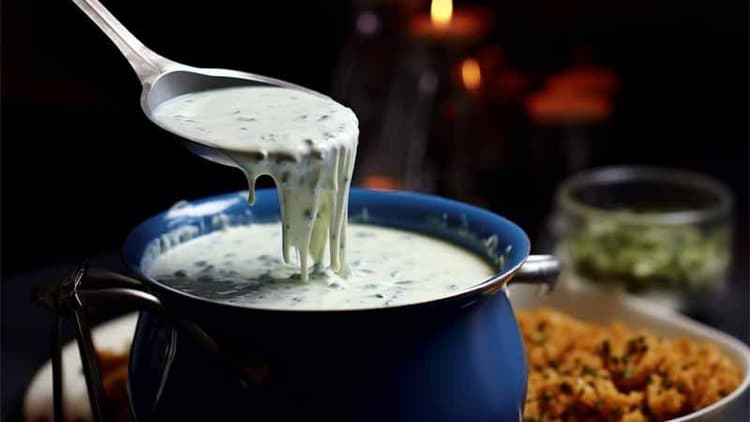
Eating curd at night is not automatically bad for your health. Curd can fit comfortably into an evening meal, helping increase its nutritional value through protein, calcium, and live cultures when available.
1. Why Do Indians Avoid Curd At Night?
In many Indian households, curd is considered a daytime food. You may have heard family members say that eating dahi after sunset increases mucus, causes a cold, or interferes with digestion. These beliefs have been passed down through generations, often as part of traditional dietary practices.
Some traditional approaches recommend avoiding curd at night because it is considered cooling or potentially mucus-forming. What is recommended by tradition may not be medically necessary for everyone, as individual needs and circumstances differ.
This is where Indian food myths deserve a closer look. A food that does not suit one person may be perfectly comfortable for another. Similarly, a traditional recommendation may reflect individual experiences or cultural preferences rather than a rule that applies to everyone.
Among the common food myths in India, the belief that curd becomes unhealthy after sunset is worth examining through the lens of nutrition and individual tolerance.
Also Read: Yogurt OR Curd? What Is Good For My Health?
2. Can We Eat Curd At Night?
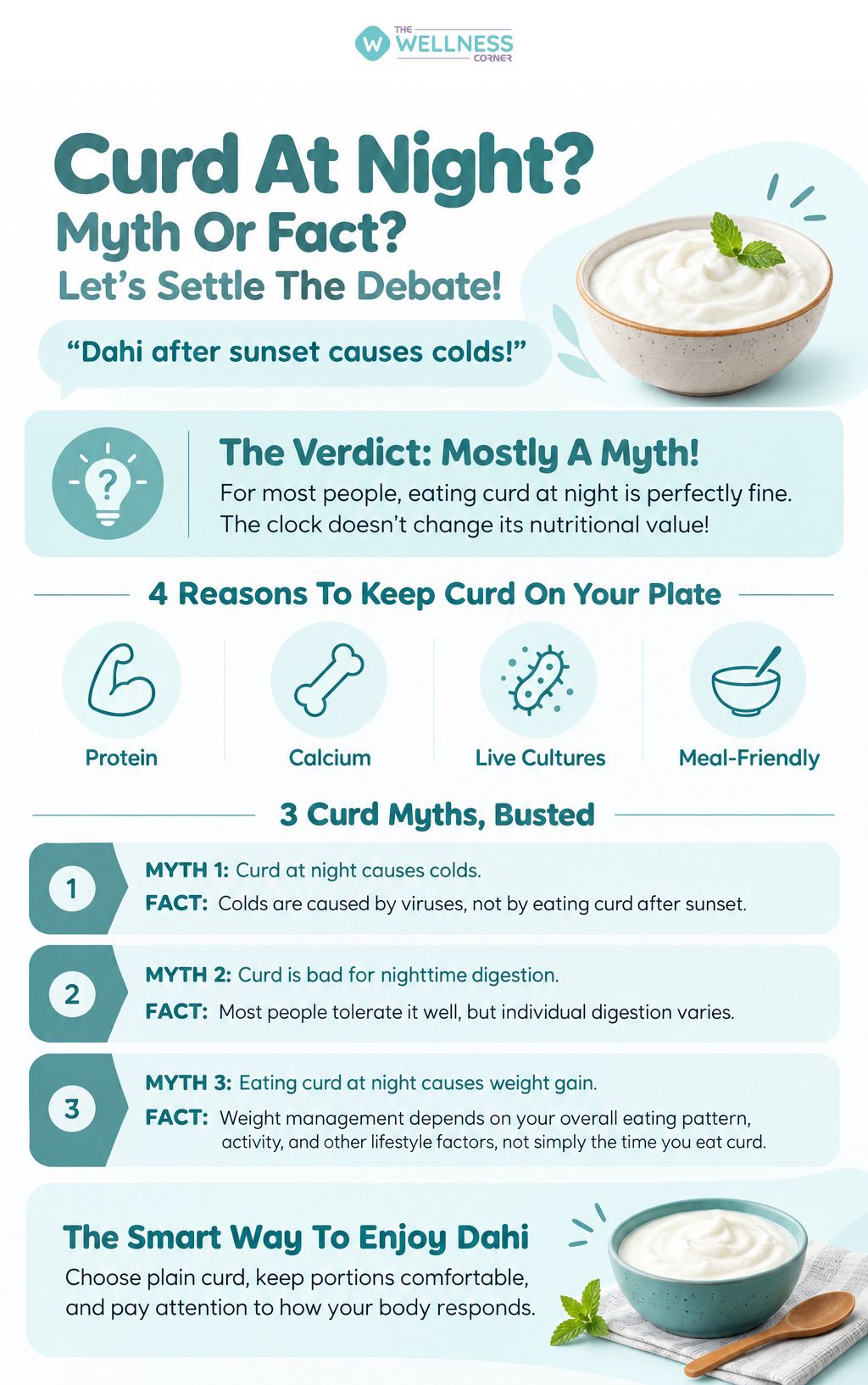
Yes, most people can eat curd at night if it suits their digestion and dietary needs.
The nutritional value of curd does not suddenly change when the sun sets. It can provide protein, calcium, and other nutrients regardless of whether you eat it at lunch or dinner. Curd containing live cultures may also contribute beneficial microorganisms to your diet, although the strains and amounts vary between products.
So, is it bad to eat curd at night? Not necessarily. There is no general medical rule requiring healthy adults to avoid it after a particular hour.
If curd agrees with your body, you can usually keep it on your dinner menu without worrying about the timing. However, if you regularly experience bloating, discomfort, or other symptoms after eating curd, pay attention to your body's response.
When asking dahi at night good or bad, the more useful question is whether it suits your individual needs, rather than whether everyone should follow the same rule.
3. Benefits Of Eating Curd At Night
Curd can offer several nutritional benefits when included as part of a balanced diet. The benefits of eating curd at night are largely the same as those of eating it at other times.
A source of protein: Curd provides protein that helps support muscle maintenance and repair. The amount depends on the type and quantity you eat.
Supports bone health: Its calcium content contributes to maintaining healthy bones and teeth. Some varieties also contain other important nutrients.
May support gut health: Curd made with live cultures can provide microorganisms that contribute to the gut's microbial environment. However, not every product contains the same cultures, and benefits vary.
Easy to include in meals: Plain curd can accompany roti, rice, vegetables, or a balanced meal. Feel free to personalise it with simple ingredients like cucumber, coriander, or mint.
These benefits do not mean that you must eat curd at night. They simply show that curd at night can be a reasonable dietary choice when it agrees with you.
Also Read: 10 Reasons Why You Should Have Your Daily Bowl Of Curd
4. Does Curd At Night Cause Cold And Cough?
Can Your Evening Bowl of Curd Make You Cough or Catch a Cold? This remains unsupported by convincing scientific evidence.
Colds are generally caused by respiratory viruses, not by eating a particular food after sunset. Some people may feel that dairy products make their saliva or mucus seem thicker, but this sensation does not necessarily mean that the body is producing more mucus.
That said, individual experiences matter. If cold foods aggravate your throat discomfort or you find curd unpleasant when you are unwell, you can choose a different
food temporarily. For some individuals, health concerns or intolerance to particular foods may call for specific dietary guidance.
The important distinction is that personal comfort should not be confused with a universal rule that curd causes respiratory infections.
5. Is Curd At Night Bad For Digestion?
For most people, curd is generally easy to incorporate into meals. Digestive comfort is not the same for everyone.
If you have lactose intolerance, curd may cause bloating, gas, abdominal discomfort, or diarrhoea, although some people tolerate it better than milk. The effect depends on individual sensitivity and the product.
If you are wondering is curd at night bad for digestion, consider how much you eat, what you eat it with, and whether you experience symptoms consistently.
A large, heavy dinner immediately before bed may also cause discomfort or aggravate acid reflux in some people. In such cases, meal size and timing may matter more than curd itself.
Try a moderate portion, choose plain curd with minimal added sugar, and notice how you feel. If symptoms persist or are severe, consult a healthcare professional rather than assuming the curd is the only cause.

6. Can Curd At Night Support Weight Loss?
If you are trying to manage your weight, you may wonder, can we eat curd at night for weight loss?
Curd can fit into a weight-management plan because it provides protein and can be a satisfying addition to a meal. However, eating it at night does not automatically burn fat or lead to weight loss.
Weight-related outcomes are shaped by your daily eating patterns, movement, rest, and the habits you maintain over time. A small serving of plain curd may be a useful alternative to a dessert high in added sugar, depending on your preferences and dietary needs.
Portion size and preparation matter too. Sweetened curd and rich, sugary preparations can contain considerably more added sugar and calories than plain curd.
Rather than searching for a perfect time to eat one food, focus on a balanced eating pattern that you can maintain.
7. When Should You Avoid Curd?
Although curd at night is suitable for many people, there are circumstances where caution makes sense.
Consider limiting or avoiding it if you have a known milk allergy, experience symptoms related to lactose intolerance, or have been advised to follow a specific diet for a medical condition. A milk allergy is different from lactose intolerance and may require complete avoidance of milk proteins.
If curd repeatedly causes discomfort, try noting the portion, product type, and symptoms. A qualified healthcare professional or dietitian can help identify possible triggers.
For everyone else, there is generally no need to avoid curd after sunset purely because of a traditional warning.
Also Read: Curd-Based Salad Dressings
The Bottom Line
The belief that curd becomes unhealthy after sunset is not a universal medical fact. For most people, it can be enjoyed at lunch or dinner as part of a balanced diet. The key is to consider your digestive comfort, portion size, and overall nutritional needs instead of following food rules without questioning them.
Understanding curd at night is a useful reminder that not every traditional food warning applies equally to everyone. When it comes to nutrition, individual needs and reliable evidence matter.
Want to make more informed choices about your daily diet? Explore The Wellness Corner for practical nutrition resources, expert-backed health information, and guidance to help you build sustainable eating habits.
Frequently Asked Questions
Disclaimer: This article is intended for general educational and informational purposes only and should not replace personalized dietary or medical advice. Nutritional needs vary based on factors such as age, health status, lifestyle, and individual requirements. If you have a medical condition, dietary restriction, or specific nutritional concern, consult a qualified healthcare professional or registered dietitian.
Leave a Comment

Sign-Up Now & Unlock
₹100 Cashback
Subscribe to our Newsletter!
Get a weekly dose of wellness tips delivered straight to your inbox.
Recently Published
Related Articles


Health Checks @ Home
Service
Explore



Follow us on:


© 2026 Truworth Health Technologies Pvt. Ltd.