Why Comparing Your Fitness Journey Online Can Harm Progress?
2 months ago
6 minute read.
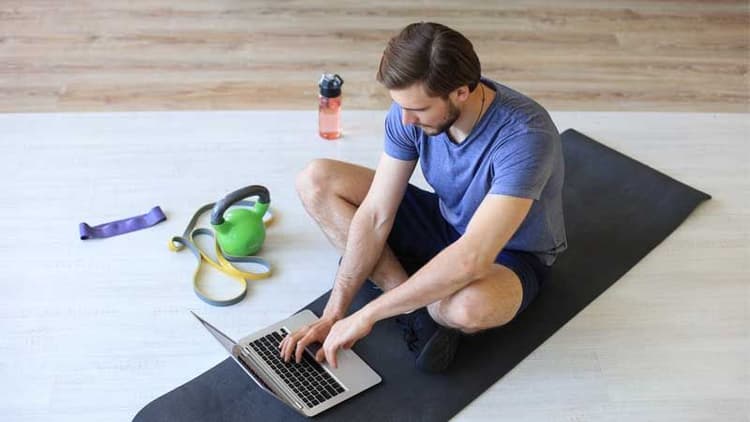
Social media has completely transformed the fitness world.
Today, people can instantly access:
- Workout routines
- Transformation photos
- Diet plans
- Fitness influencers
- Gym motivation videos
- Weight loss stories
- Muscle-building advice
At first, this can feel incredibly motivating.
Seeing others work toward their goals may inspire healthier habits and encourage consistency.
However, with time, a subtle shift often starts to take place.
Inspiration slowly turns into comparison.
And comparison may quietly damage motivation, confidence, and emotional well-being more than many people realize.
Many individuals begin questioning themselves while scrolling online:
- “Why am I not progressing that fast?”
- “Why doesn’t my body look like that?”
- “Why do I still struggle with consistency?”
- “Am I doing something wrong?”
The problem is not fitness itself.
The problem is constantly measuring personal progress against carefully curated online content.
Also Read: How Fake Social Media Lives Can Leave You Feeling Inferior?
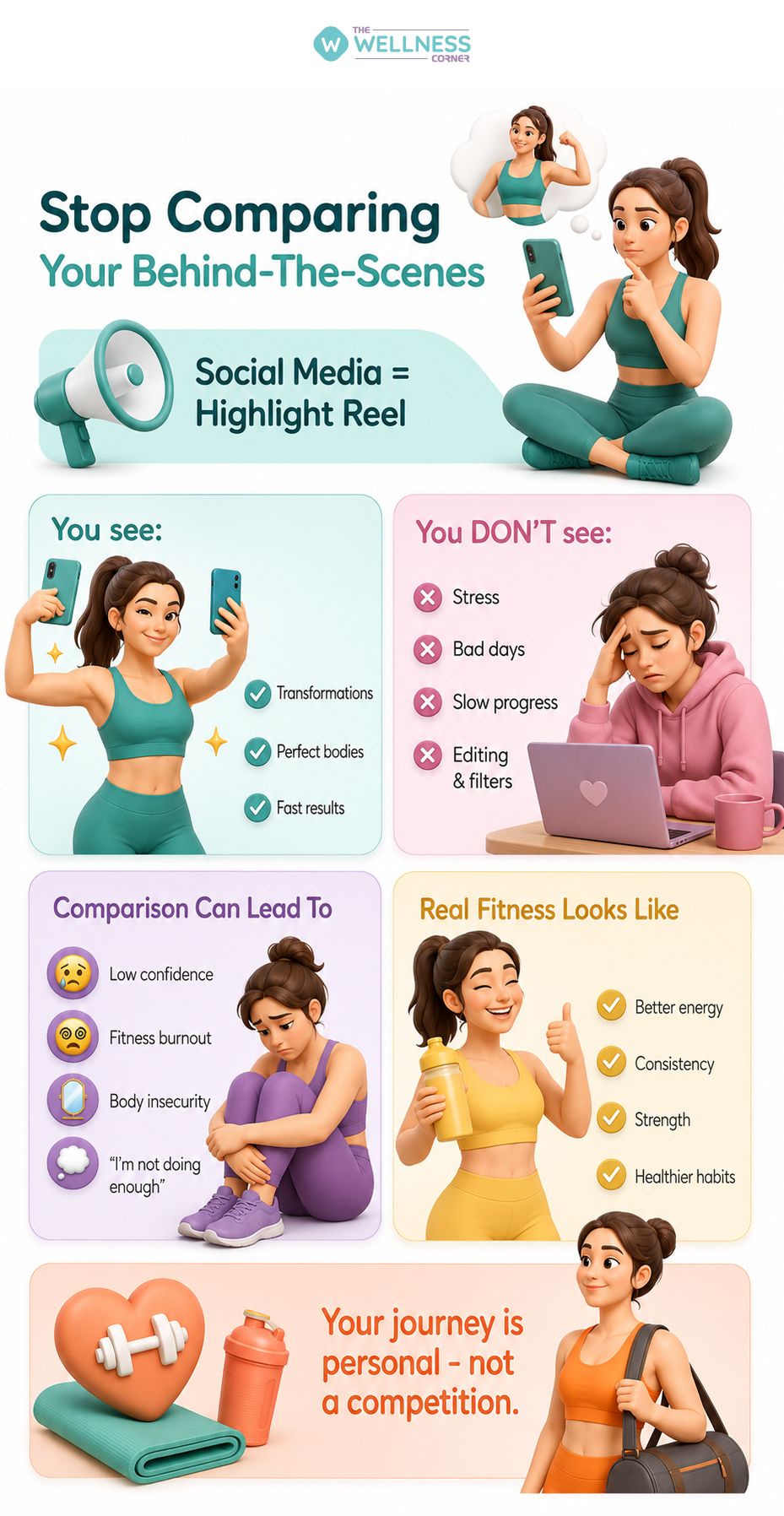
The Internet Shows Highlights, Not Full Reality
One of the biggest reasons online comparison becomes harmful is that social media rarely shows the complete picture.
Most people share:
- Best angles
- Best lighting
- Best workouts
- Big milestones
- Highly edited transformations
- Perfect gym moments
What audiences usually do not see includes:
- Bad days
- Inconsistency
- Stress
- Bloating
- Injuries
- Emotional struggles
- Unhealthy habits behind the scenes
As a result, many people compare their everyday reality to someone else’s carefully selected highlights.
This often creates unrealistic expectations.
Fitness Journeys Are Highly Individual
Every individual’s body reacts differently to fitness routines and lifestyle changes.
Fitness progress may depend on many factors, including:
- Genetics
- Age
- Hormones
- Sleep quality
- Stress levels
- Medical conditions
- Nutrition
- Lifestyle
- Training history
This is why comparing timelines can become misleading.
Two people following similar workouts may still experience completely different results.
Progress is rarely identical across individuals.
Also Read: The Indian Thali Is Already A Superfood—Here’s Why You Overthink Nutrition!

Why Constant Comparison Can Reduce Motivation?
Interestingly, comparison does not always lead to increased discipline.
Sometimes it does the opposite.
When people repeatedly feel “behind,” they may experience:
- Frustration
- Self-criticism
- Discouragement
- Body dissatisfaction
- Loss of confidence
- Emotional burnout
Over time, fitness can start to feel mentally draining instead of motivating and uplifting.
This may reduce long-term consistency.
Also Read: Boost Your Self Confidence
The “Perfect Body” Online Is Often Unrealistic
Modern fitness culture sometimes promotes unrealistic body expectations.
Many online images may involve:
- Professional lighting
- Editing filters
- Posing techniques
- Temporary dehydration
- Strict dieting phases
- Photo retouching
Even fitness influencers themselves may not look identical to their own photos all day, every day.
But viewers often forget this while scrolling.
As a result, ordinary healthy bodies may begin to feel “not good enough” unfairly.
Also Read: Realize That Social Media Is Based On Lies

Why Fast Transformations Create False Expectations?
Social media rewards dramatic results.
People are naturally drawn toward:
- Rapid weight loss
- Extreme transformations
- Intense before-and-after images
However, sustainable fitness usually develops gradually.
Healthy progress often looks less dramatic online because it involves:
- Consistency
- Routine
- Sleep
- Recovery
- Balanced eating
- Long-term habits
The internet often celebrates extremes more than balance.
Comparison May Shift Focus Away From Health
One major danger of online comparison is that people may start focusing more on appearance than actual wellness.
Fitness becomes less about:
- Strength
- Energy
- Mental well-being
- Mobility
- Confidence
- Health
And more about:
- Looking a certain way
- Chasing validation
- Matching unrealistic standards
This shift may have a negative impact on both physical and emotional health.
Why Social Media Can Distort Body Image?
Repeated exposure to idealized fitness content may gradually influence self-perception.
Even healthy individuals may begin feeling dissatisfied with their appearance after constant comparison.
This psychological effect is becoming increasingly common, especially among younger audiences.
People may overlook their own progress because they are too focused on someone else’s body.
Fitness Is Not Meant To Look Identical For Everyone
Some people naturally build muscle faster.
Others may lose weight more slowly.
Some individuals prioritize flexibility, while others focus on endurance or strength.
Health goals are personal.
A body that feels healthy, energized, and functional may not always resemble trending online fitness aesthetics.
And that is completely normal.
Why Rest Days And Slow Progress Are Still Progress?
Online fitness culture sometimes glorifies nonstop intensity.
But real wellness includes recovery too.
Rest is not laziness.
Sleep is not weakness.
Slower progress does not mean failure.
The body often improves through sustainable consistency rather than constant punishment.
Warning Signs That Fitness Comparison May Be Impacting Your Emotional Well-Being
Some people may notice signs such as:
- Feeling discouraged after scrolling fitness content
- Obsessing over body flaws
- Constantly checking mirrors or photos
- Feeling guilty after missing workouts
- Comparing meals or physiques excessively
- Believing progress is “never enough.”
These patterns may gradually affect emotional well-being and self-esteem.
How To Develop A More Positive And Balanced Approach To Fitness?
Improving mindset around fitness often matters just as much as workouts themselves.
1. Focus On Personal Progress
Instead of comparing yourself to strangers online, compare yourself to your own starting point.
Notice improvements such as:
- Better stamina
- Improved mood
- Strength gains
- Healthier habits
- More energy
- Consistency
These changes matter too.
2. Curate Your Social Media Feed
Not every fitness account supports healthy motivation.
Following content that constantly triggers insecurity may negatively affect mental health.
Choose creators who encourage:
- Balance
- Realistic wellness
- Education
- Sustainable habits
- Healthy body image
3. Stop Treating Fitness As Punishment
Exercise should not exist only to “fix” your body.
Movement may also support:
- Mental clarity
- Stress reduction
- Confidence
- Physical function
- Long-term health
The healthiest fitness routines are often sustainable rather than extreme.
4. Respect Your Body’s Reality
Your body has its own:
- Genetics
- Structure
- Metabolism
- Recovery speed
- Lifestyle demands
Trying to force your body to match someone else’s appearance may create unnecessary stress.
5. Remember That Consistency Beats Perfection
Many people quit fitness entirely because they cannot maintain unrealistic standards.
Sustainable results are usually built through regular effort and consistency rather than trying to be perfect all the time.
Small sustainable habits often create better results than temporary extremes.
Why Mental Wellness Matters In Fitness Too?
Fitness is not only physical.
Emotional health plays a major role in:
- Motivation
- Discipline
- Self-esteem
- Body image
- Long-term consistency
A healthy fitness journey should ideally improve overall well-being, not constantly damage self-worth.
The Bigger Picture: Your Fitness Journey Is Not A Competition
Modern fitness culture often encourages constant comparison.
But your body is not a social media project.
Real health is deeply personal.
Some of the healthiest progress happens quietly through consistent habits that may never go viral online.
Fitness should ideally help people feel stronger, healthier, more energized, and more connected to themselves rather than trapped in endless comparison.
Your journey does not lose value simply because someone else’s progress looks different.
Build Healthier Wellness Habits With The Wellness Corner
Physical fitness, emotional well-being, nutrition, sleep, stress management, and self-care all work together to support long-term health.
The Wellness Corner offers expert-backed guidance on fitness, preventive care, emotional wellness, mindfulness, nutrition, and healthier lifestyle habits to help individuals build balanced and sustainable wellness routines.
Because true wellness is about progress, not comparison.
Frequently Asked Questions (FAQs)
Leave a Comment
Sign-Up Now & Unlock
₹100 Cashback
Recently Published
Related Articles


Health Checks @ Home
Service
Explore



Follow us on:


© 2026 Truworth Health Technologies Pvt. Ltd.