Daily Health Hack: Easy Ways To Spot Fake Or Adulterated Milk At Home
16 days ago
6 minute read.
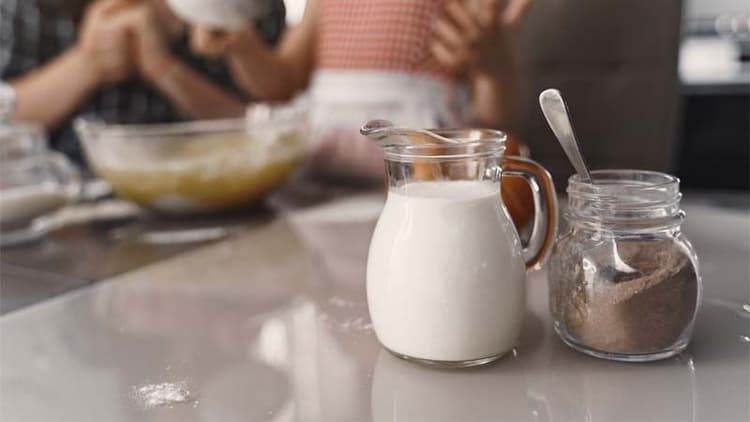
Milk is one of the most widely consumed foods across households. From your morning tea and coffee to cereals, smoothies, desserts, and children's meals, it finds its way into our daily routines. Because it is considered a wholesome source of protein, calcium, and other essential nutrients, most of us trust that the milk we buy is pure and safe.
Unfortunately, milk adulteration remains a concern in many regions. To increase profits or extend shelf life, some suppliers may dilute milk with water or add substances such as starch, detergents, synthetic milk components, or preservatives. While not every case of adulteration poses an immediate health threat, regular consumption of contaminated milk can have serious consequences over time.
The good news is that you don't need expensive laboratory equipment to spot certain forms of adulteration. A few simple home tests can help you identify obvious signs of poor-quality milk before it reaches your family's table.
Let's explore some easy ways to check whether your milk is genuine.
Also Read: Why You Should (Or Shouldn’t) Drink Milk Before Sleeping?
Why Is Milk Adulterated?
Milk is a highly perishable product, making it vulnerable to tampering during collection, transportation, and storage.
Common reasons for adulteration include:
- Increasing the quantity by adding water
- Improving appearance or thickness after dilution
- Extending shelf life
- Maximizing profits
Although food safety authorities regularly monitor dairy products, occasional cases of adulteration still occur.
Why Should You Be Concerned?
Pure milk provides valuable nutrients, including:
- Calcium
- Protein
- Vitamin B12
- Phosphorus
- Potassium
- Riboflavin
- Vitamin D
Adulteration not only reduces its nutritional value but may also introduce substances that are unsuitable or unsafe for human consumption.
Also Read - Calcium-Rich Food V/S Supplements: What's Better?
Depending on the contaminant, potential health concerns may include:
- Digestive discomfort
- Food poisoning
- Allergic reactions
- Kidney stress
- Long-term health complications
This is why checking milk quality can be a useful household habit.

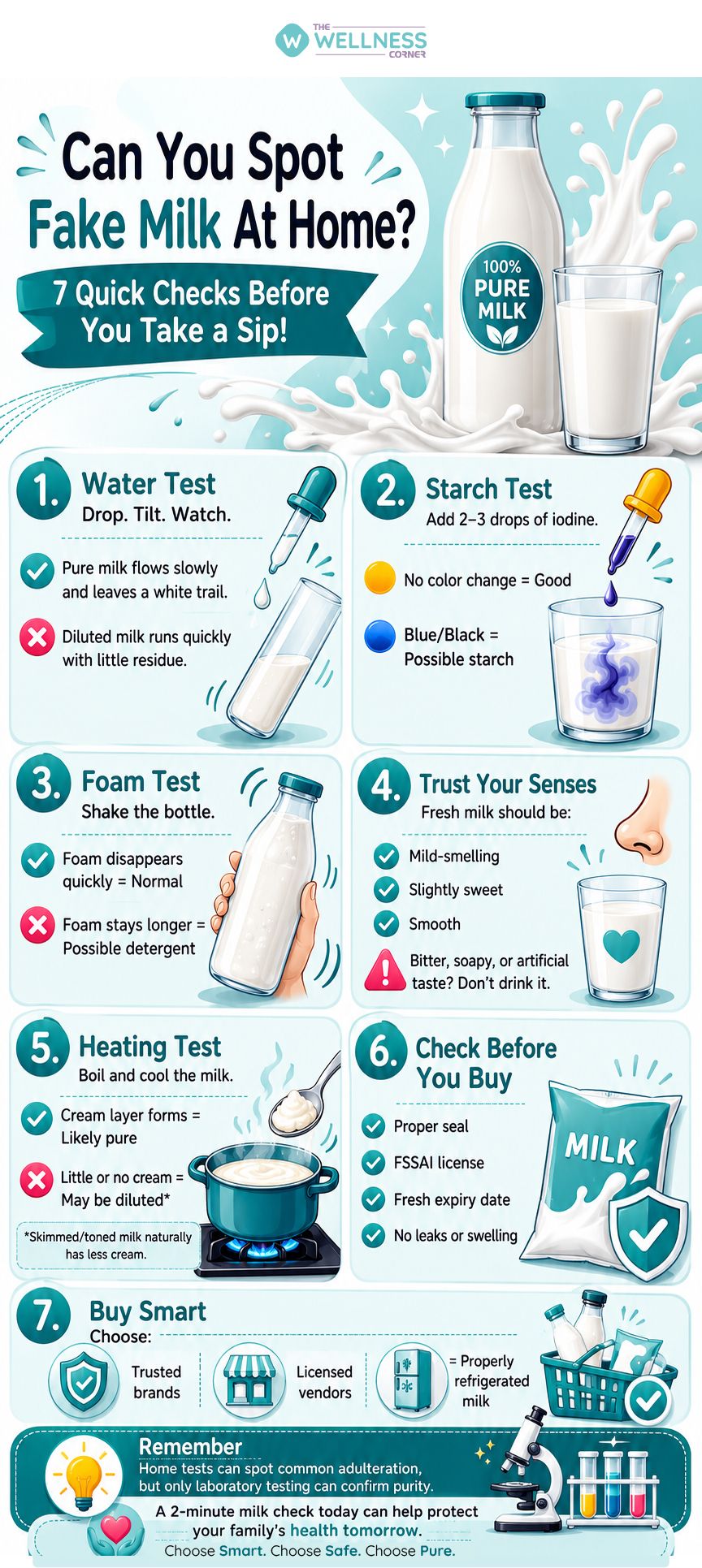
1. The Water Test
One of the simplest ways to detect excessive dilution is by observing how milk behaves on a smooth surface.
How To Perform It?
- Place a drop of milk on a clean, polished surface such as a glass plate or tile.
- Tilt the surface slightly.
What To Observe?
- Pure milk usually flows slowly and leaves behind a white trail.
- Milk heavily diluted with water tends to run quickly without leaving much residue.
Although this method isn't highly precise, it can offer an initial indication of dilution.
Also Read: Is Drinking Milk On An Empty Stomach Good?
2. The Starch Test
Sometimes starch is added to diluted milk to restore its thicker consistency.
What You'll Need?
- A small amount of milk
- A few drops of iodine solution
Steps
- Allow the milk to cool if it has been boiled.
- Add two or three drops of iodine solution.
Results
- If the milk turns blue or bluish-black, starch may be present.
- If the color remains unchanged, starch is unlikely to be present.

3. The Foam Test For Detergents
Some unscrupulous producers may add detergents to create a richer, frothier appearance.
How To Check?
- Pour a small amount of milk into a bottle with a lid.
- Shake it vigorously.
What To Look For?
- Excessive, long-lasting foam may indicate the presence of detergent.
- Normal milk forms bubbles that disappear relatively quickly.
Persistent foam doesn't always confirm adulteration, but it deserves further investigation.
4. The Smell And Taste Check
Your senses can often provide useful clues.
Fresh milk generally has:
- A mild aroma
- A slightly sweet taste
- A smooth texture
Milk that has been adulterated may develop:
- An unusually bitter taste
- A soapy flavor
- An artificial smell
- An unusual aftertaste
If something seems unusual, avoid consuming it.
Also Read: 5 Things To Add To Your Glass Of Milk To Increase Its Power
5. The Heating Test
Heating milk can reveal changes in its consistency.
Steps
- Boil a small quantity of milk.
Observe
Pure milk typically develops a layer of cream after cooling.
Milk that has been heavily diluted or adulterated may show little or no cream formation, although naturally toned or skimmed milk also contains less fat, so this test should not be used alone.
6. Check The Packaging Carefully
Before opening a packet or bottle, inspect it closely.
Look for:
- Proper sealing
- Manufacturing and expiry dates
- FSSAI license information
- Storage instructions
- Signs of leakage or damage
Never purchase milk with damaged or swollen packaging.

Buy From Trusted Sources
One of the best ways to minimize your risk is to buy milk from reputable sellers.
Choose:
- Reputable dairy brands
- Certified local suppliers
- Licensed retailers
Maintaining the cold chain from purchase to refrigeration is equally important for preserving milk quality.
Can Home Tests Detect Every Adulterant?
No.
These simple household tests may reveal certain common adulterants, but they cannot identify all possible impurities.
Sophisticated laboratory analysis remains the most accurate method for identifying chemical adulterants and microbial contamination.
If you strongly suspect adulteration, report the issue to your local food safety authority.
Simple Tips To Store Milk Safely
Even pure milk can become unsafe if stored improperly.
Follow these practices:
- Refrigerate milk promptly after purchase.
- Keep it below 4°C whenever possible.
- Avoid leaving milk at room temperature for extended periods.
- Always use clean containers.
- Close the container tightly after every use.
- Consume opened milk within the recommended time.
Proper storage helps reduce bacterial growth and preserves freshness.

Is Organic Or A2 Milk Always Free From Adulteration?
Not necessarily.
While premium milk varieties often undergo stricter quality checks, no type of milk is automatically immune to adulteration.
Regardless of the variety you purchase, it's always wise to:
- Buy from trusted brands
- Check packaging carefully
- Store milk properly
- Stay alert to any unusual smell, taste, or appearance
Final Thoughts
Milk remains one of the most nutritious foods when it is pure and handled safely. Although most commercially available milk meets food safety standards, knowing a few simple home checks can give you greater confidence about what you're consuming.
These tests should not replace professional laboratory analysis, but they can help identify obvious signs of adulteration before the milk reaches your family's meals.
Staying informed, purchasing from reliable sources, and practicing proper storage are some of the best ways to ensure that every glass of milk supports your health rather than compromising it.
Choose Smarter With The Wellness Corner
Good health begins with informed food choices. Whether you're looking for expert nutrition guidance, healthy eating tips, preventive healthcare advice, or support for your overall wellness journey, making informed decisions every day can have a lasting impact.
The Wellness Corner provides evidence-based resources on nutrition, fitness, mental well-being, preventive healthcare, lifestyle management, and healthy living to help you and your family make safer, healthier choices.

Frequently Asked Questions (FAQs)
Leave a Comment

Sign-Up Now & Unlock
₹100 Cashback
Recently Published
Related Articles


Health Checks @ Home
Service
Explore



Follow us on:


© 2026 Truworth Health Technologies Pvt. Ltd.