Adding These Simple Ingredients To Your Food Can Make It Much Healthier
1 month ago
5 minute read.

Many people assume healthy eating requires complicated meal plans, expensive superfoods, or strict restrictions.
But in reality, small additions to everyday meals can sometimes make a surprisingly meaningful difference.
The foods you already eat may become more balanced, nutrient-rich, and satisfying simply by adding certain ingredients that support digestion, heart health, immunity, energy, and overall wellness.
This does not mean food suddenly becomes “three times healthier” in a scientific sense. Health is too complex to measure with dramatic numbers alone.
However, smart food pairings and nutrient-rich additions can absolutely improve nutritional quality in practical ways.
The best part?
Most of these ingredients are simple, affordable, and already found in many kitchens.
Also Read: Citrus Salads To Boost Your Immunity
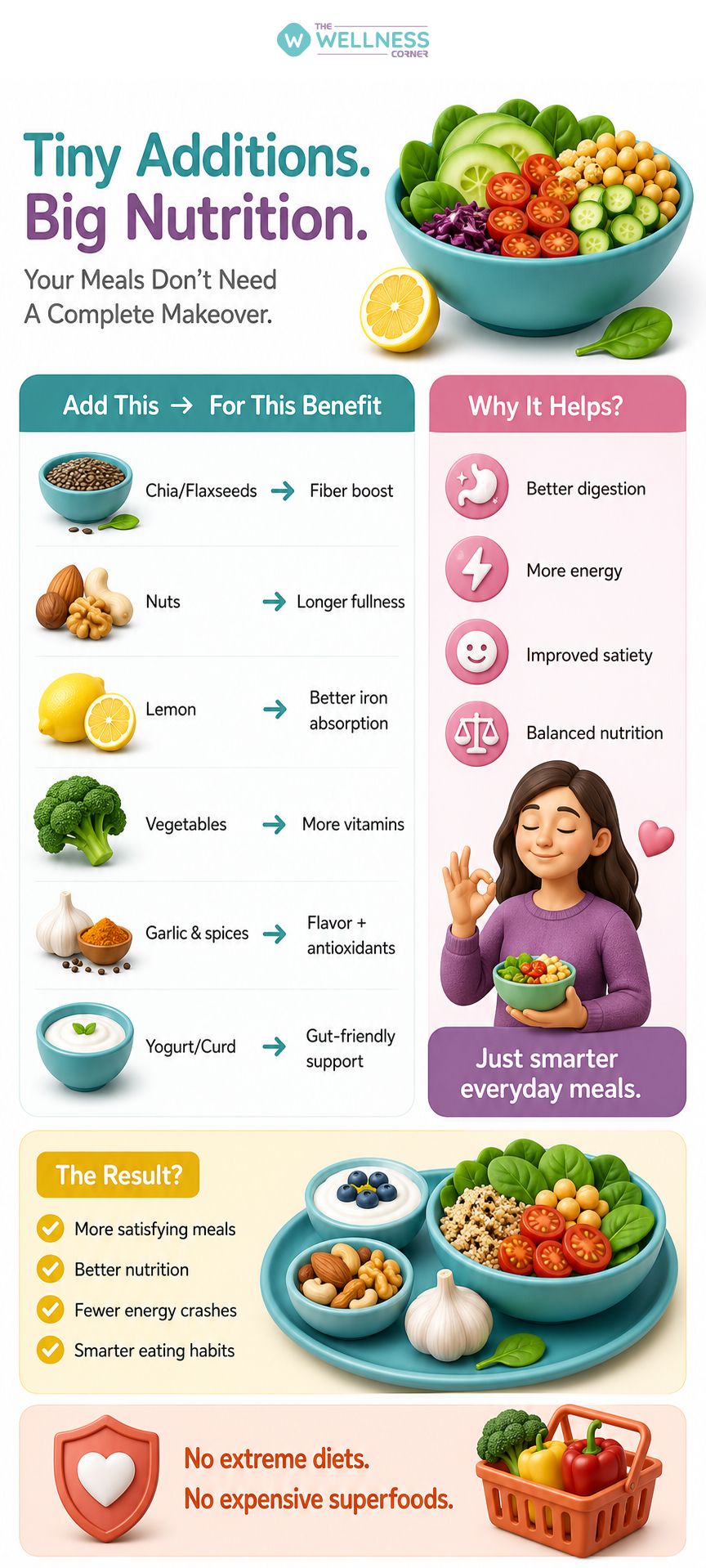
Why Food Pairing Matters?
Nutrition is not only about individual ingredients.
How foods are combined also matters.
Certain combinations may help:
- Improve nutrient absorption
- Increase fiber intake
- Support digestion
- Boost satiety
- Add antioxidants and healthy fats
Small additions often help meals become more balanced without requiring major dietary changes.
1. Add Seeds For Extra Fiber And Healthy Fats
Although small in size, seeds contain a wide range of valuable nutrients.
Popular choices include:
- Chia seeds
- Flaxseeds
- Pumpkin seeds
- Sunflower seeds
- Sesame seeds
These seeds contain fiber, healthy fats, plant compounds, and important minerals. Daily recommended intake is 1-2 teaspoons.
Why They Help?
Adding seeds to meals support:
- Digestive health
- Heart health
- Satiety
- Energy balance
They can easily be sprinkled over:
- Yogurt
- Salads
- Smoothies
- Oatmeal
- Soups
Also Read: Yogurt OR Curd? What Is Good For My Health?

2. Add Nuts For Better Satiety
Nuts provide healthy fats, protein, and minerals that help meals feel more satisfying.
Options include:
- Almonds
- Walnuts
- Pistachios
- Cashews
- Peanuts
Instead of relying heavily on processed snacks, small portions of nuts may support healthier eating patterns.
Portion control still matters because nuts are calorie-dense and they contain high amounts of fat. Recommended portion is generally one fistful of nuts, or a handful of peanuts.
3. Add Fresh Herbs And Spices
Herbs and spices do more than improve flavor.
Ingredients like:
- Turmeric
- Cinnamon
- Ginger
- Garlic
- Coriander
- Mint
Also Read - Turmeric Myths Busted: Who Should Really Avoid It?
Contain natural plant compounds associated with various health-supporting properties.
Using herbs and spices may also help reduce dependence on excessive salt or heavy sauces.

4. Add Protein To Balance Meals
Meals containing only refined carbohydrates may lead to quicker hunger and energy crashes.
Adding protein sources helps improve balance and satiety.
Examples include:
- Eggs
- Curd
- Beans
- Lentils
- Paneer
- Chicken
- Tofu
Balanced meals often help maintain steadier energy levels throughout the day.
5. Add Fermented Foods For Gut Health
Gut health has become an important topic in modern nutrition discussions.
Fermented foods help support beneficial gut bacteria.
Examples include:
- Curd
- Yogurt
- Kimchi
- Sauerkraut
- Traditional fermented pickles
- Kanji
- Pakhala bhat
- Idli dosa batter
- Gundruk
Digestive tolerance varies from person to person, but almost everyone benefits from including fermented foods moderately.

6. Add Vegetables To Everyday Meals
One of the simplest ways to improve meal quality is to add more vegetables. Add a variety of different colored veggies each day for better nutritional intake.
Even small additions can increase:
- Fiber
- Vitamins
- Minerals
- Antioxidants
Also Read: Antioxidants Keep Diseases Away
You do not need elaborate salads.
Simple habits matter, such as:
- Adding spinach to omelets
- Including cucumber with meals
- Mixing vegetables into rice, chapati dough, or dal
- Adding carrots to sandwiches
7. Add Healthy Fats Instead Of Highly Processed Sauces
Healthy fats help support hormone function, nutrient absorption, and satiety.
Better options include:
- Olive oil
- Mustard oil
- Peanut oil
- Sesame oil
- Avocado
- Nuts
- Seeds
- Nut butters
Replacing heavily processed dressings and sauces with more balanced fat sources may improve overall meal quality.
8. Add Lemon Or Vitamin C-Rich Foods
Vitamin C helps improve iron absorption from plant-based foods.
Adding lemon juice or tomatoes to lentils, beans, or green vegetables may help the body utilize iron more effectively.
Simple combinations sometimes make nutrients easier for the body to absorb.
Why “Healthy” Does Not Mean Perfect?
Modern wellness culture often promotes unrealistic ideas around food.
A single ingredient cannot magically transform an unhealthy lifestyle overnight.
Health is influenced by:
- Sleep
- Stress
- Physical activity
- Hydration
- Long-term eating habits
- Mental well-being
Adding nutritious ingredients helps support overall wellness, but consistency matters far more than chasing “superfood” trends.
Small Changes Are More Sustainable
Extreme diets are difficult to maintain long-term.
Small realistic habits are often more sustainable.
For example:
- Adding vegetables instead of eliminating favorite foods
- Including protein instead of skipping meals
- Using herbs instead of extra salt
- Choosing balanced snacks over ultra-processed options
These adjustments may seem minor individually, but over time they can support healthier routines.
Healthy Eating Should Still Feel Enjoyable
Nutrition should not become a constant source of guilt or anxiety.
Food is not only fuel. It is also connected to culture, enjoyment, family, and daily life.
The healthiest eating patterns are usually flexible, balanced, and realistic enough to maintain consistently.
Sometimes improving nutrition is less about restriction and more about thoughtful additions.
The Bigger Picture: Wellness Is Built Through Everyday Choices
People often search for dramatic health transformations.
But long-term wellness usually grows from repeated everyday habits.
Small additions like seeds, vegetables, protein, herbs, or fermented foods may not seem revolutionary on their own, but together they can help create more nourishing and balanced meals over time.
The goal is progress, not perfection.
Build Healthier Eating Habits With The Wellness Corner
Understanding nutrition does not have to feel confusing or overwhelming.
The Wellness Corner offers expert-backed guidance on nutrition, fitness, emotional wellness, preventive care, and healthier lifestyle habits to help individuals make informed and sustainable health choices.
Because better health often begins with small daily improvements.
Frequently Asked Questions (FAQs)
Leave a Comment

Sign-Up Now & Unlock
₹100 Cashback
Recently Published
Related Articles


Health Checks @ Home
Service
Explore



Follow us on:


© 2026 Truworth Health Technologies Pvt. Ltd.