Fitness Myths Women Still Hear In 2026
2 months ago
6 minute read.

Fitness information has never been more accessible.
Today, women have access to:
- Workout apps
- Strength training programs
- Sports science content
- Nutrition guidance
- Fitness influencers
- Online coaching
- Health communities
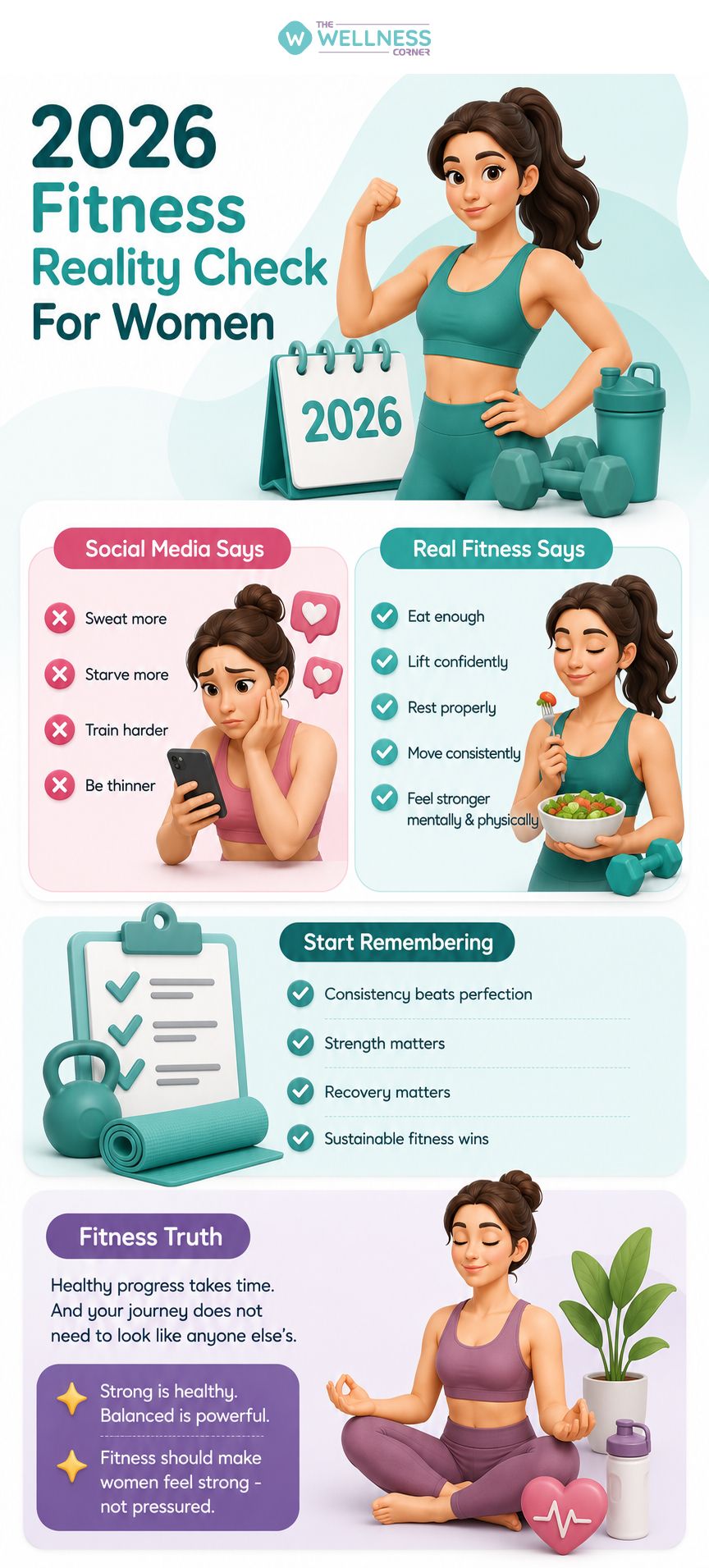
Yet despite all this progress, many outdated fitness myths still continue circulating everywhere from social media to family conversations.
Women are often still told things like:
- “Lifting weights will make you bulky.”
- “You should only focus on cardio.”
- “You have to eat very little if you want to lose weight.”
- “Fitness is mainly about becoming thinner.”
- “Women should avoid heavy training.”
Even in 2026, many of these beliefs continue influencing how women approach exercise, nutrition, and body image.
The problem is that misinformation may not only slow physical progress but also affect confidence, emotional well-being, and long-term health habits.
Understanding these myths can help women build a healthier and more realistic relationship with fitness.
Also Read - Fitness Myths Debunked: Why “Sweat = Fat Loss” Is The Biggest Lie You Believe
Myth 1: Lifting Weights Makes Women “Bulky”
This remains one of the most common fitness myths women still hear.
In reality, building large amounts of muscle mass is not easy for most people regardless of gender.
Women naturally have different hormonal profiles compared to men, including lower testosterone levels, which generally affects muscle growth patterns.
Strength training more commonly helps improve:
- Muscle tone
- Bone health
- Posture
- Metabolis
- Strength
- Functional fitness
For many women, resistance training supports a stronger and healthier body rather than extreme muscular size.

Myth 2: Only Cardio Workouts Help With Weight Loss
Many women are still encouraged to spend hours doing only cardio exercises.
While cardio can support heart health and calorie expenditure, relying only on cardio may not always create balanced fitness.
Strength training also plays an important role because muscle tissue supports metabolic health.
A balanced routine often includes:
- Strength training
- Cardiovascular exercise
- Mobility work
- Recovery
Long-term wellness usually depends on overall lifestyle consistency rather than one type of workout alone.
Also Read: How To Improve Flexibility And Mobility Without Stretching?
Myth 3: Women Should Eat As Little As Possible To Get Fit
Extreme dieting culture continues to affect many women.
Some people still believe eating very little is the fastest path to fitness.
However, under-eating may sometimes contribute to:
- Low energy
- Hormonal imbalance
- Poor recovery
- Muscle loss
- Fatigue
- Mood changes
- Nutrient deficiencies
The body requires adequate nutrition for:
- Exercise performance
- Recovery
- Hormonal function
- Strength development
- Long-term health
Long-term fitness and wellness are generally supported by proper nourishment rather than ongoing restriction and deprivation.

Myth 4: Sweat Automatically Means A Better Workout
Many people associate intense sweating with workout effectiveness.
But sweat levels may vary based on:
- Weather
- Humidity
- Genetics
- Hydration
- Fitness environment
A person does not necessarily burn more fat simply because they sweat more.
Effective workouts are usually measured through consistency, progress, recovery, and overall health improvements rather than sweat alone.
Myth 5: Women Should Avoid Heavy Weights
Some women still fear heavier resistance training because they believe it may be unsafe or overly masculine.
But appropriately supervised strength training may help support:
- Bone density
- Joint stability
- Functional movement
- Balance
- Healthy aging
- Muscle preservation
This becomes especially important as women age and natural muscle mass gradually declines over time.
Also Read: Making Exercise A Priority For Healthy Aging

Myth 6: Fitness Is Mainly About Appearance
Today’s fitness culture frequently places a strong emphasis on physical appearance and body image.
But true fitness involves much more than aesthetics.
Exercise may also support:
- Mental health
- Confidence
- Energy levels
- Stress management
- Mobility
- Heart health
- Sleep quality
- Long-term disease prevention
Reducing fitness only to body size may create an unhealthy relationship with exercise.
Myth 7: Spot Reduction Actually Works
Many people still believe certain exercises can specifically remove fat from one body area.
For example:
- Crunches for belly fat
- Arm exercises for arm fat
- Thigh workouts for thigh fat
However, the body does not selectively burn fat from only one targeted area through isolated exercises.
Fat loss patterns are influenced by factors such as:
- Genetics
- Hormones
- Overall calorie balance
- Lifestyle habits
Targeted exercises may strengthen muscles underneath, but they do not directly “melt” fat from one specific area.
Myth 8: Rest Days Mean Laziness
Some women feel guilty taking recovery days.
However, proper recovery plays a vital role in maintaining overall fitness and physical health.
The body needs time for:
- Muscle repair
- Hormonal recovery
- Energy restoration
- Injury prevention
Overtraining without sufficient rest may sometimes increase fatigue and stress rather than improve results.
Rest supports progress too.
Myth 9: Women Must Exercise Every Day To Stay Fit
Social media often promotes extreme consistency without discussing recovery realistically.
But sustainable fitness does not require perfection.
Some women balance:
- Careers
- Parenting
- Household responsibilities
- Mental stress
- Sleep challenges
Missing a workout occasionally does not erase progress.
Long-term wellness is usually built through sustainable routines rather than unrealistic intensity.
Also Read: Positive Parenting Tips
Myth 10: Fitness Progress Should Happen Quickly
Modern social media encourages unrealistic expectations around transformation speed.
People are constantly exposed to:
- Rapid weight-loss videos
- Extreme transformation photos
- “30-day results” content
But healthy progress often develops gradually.
The body requires time for:
- Adaptation
- Strength gains
- Recovery
- Habit building
- Metabolic adjustments
Sustainable change rarely happens overnight.
Why Social Media Keeps These Myths Alive?
Many outdated fitness beliefs continue spreading because social media rewards:
- Quick fixes
- Extreme results
- Sensational claims
- Viral transformations
Unfortunately, balanced and realistic fitness advice often receives less attention online.
This can create confusion, especially for women trying to build healthier lifestyles.
Why Women’s Fitness Needs A More Balanced Conversation?
Women’s bodies go through multiple life stages that may influence fitness needs, including:
- Menstruation
- Pregnancy
- Postpartum recovery
- Perimenopause
- Menopause
- Aging-related hormonal changes
This means fitness advice should ideally focus on overall wellness rather than unrealistic beauty standards alone.
The Emotional Side Of Fitness Matters Too
Fitness is not only physical.
Emotional well-being strongly affects:
- Consistency
- Motivation
- Confidence
- Body image
- Stress levels
Women are often exposed to intense appearance-related pressure from both media and society.
Building a healthier relationship with movement may sometimes matter more than chasing perfection.
How To Build A Healthier Fitness Mindset?
In most cases, a moderate and sustainable approach is more effective than extreme habits.
Helpful habits may include:
- Focusing on strength rather than punishment
- Choosing sustainable routines
- Eating adequately
- Prioritizing sleep and recovery
- Reducing unhealthy comparison
- Setting realistic expectations
Fitness should ideally support life rather than dominate it.
The Bigger Picture: Fitness Should Feel Empowering, Not Punishing
Many outdated fitness myths continue making women feel:
- Not disciplined enough
- Not thin enough
- Not athletic enough
- Not “perfect” enough
But wellness is not about fitting one unrealistic ideal.
A healthy fitness journey should help women feel:
- Stronger
- More energized
- More confident
- More capable
- More connected to their bodies
Progress looks different for everyone.
And health is about far more than appearance alone.
Support Holistic Wellness With The Wellness Corner
Fitness, emotional health, nutrition, sleep, stress management, and preventive care are all deeply connected to overall well-being.
The Wellness Corner offers expert-backed support for fitness, mindfulness, emotional wellness, nutrition, preventive care, and healthier lifestyle habits to help individuals build balanced and sustainable wellness routines.
Because true fitness supports both body and mind.
Frequently Asked Questions (FAQs)
Leave a Comment

Sign-Up Now & Unlock
₹100 Cashback
Recently Published
Related Articles


Health Checks @ Home
Service
Explore



Follow us on:


© 2026 Truworth Health Technologies Pvt. Ltd.