How To Identify Pure Jaggery At Home: Simple Purity Checks Recommended By Food Safety And Standards Authority Of India
1 day ago
5 minute read.
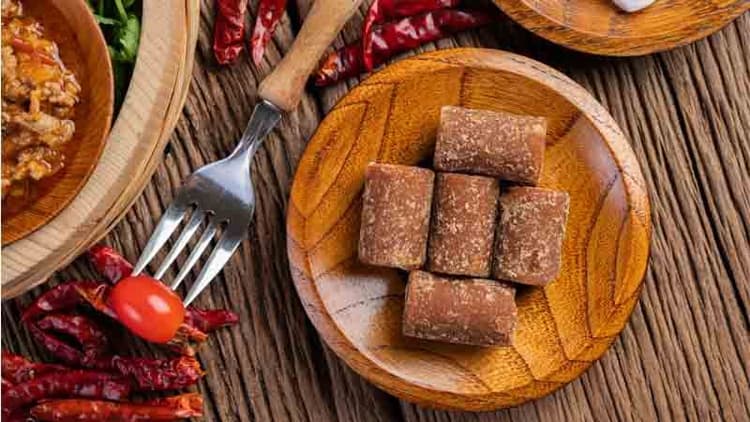
For many households, jaggery is more than just a sweetener.
It is part of traditional recipes, winter remedies, festive foods, and everyday eating habits. From adding it to tea and laddoos to consuming it after meals, jaggery continues to hold a strong place in Indian kitchens.
Over the years, jaggery has also gained popularity among health-conscious consumers because it is often considered less processed than refined white sugar.
Many people choose jaggery believing it contains:
- Natural minerals
- Trace nutrients
- Iron content
- Less processing compared to refined sugar
But as demand increases, concerns about adulteration and food quality have also grown.
Not all jaggery available in the market is completely pure.
Some commercially sold jaggery products may contain artificial colors, chemicals, chalk powder, or washing soda to improve appearance, texture, or shelf life.
This is why food safety awareness matters.
Recently, the Food Safety and Standards Authority of India shared simple awareness tips and home-based methods to help consumers identify possible jaggery adulteration more easily.
Understanding a few basic methods to assess jaggery purity at home may help people make safer and more informed food choices.
Also Read: Health Benefits Of Jaggery
Why Jaggery Adulteration Happens?
The growing popularity of jaggery has increased market competition.
Some manufacturers may use additives to:
- Enhance color
- Increase weight
- Improve texture
- Make jaggery appear cleaner or brighter
- Extend shelf life
Consumers often associate bright golden jaggery with “better quality,” even though natural jaggery is usually darker and less polished in appearance.
The preference for cleaner-looking and visually appealing products can sometimes contribute to the use of adulteration methods.
Here's A Recipe - Sugar-Free Malpua: A Jaggery Malpua Recipe for All Dessert Lovers

What Pure Jaggery Usually Looks Like?
Jaggery is traditionally produced by boiling sugarcane juice or palm sap until it thickens into a solid form.
Pure jaggery usually has:
- An earthy smell
- Uneven texture
- Natural brown or dark golden color
- Slight impurities or variations
- Soft or grainy consistency depending on type
Very shiny or unnaturally bright jaggery may sometimes indicate excessive processing or additives.
Common Adulterants Found In Jaggery
Certain substances may occasionally be mixed into jaggery during production or storage.
These may include:
- Chalk powder
- Artificial color
- Washing soda
- Chemical clarifying agents
These additives may affect quality and, in some situations, may not be ideal for regular consumption.

FSSAI’s Easy Home Test For Jaggery Purity
According to awareness guidance shared by Food Safety and Standards Authority of India, consumers may try simple observations and basic home tests to identify possible impurities.
These tests are not replacements for laboratory analysis, but they may help raise awareness about suspicious products.
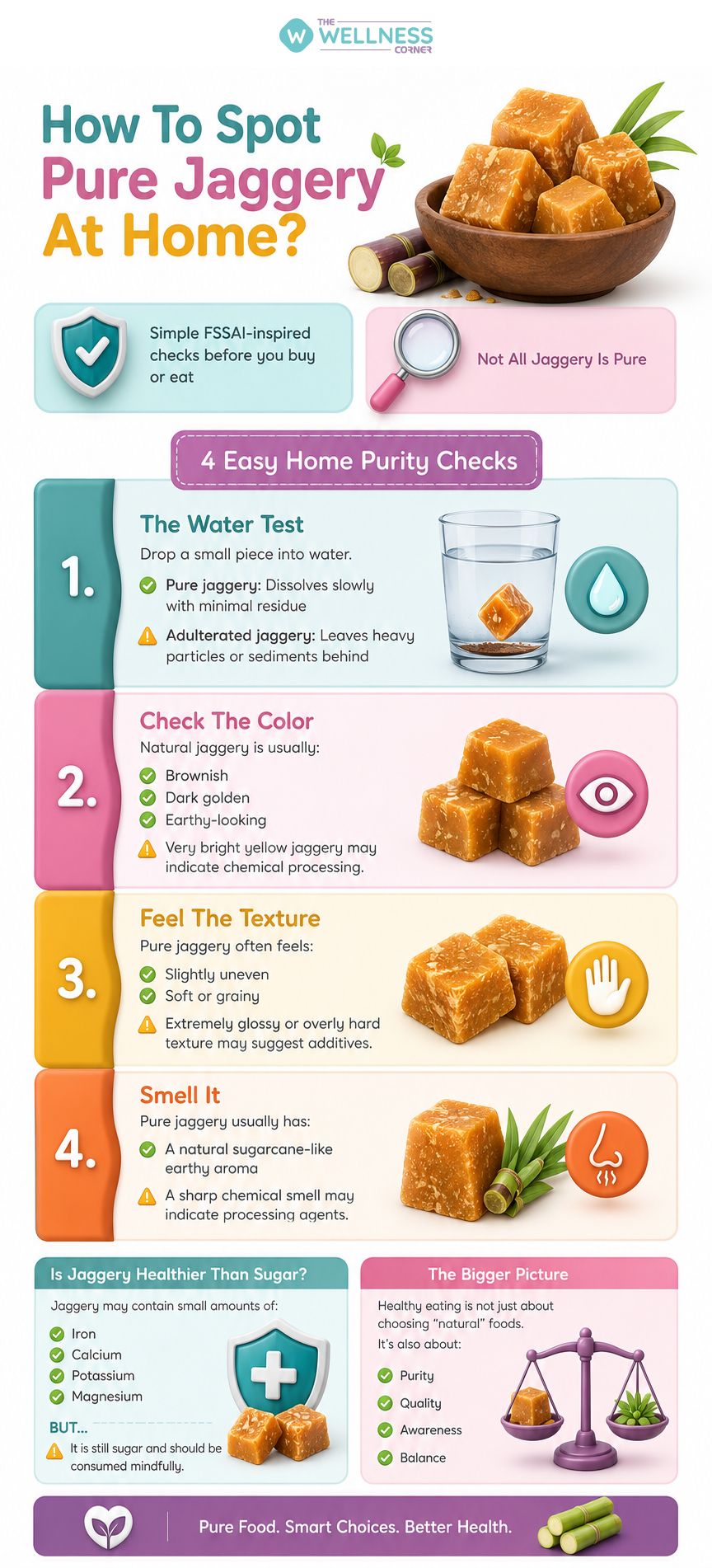
1. The Water Test
One simple method involves checking how jaggery behaves in water.
How To Do It?
- Take a glass of clean water.
- Add a small piece of jaggery.
- Allow it to dissolve naturally.
What To Observe?
Authentic jaggery usually melts slowly in water and does not leave behind a large amount of residue.
If large amounts of particles settle at the bottom, it may suggest impurities such as chalk or dirt.
2. Observe The Color Carefully
Many people mistakenly assume brighter jaggery means better quality.
However, natural jaggery is often:
- Brownish
- Dark golden
- Earthy in appearance
Very bright yellow jaggery may sometimes indicate chemical treatment or artificial coloring.
Natural products rarely appear perfectly polished.
Also Read: Say No To Artificial Food Colors
3. Check The Texture
Pure jaggery often has a slightly uneven texture because it undergoes minimal processing.
If the surface feels excessively smooth, glossy, or artificially hard, it may indicate extra processing or additives.
4. Smell The Jaggery
Pure jaggery typically carries a deep, earthy scent that resembles fresh sugarcane.
An unusually sharp or chemical-like smell could suggest the presence of artificial processing substances.
Why Food Quality Awareness Matters?
Many people focus only on calories and nutrients while ignoring food quality itself.
But purity and contamination also matter when evaluating health.
Even foods commonly considered “healthy” may become less beneficial when adulteration enters the picture.
Food awareness is not about fear.
It is about making more informed decisions.

Is Jaggery Actually Healthier Than Sugar?
This topic often creates confusion.
Jaggery and white sugar are both sweeteners and should still be consumed in moderation.
However, jaggery is less refined and may retain small amounts of minerals such as:
- Iron
- Potassium
- Calcium
- Magnesium
Even so, jaggery still provides a considerable amount of sugar and calories.
Excess intake may still affect:
- Blood sugar levels
- Weight management
- Metabolic health
The idea that jaggery can be consumed “unlimited” because it is natural is misleading.
Also Read: Evening Exercise Works Best For Lowering Blood Sugar Levels
Who Should Be Careful With Jaggery Consumption?
Individuals managing certain health conditions may still need to consume it carefully and in limited amounts.
This may include individuals with:
- Diabetes
- Insulin resistance
- Weight management concerns
- Certain metabolic conditions
Natural sweeteners are not automatically risk-free simply because they are less processed.
Why Traditional Foods Are Making A Comeback In Modern Eating Habits?
More people are becoming interested in traditional foods and ingredients that undergo minimal processing.
People are increasingly exploring:
- Jaggery
- Millets
- Fermented foods
- Cold-pressed oils
- Traditional spices
This shift often reflects a desire for more natural eating patterns.
However, growing popularity also increases the importance of quality control and food safety awareness.
Also Read: The Goodness Of Fermented Food
How To Buy Better Quality Jaggery?
Some simple tips may help consumers make more informed choices.
1.Prefer Trusted Sellers
Buying from reliable vendors may reduce the risk of adulteration.
2. Avoid Extremely Bright Colors
Very bright yellow jaggery may not always indicate purity.
3. Read Labels Carefully
Packaged products with proper certifications may offer more transparency.
4. Store Properly
Jaggery should be stored in airtight containers away from moisture.
The Bigger Reality: Natural Products Are Not Always Completely Risk-Free
Modern wellness trends sometimes label foods as either “healthy” or “unhealthy” too quickly.
But reality is usually more complex.
Even natural foods require:
- Quality awareness
- Moderation
- Proper sourcing
- Balanced consumption
Understanding food quality helps consumers make smarter long-term decisions instead of blindly following health trends.
Build Healthier Nutrition Habits With The Wellness Corner
Understanding food quality, nutrition, and balanced wellness habits is essential for long-term health.
The Wellness Corner offers expert-backed support for nutrition, preventive care, emotional wellness, fitness, stress management, and healthier lifestyle habits to help individuals make informed everyday health choices.
Because awareness is an important part of wellness too.
Frequently Asked Questions (FAQs)
Leave a Comment

Sign-Up Now & Unlock
₹100 Cashback
Subscribe to our Newsletter!
Get a weekly dose of wellness tips delivered straight to your inbox.
Recently Published
Related Articles


Health Checks @ Home
Service
Explore



Follow us on:


© 2026 Truworth Health Technologies Pvt. Ltd.