7 Signs From Your Body That Mean You’re Heading Towards Diabetes
8 months ago
5 minute read.

Diabetes does not appear overnight. Long before blood sugar levels reach a clinical diagnosis, the body quietly sends warning signals. The problem is that many of these signs are subtle, easy to ignore, or often mistaken for everyday stress, aging, or lifestyle fatigue. By the time symptoms become obvious, damage may already be underway.
Understanding these early signals can make a powerful difference. Catching diabetes in its early or prediabetic stage allows you to reverse or slow its progression through lifestyle changes, nutrition, and medical guidance.
Let’s explore seven clear signs your body may give when it is heading toward diabetes and why paying attention now can protect your long-term health.
Also Read: Diabetes-Friendly Recipes You Must Try This Summer Season
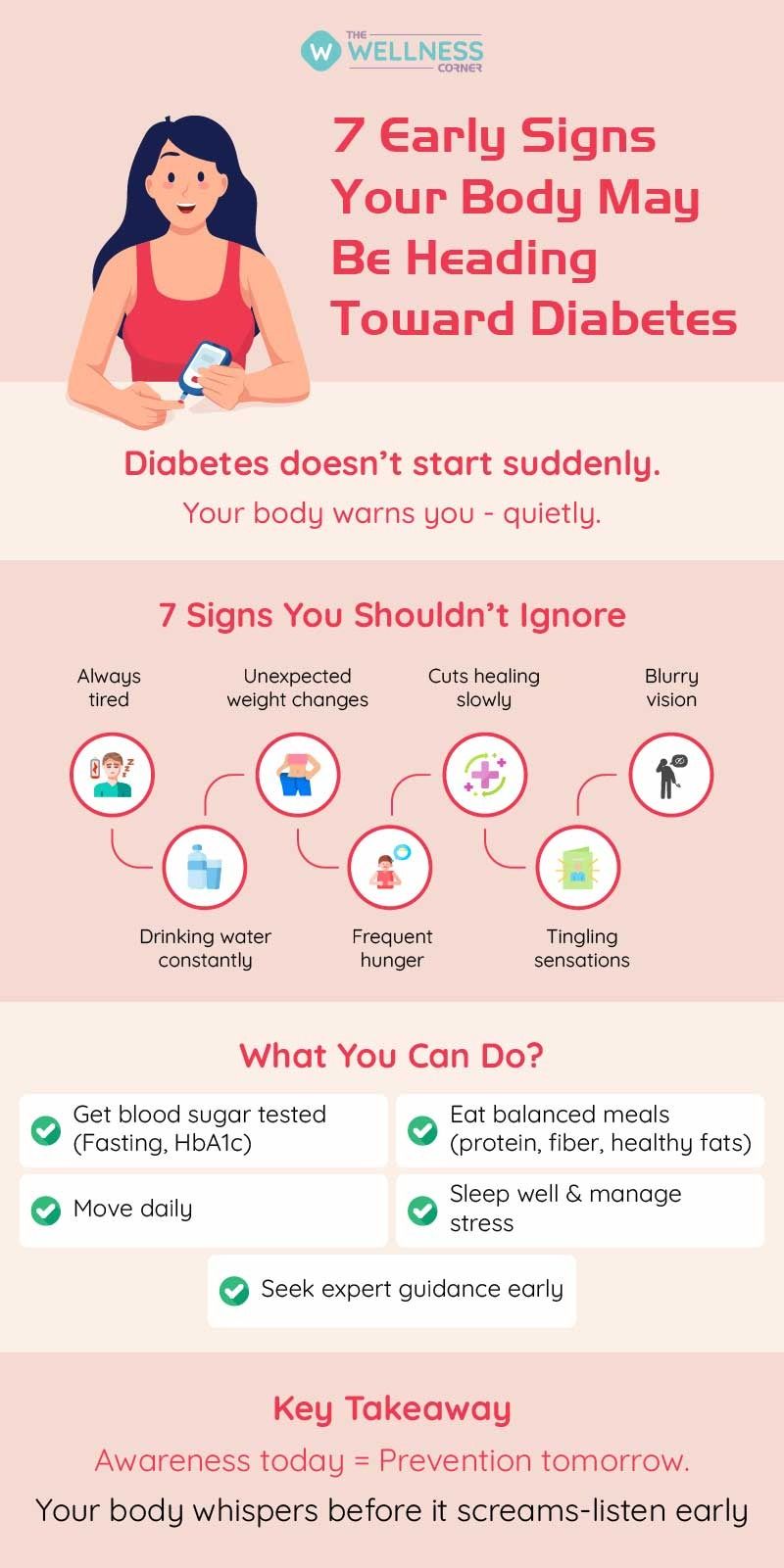
1. Constant Fatigue That Rest Does Not Fix
Feeling tired after a long day is normal. Feeling exhausted even after proper sleep is not.
When blood sugar levels remain high, glucose struggles to enter your cells efficiently. Since glucose is your body’s primary energy source, your cells are essentially running low on fuel. The result is persistent fatigue that no amount of rest seems to fix.
You may notice sluggishness in the morning, difficulty concentrating at work, or a general lack of motivation throughout the day. This type of tiredness is often dismissed as burnout, but it can be one of the earliest metabolic red flags.

2. Increased Thirst And Frequent Urination
One of the most classic early signs of rising blood sugar is excessive thirst paired with frequent urination.
When there is too much sugar in the bloodstream, the kidneys work overtime to remove it through urine. This leads to increased fluid loss, which then triggers intense thirst. The cycle continues as you drink more water and urinate more frequently.
If you find yourself waking up multiple times at night to use the bathroom or constantly reaching for water despite normal activity levels, it is worth paying attention.
3. Unexplained Weight Changes
Sudden weight loss or gain without a clear reason can be a warning sign.
In early diabetes, the body may start breaking down muscle and fat for energy because it cannot properly use glucose. This can lead to unexpected weight loss even when your appetite remains the same or increases.
On the other hand, insulin resistance can also cause weight gain, especially around the abdomen. Excess insulin promotes fat storage, particularly in the belly area, which further worsens insulin resistance.
Both unexplained weight loss and stubborn belly fat deserve closer attention.

4. Increased Hunger And Sugar Cravings
When glucose cannot enter your cells efficiently, your body believes it is starving, even if you are eating enough. This leads to frequent hunger and strong cravings, particularly for sugary or carbohydrate-rich foods.
You may feel hungry shortly after meals or crave sweets late at night. These cravings are not about lack of willpower. Your unstable blood sugar levels, is the force driving them.
Ignoring this sign often leads to overeating, weight gain, and further blood sugar imbalance.
Also Read: Why Are You Always Craving Sugar — And How Can You Stop It?

5. Slow-Healing Wounds And Frequent Infections
If cuts, bruises, or minor wounds take longer than usual to heal, it may be linked to rising blood sugar levels.
High glucose levels impair blood circulation and weaken immune function. This makes it harder for nutrients and oxygen to reach injured tissues and slows the healing process.
Frequent infections such as skin infections, urinary tract infections, or recurring gum issues can also appear. These are often overlooked as unrelated problems, but together they can point toward an underlying metabolic issue.
6. Tingling, Numbness, Or Burning Sensations
Early nerve involvement can begin even before diabetes is officially diagnosed.
You may experience tingling, numbness, or a burning sensation in the hands, feet, or fingers. This happens because prolonged high blood sugar can start damaging nerves and small blood vessels.
While nerve damage is more common in advanced diabetes, early symptoms can still occur during the prediabetic stage. Many people ignore these sensations or blame them on posture or fatigue, allowing the issue to progress unnoticed.
Also Read: Evening Exercise Works Best For Lowering Blood Sugar Levels
7. Blurred Vision And Difficulty Focusing
When the blood sugar levels fluctuate, they can affect the lenses in your eyes.
High glucose causes fluid shifts that change the shape of the lens, leading to temporary blurred vision or difficulty focusing. You may notice your vision fluctuating throughout the day or needing frequent changes in prescription glasses.
While vision changes can have many causes, when combined with other symptoms on this list, they should not be ignored.
Why These Signs Should Never Be Ignored?
Diabetes is not just about blood sugar. Over time, uncontrolled glucose levels can damage the heart, kidneys, nerves, eyes, and blood vessels.
The good news is that early intervention works. Research shows that lifestyle changes such as improved nutrition, regular physical activity, better sleep, and stress management can significantly reduce the risk of developing type 2 diabetes.
Awareness is the first step. Action is the second.
Also Read: These Houseplants Can Promote Better Sleep!

What To Do When You Notice These Signs?
If several of these symptoms feel familiar, do not panic. Instead, take informed steps.
Start by getting your blood sugar levels checked. Simple tests like fasting glucose, HbA1c, and post-meal glucose can provide valuable insights.
Your focus should be on a balanced diet, which consist protein, healthy fats, and fiber. Reduce excessive sugar and refined carbohydrates. Prioritize regular movement, even if it is just daily walking. Sleep well and manage stress, as both play a major role in blood sugar regulation.
Most importantly, seek professional guidance rather than guessing or self-diagnosing.

Take Control Of Your Health With The Wellness Corner
Early signs are your body’s way of asking for attention, not fear.
At The Wellness Corner, you can access expert nutritionists, personalized health assessments, and doctor consultations designed to identify risks early and guide you toward sustainable health changes.
Whether you want to understand your blood reports, manage prediabetes, or simply improve your metabolic health, trusted guidance makes all the difference.
Frequently Asked Questions
Leave a Comment

Sign-Up Now & Unlock
₹100 Cashback
Subscribe to our Newsletter!
Get a weekly dose of wellness tips delivered straight to your inbox.
Recently Published
Related Articles


Health Checks @ Home
Service
Explore



Follow us on:


© 2026 Truworth Health Technologies Pvt. Ltd.