The Workplace Vitamin D Problem: What's Causing It And Why It Matters?
3 months ago
7 minute read.

Imagine living in one of the sunniest countries in the world and still being deficient in the "sunshine vitamin." It sounds surprising, but it is becoming an increasingly common reality.
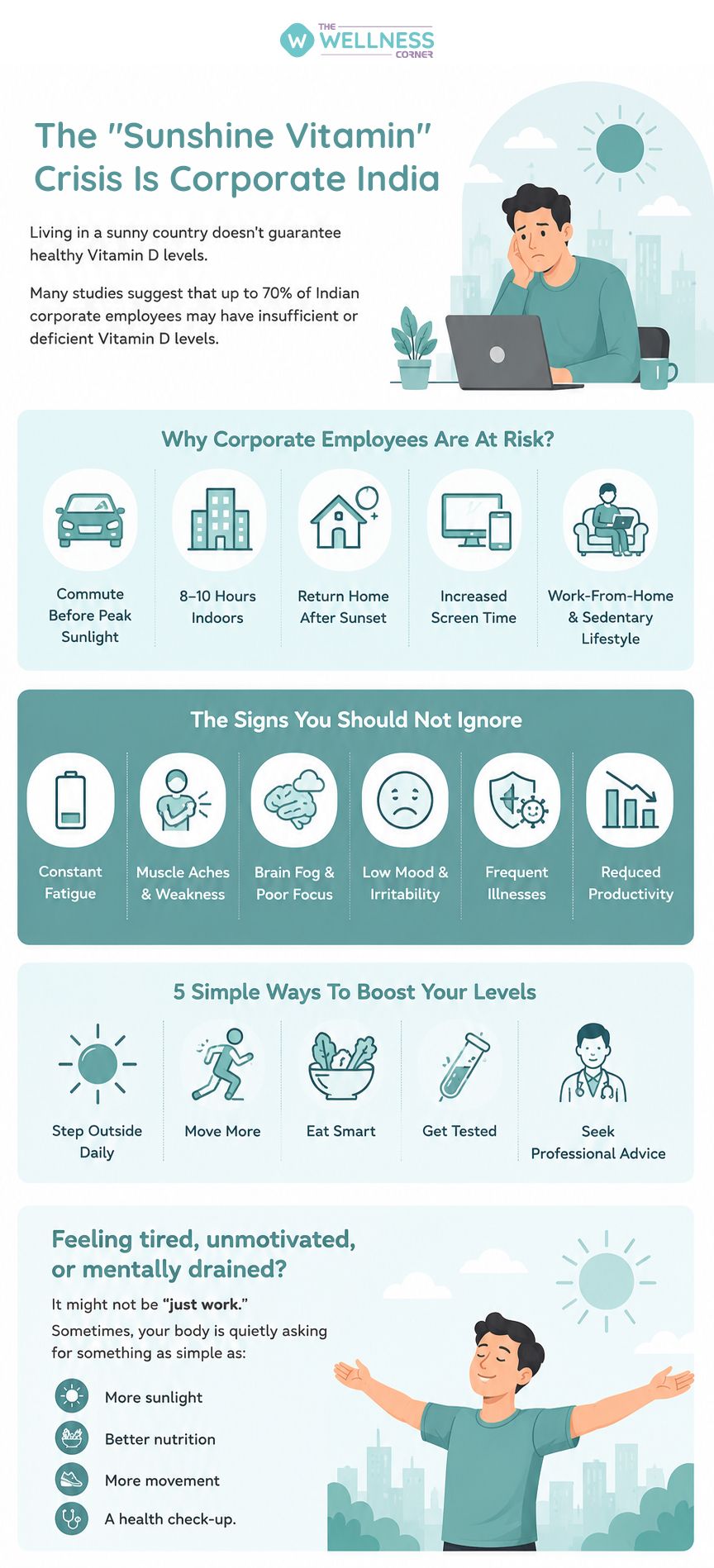
Vitamin D deficiency has emerged as one of the most widespread nutritional concerns among Indian professionals. Despite abundant sunlight throughout the year, studies have consistently shown that a large percentage of Indians have insufficient or deficient Vitamin D levels. Among corporate employees, the problem appears even more pronounced due to indoor work environments, sedentary lifestyles, and limited sun exposure.
What makes Vitamin D deficiency particularly concerning is that its symptoms often develop gradually. Many people dismiss fatigue, body aches, low mood, or reduced productivity as normal consequences of a busy work life, without realizing that an underlying nutrient deficiency may be contributing to these issues.
Let's explore why Vitamin D deficiency is so common among corporate professionals, how it affects health and performance, and what can be done to address it.
Also Read: 9 Signs Of Vitamin D Deficiency (And How To Recover From It)
Why Vitamin D Matters More Than Most People Realize?
Vitamin D is often associated with bone health, but its role extends far beyond maintaining strong bones.
This essential nutrient helps support:
- Bone and muscle health
- Immune system function
- Mood regulation
- Energy levels
- Nervous system function
- Inflammation control
- Overall well-being
Unlike most vitamins, Vitamin D functions more like a hormone, influencing multiple systems throughout the body.
When levels drop too low, the effects can impact both physical and mental health.

Why Is Vitamin D Deficiency So Common Among Corporate Employees?
1. The Indoor Work Lifestyle
Modern work culture has dramatically changed how people spend their days.
Many corporate professionals:
- Commute before peak sunlight hours
- Spend most of the workday indoors
- Stay in office settings where artificial lighting replaces exposure to daylight.
- Return home after sunset
As a result, meaningful sun exposure becomes increasingly limited.
Even individuals who travel to and from work daily may not receive enough direct sunlight for adequate Vitamin D production.
Also Read: Low On Vitamin D? Reap The Benefits Of Sunlight
2. Work-From-Home And Hybrid Work Patterns
Remote work has created additional challenges.
Without the need to commute or leave the house frequently, many employees spend entire days indoors.
While working from home offers convenience, it can unintentionally reduce outdoor exposure even further.
3. Excessive Screen Time
Long working hours often involve extended periods in front of laptops, computers, and mobile devices.
The result is less time spent engaging in outdoor activities that naturally promote sunlight exposure and physical movement.
Also Read: Is Too Much Screen Time Harmful To Our Eyes?

The Silent Symptoms Many Professionals Ignore
One reason Vitamin D deficiency often goes unnoticed is that the symptoms can be subtle and easily attributed to stress or workload.
1. Persistent Fatigue
Feeling tired despite getting adequate sleep is one of the most common complaints associated with low Vitamin D levels.
Many employees assume workplace stress is solely responsible, while the deficiency remains undetected.
2. Frequent Muscle Aches And Weakness
Healthy muscle activity relies in part on sufficient Vitamin D levels.
Low levels may contribute to:
- Muscle discomfort
- Generalized body aches
- Reduced physical endurance
- Difficulty recovering after exercise
3. Lower Productivity And Focus
Emerging research suggests Vitamin D may influence cognitive performance and mental clarity.
Deficiency can sometimes contribute to:
- Reduced concentration
- Mental fatigue
- Difficulty maintaining focus
Also Read: Does Listening To Music Boost Productivity?
4. Mood Changes
Vitamin D receptors can be found in multiple regions of the brain.
Insufficient levels have been linked with:
- Low mood
- Irritability
- Reduced motivation
- Increased stress sensitivity
While Vitamin D is not the sole factor influencing mental health, maintaining adequate levels is important for emotional well-being.

5. Increased Susceptibility To Illness
Vitamin D supports immune system function.
Individuals with low levels may find themselves experiencing frequent infections or prolonged recovery periods.
The Corporate Wellness Impact
1. Absenteeism And Reduced Performance
When employees experience ongoing fatigue, discomfort, and reduced concentration, workplace productivity can be affected.
Over time, Vitamin D deficiency may contribute to:
- Increased sick leave
- Lower workplace engagement
- Reduced energy levels
- Poorer overall performance
2. Long-Term Health Consequences
If left unaddressed, severe or prolonged deficiency may increase the risk of:
- Osteoporosis
- Bone weakness
- Increased fracture risk
- Muscle weakness
- Certain chronic health conditions
Early identification and intervention can help prevent these complications.
Why Getting Sunlight Alone May Not Meet Your Vitamin D Needs?
Many people assume that living in a sunny country automatically guarantees adequate Vitamin D levels.
Unfortunately, several factors can interfere with Vitamin D production.
These include:
- Spending most of the day indoors
- Air pollution
- Clothing that covers a large portion of the body
- Sunscreen use
- Skin pigmentation
- Age-related changes in Vitamin D synthesis
This explains why deficiency remains common even in regions with abundant sunshine.
How To Improve Your Vitamin D Levels?
1. Spend More Time Outdoors
One of the most reliable ways to support natural Vitamin D production is through routine sun exposure. At least 15-20 minutes of sun exposure daily is generally considered the best time, between 11 am and 1 pm.
Whenever possible:
- Take short outdoor breaks during the day.
- Walk outside during lunch hours.
- Look for opportunities to stay active while spending time outside.
Even minor lifestyle changes can lead to noticeable benefits over time.
2. Include Vitamin D-Rich Foods
Although food alone may not fully meet Vitamin D requirements, it can contribute to healthier levels.
Some dietary sources include:
- Fatty fish
- Egg yolks
- Dairy products
- Fortified cereals
- Mushrooms exposed to ultraviolet light
- Calcium-rich foods
A balanced diet supports overall nutritional health.
3. Stay Physically Active
Regular movement supports overall wellness and often increases opportunities for outdoor exposure.
Simple habits such as walking meetings, outdoor exercise sessions, or evening walks can be beneficial.
4. Consider Testing
Because symptoms can be vague, a blood test is often the most reliable way to determine Vitamin D status.
Testing can help identify whether deficiency exists and guide appropriate interventions.
5. Follow Professional Guidance
If Vitamin D deficiency is confirmed, healthcare professionals may recommend supplementation based on individual needs.
Supplementation should always be guided by medical advice rather than self-prescription.
Building A Healthier Corporate Lifestyle
Addressing Vitamin D deficiency requires more than simply taking a supplement.
It often involves creating healthier daily routines that support overall well-being.
Corporate professionals can benefit from:
- Regular health screenings
- Movement breaks during work hours
- Outdoor activities
- Balanced nutrition
- Stress management
- Adequate sleep
Small lifestyle improvements often have a cumulative effect on long-term health.
The Bottom Line
Vitamin D deficiency is becoming an increasingly common concern among Indian corporate employees, largely driven by indoor work environments and modern lifestyle patterns.
Because the symptoms often develop gradually, many people fail to recognize the impact low Vitamin D levels may be having on their energy, productivity, mood, and overall health.
The encouraging news is that awareness, routine testing, healthier habits, and professional guidance can help address the problem before it leads to more serious complications.
Sometimes, improving your health begins with paying attention to what your body has been quietly trying to tell you.
Prioritize Your Health With The Wellness Corner
Workplace success and personal well-being go hand in hand. Maintaining healthy Vitamin D levels is just one part of a broader approach to physical and mental wellness.
The Wellness Corner provides expert-backed support for nutrition, fitness, preventive care, emotional well-being, stress management, and healthy lifestyle habits that help individuals thrive both inside and outside the workplace.
Because sustainable health is not just about treating problems. It is about building habits that support long-term well-being every day.
Frequently Asked Questions (FAQs)
Leave a Comment

Sign-Up Now & Unlock
₹100 Cashback
Subscribe to our Newsletter!
Get a weekly dose of wellness tips delivered straight to your inbox.
Recently Published
Related Articles


Health Checks @ Home
Service
Explore



Follow us on:


© 2026 Truworth Health Technologies Pvt. Ltd.