21 Days To Become Emotionally Stronger
1 month ago
6 minute read.

When people hear the phrase "emotional strength," they often imagine someone who never cries, never feels stressed, and always appears calm under pressure.
In reality, emotional strength looks very different.
Emotionally strong people still experience disappointment, anxiety, frustration, grief, and self-doubt. The difference is not that they avoid difficult emotions. It is that they learn how to manage, process, and respond to those emotions in healthier ways.
Just like physical fitness develops through consistent effort, emotional resilience can also be strengthened through daily habits and intentional practice.
While no one can completely transform their emotional well-being overnight, 21 days can be a powerful starting point for building healthier thought patterns, improving self-awareness, and developing greater emotional resilience.
Let's explore a practical 21-day journey that can help you become emotionally stronger and more resilient in everyday life.
Also Read: Understanding Emotional Triggers And Healing Responses
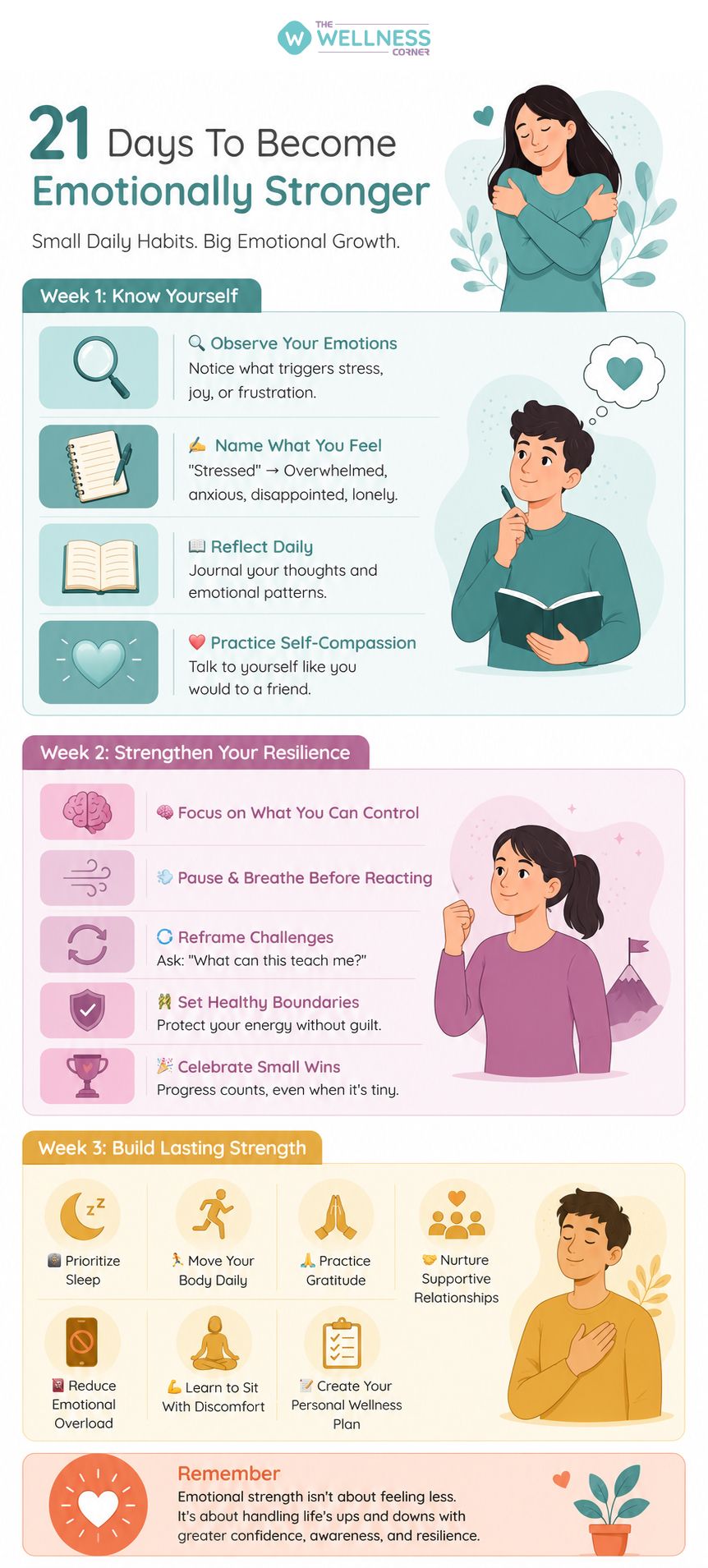
What Does Emotional Strength Really Look Like?
Emotional strength is not about suppressing emotions.
Instead, it involves the ability to:
- Manage stress effectively
- Adapt to change
- Recover from setbacks
- Maintain perspective during challenges
- Express emotions in healthy ways
- Build positive relationships
- Make thoughtful decisions under pressure
Emotionally strong individuals recognize their feelings without allowing those feelings to completely control their actions.
Week 1: Build Self-Awareness
Days 1 To 7: Understanding Yourself Better
Emotional growth begins with awareness.
Before changing your reactions, you first need to understand them.
Also Read - The Mirror Effect: Using Mirror Gazing To Build Self-Awareness And Confidence
Day 1: Observe Your Emotions
As you go through your day, take a moment to notice how you react emotionally to different situations and experiences.
Notice:
- What triggers stress?
- What brings joy?
- What causes frustration?
- Awareness is the first step toward change.

Day 2: Name Your Feelings
Rather than describing your feelings in broad terms, try pinpointing the exact emotions you are experiencing.
Examples include:
- Disappointed
- Anxious
- Overwhelmed
- Frustrated
- Lonely
- Hopeful
Research suggests that labeling emotions can help improve emotional regulation.
Day 3: Start A Journal
Spend a few minutes writing about your experiences.
Journaling can help organize thoughts, identify patterns, and create emotional clarity.
Also Read: Five Journaling Techniques That Can Change Your Life For Good
Day 4: Notice Negative Self-Talk
Pay attention to the way you speak to yourself.
Many people are far more critical of themselves than they would ever be toward others.

Day 5: Practice Self-Compassion
Treat yourself with the same kindness you would offer a friend facing a difficult situation.
Day 6: Identify Stress Triggers
Take note of situations, people, or environments that consistently increase stress levels.
Day 7: Reflect On The Week
Review your observations and identify areas where you would like to grow emotionally.
Week 2: Strengthen Emotional Resilience
Days 8 to 14: Building Healthier Responses
Once awareness develops, the next step is learning how to respond more effectively.

Day 8: Focus On What You Can Control
Not every challenge can be solved immediately.
However, identifying what is within your control can reduce feelings of helplessness.
Day 9: Practice Deep Breathing
Breathing exercises can help calm the nervous system during stressful situations.
Even a few minutes of intentional breathing may help improve emotional regulation.
Also Read - Deep Breathing & Techniques To Relieve Anxiety: Learn How To Do It Right!
Day 10: Reframe Challenges
Instead of asking:
"Why is this happening to me?"
Try asking:
"What can I learn from this situation?"
Even minor changes in the way you view a situation can have a significant impact on how you respond to it.
Day 11: Reduce Comparison
Constant comparison often undermines emotional well-being.
Focus on your own progress rather than measuring yourself against others.
Day 12: Set Healthy Boundaries
Protecting your emotional energy is an important part of resilience.
Learn to say no when necessary.
Day 13: Accept Imperfection
Perfection is unattainable.
Emotionally strong individuals recognize that mistakes are part of growth.
Day 14: Celebrate Small Wins
Acknowledge progress, no matter how small.
Growth often happens gradually rather than dramatically.
Week 3: Build Long-Term Emotional Strength
Days 15 to 21: Creating Sustainable Habits
The final week focuses on habits that support emotional well-being over the long term.
Day 15: Prioritize Sleep
Sleep influences:
- Mood
- Stress management
- Focus
- Emotional regulation
Poor sleep often makes emotional challenges harder to manage.
Also Read: Is The 8-Hour Sleep Rule A Myth? What Science Really Says?
Day 16: Move Your Body
Physical activity supports both physical and emotional health.
Even a short walk can positively influence mood.
Day 17: Practice Gratitude
Spend a few minutes identifying things you appreciate.
Gratitude can help shift attention away from constant stress and negativity.
Day 18: Strengthen Social Connections
Emotional resilience often grows through supportive relationships.
Reach out to someone you trust.
Day 19: Limit Emotional Overload
Constant exposure to negative news, social media, or stressful content can affect emotional well-being.
Create space for mental recovery.
Day 20: Learn To Sit With Discomfort
Not every difficult feeling requires an immediate fix or response.
Sometimes emotional strength involves allowing yourself to experience difficult feelings without avoiding them.
Day 21: Create A Personal Emotional Wellness Plan
Take some time to review the insights, experiences, and lessons you have gained throughout the past 21 days.
Identify the habits you want to continue.
Long-term emotional strength develops through ongoing practice.
Why Emotional Strength Matters In Everyday Life?
Emotionally resilient individuals are often better equipped to handle:
- Workplace stress
- Relationship challenges
- Unexpected setbacks
- Personal disappointments
- Major life transitions
- Emotional strength does not eliminate difficulties.
- It helps people navigate those difficulties more effectively.
Common Obstacles To Emotional Growth
Many people struggle to strengthen emotional resilience because of:
- Fear of vulnerability
- Unrealistic expectations
- Perfectionism
- Negative self-talk
- Avoidance of difficult emotions
Recognizing these obstacles is an important part of overcoming them.
Progress Is Not Always Linear
One of the biggest misconceptions about emotional growth is the belief that progress happens in a straight line.
Some days will feel easier than others.
There may be setbacks.
There may be moments when old habits reappear.
This is normal.
Growth is rarely perfect.
What matters most is consistency rather than perfection.
Small Daily Actions Create Lasting Change
Many people search for dramatic solutions to emotional challenges.
However, meaningful change often develops through small actions repeated consistently.
Examples include:
- Five minutes of journaling
- A daily gratitude practice
- Better sleep habits
- Healthier boundaries
- Regular physical activity
- Mindful breathing
Over time, these small habits can create significant improvements in emotional resilience.
The Bigger Picture: Emotional Strength Is A Lifelong Skill
Building emotional resilience is not a 21-day destination.
It is a lifelong journey.
The purpose of these 21 days is not to eliminate stress, sadness, or challenges.
The goal is to develop healthier tools for navigating them.
Every small step toward greater self-awareness, emotional regulation, and resilience contributes to a stronger foundation for long-term well-being.
Support Your Emotional Well-Being With The Wellness Corner
Emotional wellness is an important part of overall health.
Sleep, nutrition, fitness, stress management, mindfulness, preventive care, and mental well-being all work together to support a healthier and more balanced life.
The Wellness Corner offers expert-backed support for emotional wellness, stress management, mindfulness, fitness, nutrition, and holistic health to help individuals build sustainable habits that support long-term well-being.
Because emotional strength is not about avoiding life's challenges. It is about learning how to navigate them with confidence and resilience.
Frequently Asked Questions (FAQs)
Leave a Comment

Sign-Up Now & Unlock
₹100 Cashback
Recently Published
Related Articles


Health Checks @ Home
Service
Explore



Follow us on:


© 2026 Truworth Health Technologies Pvt. Ltd.