Why Do You Feel Sad After A Happy Event? Understanding Post-Joy Dysphoria
10 hours ago
7 minute read.
Imagine spending months planning a dream wedding.
Or finally completing an important project after years of effort.
Maybe you've just come back from an unforgettable trip, achieved a significant career milestone, or finally enjoyed a family celebration you had been looking forward to for a long time.
- Everything goes well.
- You feel excited, grateful, and fulfilled.
- Yet a few hours or days later, something unexpected happens.
- A feeling of sadness appears.
- You feel emotionally low.
- Motivation drops.
There is a strange sense of emptiness that seems difficult to explain.
This experience can be confusing because it appears to contradict the joyful event that came before it.
However, many people experience this emotional shift.
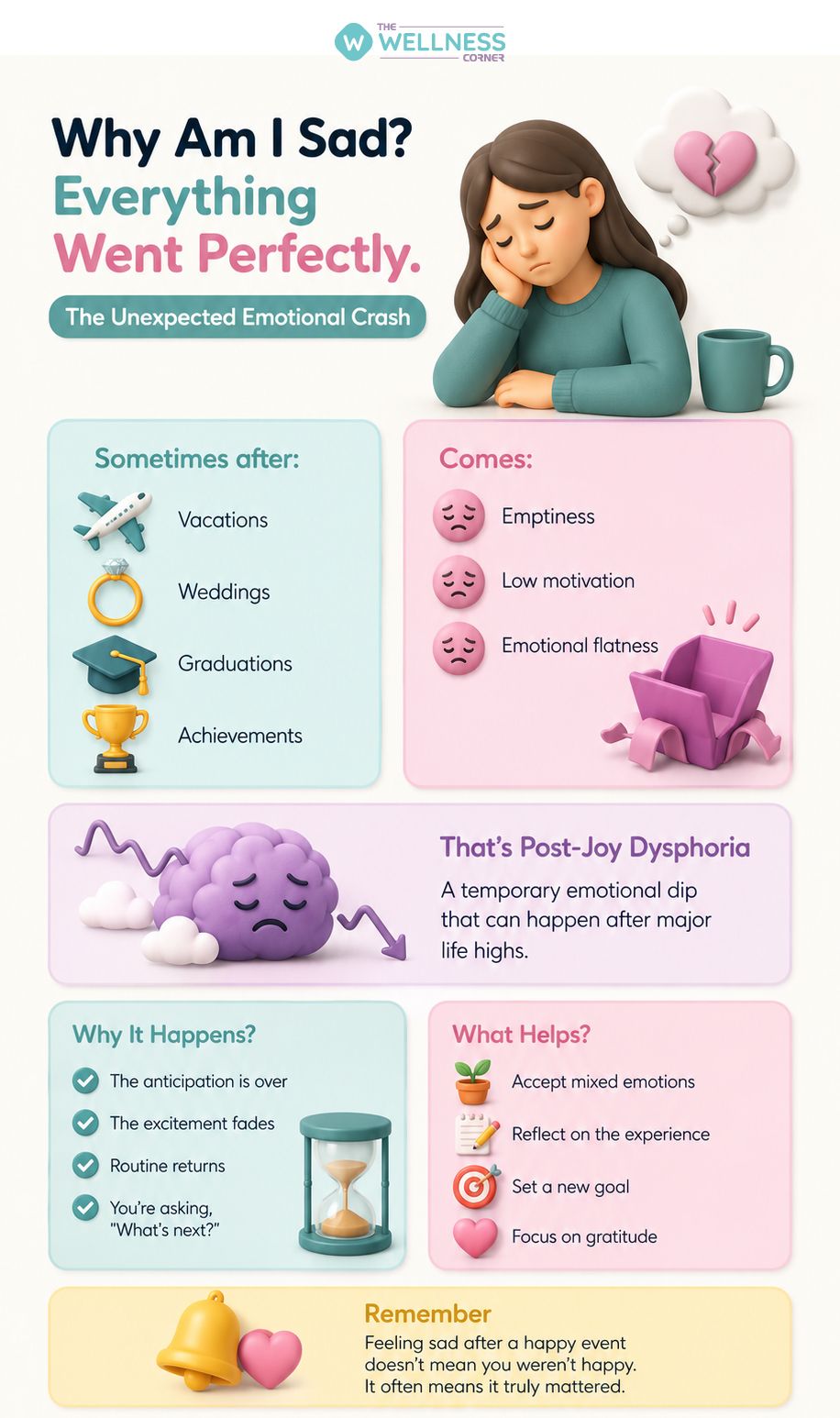
Psychologists sometimes refer to this phenomenon as post-joy dysphoria, a state in which feelings of sadness, emptiness, or emotional discomfort emerge after a highly positive experience.
Understanding why this happens can help people approach these emotions with greater self-awareness and compassion.
Also Read: What Are Microjoys? How Can They Help Us Feel Positive?
What Is Post-Joy Dysphoria?
Post-joy dysphoria describes feelings of sadness, emotional flatness, or disappointment that occur after a significant positive event.
It does not mean the event was unsuccessful.
It does not mean the happiness was fake.
Instead, it reflects the complex way human emotions work.
People often experience post-joy dysphoria after:
- Major celebrations
- Vacations
- Weddings
- Graduations
- Career achievements
- Sporting events
- Holiday gatherings
- Personal milestones
The emotional high associated with these experiences may be followed by an emotional downturn once the event ends.
Why Positive Events Can Trigger Sadness?
At first glance, it seems strange that something wonderful could lead to feelings of sadness.
However, emotions are rarely simple.
Major positive experiences often involve intense anticipation, excitement, and emotional investment.
When the event concludes, people may experience a sudden shift from emotional stimulation back to ordinary daily life.
The contrast between the excitement of the event and the routine that follows can feel surprisingly dramatic.
Also Read - The “Dopamine Patch” Lifestyle: Why We Constantly Need Stimulation?
The Role Of Anticipation
Sometimes the anticipation leading up to an event becomes almost as meaningful as the event itself.
Many individuals invest significant time and energy, sometimes over weeks, months, or years, getting ready for:
- A wedding
- A graduation
- A major trip
- A retirement celebration
- A career milestone
The planning process creates excitement and purpose.
Once the event is over, that anticipation disappears.
Many individuals are surprised by the emotional void this can leave behind.
The mind may suddenly lose a major source of focus and excitement.
When Your Brain Adjusts After Emotional Highs?
Positive experiences often create heightened emotional states.
The brain responds to exciting events by releasing chemicals associated with pleasure, motivation, and reward.
After the event ends, emotional intensity naturally returns to baseline levels.
For some people, this transition can feel abrupt.
What is actually a return to normal emotional functioning may feel like sadness because it follows such a powerful positive experience.
Also Read: Dopamine Fasting (Pleasure Detox)-The Latest Wellness Trend

The "Now What?" Feeling
Many people report experiencing a sense of uncertainty after reaching an important goal.
For months or years, their attention has been directed toward achieving something meaningful.
Then the goal is accomplished.
The celebration ends.
And a new question appears:
"What happens next?"
Without a new objective or challenge, people may feel temporarily directionless.
This does not diminish the achievement itself. It simply reflects the human need for purpose and forward momentum.
Why Major Life Milestones Can Feel Emotionally Complex?
Life transitions often involve mixed emotions.
A graduation may bring pride and excitement while also marking the end of an important chapter.
A wedding may create happiness while simultaneously highlighting changes in identity and relationships.
Retirement may provide freedom while also introducing uncertainty.
Human emotions rarely exist in isolation.
Feelings of happiness and sadness can sometimes exist side by side within the same experience.
This emotional complexity is often a normal part of significant life events.

Common Signs Of Post-Joy Dysphoria
Post-joy dysphoria can appear differently from person to person.
Common experiences may include:
- Feeling emotionally flat after a celebration
- A sense of emptiness once an event ends
- Reduced motivation
- Unexpected sadness
- Increased emotional sensitivity
- Difficulty returning to normal routines
- Questioning what comes next
- Temporary feelings of loneliness
These experiences are often short-lived and gradually improve with time.
Also Read - Secrets To Never Losing Motivation: Types And Its Link To Productivity

Social Media Can Intensify The Experience
Modern life adds another layer to post-joy dysphoria.
After major events, people often spend time reviewing photos, videos, and social media posts.
While these memories can be enjoyable, they may also reinforce comparisons between the excitement of the event and ordinary daily life.
Scrolling through highlights repeatedly can sometimes make it harder to fully reconnect with the present moment.
Why Perfection Expectations Can Make Things Worse?
Many people place enormous expectations on major milestones.
They believe:
- "I believe this occasion will be one of the most special and significant experiences of my life."
- "Everything will feel different afterward."
- "I'll finally feel complete."
When reality does not perfectly match these expectations, disappointment may emerge.
Even wonderful experiences cannot permanently eliminate stress, uncertainty, or everyday challenges.
Recognizing this can help create more realistic emotional expectations.
Also Read - The Quest For Perfection: Are You A Perfectionist?
The Difference Between Post-Joy Dysphoria And Depression
While there may be similarities in certain emotional experiences, post-joy dysphoria is distinct from clinical depression.
Post-joy dysphoria is typically:
- Temporary
- Linked to a specific positive event
- Mild to moderate in intensity
- Short-lived
Depression often involves more persistent symptoms that significantly affect daily functioning.
If sadness continues for an extended period or becomes overwhelming, professional support may be helpful.
Healthy Ways To Cope With Post-Joy Dysphoria
The good news is that post-joy dysphoria is often manageable.
1.Accept Mixed Emotions
It is possible to feel grateful for a positive experience while also feeling sad that it has ended.
Both emotions can exist simultaneously.
2. Avoid Judging Yourself
Many individuals feel confused or ashamed when they experience sadness following an event that was supposed to bring happiness.
Emotions are not always logical, and self-criticism often increases distress.
3. Reconnect With Daily Routines
Returning to familiar routines can help restore a sense of stability and balance.
4. Reflect On The Experience
Journaling or discussing the event with others may help process the emotions associated with it.
5. Create New Sources Of Meaning
Setting new goals or pursuing meaningful activities can help restore a sense of purpose and momentum.

Why Gratitude Can Help?
Gratitude does not eliminate sadness, but it can help shift attention toward positive memories and meaningful experiences.
Instead of focusing solely on the fact that an event has ended, gratitude encourages appreciation for:
- The people involved
- The memories created
- The lessons learned
- The experiences shared
This perspective often helps ease the transition back into everyday life.
The Emotional Side Of Being Human
One reason post-joy dysphoria feels confusing is because society often portrays happiness as a permanent destination.
In reality, emotions are constantly changing.
Joy comes and goes.
Sadness comes and goes.
Excitement rises and falls.
The emotional shifts that follow meaningful experiences are part of being human.
Rather than viewing post-joy sadness as a problem, it may be more helpful to see it as evidence that something truly mattered.
The event was meaningful.
The experience was significant.
And the emotions that follow are simply part of the mind's process of adjusting.
The Bigger Picture: Meaningful Moments Leave Emotional Imprints
The happiest moments in life often leave lasting emotional impressions.
When those moments pass, it is natural to miss them.
Feeling a little sad after a joyful experience does not erase the happiness that came before it.
In many cases, it highlights just how meaningful that experience was.
Learning to embrace both joy and the emotions that follow can help people navigate life's transitions with greater understanding and emotional balance.
Support Your Emotional Well-Being With The Wellness Corner
Emotional health is about more than managing difficult moments. It also involves understanding the complex emotions that can arise after positive experiences and major life events.
The Wellness Corner offers expert-backed support for mental wellness, stress management, mindfulness, emotional resilience, preventive care, and overall well-being.
Whether you are navigating life transitions, emotional challenges, or personal growth, professional support can help you build healthier coping strategies and emotional awareness.
Because every emotion deserves understanding, not judgment.
Frequently Asked Questions (FAQs)
Leave a Comment

Sign-Up Now & Unlock
₹100 Cashback
Subscribe to our Newsletter!
Get a weekly dose of wellness tips delivered straight to your inbox.
Recently Published
Related Articles


Health Checks @ Home
Service
Explore



Follow us on:


© 2026 Truworth Health Technologies Pvt. Ltd.