Signs Your Mental Abilities Are Declining
14 hours ago
6 minute read.

Most people occasionally forget where they’ve kept their keys. Struggling to remember a familiar name after a long day can happen too. But what if these moments start happening more often, begin interfering with everyday tasks, or feel noticeably different from how your mind usually works?
The important thing is not to panic. Occasional forgetfulness does not automatically mean your mental abilities are declining. Sleep problems, stress, anxiety, certain medications, nutritional deficiencies, alcohol use, and several medical conditions can also affect how the brain functions.
So, what signs should you actually watch for?
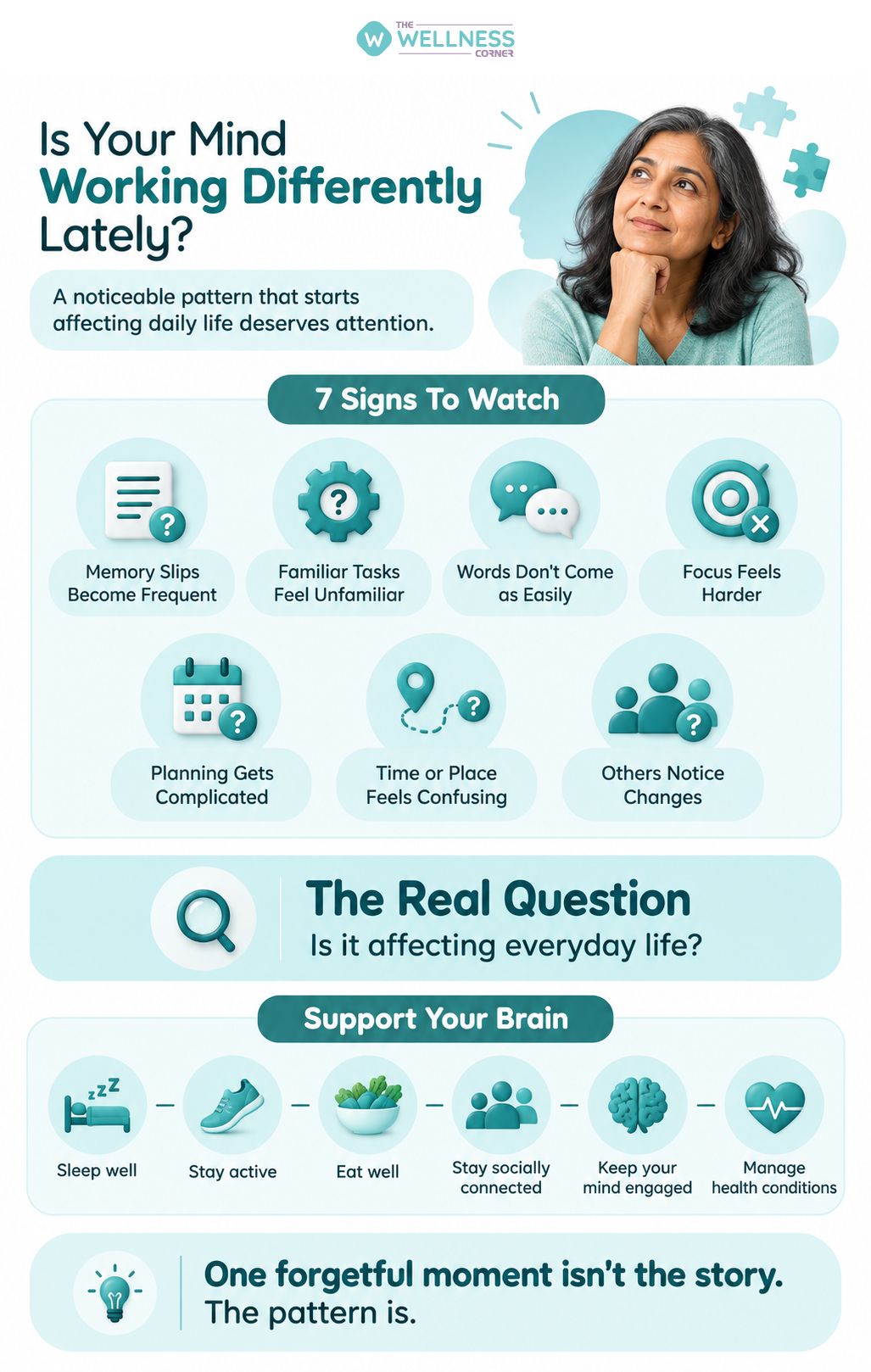
When Everyday Forgetfulness Becomes More Frequent?
Everyone forgets things. The occasional missed appointment or forgotten password is usually not concerning on its own.
A more noticeable change may involve repeatedly forgetting recent conversations, appointments, important dates, or information that you would normally remember.
You might find yourself asking the same question several times or relying much more heavily on reminders and notes. The key is the pattern.
Losing Track Of Familiar Tasks
Another possible warning sign is difficulty completing tasks that were once routine.
You may suddenly struggle to follow a familiar recipe, operate a device you have used for years, manage household responsibilities, or complete a familiar work process.
In a workplace setting, this could look like repeatedly forgetting standard procedures or needing significantly more assistance with tasks you previously handled comfortably.
Changes in familiar abilities can be worth discussing with a healthcare professional.
Finding The Right Words Becomes Harder
Occasionally getting stuck on a word happens to everyone. Persistent shifts in communication patterns can become more apparent over time.
You might frequently lose your train of thought, struggle to find simple words, repeat yourself during conversations, or have difficulty following discussions. Some people may also begin using unusual words because they cannot recall the word they actually want.
Communication changes can have many possible causes, so they should be considered alongside other symptoms rather than viewed in isolation.

When Concentration Starts Feeling Different?
Mental fatigue after a demanding day is completely normal. But persistent difficulty concentrating may deserve attention.
You may find it harder to read and understand information, follow a conversation, switch between tasks, or stay focused on something for more than a few minutes.
Simple tasks may suddenly require much more mental effort than they used to.
Poor sleep, chronic stress, anxiety, depression, medication effects, and other health conditions can also interfere with concentration. This is why understanding what may be causing the change is important.
Also Read: Mindfulness & Concentration: How Are They Connected?
Struggling With Planning And Problem-Solving
Your brain handles countless decisions every day. When planning and problem-solving become noticeably harder, it can affect both personal and professional life.
For example, you might struggle to organise a familiar schedule, manage finances, prepare for an event, follow several steps in the correct order, or adjust when something unexpected happens.
Making an occasional poor decision is part of being human. The concern is a persistent change in your ability to organise, reason, or solve problems.

Getting Confused About Time Or Place
Becoming temporarily unsure about the day after a particularly exhausting week is different from repeatedly becoming confused about dates, locations, or familiar surroundings.
Some people experiencing cognitive changes may lose track of where they are, forget how they arrived somewhere, or become confused about events that recently happened.
Sudden confusion is especially important. A rapid change in mental status can have several medical causes and may require urgent medical attention.
Also Read: Your Office Lighting Could Be Affecting Mental Health
Changes In Judgment May Be Easier For Others To Notice
Sometimes, changes in mental abilities are noticed by family members, friends, or colleagues before the person experiencing them recognises them.
You may become unusually impulsive, make decisions that seem out of character, have difficulty managing money, or show less awareness of situations that previously seemed obvious.
One change does not automatically indicate cognitive decline. However, significant or repeated changes in judgment are worth discussing with a healthcare professional.
Mood And Personality Changes Can Accompany Cognitive Changes
Changes in thinking can sometimes occur alongside changes in mood or personality.
Someone who was previously socially engaged may become unusually withdrawn. Another person may become more irritable, anxious, suspicious, or emotionally flat without an obvious explanation.
These changes can also occur with stress, depression, anxiety, grief, sleep problems, or other health concerns. Looking at the broader picture is therefore important.

Your Daily Life Can Tell You A Lot
One of the most useful questions is simple: Is this affecting everyday independence?
Difficulty remembering an occasional name is different from repeatedly forgetting how to perform familiar tasks. Misplacing something occasionally is different from frequently putting objects in unusual places and being unable to retrace your steps.
If changes are becoming persistent, noticeable, and disruptive, consider speaking with a doctor. A healthcare professional can review your symptoms, medications, sleep, lifestyle, medical history, and other possible causes.
Also Read: Is The 8-Hour Sleep Rule A Myth? What Science Really Says?
How To Act When These Signs Appear?
Start by paying attention to patterns rather than isolated incidents.
Write down any changes you observe over time. Note when they happen, what you were doing, how well you slept, and whether stress or other factors were involved. You can also ask someone you trust whether they have noticed changes in your memory or behaviour.
Prioritising regular sleep, physical activity, nutritious food, social connection, mental stimulation, and management of health conditions can support overall brain health. These habits are valuable at any age, but they should not replace professional assessment when significant changes occur.
Most importantly, do not label yourself based on a few forgetful moments. The brain is influenced by sleep, stress, health, environment, and many other factors.
The Bottom Line
Not every forgotten name or misplaced object is a sign that your mental abilities are declining. What matters more is whether there is a noticeable, persistent change from your usual level of functioning.
Pay attention to patterns, take concerns seriously, and avoid jumping to conclusions. If changes are affecting work, relationships, safety, or independence, professional evaluation can help identify what may be happening and whether anything treatable is contributing to the symptoms.
Looking for practical ways to support your physical and mental wellbeing? Explore The Wellness Corner for expert guidance, wellness resources, assessments, and tools designed to help you make informed choices about your health.
Disclaimer: This article is intended for general educational and informational purposes only and should not replace professional mental health care, diagnosis, or treatment. Mindfulness and relaxation practices may affect individuals differently. If you are experiencing persistent emotional or psychological difficulties or they are affecting your daily life, consider speaking with a qualified mental health professional.
Leave a Comment

Sign-Up Now & Unlock
₹100 Cashback
Subscribe to our Newsletter!
Get a weekly dose of wellness tips delivered straight to your inbox.
Recently Published
Related Articles


Health Checks @ Home
Service
Explore



Follow us on:


© 2026 Truworth Health Technologies Pvt. Ltd.