Understanding Anxiety in Your 20s And 30s: Why Family Pressure, Relationships, And Life Decisions Can Feel Overwhelming?
9 days ago
7 minute read.

Your 20s and 30s can be an exciting phase of life, but they can also bring a surprising amount of pressure.
You may be building a career, managing money, navigating relationships, supporting family, and making decisions about the future. At the same time, it can feel as though everyone expects you to have everything figured out.
That pressure can fuel anxiety.
You may find yourself overthinking simple decisions, comparing your progress with friends, worrying about disappointing your family, or constantly imagining what could go wrong.
Sometimes, there is no single cause.
It is the feeling of having too many important decisions to make, all while wondering whether you are making the right ones.
Also Read: Signs You Might Have High-Functioning Anxiety
Why Anxiety Can Feel Stronger During This Life Stage?
Adulthood comes with several major transitions.
You may be deciding where to work, whether to change careers, how to manage your finances, whether to move out, or what you want from your relationships.
These decisions can create questions such as:
- “Am I making the right choices?”
- “Why does everyone else seem ahead?”
- “What if I regret my decision?”
- “Am I reaching my full potential in life?”
When these thoughts become repetitive, ordinary decisions can begin to feel overwhelming.
Making the decision is not always the hardest part. It is the pressure to get everything right.
Social Comparison Can Turn Uncertainty Into Anxiety
Anxiety often becomes louder when you compare your life with other people's milestones.
A friend gets engaged.
Someone from college gets promoted.
Another person buys a home.
Social media adds another layer by putting these updates in front of you every day.
But you are comparing your private doubts with someone else's public moments.
You rarely see their financial worries, relationship struggles, career uncertainty, or difficult days.
Your life does not have to follow someone else's timeline to be meaningful.
Also Read: Signs You're Sabotaging Your Relationship | How To Stop?

Family Expectations Can Add Emotional Pressure
For many young adults in India, family concern is closely connected with love and responsibility.
Parents may ask about your career, finances, relationships or marriage because they genuinely care about your future.
Yet repeated conversations can still feel exhausting.
You may begin to feel as though your life is being measured against a checklist:
Have you progressed enough?
Are you earning enough?
Have you found someone?
Are you getting married?
Over time, these questions can become internal pressure.
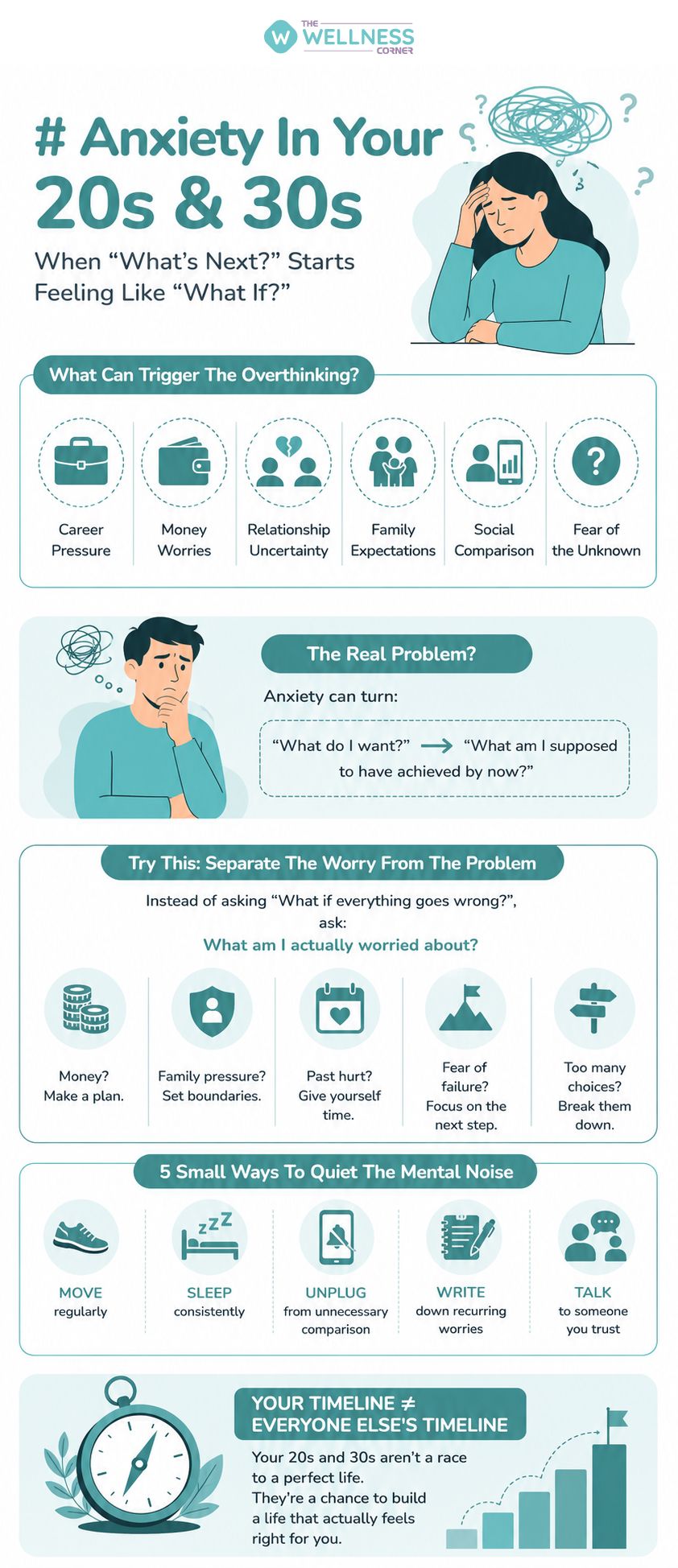
Instead of asking, “What do I want?”, you may start asking, “What am I supposed to have achieved by now?”
That shift can increase anxiety significantly.
When these thoughts become repetitive, ordinary decisions can begin to feel overwhelming, and seeking professional mental health care can help people better understand and manage these feelings.
Marriage Anxiety Is Only One Part Of The Bigger Picture
Marriage anxiety deserves attention, but it is often connected to broader worries about adulthood and the future.
You may be concerned about finding the right person, managing financial responsibilities, losing independence, or making a decision you later regret.
You might wonder:
- “Will I find a partner who wants the same kind of future I do?”
- “Would marriage still feel right without pressure from others?”
- “Could trusting someone new bring back emotional pain?”
- “What if I end up with someone who isn’t right for me?”
These concerns do not necessarily mean you are against marriage.
Sometimes, they simply reflect a need for security, confidence and personal readiness.
Also Read: Is First Year Of Marriage Hardest? Let’s Make Your Marriage Successful!

Money Can Make Future Decisions Feel Heavier
Financial uncertainty is another common source of adult anxiety.
You may be thinking about savings, career growth, housing, debt, supporting parents, wedding expenses or future children.
This can make major life decisions feel even more intimidating.
You might genuinely want companionship while still wondering whether you are financially prepared for the responsibilities that may follow.
That is not necessarily fear of commitment.
It may simply mean you are taking the practical side of your future seriously.
Instead of comparing your income or savings with your friends, focus on your own financial reality and what you would need for the life you want.
Past Relationships Can Influence Present Anxiety
A difficult relationship does not always remain emotionally in the past.
If you have experienced betrayal, rejection, manipulation or a painful breakup, you may become more cautious about future relationships.
You might overanalyse conversations, question someone's intentions, or worry that the same problems will happen again.
You may even think:
“Could trusting someone again reopen feelings from the past?”
Past experiences can influence how safe and comfortable a future relationship feels.
That does not mean you are incapable of love or commitment.
It may simply mean you need time to process what happened before moving forward.
Also Read: Tips For Handling Situationships (Relationships With Unclear Commitments)

Anxiety Can Create A Constant Need For Certainty
One of the hardest parts of anxiety is wanting complete certainty before making a decision.
You may repeatedly ask:
“What if this goes wrong?”
“What if I regret this?”
“What if there is a better option?”
“What if I make the wrong choice?”
The problem is that life rarely offers complete guarantees.
You can gather information, reflect on your values and consider the risks, but you cannot predict every outcome.
Healthy decision-making is less about achieving perfect certainty and more about making a thoughtful choice based on what matters to you.
Separate The Anxiety From The Actual Problem
When everything feels overwhelming, identify the specific concern underneath the anxiety.
Ask yourself:
What am I actually worried about?
Is it money?
Family pressure?
Loneliness?
A previous relationship?
Fear of failure?
Fear of making the wrong decision?
Once you identify the real concern, it becomes easier to address it.
If money is driving your anxiety, financial planning may help.
If family pressure is the problem, boundaries may help.
If a past relationship is affecting your confidence, emotional processing may be more important than immediately entering a new relationship.
Also Read: Nervousness - Is It Different From Anxiety Or The Same?

You Can Love Your Family And Still Set Boundaries
Setting boundaries around personal decisions can feel uncomfortable, especially in close-knit families.
But boundaries do not have to be confrontational.
You can say:
“I understand that you are concerned about my future, but repeated conversations about marriage are making me stressed. I’d like some breathing room to think things over carefully.”
Or:
“I appreciate that you want the best for me, but I would like to make major decisions based on what feels right for my life.”
You are not rejecting your family.
You are asking for enough space to make important decisions thoughtfully.
Small Changes Can Help Manage Everyday Anxiety
You can take your future one decision at a time.
Start with manageable habits.
Stay physically active.
Keep a regular sleep routine.
Reduce unnecessary social media comparison.
Write down recurring worries instead of replaying them mentally.
Talk to someone you trust.
Break major decisions into smaller questions.
Most importantly, notice how anxiety is affecting your daily life.
If it regularly interferes with your sleep, work, relationships, concentration or ability to function, professional support may be worthwhile.
Your Life Does Not Need To Follow A Fixed Schedule
Some people establish their careers early. Others change direction several times.
Some marry in their 20s. Others marry later.
Some prioritise relationships. Others focus on financial independence, personal growth or other goals first.
There is no single schedule that guarantees a meaningful life.
“Instead of asking, ‘When should I feel certain about what I want?’” ask:
“What can I do to feel prepared for the path ahead?”
That question shifts the focus from comparison to self-awareness.

Anxiety Is Not A Sign That You Are Falling Behind
Feeling anxious does not mean you are weak, indecisive or unsuccessful.
Sometimes anxiety is your mind reacting to uncertainty, expectations and too many responsibilities at once.
You do not need to eliminate every uncomfortable thought.
You need to learn how to respond to those thoughts without letting them make every decision for you.
Your 20s and 30s do not have to be a race toward a perfect life.
They can be a period of understanding yourself, building resilience, strengthening relationships and deciding what genuinely matters to you.
FAQs
Leave a Comment

Sign-Up Now & Unlock
₹100 Cashback
Recently Published
Related Articles



Health Checks @ Home
Service
Explore



Follow us on:


© 2026 Truworth Health Technologies Pvt. Ltd.