Is Technology Making Work More Stressful? The Hidden Psychosocial Risks Nobody Talks About
6 days ago
6 minute read.

Technology has transformed the way we work. Emails arrive instantly, meetings happen across time zones, artificial intelligence can complete tasks in seconds, and employees can collaborate from almost anywhere. On paper, all of this sounds like progress.
But there is another side to the digital workplace that receives far less attention.
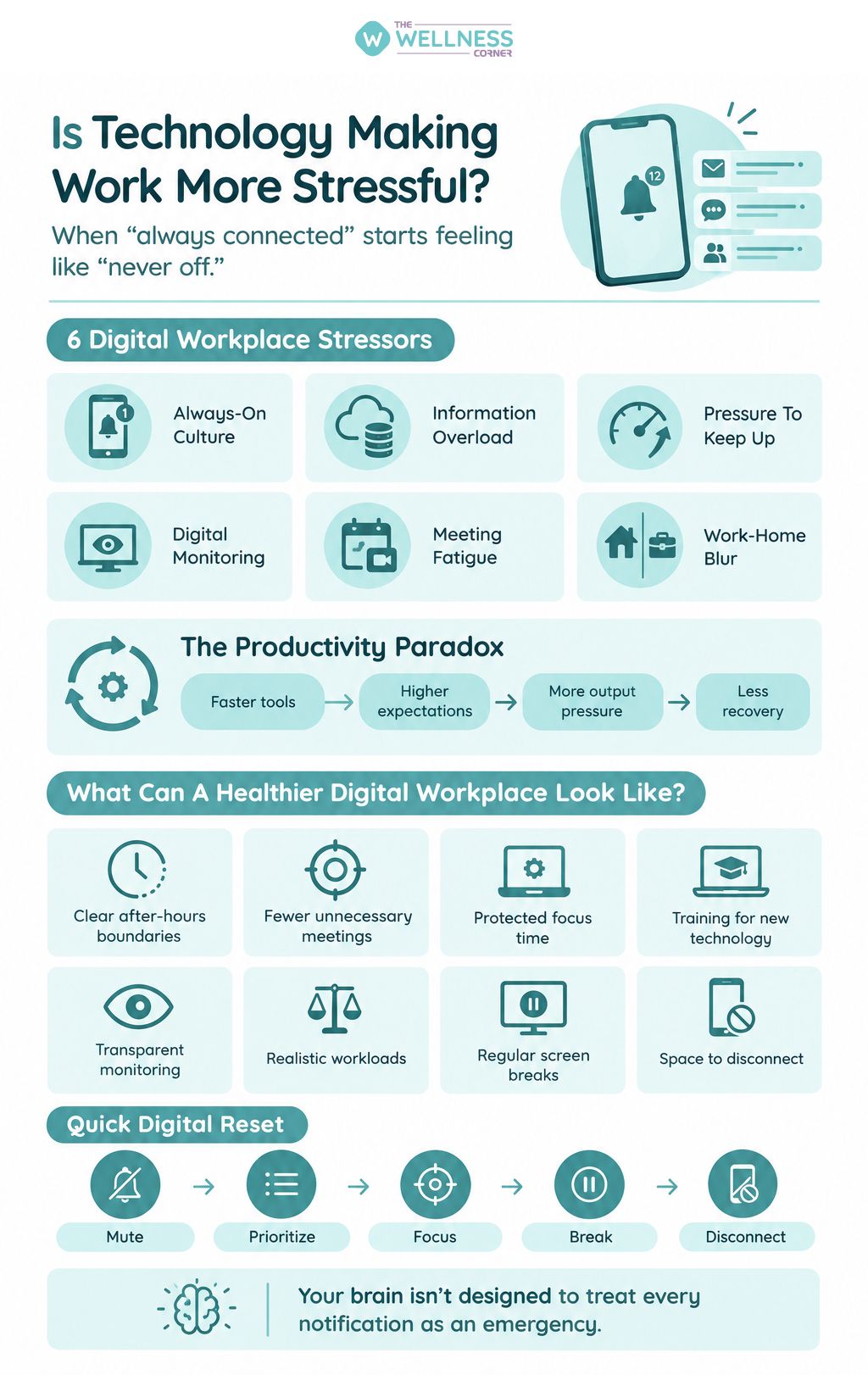
The same technology designed to make work easier can sometimes make it harder to switch off. Constant notifications, rapid deadlines, digital monitoring, information overload, and pressure to adapt to new tools can quietly increase workplace stress.
These challenges are known as psychosocial risks, and they can influence how employees feel, think, interact, and perform at work. Understanding them is becoming increasingly important as technology becomes more deeply embedded in everyday working life.
Also Read - AI Anxiety: How Technology Is Silently Affecting Your Mental Health?
When Being Connected Starts Feeling Like Being Trapped?
Technology has made employees more accessible than ever. A message can arrive at 10 p.m., a colleague can send a quick request over the weekend, and a work notification can appear during dinner.
The problem is not necessarily the technology itself. It is the expectation of constant availability that can develop around it.
When employees feel they need to respond immediately, the boundary between professional and personal time becomes blurred. Even when someone is not actively working, they may still be mentally connected to work.
Over time, this can make genuine recovery more difficult.
Information Overload Is Draining Your Mental Energy
Think about a typical workday. You may move between emails, instant messages, video meetings, project management platforms, documents, spreadsheets, notifications, and multiple browser tabs.
Each individual task may seem manageable. Together, they can create significant cognitive pressure.
Constantly switching between tasks requires the brain to repeatedly redirect attention. This can leave employees feeling mentally exhausted, even when they have spent the day sitting at a desk.
Information overload can also make it harder to determine what deserves immediate attention and what can wait.
When everything appears urgent, nothing feels manageable.
Also Read: Habits & Strategies Of Mentally Stronger People You Should Adopt

The Pressure To Keep Up With Technology
Digital transformation often requires employees to learn new software, systems, platforms, and processes.
For some employees, this can be exciting. For others, it can create anxiety.
Workers may worry about making mistakes, appearing less capable than their colleagues, or failing to adapt quickly enough. Employees may also fear that automation or artificial intelligence could eventually reduce the value of their role.
This creates a less visible form of workplace stress: technology-related insecurity.
Even when an organization provides training, employees can still feel overwhelmed if technological change happens faster than they can comfortably adapt.
Digital Monitoring Can Change How People Feel At Work
Technology can help organizations understand productivity, workflows, and resource use. However, excessive monitoring can have unintended psychological effects.
When employees believe every activity, response time, keystroke, or performance metric is being closely watched, they may begin to feel that they must constantly prove their productivity.
This can encourage employees to focus on looking busy rather than working effectively.
It may also reduce feelings of autonomy and trust, two factors that can strongly influence workplace wellbeing.
The issue is not whether technology should be used to monitor work. It is whether employees understand why monitoring exists, how information is used, and whether the process feels fair.
Also Read: How To Focus At The Workplace?

Virtual Meetings Can Create A Different Kind Of Fatigue
Video meetings have made collaboration easier, particularly for distributed teams. But meeting-heavy workdays can become exhausting.
Employees may spend hours looking at screens, concentrating on conversations, interpreting facial expressions, and managing distractions around them.
Back-to-back meetings also reduce the time available for focused work and mental recovery.
When meetings continue throughout the day, employees may finish their working hours feeling as though they have been constantly occupied without having enough
uninterrupted time to complete meaningful tasks.
That combination can contribute to frustration and stress.
Artificial Intelligence Brings Opportunity And Uncertainty
Artificial intelligence is rapidly changing many workplaces. It can automate repetitive tasks, support decision-making, improve productivity, and help employees work more efficiently.
However, technological advancement can also create uncertainty.
Employees may wonder whether their skills will remain relevant, whether their roles will change, or whether they will be expected to produce more simply because technology allows certain tasks to be completed faster.
There can also be pressure to constantly learn new AI tools.
Instead of technology reducing workload, organizations may unintentionally increase expectations because employees have access to faster tools.
The result can be a productivity paradox: the ability to do more does not always mean people feel less stressed.
Also Read: Effective Decision Making

Remote Work Can Blur The Boundary Even Further
Remote and hybrid work offer flexibility, but flexibility can become complicated when boundaries are unclear.
Without a physical transition between office and home, employees may find it difficult to mentally disconnect from their jobs.
A laptop sitting on the dining table can serve as a constant reminder of unfinished work. Checking one email can quickly turn into another hour of work.
Remote employees may also feel pressure to demonstrate that they are available and productive, particularly when they cannot rely on physical presence to communicate their engagement.
Healthy flexibility requires boundaries, not unlimited accessibility.
What Can Organizations Do About Psychosocial Risks?
Technology-related stress is not simply an individual employee's responsibility. Organizations play an important role in creating healthier digital workplaces.
A few practical measures can make a meaningful difference:
- Establish clear expectations around after-hours communication.
- Avoid unnecessary meetings and protect focused work periods.
- Provide adequate training when introducing new technologies.
- Communicate openly about AI, automation, and changes to job roles.
- Make digital monitoring transparent and proportionate.
- Encourage employees to take meaningful breaks from screens.
- Give employees reasonable control over how they organize their work.
- Regularly assess workload, deadlines, and staffing levels.
- Create safe channels for employees to discuss workplace stress.
The goal is not to eliminate technology. It is to make sure technology supports people rather than constantly demanding more from them.
Also Read: 8 Tips To Meet Deadlines Without Over-Stressing Yourself

The Healthiest Digital Workplace Knows When To Disconnect
Technology is not automatically stressful. In many cases, it can make work more flexible, collaborative, and efficient.
The problem arises when digital tools create expectations that employees should always be available, constantly productive, and endlessly adaptable.
A healthy workplace recognizes that human attention has limits. People need time to concentrate, recover, communicate, and disconnect.
Organizations that take psychosocial risks seriously can create an environment where technology becomes an enabler rather than another source of pressure.
Ultimately, the future of work should not simply be about making people work faster. It should also be about helping them work sustainably.
Frequently Asked Questions
Leave a Comment

Sign-Up Now & Unlock
₹100 Cashback
Recently Published
Related Articles



Health Checks @ Home
Service
Explore



Follow us on:


© 2026 Truworth Health Technologies Pvt. Ltd.