8 Key Soft Skills That Can Help You Thrive At Work And Beyond
10 days ago
7 minute read.

Success is not always about having the right qualifications, technical knowledge, or years of experience. The way you communicate, respond to challenges, work with others, and manage yourself can have an equally important impact on your personal and professional growth.
These abilities are often called soft skills. Technical abilities may be job-specific, but soft skills can be useful across different roles and industries. They influence how effectively you collaborate with colleagues, handle pressure, build relationships, solve problems, and navigate everyday situations.
With time, practice, and the right approach, anyone can improve their soft skills. Whether you are starting your career, leading a team, changing jobs, or simply trying to become more confident in everyday life, strengthening these skills can make a meaningful difference.
Want to work on your overall personal and professional wellbeing? Explore The Wellness Corner for practical health and wellness resources.
Also Read: Burned Out… Or Just Bored At Work?
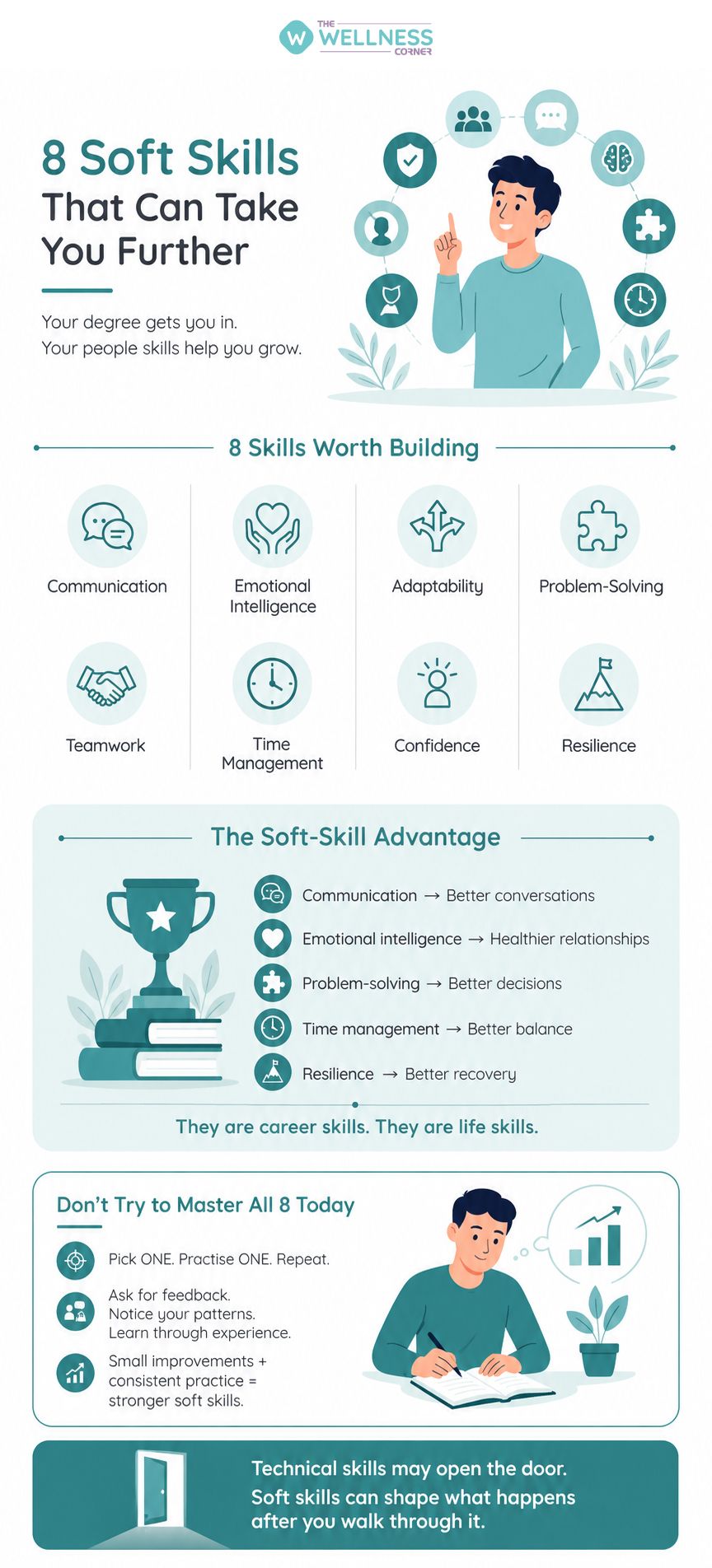
1. Communication: Make Your Ideas Easy To Understand
Effective communication involves far more than simply expressing yourself clearly. It also involves listening carefully, understanding context, choosing the right words, and knowing when to speak and when to listen.
At work, strong communication can help prevent misunderstandings, improve teamwork, and make discussions more productive. In personal life, it can help you express your needs and feelings without creating unnecessary conflict.
How to strengthen it?
- Listen without interrupting.
- Keep your message clear and concise.
- Ask questions when something is unclear.
- Be mindful of how your tone and nonverbal cues come across to others.
- Adapt your communication style to the situation.
Being a good communicator does not mean talking more. It means making sure your message is understood.
2. Emotional Intelligence: Understand Yourself And Others
Emotional intelligence is the ability to recognise, understand, and manage emotions while also being sensitive to what others may be experiencing.
Imagine receiving unexpected criticism at work. An emotional reaction may be to become defensive immediately. Emotional intelligence allows you to pause, understand your response, and decide how to handle the situation constructively.
This skill can improve relationships, teamwork, leadership, and conflict management.
How to strengthen it?
- Identify what triggers strong emotional reactions.
- Pause before responding during difficult conversations.
- Try to understand another person's perspective.
- Practise empathy.
- Learn to manage stress instead of reacting impulsively.
The better you understand your emotions, the easier it becomes to respond thoughtfully rather than react automatically.
Also Read: 21 Days To Become Emotionally Stronger

3. Adaptability: Stay Comfortable With Change
Workplaces and personal circumstances rarely remain the same for long. New technologies, changing responsibilities, organisational restructuring, unexpected challenges, and shifting priorities are all part of modern life.
Being adaptable helps you navigate new situations without feeling overwhelmed.
True adaptability means knowing when to adjust and when to question a change. It means being willing to learn, adjust your approach, and find practical ways forward.
How to strengthen it?
- Treat unfamiliar situations as learning opportunities.
- Stay open to new ideas.
- Develop a habit of learning new skills.
- Focus on what you can control.
- Avoid becoming overly attached to one way of doing things.
People who can adjust without losing their sense of direction often find it easier to navigate uncertainty.
4. Problem-Solving: Look Beyond The Obvious Answer
Problems are unavoidable, whether you are managing a project deadline, dealing with a workplace disagreement, or making an important personal decision.
Strong problem-solving skills help you move beyond simply identifying what went wrong. They encourage you to understand the cause, consider possible solutions, and
choose an appropriate course of action.
A simple approach:
- Define the problem clearly.
- Identify what may be causing it.
- Consider different solutions.
- Think about the possible consequences.
- Choose an approach and evaluate the result.
Good problem-solvers do not necessarily have all the answers immediately. They know how to approach a difficult situation logically.

5. Teamwork: Know How To Work With Different People
Almost every workplace requires some level of collaboration. You may work with people who have different personalities, communication styles, experiences, and opinions.
Teamwork involves respecting those differences while working toward a shared goal.
A strong team member contributes ideas but also gives others space to contribute. They take responsibility for their tasks, support colleagues when appropriate, and understand that successful collaboration requires trust.
How to strengthen it?
- Respect different perspectives.
- Share credit for collective achievements.
- Complete your responsibilities reliably.
- Offer help when someone needs it.
- Address disagreements respectfully.
You do not have to agree with everyone to work effectively with them.
Also Read: Communication And Conflict Resolution At The Workplace
6. Time Management: Make Your Time Work For You
A full day of activity does not necessarily translate into meaningful results. Without effective time management, important tasks can get buried beneath meetings, messages, notifications, and less important activities.
Good time management helps you decide where your attention should go.
Instead of trying to complete everything at once, identify priorities and allocate your energy accordingly.
Try these habits:
- Create a realistic daily priority list.
- Break large projects into smaller tasks.
- Set deadlines for important work.
- Avoid unnecessary multitasking.
- Schedule focused periods for demanding tasks.
Time management is ultimately about managing attention and priorities, not simply filling every hour of the day.

7. Confidence: Trust Your Ability Without Overestimating It
Confidence can influence how you communicate, make decisions, accept responsibility, and respond to opportunities.
Healthy confidence does not mean believing you are always right. It means being comfortable recognising your strengths while also acknowledging areas where you need to improve.
For example, speaking up during a meeting may feel uncomfortable at first. But sharing a thoughtful idea can help others understand your perspective and can gradually strengthen your confidence.
How to build it?
- Recognise your accomplishments.
- Prepare before important conversations or presentations.
- Stop comparing your progress constantly with others.
- Learn from mistakes instead of treating them as proof of failure.
- Take on challenges that are slightly outside your comfort zone.
Confidence usually grows through experience. You do not have to feel completely confident before taking the first step.
Also Read - The Mirror Effect: Using Mirror Gazing To Build Self-Awareness And Confidence
8. Resilience: Keep Moving Forward After Setbacks
Everyone experiences disappointment. A project may fail, a promotion may not happen, a relationship may become difficult, or a personal goal may take longer than expected.
Resilience helps you recover, learn from setbacks, and continue moving forward.
Being resilient does not mean ignoring difficult emotions or pretending that everything is fine. It means giving yourself time to process challenges while gradually finding a way to adapt and move ahead.
How to strengthen resilience?
- Focus on lessons rather than only mistakes.
- Maintain supportive relationships.
- Break overwhelming problems into manageable steps.
- Give yourself time to recover from setbacks.
- Keep realistic expectations about progress.
Resilience becomes especially valuable when circumstances do not go according to plan.

Why Soft Skills Matter Beyond The Workplace?
One of the biggest advantages of soft skills is that they are transferable.
Communication helps you manage conversations with colleagues, friends, and family. Emotional intelligence can improve both professional relationships and personal connections. Problem-solving helps with everything from workplace decisions to everyday challenges. Managing your time wisely can help you maintain a healthier balance between work and personal life.
In other words, developing soft skills is not simply a career investment. It is an investment in how you navigate life.
How To Build Stronger Soft Skills Every Day?
Developing a stronger personality is a gradual process, not an overnight transformation. Small, consistent changes can make these abilities stronger over time.
Start by choosing one skill that you would like to improve. If communication is your focus, practise active listening. If adaptability is a challenge, deliberately try a different approach to a familiar task. If confidence is holding you back, volunteer for a responsibility that allows you to stretch your abilities.
Seek honest and helpful feedback from people whose opinions you value. Pay attention to situations where you struggle and look for patterns. Most importantly, give yourself permission to learn through experience.
Soft skills develop through repetition. Every conversation, challenge, mistake, and collaboration can become an opportunity to improve.
The Bottom Line
Technical expertise may help you qualify for an opportunity, but soft skills can influence how effectively you perform, collaborate, lead, and grow once you are there.
Communication, emotional intelligence, adaptability, problem-solving, teamwork, time management, confidence, and resilience can help you become more effective at work while also supporting healthier relationships and better decision-making in everyday life.
You can focus on building these eight skills gradually, one at a time.
Start with one, practise it consistently, and build from there. Over time, these small improvements can shape the way you approach both your career and your life.
Looking for practical ways to support your overall wellbeing and personal growth? Visit The Wellness Corner for useful health and wellness resources.

Frequently Asked Questions
Leave a Comment
Sign-Up Now & Unlock
₹100 Cashback
Recently Published
Related Articles



Health Checks @ Home
Service
Explore



Follow us on:


© 2026 Truworth Health Technologies Pvt. Ltd.