30 Day Metabolic Reset: Can One Month Really Change Your Energy, Weight, And Health?
2 months ago
5 minute read.

From fitness influencers to nutrition programs, the phrase “metabolic reset” has become increasingly popular in the health world.
People often hear claims like:
- “Reset your metabolism in 30 days.”
- “Turn your body into a fat-burning machine.”
- “Boost metabolism naturally.”
- “Fix slow metabolism fast.”
For many individuals struggling with:
- Low energy
- Weight fluctuations
- Poor sleep
- Fatigue
- Sugar cravings
- Difficulty losing weight
The idea of a metabolic reset sounds incredibly appealing.
But what does “metabolic reset” actually mean?
Can metabolism truly be “reset” in just 30 days?
Or is the concept being oversimplified online?
The reality is usually far more practical and balanced than many extreme wellness trends claim.
While metabolism cannot magically transform overnight, 30 days of consistent lifestyle changes may positively influence several important aspects of metabolic health.
Understanding how metabolism works can help people focus on sustainable habits instead of quick-fix promises.
Also Read - Metabolism: Time Required To See Noticeable Changes??
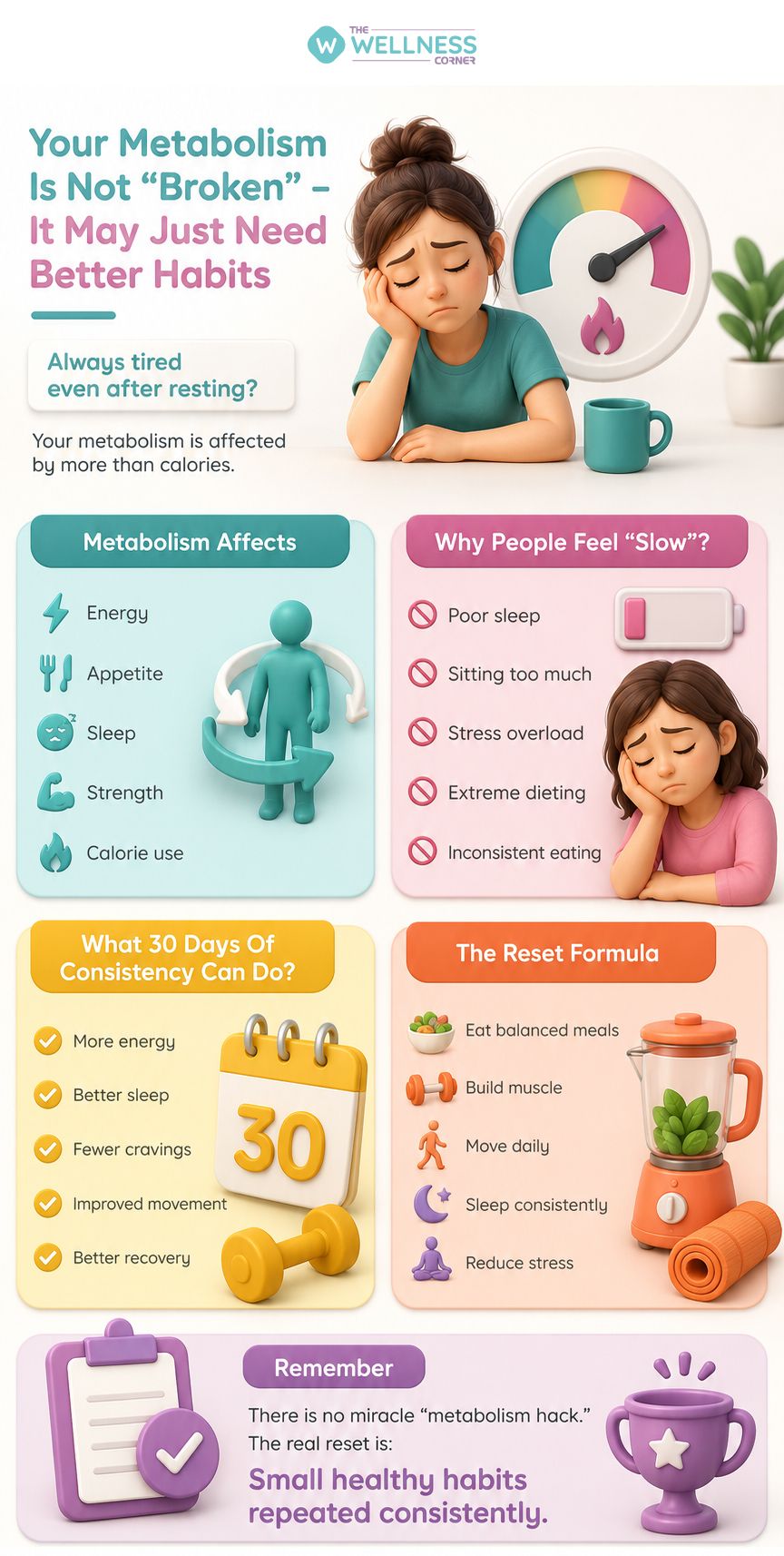
What Is Metabolism?
Metabolism refers to the collection of chemical processes that help the body produce and use energy.
Your metabolism influences how the body:
- Burns calories
- Uses nutrients
- Stores energy
- Supports organ function
- Regulates hormones
- Maintains body temperature
Metabolic health is affected by many factors, including:
- Age
- Sleep
- Muscle mass
- Nutrition
- Physical activity
- Stress
- Hormones
- Genetics
This is why metabolism is far more complex than simply “fast” or “slow.”
Also Read: The Morning Habit That’s Secretly Spiking Your Stress Hormones

What Does “Metabolic Reset” Usually Mean?
In wellness culture, a “metabolic reset” generally refers to improving habits that support healthier energy balance and metabolic function.
This may involve:
- Improving sleep
- Eating balanced meals
- Increasing movement
- Reducing stress
- Supporting muscle health
- Managing blood sugar patterns
- Improving consistency with healthy habits
Rather than literally resetting the body like a computer, the goal is usually to create healthier conditions that help the body function more efficiently over time.
Why Many People Feel Their Metabolism Is “Slow”
People often blame metabolism when they experience:
- Persistent fatigue
- Weight gain
- Sugar cravings
- Low motivation
- Difficulty losing weight
However, several lifestyle factors may contribute to these feelings.
Also Read: What Does Your Metabolic Age Tell You About Your Health?
1. Chronic Sleep Deprivation
Poor sleep may affect hormones involved in:
- Appetite
- Energy regulation
- Cravings
- Stress response
Even highly motivated individuals may struggle with energy balance when sleep quality remains poor.

2. Sedentary Lifestyle
Long hours of sitting may reduce overall daily energy expenditure.
Modern lifestyles often involve:
- Desk jobs
- Screen exposure
- Reduced walking
- Minimal physical movement
Small reductions in activity may gradually affect metabolic health over time.
Also Read - Sedentary Lifestyles: A Silent Killer?
3. Extreme Dieting
Very restrictive dieting may sometimes backfire.
Constantly undereating may contribute to:
- Low energy
- Muscle loss
- Fatigue
- Increased cravings
- Difficulty maintaining long-term consistency
Sustainable nutrition generally works better than extreme restriction.

4. Chronic Stress
Stress affects far more than mental health.
Long-term stress may influence:
- Sleep quality
- Eating behavior
- Hormonal balance
- Recovery
- Energy levels
Many people underestimate the metabolic effects of ongoing emotional stress.
What Can Actually Improve In 30 Days?
A month of consistent healthy habits may create noticeable positive changes for many people.
However, results vary depending on the individual.
1. Better Energy Levels
Improved sleep, hydration, movement, and nutrition may help reduce feelings of sluggishness.
People often experience steadier energy levels after maintaining healthier habits consistently over time.
2. Improved Eating Patterns
Balanced meals with sufficient protein, fiber, and whole foods may help support better appetite control and blood sugar balance.
This may reduce:
- Frequent cravings
- Energy crashes
- Mindless snacking
3. Better Sleep Quality
Consistent routines may improve sleep patterns significantly.
Better sleep often affects:
- Mood
- Recovery
- Focus
- Hunger regulation
- Stress resilience
Also Read: 5 Minute Brain Workout To Sharpen Your Mind & Boost Focus
4. Increased Physical Stamina
Even moderate exercise performed consistently for 30 days may improve endurance and movement comfort.
The body often adapts surprisingly quickly to regular activity.
5. Improved Relationship With Food
Many “reset” programs unintentionally become too restrictive.
But healthier long-term results often come from learning balance rather than punishment-based dieting.
What A Healthy 30-Day Reset Might Include?
A realistic metabolic reset focuses on sustainable habits instead of extreme detoxes.
1. Prioritizing Protein
Protein supports:
- Muscle maintenance
- Satiety
- Recovery
- Energy balance
Balanced meals often help improve consistency.
2. Strength Training And Movement
Muscles contribute significantly to the body’s overall metabolic function.
Strength training may help support:
- Energy expenditure
- Physical strength
- Long-term metabolic function
Daily movement matters too.
3. Improving Sleep Hygiene
Good sleep supports overall metabolic regulation.
Helpful habits may include:
- Reducing late-night screen exposure
- Consistent sleep schedules
- Limiting excessive caffeine late in the day
4. Managing Stress More Intentionally
Stress management is often overlooked in wellness conversations.
Activities such as:
- Walking
- Mindfulness
- Breathing exercises
- Social connection
- Relaxation practices
May support overall well-being.
What Does NOT “Reset” Metabolism?
Many online claims exaggerate metabolic transformation.
No drink, supplement, tea, or detox can instantly “repair” metabolism overnight.
Be cautious around programs promising:
- Rapid fat burning
- Extreme calorie restriction
- Instant body transformation
- “Magic” metabolism boosters
Sustainable wellness usually develops gradually.
Why Muscle Matters More Than Many People Realize?
Muscle tissue plays an important role in overall metabolic function.
This is one reason strength training is increasingly recommended for long-term health rather than focusing only on cardio or weight loss.
Maintaining muscle becomes especially important with aging.
Why Consistency Matters More Than Perfection?
A lot of individuals tend to view health habits in extreme “all or nothing” terms.
But long-term metabolic wellness usually depends more on:
- Consistency
- Sleep quality
- Daily movement
- Balanced eating
- Stress management
Rather than temporary perfection.
Small sustainable habits often outperform short-term extreme programs.
The Bigger Picture: A Healthy Body Is Not Built In 30 Days Alone
A month of consistent effort may help individuals rebuild healthier routines, become more mindful of their habits, and experience improved energy levels.
But true metabolic health develops through long-term lifestyle patterns.
The goal should not be achieving a “perfect” body in one month.
Instead, the focus should be building routines that support:
- Energy
- Strength
- Mental well-being
- Sleep
- Hormonal balance
- Long-term health
Real wellness is rarely instant.
It is usually built gradually through repeatable daily choices.
Support Sustainable Wellness With The Wellness Corner
Improving energy, nutrition, sleep, stress management, and overall lifestyle habits requires realistic and sustainable support.
The Wellness Corner offers expert-backed guidance on nutrition, fitness, preventive care, emotional wellness, mindfulness, and healthier lifestyle habits to help individuals build long-term well-being instead of chasing short-term health trends.
Because sustainable wellness works better than extreme solutions.
Frequently Asked Questions (FAQs)
Leave a Comment

Sign-Up Now & Unlock
₹100 Cashback
Subscribe to our Newsletter!
Get a weekly dose of wellness tips delivered straight to your inbox.
Recently Published
Related Articles


Health Checks @ Home
Service
Explore



Follow us on:


© 2026 Truworth Health Technologies Pvt. Ltd.