84% Of IT Professionals In India Already Have Fatty Liver: What Every Desk Worker Should Know?
2 months ago
6 minute read.

Imagine spending long hours at your desk, meeting deadlines, attending back-to-back virtual meetings, surviving on coffee, and grabbing quick meals whenever time permits. For today's IT workforce in India, this routine has become more common than the exception. While it may help projects move forward, it could also be affecting your health in ways you don't immediately notice.
Recent observations and workplace health assessments have highlighted an alarming trend: a significant proportion of IT professionals show signs of fatty liver disease. Although the exact percentage may vary across different studies and employee populations, experts agree that sedentary lifestyles, unhealthy eating habits, poor sleep, and chronic stress are making fatty liver increasingly common among office workers.
The concerning part? In many cases, fatty liver develops gradually without causing noticeable symptoms.
Let's understand why this condition is becoming so widespread and what you can do to protect your liver.
Also Read: Is Your Skin Trying To Tell You About Fatty Liver Disease?
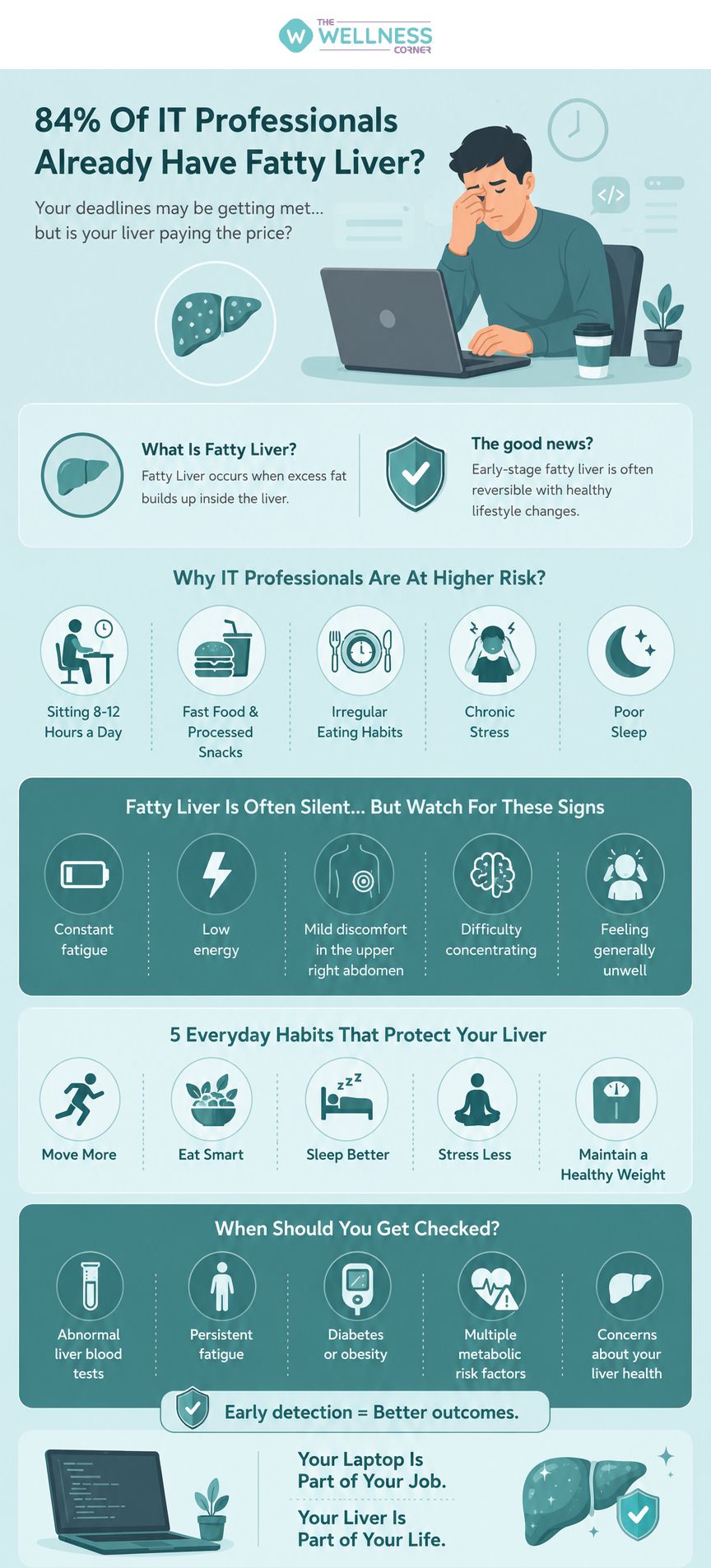
What Is Fatty Liver Disease?
This condition occurs when fat accumulates in the liver beyond healthy levels.
There are two main types:
- Alcohol-related fatty liver disease, which is linked to excessive alcohol consumption.
- Non-alcoholic fatty liver disease (NAFLD), now increasingly referred to as Metabolic Dysfunction-Associated Steatotic Liver Disease (MASLD), which develops due to metabolic factors rather than alcohol.
Most IT professionals diagnosed with fatty liver fall into the second category.
When detected early, fatty liver is often reversible through lifestyle changes.
However, if ignored, it may progress to liver inflammation, fibrosis, cirrhosis, or even liver failure in some individuals.
Why Are IT Professionals More Vulnerable?
Several aspects of modern office life contribute to increasing fatty liver risk.
1. Prolonged Sitting
Many IT employees remain seated for eight to twelve hours each day.
Low physical activity reduces calorie expenditure and contributes to fat accumulation throughout the body, including the liver.
Also Read: Sitting For Long Hours Can Be Deadly
2. Frequent Consumption Of Processed Foods
Busy work schedules often encourage reliance on:
- Fast food
- Sugary beverages
- Refined carbohydrates
- Packaged snacks
Over time, diets high in added sugars and unhealthy fats may contribute to liver fat buildup.

3. Irregular Eating Patterns
Skipping breakfast, eating late at night, or relying on frequent takeout meals may negatively affect metabolism.
These habits can contribute to insulin resistance, which plays a major role in fatty liver development.
4. Chronic Workplace Stress
Long-term stress influences hormone levels, appetite, and eating behaviors.
Many people respond to stress by consuming high-calorie comfort foods while exercising less frequently.
5. Poor Sleep
Late-night work, screen exposure, and irregular schedules often reduce sleep quality.
Research suggests that inadequate sleep may increase the risk of obesity, insulin resistance, and metabolic disorders, all of which are associated with fatty liver.
Common Symptoms Of Fatty Liver
One reason fatty liver often goes unnoticed is that many people experience no symptoms during the early stages.
When symptoms do occur, they may include:
- Persistent fatigue
- Low energy
- Mild discomfort in the upper right abdomen
- Difficulty concentrating
- Feeling generally unwell
Because these symptoms are non-specific, many people attribute them to work stress or lack of sleep.
Also Read: Why Office Workers Are Experiencing Fatigue Despite “Healthy” Lifestyles?
Who Is At Higher Risk?
Although fatty liver can affect anyone, certain factors increase the likelihood.
These include:
- Overweight or obesity
- Type 2 diabetes
- High cholesterol
- High triglycerides
- High blood pressure
- Sedentary lifestyle
- Family history of metabolic disorders
Even individuals with a normal body weight can develop fatty liver if they have poor metabolic health.

How Is Fatty Liver Diagnosed?
Healthcare professionals may recommend:
- Liver function blood tests
- Ultrasound examination
- FibroScan (where appropriate)
- Additional imaging or blood investigations
Routine health check-ups can help identify fatty liver before complications develop.
Can Fatty Liver Be Reversed?
In many cases, yes.
Early-stage fatty liver often improves with consistent lifestyle changes.
The earlier intervention begins, the greater the likelihood of reversing fat accumulation before permanent liver damage occurs.
Lifestyle Changes That Support Liver Health
1. Stay Physically Active
Exercise remains one of the most effective ways to reduce liver fat.
Aim for at least:
- Aim for roughly 150 minutes of moderate aerobic activity each week.
- Muscle-strengthening exercises on two or more days
Even regular walking breaks throughout the workday can make a difference.
2. Improve Your Diet
Focus on eating:
- Fresh vegetables
- Fruits
- Whole grains
- Lean protein
- Healthy fats
- High-fiber foods
Try limiting:
- Sugary drinks
- Refined carbohydrates
- Deep-fried foods
- Highly processed snacks
Small dietary improvements maintained consistently often produce meaningful long-term benefits.

3. Avoid Long Hours Of Sitting
If you work at a desk:
- Stand every 30 to 60 minutes.
- Walk briefly during phone calls.
- Stretch regularly.
- Setting reminders can encourage you to stay active throughout the day.
- Reducing prolonged sitting supports both liver health and overall well-being.
4. Prioritize Sleep
Most adults should aim for seven to nine hours of restful sleep each night to support overall health.
Good sleep supports hormone regulation, metabolism, and recovery.
5. Manage Stress
Healthy stress-management strategies include:
- Deep breathing
- Meditation
- Mindfulness
- Physical activity
- Spending time outdoors
- Speaking with supportive friends or professionals
Keeping chronic stress under control supports overall mental and physical wellness.
Also Read - Tea Time As Me Time: Creating Space For Mindfulness And Relaxation
6. Maintain A Healthy Weight
Even modest weight loss may significantly reduce liver fat in individuals with overweight or obesity.
Healthy weight management should focus on sustainable habits rather than restrictive diets.

Why Prevention Matters?
Fatty liver often develops gradually over several years.
Because symptoms may remain absent during the early stages, prevention becomes especially important.
Simple daily habits can have a significant impact:
- Regular exercise
- Balanced meals
- Adequate sleep
- Routine health check-ups
- Managing stress effectively
When Should You See A Doctor?
Consider consulting a healthcare professional if:
- Routine blood tests show abnormal liver enzymes.
- You have diabetes or obesity.
- You experience persistent fatigue.
- You have multiple metabolic risk factors.
- You have concerns about your liver health.
Early medical evaluation allows appropriate diagnosis and timely management.
Final Thoughts
Modern work culture has transformed the way many people live, particularly in the IT industry. Long hours at a desk, irregular meals, chronic stress, inadequate sleep, and reduced physical activity have quietly increased the risk of metabolic conditions such as fatty liver.
The encouraging news is that fatty liver is often preventable and, in many cases, reversible when identified early. Small, sustainable lifestyle improvements can significantly support liver health while also benefiting your heart, metabolism, energy levels, and overall well-being.
Your liver works hard every day. Taking care of it starts with the choices you make today.

Protect Your Liver With The Wellness Corner
Supporting liver health involves more than occasional health check-ups. Balanced nutrition, regular physical activity, stress management, quality sleep, preventive screenings, and healthy daily habits all play important roles in maintaining long-term wellness.
The Wellness Corner offers expert-backed guidance on nutrition, fitness, preventive healthcare, mental well-being, and lifestyle management to help you build healthier habits every day.

Frequently Asked Questions (FAQs)
Leave a Comment

Sign-Up Now & Unlock
₹100 Cashback
Recently Published
Related Articles


Health Checks @ Home
Service
Explore



Follow us on:


© 2026 Truworth Health Technologies Pvt. Ltd.