Anticipatory Grief: Why Anticipating Loss Can Feel As Painful As Loss Itself?
2 months ago
6 minute read.

Life is inherently unpredictable, but few situations carry as much emotional weight as difficult as realizing that an important loss could be on the horizon.
- A loved one receives a serious diagnosis.
- An aging parent begins to decline.
- A cherished pet develops a terminal illness.
- A major life transition threatens a relationship, career, or way of life.
In these situations, grief often begins long before the actual loss occurs.
Many people think grief begins only after a person, relationship, or meaningful part of life has been lost. However, emotional pain can emerge well in advance of the event itself. This emotional response is commonly referred to as anticipatory grief.
Anticipatory grief can be confusing because it involves mourning something that has not yet happened. Yet for many people, the emotions can feel just as intense, overwhelming, and real as grief after a loss.
Understanding anticipatory grief can help individuals navigate these emotions with greater self-awareness, compassion, and emotional resilience.
Also Read - Seven Stages Of Grief: Accepting The Unacceptable
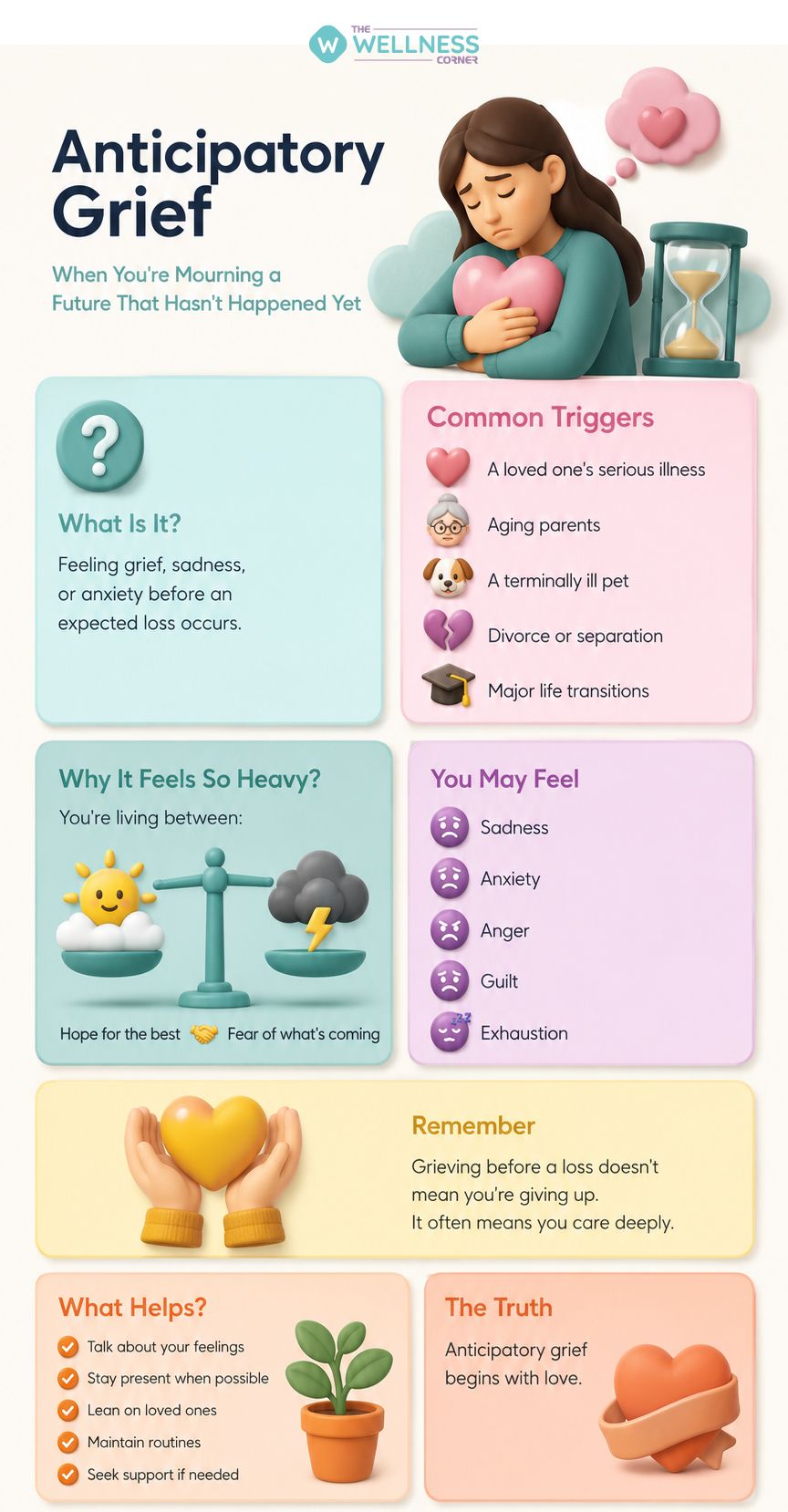
What Is Anticipatory Grief?
Anticipatory grief refers to the emotional response people experience when they expect a significant loss in the future.
Unlike traditional grief, which occurs after a loss, anticipatory grief develops while the person, relationship, or situation is still present.
People may experience anticipatory grief when facing:
- A loved one's serious illness
- A terminal diagnosis
- Progressive conditions such as dementia
- A difficult separation or divorce
- Major life changes
- The expected loss of a pet
- Career transitions or retirement
Even though the loss has not yet occurred, the mind begins processing the possibility of life without that person, role, or experience.
Why Anticipating Loss Can Hurt So Much?
Many people wonder why they feel grief before anything has actually happened.
The answer lies in how the human brain processes attachment and uncertainty.
When we form deep emotional bonds, those connections become woven into our daily lives, routines, identities, and sense of security.
When the possibility of losing those connections appears, the brain often reacts emotionally long before the actual event occurs.
People may begin imagining:
- What life will look like afterward
- How relationships might change
- How responsibilities may shift
- What emotional pain may follow
These thoughts can create genuine feelings of sadness, fear, helplessness, and anxiety.

Navigating The Emotional Space Between Optimism and Uncertainty
One of the most difficult aspects of anticipatory grief is existing between two conflicting emotions.
On one hand, people may hold onto hope.
On the other hand, they may prepare for the possibility of loss.
This emotional balancing act can be exhausting.
A person supporting an ill loved one may experience optimism on some days and profound sadness on others.
The uncertainty often creates emotional ups and downs that can be difficult to predict or manage.
Also Read - The Truth: Toxic Positivism Or Realistic Optimism
Common Emotions Associated With Anticipatory Grief
Anticipatory grief is a highly personal experience, and its emotional impact can vary significantly from one individual to another.
Individuals may go through various emotional responses, such as:
- Sadness
- Anxiety
- Fear
- Anger
- Helplessness
- Loneliness
- Guilt
- Frustration
- Emotional numbness
Many individuals are surprised by the intensity of these feelings because the anticipated loss has not yet occurred.
However, these emotional responses are often part of the natural process of preparing for significant change.

Why Guilt Often Becomes Part Of The Experience?
Guilt is a common but often overlooked aspect of anticipatory grief.
People may feel guilty for:
- Thinking about life after the loss
- Feeling emotionally exhausted
- Wanting relief from caregiving responsibilities
- Experiencing moments of happiness
- Preparing themselves for the future
Some individuals even feel guilty for grieving while their loved one is still alive.
In reality, anticipatory grief is not a sign of giving up or caring less. It often reflects the depth of care, love, and importance that the relationship holds for that person.
Also Read: Healthy Ways To Deal With Guilt
The Impact On Mental And Physical Health
The emotional strain of anticipatory grief can affect more than feelings alone.
Many people experience physical symptoms such as:
- Fatigue
- Difficulty sleeping
- Changes in appetite
- Headaches
- Trouble concentrating
- Low energy levels
- Increased stress
Because the experience often unfolds over months or even years, the emotional burden can become chronic.
This is why self-care and emotional support are especially important during periods of prolonged uncertainty.

How Anticipatory Grief Affects Relationships?
Anticipatory grief can influence interactions with family members, friends, and caregivers.
Different individuals may react in their own unique ways when faced with the same circumstances.
Some individuals prefer to discuss their fears openly.
Others avoid conversations about loss entirely.
These differences can sometimes create misunderstandings.
Family members may appear emotionally distant, overly optimistic, or excessively focused on practical matters.
In many cases, people are simply coping in different ways.
Recognizing these differences can help reduce conflict and encourage greater empathy.
Also Read: Can You Move On Without Closure In Relationships?
The Unique Challenge Of Caregiving
Caregivers often experience particularly intense forms of anticipatory grief.
They may witness gradual changes in a loved one's health, personality, memory, or independence.
This can create a sense of ongoing loss even before death occurs.
For example, someone caring for a family member with dementia may grieve the gradual loss of shared memories, conversations, or familiar aspects of the relationship.
These experiences can generate complex emotions that deserve acknowledgment and support.

Can Anticipatory Grief Have Any Positive Effects?
Although anticipatory grief is painful, it may sometimes create opportunities for meaningful experiences.
For some people, it encourages:
- Important conversations
- Emotional closeness
- Expressions of love and appreciation
- Relationship healing
- Practical planning
- Greater presence in everyday moments
Knowing that time may be limited often motivates people to cherish meaningful connections more deeply.
While this does not remove the pain, it can create moments of connection and purpose during difficult circumstances.
Healthy Ways To Cope With Anticipatory Grief
There is no perfect way to cope with anticipated loss.
However, certain strategies may help individuals navigate the experience more effectively.
1.Acknowledge Your Emotions
Allow yourself to recognize what you are feeling without judgment.
Suppressing emotions often increases distress over time.
2. Talk About Your Experience
Sharing thoughts and fears with trusted friends, family members, or professionals can reduce feelings of isolation.
3. Focus On The Present
While future concerns are understandable, spending time in the present moment may help reduce emotional overwhelm.
4. Maintain Daily Routines
Maintaining regular daily routines can create a sense of structure and comfort during times of uncertainty.
5. Seek Professional Support
Mental health professionals can provide guidance, coping strategies, and emotional support during especially challenging situations.
When Anticipatory Grief Becomes Overwhelming?
While grief is a natural emotional response, there are times when professional support may be beneficial.
Consider seeking help if you experience:
- Persistent hopelessness
- Severe anxiety
- Difficulty functioning in daily life
- Prolonged sleep disturbances
- Social withdrawal
- Intense emotional distress
Early support can help individuals manage difficult emotions before they become overwhelming.
The Bigger Picture: Grief Begins With Love
At its core, anticipatory grief exists because people care deeply.
The pain comes from attachment, connection, and love.
Although the experience can be emotionally exhausting, it reflects the importance of the relationships and experiences that shape our lives.
Rather than viewing anticipatory grief as something abnormal, it can be understood as a natural response to uncertainty and meaningful connection.
Allowing yourself to feel these emotions may be one of the most compassionate steps you can take during a challenging period of life.
Find Emotional Support With The Wellness Corner
Navigating grief, uncertainty, caregiving challenges, and emotional stress can be difficult to manage alone.
The Wellness Corner offers expert-backed support for emotional wellness, mental health, stress management, mindfulness, and overall well-being. Whether you are coping with life transitions, relationship challenges, or emotional strain, professional guidance can help you build resilience and find support when you need it most.
Because emotional health deserves care, understanding, and attention.
Frequently Asked Questions (FAQs)
Leave a Comment

Sign-Up Now & Unlock
₹100 Cashback
Subscribe to our Newsletter!
Get a weekly dose of wellness tips delivered straight to your inbox.
Recently Published
Related Articles


Health Checks @ Home
Service
Explore



Follow us on:


© 2026 Truworth Health Technologies Pvt. Ltd.