Are You Addicted To ‘Chai’? It Might Be Helping Your Heart Only If You Follow This Rule
4 months ago
6 minute read.

For millions of people, the day does not truly begin until the first sip of chai.
- Morning chai.
- Office chai breaks.
- Rainy evening chai.
- Stress chai.
- Social chai.
Tea is deeply woven into daily life, routines, emotions, and culture.
In fact, many people jokingly describe themselves as “chai addicts” because they simply cannot function properly without it.
But as chai consumption continues increasing, an important question often comes up:
“Is drinking chai actually good for health?”
More specifically:
“Can chai help the heart?”
The reality is a bit more nuanced than a simple yes or no.
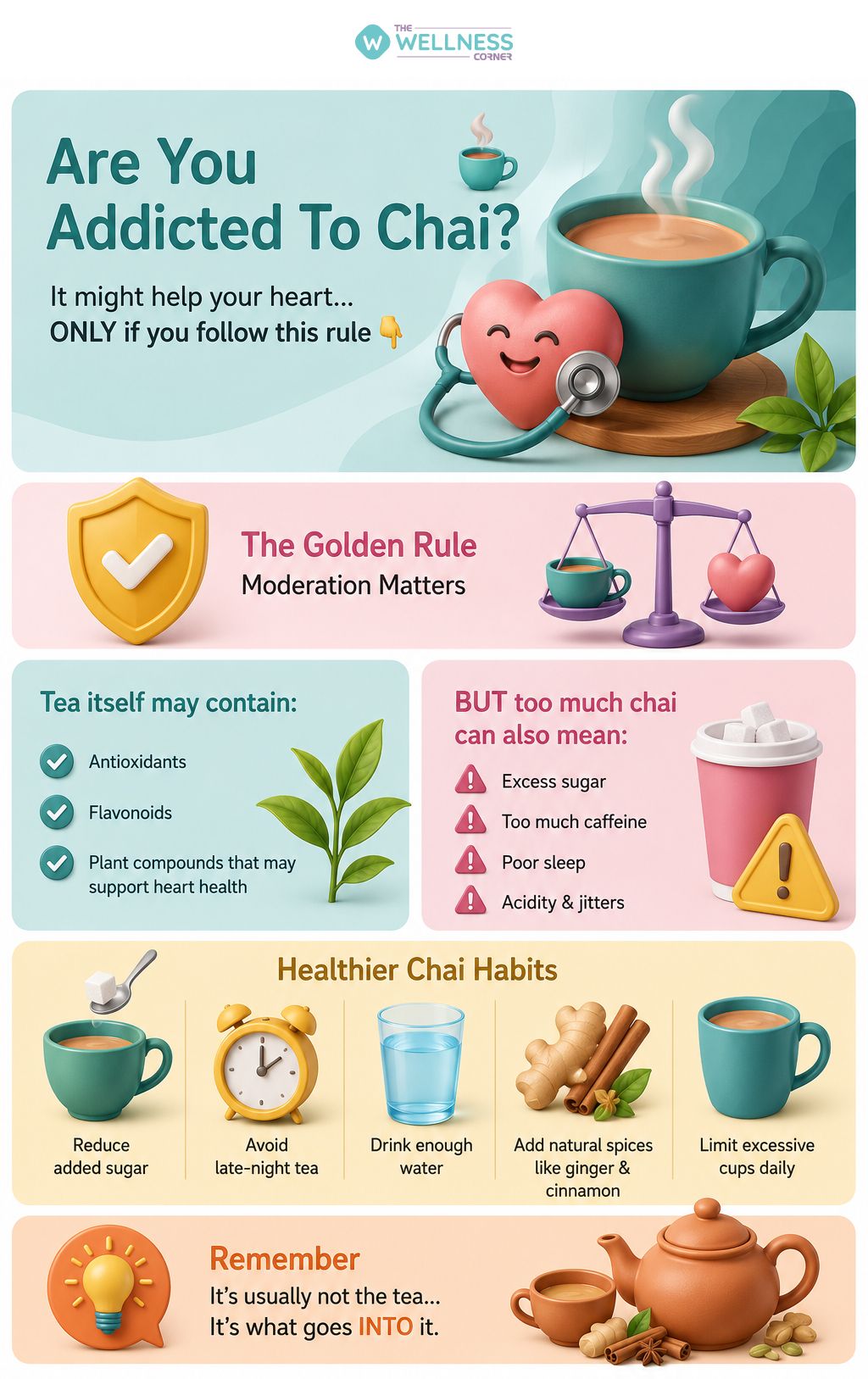
Tea itself contains compounds that may offer certain health benefits. However, whether chai supports heart health or quietly harms it often depends on one very important rule:
- The impact largely depends on the quantity consumed, the frequency, and the ingredients mixed into it.
- Because sometimes the issue is not the tea itself.
- It is the sugar, frequency, excess caffeine, and overall lifestyle surrounding it.
Let us understand the relationship between chai and heart health more realistically.
Also Read - Tea Time As Me Time: Creating Space For Mindfulness And Relaxation
What Exactly Is Chai?
Traditional Indian chai usually contains:
- Black tea
- Milk
- Sugar
- Water
- Spices like ginger, cardamom, cloves, cinnamon, fennel, or tulsi (holy basil)
Different households prepare it differently, but black tea typically remains the base ingredient.
Black tea contains natural compounds called flavonoids and antioxidants that have been studied for potential health-supporting properties.
This is one reason tea is often associated with wellness conversations.
Can Tea Actually Support Heart Health?
Research suggests that tea consumption may offer certain cardiovascular benefits when consumed in moderation.
Tea contains antioxidants that may help support:
- Blood vessel function
- Circulation
- Inflammation balance
- Oxidative stress reduction
Some studies suggest moderate tea consumption may be associated with better heart health outcomes in certain populations.
However, moderation matters significantly.
The health effects of tea may change depending on preparation methods and excessive intake.
Also Read - Plow Pose: Ground Your Body & Improve Circulation
The Rule That Matters Most: Moderation
Many people assume that if one cup is beneficial, multiple cups must be even healthier.
That is not always true.
Drinking excessive amounts of chai throughout the day may contribute to issues such as:
- Excess caffeine intake
- High sugar consumption
- Sleep disruption
- Acidity
- Digestive discomfort
- Dependence on stimulants
The key is balance rather than overconsumption.
For many individuals, moderate intake may fit comfortably into a healthy lifestyle.

Why Sugar Changes The Equation?
One of the biggest concerns with chai is not always the tea itself.
It is often the sugar added repeatedly throughout the day.
Many people consume:
- 3 to 6 cups daily
- With multiple teaspoons of sugar each time
This may gradually increase overall sugar intake significantly without people realizing it.
Excess sugar consumption is associated with several long-term health concerns involving:
- Weight management
- Blood sugar control
- Heart health
- Metabolic health
A beverage that starts as tea may eventually become more sugar than tea.
Also Read: Can Spicy Food Increase Your Metabolism?
Excess Caffeine May Affect The Body Too
Tea naturally contains caffeine.
In moderate amounts, caffeine may help improve alertness and concentration.
However, excessive caffeine intake may contribute to:
- Jitters
- Anxiety
- Palpitations
- Poor sleep
- Restlessness
- Increased stress sensitivity
Many office workers unknowingly use repeated chai breaks to push through fatigue rather than addressing the underlying causes of exhaustion.
Over time, this cycle may affect recovery and sleep quality.

What About Milk Tea Vs Black Tea?
This debate appears frequently in wellness discussions.
Black tea generally contains higher concentrations of certain antioxidants compared to heavily milk-diluted tea. The type of milk also matters, such as whether it is low-fat milk or full-fat milk, which can be unhealthy.
However, this does not automatically make milk chai “unhealthy.”
The overall impact depends on:
- Sugar quantity
- Portion size
- Frequency
- Lifestyle habits
- Overall nutrition
For many people, enjoying moderate milk tea as part of balanced habits may not be problematic.
Health rarely depends on one single food or beverage alone.
Also Read: Get Your Food Portions Under Control
Spices In Chai May Offer Additional Benefits
Traditional chai spices are one reason many people find tea comforting.
Ingredients like:
- Ginger
- Cinnamon
- Cardamom
- Cloves
- Tulsi
Contain natural plant compounds that have long been used in traditional wellness practices.
Some spices are studied for their potential roles in digestion, warmth, and antioxidant activity.
Although chai should not be considered a medical treatment, the spices used in it may offer more nutritional benefits than regular sugary drinks.

When Chai Habits Become Less Healthy?
Tea consumption patterns may become less healthy when they include:
- Excessive sugar
- Very frequent consumption
- Replacing meals with tea
- Drinking tea late at night
- Depending on caffeine constantly for energy
- High proportions of full fat milk
In some individuals, excessive tea intake may interfere with:
- Sleep quality
- Iron absorption
- Hydration balance
- Stress regulation
This is why moderation matters more than extremes.
Can Chai Affect Iron Absorption?
Tea contains compounds called tannins that may reduce iron absorption temporarily when consumed alongside meals.
This may matter more for individuals already vulnerable to iron deficiency.
Some healthcare professionals suggest avoiding tea immediately around iron-rich meals if deficiency is a concern.
Why Chai Feels Emotionally Comforting?
Tea is not just about caffeine.
For many people, chai represents:
- Routine
- Warmth
- Pause
- Comfort
- Connection
- Social bonding
The emotional aspect of tea drinking often explains why people become attached to it.
A short tea break may psychologically feel calming during stressful days.

Healthier Ways To Enjoy Chai
People do not necessarily need to eliminate chai completely to support heart health.
Smarter habits may include:
- Reducing added sugar
- Limiting excessive cups
- Avoiding very late-night tea
- Balancing caffeine intake
- Using moderate milk quantities
- Including spices naturally
- Drinking enough water alongside tea
- Using low-fat milk
Small adjustments may make tea habits more balanced over time.
The Bigger Picture: One Beverage Does Not Define Overall Health
People often search for “healthy” or “unhealthy” labels for single foods and drinks.
But health is usually shaped by overall patterns.
A moderate tea habit inside a balanced lifestyle may look very different from excessive tea consumption combined with:
- Poor sleep
- High stress
- Processed diets
- Sedentary habits
- Context matters.
True wellness rarely comes from extreme restriction.
It usually develops through sustainable daily choices.
Build Healthier Lifestyle Habits With The Wellness Corner
Understanding nutrition, stress, hydration, and balanced lifestyle choices is essential for long-term heart and overall wellness.
The Wellness Corner offers expert-backed support for nutrition, fitness, emotional wellness, preventive care, stress management, and healthier lifestyle habits to help individuals make more informed everyday health decisions.
Because sustainable wellness is built through balance, not extremes.
Frequently Asked Questions (FAQs)
Leave a Comment

Sign-Up Now & Unlock
₹100 Cashback
Subscribe to our Newsletter!
Get a weekly dose of wellness tips delivered straight to your inbox.
Recently Published
Related Articles


Health Checks @ Home
Service
Explore



Follow us on:


© 2026 Truworth Health Technologies Pvt. Ltd.