Bloating After 30: When It's More Than Just A Temporary Discomfort?
1 month ago
5 minute read.

Most people experience bloating occasionally after a large meal or during periods of stress. Usually, it passes within a few hours and isn't a cause for concern. However, if bloating starts becoming frequent after the age of 30, it may be worth paying closer attention.
As we get older, our bodies naturally undergo changes that affect digestion, hormones, metabolism, and gut health. While occasional bloating is common, persistent or recurring bloating should not simply be ignored or accepted as a normal part of aging.
Understanding the possible causes can help you identify lifestyle changes that may improve your digestive health and recognize situations where medical advice may be necessary.
Also Read: How Dietary Choices Affect Bloating And Gas?
What Exactly Is Bloating?
Bloating is the sensation of fullness, tightness, or swelling in the abdomen.
Some people experience:
- A visibly enlarged abdomen
- Excess gas
- Pressure or discomfort
- Frequent burping
- Increased flatulence
Although bloating is often temporary, frequent episodes may indicate an underlying digestive issue.
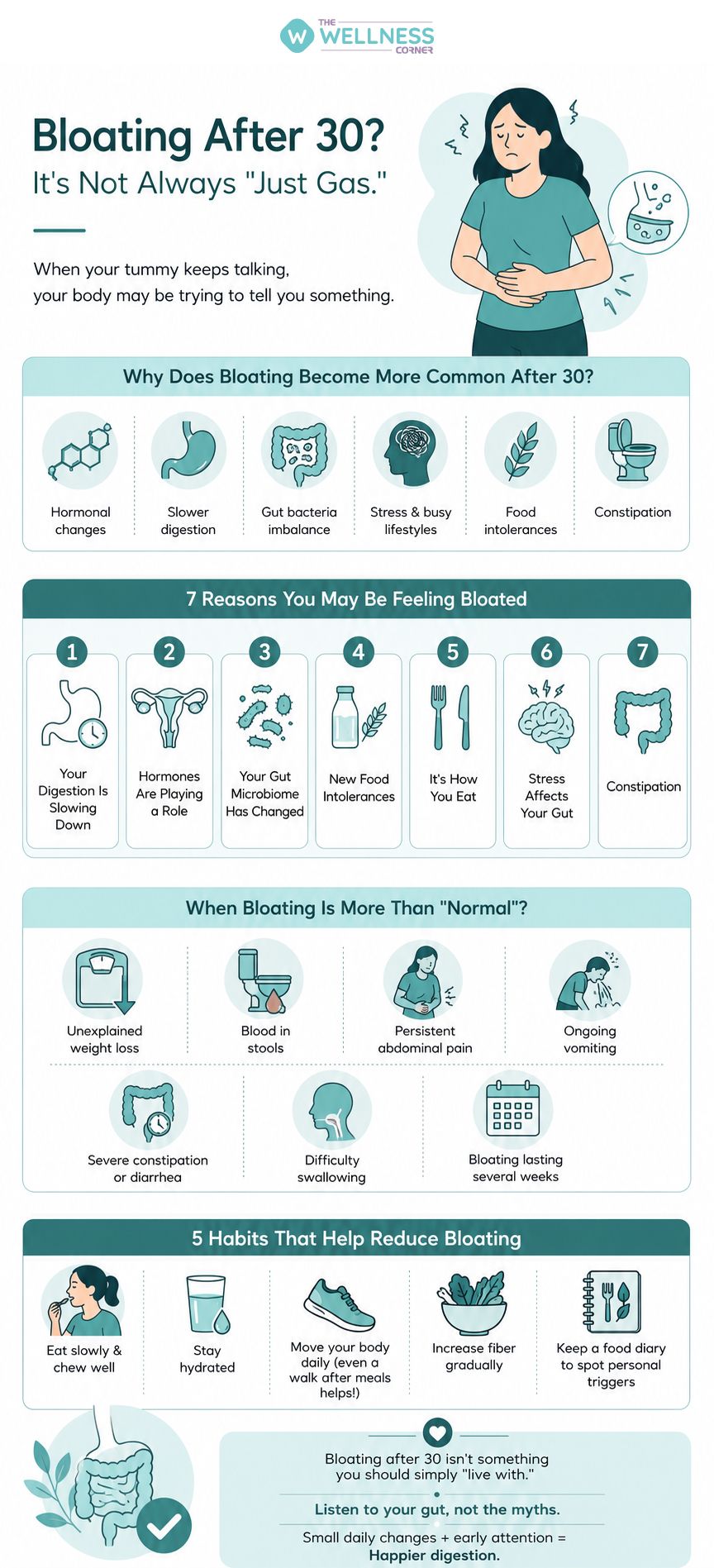
Why Does Bloating Become More Noticeable After 30?
Several factors begin to influence digestive health during adulthood.
These include:
- Hormonal changes
- Reduced physical activity
- Dietary habits
- Increased stress
- Changes in gut bacteria
- Certain medical conditions
Rather than one single cause, bloating often develops from a combination of factors.
Also Read - Dietary Supplements: Best Ways To Reap The Benefits

Your Digestive System Changes Over Time
Digestion may become slightly less efficient with age.
Some people notice:
- Slower stomach emptying
- Increased sensitivity to certain foods
- Reduced tolerance for heavy meals
- Greater discomfort after eating
These gradual changes can contribute to more frequent bloating.
Hormonal Fluctuations Can Influence Digestion
Hormones affect much more than reproductive health.
In women, menstrual cycles, pregnancy, perimenopause, and menopause may all influence digestion.
Hormonal changes can slow intestinal movement and increase water retention, making bloating more noticeable.
Men may also experience hormonal changes that influence metabolism and digestive function as they age.
Also Read: 9 Common Symptoms Of Hormonal Imbalances Among Women (And What To Do?)

Your Gut Microbiome May Be Changing
The digestive system contains trillions of beneficial bacteria that help digest food and support overall health.
Factors such as:
- Diet
- Stress
- Poor sleep
- Antibiotic use
- Illness
can alter the balance of these bacteria.
When this balance changes, symptoms such as bloating, gas, and digestive discomfort may become more common.
Food Intolerances Can Develop Later In Life
Many people assume food intolerances appear during childhood.
However, some sensitivities develop gradually during adulthood.
Common triggers include:
- Dairy products
- Gluten
- Artificial sweeteners
- Carbonated drinks
- High-fat meals
Keeping a food diary may help identify patterns between certain foods and bloating episodes.
Also Read: What Makes Me Digest Other Dairy Items But Not Milk?

Eating Habits Matter More Than You Think
How you eat is often just as important as what you eat.
Habits that may contribute to bloating include:
- Eating too quickly
- Large portion sizes
- Drinking carbonated beverages
- Talking while eating
- Frequently chewing gum
These behaviors may increase swallowed air and digestive discomfort.
Stress And The Gut Are Closely Connected
The brain and digestive system constantly communicate through what is often called the gut-brain axis.
Periods of chronic stress may influence:
- Digestion
- Gut movement
- Appetite
- Gut bacteria
- Sensitivity to abdominal discomfort
This explains why emotional stress sometimes causes noticeable digestive symptoms.
Also Read: The Morning Habit That’s Secretly Spiking Your Stress Hormones

Constipation Is Another Common Cause
When stool moves slowly through the intestines, gas may accumulate, causing abdominal pressure and bloating.
Common contributors include:
- Low fiber intake
- Inadequate hydration
- Limited physical activity
- Certain medications
Improving bowel regularity often reduces bloating.
Could An Underlying Medical Condition Be Responsible?
Sometimes persistent bloating may be associated with medical conditions such as:
- Irritable Bowel Syndrome (IBS)
- Celiac disease
- Inflammatory bowel disease
- Gastroesophageal reflux disease (GERD)
- Ovarian conditions
- Gallbladder disease
- Liver disease
Although these conditions are less common than lifestyle-related causes, ongoing symptoms deserve appropriate evaluation.

When Should You See A Doctor?
Occasional bloating usually isn't an emergency.
However, medical evaluation is recommended if bloating is accompanied by:
- Unexplained weight loss
- Persistent abdominal pain
- Blood in the stool
- Ongoing vomiting
- Difficulty swallowing
- Severe constipation
- Persistent diarrhea
- Bloating that continues for several weeks
Getting evaluated early can help uncover the cause and ensure timely treatment.
Simple Ways To Reduce Bloating
Many people improve their symptoms through small lifestyle adjustments.
1. Eat Slowly
Eating at a slower pace and chewing well may help minimize swallowed air.
2. Increase Fiber Gradually
Fiber supports healthy digestion, but increasing it too quickly may temporarily increase gas.
Increase intake gradually while drinking enough water.
3. Stay Hydrated
Adequate water intake supports healthy digestion and bowel function.
4. Move Your Body Daily
Regular physical activity encourages normal intestinal movement.
A brief walk after eating can support healthy digestion.
5. Limit Highly Processed Foods
Foods rich in sodium, added sugars, and unhealthy fats may sometimes worsen digestive discomfort.
6. Identify Personal Food Triggers
Keeping track of meals and symptoms may reveal patterns that help guide dietary changes.
Don't Ignore Persistent Symptoms
Many people dismiss bloating as "just getting older."
While aging can influence digestion, persistent bloating should not automatically be accepted as normal.
Listening to your body's signals allows problems to be addressed before they become more significant.
Small changes today may improve both digestive comfort and overall health.

Conclusion
Experiencing occasional bloating after a heavy meal is common. However, frequent or persistent bloating after the age of 30 deserves attention rather than dismissal.
Whether the cause is diet, stress, hormonal changes, gut health, or an underlying medical condition, understanding the reason behind your symptoms is the first step toward feeling better.
Simple lifestyle improvements often make a meaningful difference, while persistent symptoms should always be discussed with a qualified healthcare professional.
Frequently Asked Questions
Leave a Comment

Sign-Up Now & Unlock
₹100 Cashback
Recently Published
Related Articles


Health Checks @ Home
Service
Explore



Follow us on:


© 2026 Truworth Health Technologies Pvt. Ltd.