Breathing Troubles Only In The Office? Here's What Your Workplace Might Be Telling You
1 month ago
6 minute read.

You wake up feeling perfectly normal.
Your breathing is comfortable.
You go about your morning routine without any issues.
But a few hours after reaching the office, something changes.
You begin to notice:
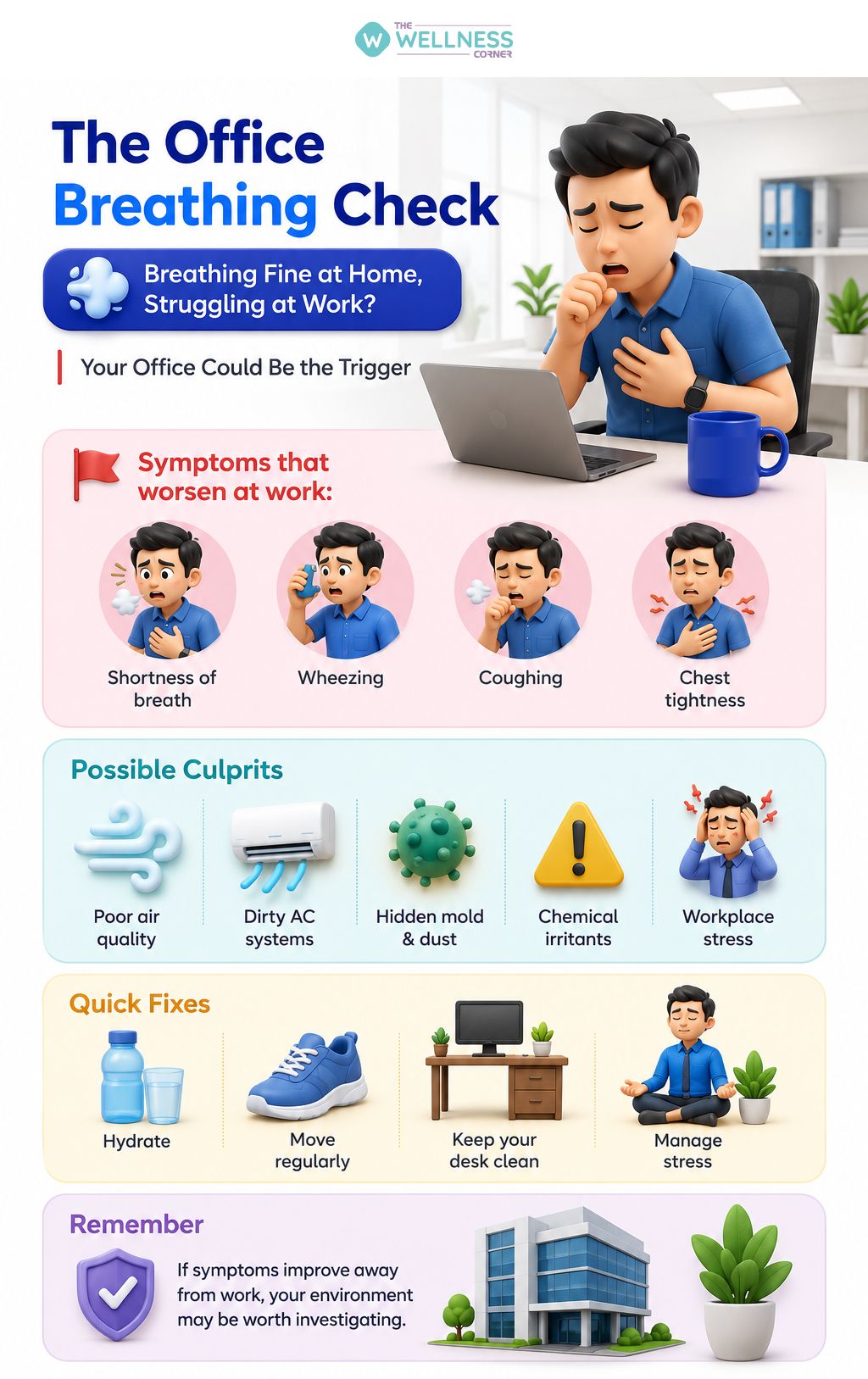
- Shortness of breath
- Chest tightness
- Frequent coughing
- Sneezing
- A stuffy nose
An uncomfortable feeling that makes breathing seem harder than usual
Then, after leaving work, the symptoms gradually improve.
If this sounds familiar, you are not alone.
Many people experience respiratory discomfort that appears to occur mainly in workplace environments. While occasional breathing difficulties can happen for various reasons, symptoms that consistently appear at work may indicate that something in the office environment is contributing to the problem.
Understanding the potential causes can help individuals identify triggers and take steps to protect their health and well-being.
Also Read: Upper Back Pain, Pain Below The Rib & Difficulty Breathing? What's Happening?
Why Your Workplace Environment Matters More Than You Think?
Most people spend a significant portion of their day indoors at work.
In many cases, employees spend:
- Eight or more hours in office buildings
- Long periods sitting near air-conditioning systems
- Extended time in enclosed spaces
- Hours exposed to indoor air circulation
As a result, workplace conditions can have a substantial impact on respiratory health.
The quality of indoor air often affects how people feel throughout the day, even when they do not immediately recognize it.
Understanding Indoor Air Quality
Indoor air quality refers to the condition of the air inside buildings.
Poor indoor air quality may result from factors such as:
- Dust accumulation
- Inadequate ventilation
- Mold growth
- Chemical pollutants
- Poor maintenance of air-conditioning systems
- High levels of indoor allergens
When indoor air quality declines, respiratory symptoms may become more noticeable, especially among individuals who already have allergies, asthma, or other respiratory sensitivities.
Also Read: Indoor Plants - Pots Of Health
Could Office Air Conditioning Be The Culprit?
Air-conditioning systems are essential in many workplaces.
They help regulate temperature and improve comfort.
However, poorly maintained systems can sometimes contribute to respiratory discomfort.
Air-conditioning units may circulate:
- Dust particles
- Pollen
- Mold spores
- Airborne irritants
- Other contaminants
If filters are not cleaned regularly, these particles can accumulate and spread throughout the workspace.
For some individuals, this may trigger symptoms that affect breathing comfort.

The Hidden Impact Of Dust And Allergens
Many office spaces contain common allergens that often go unnoticed.
Potential sources include:
- Carpets
- Curtains
- Office furniture
- Paper files
- Ceiling vents
- Shared workstations
Dust mites and airborne particles may accumulate over time, particularly in areas that are difficult to clean thoroughly.
Individuals with allergies may experience symptoms such as:
- Sneezing
- Nasal congestion
- Itchy eyes
- Coughing
- Breathing discomfort
When Mold Becomes A Workplace Problem?
Mold thrives in damp environments.
Leaks, excess moisture, and poorly ventilated areas can create conditions that support mold growth.
Unfortunately, mold is not always visible.
It may exist behind walls, under carpeting, or within ventilation systems.
Exposure to mold may contribute to:
- Respiratory irritation
- Nasal congestion
- Coughing
- Wheezing
- Eye irritation
- Headaches
Individuals who notice symptoms worsening in specific office locations may benefit from investigating potential moisture-related issues.
Also Read - Pineapple: Why it's Five Times More Effective Than Cough Syrup?

Stress Can Affect Breathing Too
Not all breathing difficulties originate from physical environmental factors.
Workplace stress can also influence respiratory patterns.
When people experience stress, anxiety, or pressure, they may unconsciously alter their breathing.
Some common responses include:
- Shallow breathing
- Rapid breathing
- Chest breathing rather than diaphragmatic breathing
- Increased muscle tension
Over time, these patterns may create sensations of breathlessness even when lung function remains normal.
This highlights the close relationship between emotional well-being and physical health.

Poor Ventilation May Contribute To Discomfort
Modern office buildings are often designed for energy efficiency.
While this offers certain benefits, it may also reduce fresh air circulation.
Poor ventilation can lead to the buildup of:
- Carbon dioxide
- Indoor pollutants
- Airborne particles
- Odors
- Chemical compounds
Employees may notice symptoms such as:
- Fatigue
- Headaches
- Difficulty concentrating
- Breathing discomfort
- General feelings of stuffiness
Fresh air circulation plays an important role in maintaining a healthy indoor environment.
Also Read: Snacks To Charge You Up And Fight Fatigue
Chemical Irritants In The Workplace
Many everyday office products release substances into the air.
Potential sources include:
- Cleaning products
- Air fresheners
- Printers
- Photocopiers
- Paint
- Furniture materials
- Adhesives
Although exposure levels are usually low, some individuals may be more sensitive to these compounds.
Respiratory irritation may occur when exposure is frequent or prolonged.
Could It Be Occupational Asthma?
In some cases, breathing difficulties that occur mainly at work may be related to occupational asthma.
Occupational asthma refers to asthma symptoms that are triggered or worsened by workplace exposures.
Potential workplace triggers include:
- Dust
- Chemical fumes
- Cleaning agents
- Mold
- Industrial materials
- Airborne allergens
Symptoms may include:
- Wheezing
- Coughing
- Chest tightness
- Shortness of breath
Because asthma can become serious if left unmanaged, persistent symptoms should always be evaluated by a healthcare professional.
Why Symptoms Often Improve After Leaving Work?
One clue that workplace factors may be involved is the timing of symptoms.
Many people notice that discomfort:
- Develops during work hours
- Improves in the evening
- Reduces during weekends
- Disappears during vacations
This pattern can suggest that environmental or occupational factors may be contributing to respiratory symptoms.
However, a professional evaluation is important to identify the exact cause.
Signs That Should Not Be Ignored
Occasional mild symptoms may not always indicate a serious issue.
However, certain signs warrant medical attention.
These include:
- Persistent shortness of breath
- Frequent wheezing
- Chest pain
- Difficulty completing routine activities
- Symptoms that worsen over time
- Severe coughing episodes
Any breathing difficulty that interferes with daily life should be evaluated promptly.
Practical Steps To Improve Workplace Breathing Comfort
While not every factor can be controlled, several strategies may help improve comfort.
1. Maintain Good Hydration
Staying hydrated may help support respiratory health and reduce throat irritation.
2. Take Regular Movement Breaks
Walking and stretching periodically may improve circulation and support healthier breathing patterns.
3. Report Air Quality Concerns
If ventilation issues, mold, or excessive dust are suspected, notifying workplace management may help address the problem.
4. Practice Stress Management
Breathing exercises, mindfulness techniques, and stress-reduction strategies may help reduce stress-related breathing discomfort.
5. Keep Workspaces Clean
Reducing dust accumulation around personal work areas may help minimize exposure to potential irritants.
The Importance Of Paying Attention To Patterns
Breathing difficulties can sometimes provide valuable clues about environmental conditions.
Tracking when symptoms occur may help identify patterns.
Consider noting:
- Time of day
- Specific office locations
- Work activities
- Air-conditioning use
- Stress levels
- Environmental changes
This information may be useful when discussing symptoms with healthcare professionals.

The Bigger Picture: Your Environment Influences Your Health
Many people think about health primarily in terms of diet and exercise.
However, the environments we spend time in can also affect how we feel physically and mentally.
Indoor air quality, workplace conditions, stress levels, and environmental exposures all contribute to overall well-being.
If breathing problems seem to occur primarily at work, paying attention to these factors may provide valuable insights.
The sooner potential issues are identified, the easier it may be to take appropriate action.
Support Your Well-Being With The Wellness Corner
Respiratory health, stress management, preventive care, emotional wellness, and healthy workplace habits are all connected to overall well-being.
The Wellness Corner offers expert-backed support for preventive health, fitness, mindfulness, emotional wellness, nutrition, and healthier lifestyle practices that help individuals thrive both at work and beyond.
Because a healthier workplace experience starts with a healthier you.
Frequently Asked Questions (FAQs)
Leave a Comment

Sign-Up Now & Unlock
₹100 Cashback
Subscribe to our Newsletter!
Get a weekly dose of wellness tips delivered straight to your inbox.
Recently Published
Related Articles


Health Checks @ Home
Service
Explore



Follow us on:


© 2026 Truworth Health Technologies Pvt. Ltd.